
BuddhistCatholicContemplativeEvangelicalGeneral ChristianHinduJewishLatter-day SaintMuslimNew VisionsProgressive Christian
Beliefs
- Buddhist
- Catholic
- Contemplative
- Evangelical
- General Christian
- Hindu
- Jewish
- Latter-day Saint
- More Voices
- Muslim
- New Visions
- Pagan
- Progressive Christian
Topics
- Religion News
- Food and Religion
- Sports and Religion
- Religious Art
- Religious Music and Entertainment
- Religious Events
- History and Religion
- Style and Religion
- Politics and Religion
- Women in Religion
- Recreation Outdoors and Religion
- Business Finance and Religion
- Careers Workplace and Religion
- Education and Religion
- Family Parenting and Religion
- Health Fitness and Religion
- Home and Religion
- Relationships and Religion
- Technology and Religion
- Travel and Religion
Columnists
- Buddhist Columnists
- Business Finance and Religion Columnists
- Careers Workplace and Religion Columnists
- Catholic Columnists
- Contemplative Columnists
- Education and Religion Columnists
- Evangelists Columnists
- Family Parenting and Religion Columnists
- General Christian Columnists
- Health Fitness and Religion Columnists
- Hindu Columnists
- History and Religion Columnists
- Home and Religion Columnists
- Jewish Columnists
- More Voices Columnists
- Latter Day Columnists
- Muslim Columnists
- New Visions Columnists
- Nonreligious Columnists
- Pagan Columnists
- Politics and Religion Columnists
- Progressive Columnists
- Recreation Outdoors and Religion Columnists
- Relationships and Religion Columnists
- Religion News Columnists
- Religious Art Columnists
- Religious Events Columnists
- Religious Music and Entertainment Columnists
- Sports and Religion Columnists
- Style and Religion Columnists
- Technology and Religion Columnists
- Travel and Religion Columnists
- Women in Religion Columnists
Resource Library
- 2026 Calendar
- Library of World Religions
- The 100 Most Holy Places on Earth
- Patheos Answers
- Podcasts
- Videos
- Faith Leaders Database
- Anglican Episcopalian
- Bahai
- Baptist
- Buddhism
- Christianity
- Confucianism
- Eastern Orthodoxy
- Hinduism
- Holiness and Pentecostal
- ISKCON
- Islam
- Judaism
- Lutheran
- Methodist
- The Church of Jesus Christ of Latter-day Saints
- New Age
- Paganism
- Presbytarian and Reformed
- Protestantism
- Religion Behind the Scenes
- Roman Catholic
- Scientology
- Shia Islam
- Sikhism
- Sufism
- Sunni Islam
- Taoism
- Zen
- See all religions
Research Tools
 Ad-Free & Subscriber Log-In Subscription Support
Ad-Free & Subscriber Log-In Subscription Support
Follow Patheos 

- Trending:
- Forgiveness
- |
- Marriage
- |
- Consciousness
- |
- Death Penalty
- |
- Election
- |
- Halloween

- Home
- Progressive Christian
- Technology and Religion
- What is Scandinavian Creation Theology?
What is Scandinavian Creation Theology?
Last updated on: October 5, 2024 at 2:46 pm by Ted Peters
What is Scandinavian Creation Theology? 2024-10-05T14:46:28-07:00 Ted Peters
Patheos Explore the world's faith through different perspectives on religion and spirituality! Patheos has the views of the prevalent religions and spiritualities of the world.
What is Scandinavian Creation Theology?
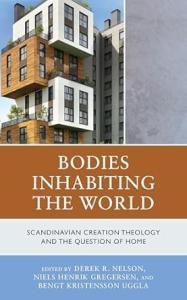
Scandinavian Creation Theology. To buy book, click here.
What is Scandinavian Creation Theology? Or what is SCT? “SCT does not picture the world as a cold and hostile place—instead the world is recognized as our home,” declares Bengt Kristensson Uggla, a Swedish theologian teaching at Åbo Akademi Univeristy in Finland (Uggla 2024, 7). Instead of fleeing the creation in order to live in our heavenly home, Christians should feel and appreciate a deep resonance with Planet Earth as our God-given home.
Actually, I want to call your attention to a brand new book on Scandinavian Creation Theology by Nordics in both Scandinavia and in diaspora, Bodies Inhabiting the World.
Nature is imbued with God’s presence and grace
What kind of hymn should we choose? Should we escape from earth to a heavenly home? Try these lines from the Happy Dane, Nicolai Frederik Severin Grundtvig (1783-1872).
Lift up thy head, O Christendom!
Behold above the blessed home
Or, should we make our nest here below, within the beauty of this divinely graced creation? Grundtvig again.
The sun now shines in all its splendor,
The fount of life and mercy tender…
The peaceful nightingales are filling
The quiet night with music thrilling…
It breathes from heaven on the flowers,
It whispers home-like in the bowers,
A balmy breeze comes to our coast
From Paradise, no longer closed.
Scandinavian creation theologians sing the second with gusto. Copenhagen’s Niels Henrik Gregersen unbosoms the the significance.
“SCT insists that we should never think of redemption and fulfillment by taking leave of our embodied and social existence in some soulish afterlife. Our lives are always enmeshed with the cosmos and chaos of the world of creation. We are indeed to be saved – with the universe but not from the universe” (Gregersen 2024b, 159)
So, again, what is Scandinavian Creation Theology?
Wabash College professor Derek Nelson provides a succinct answer to our question: what is Scandinavian Creation Theology or SCT?
“SCT is thus a theological movement originating in Scandinavia after World War II which attends to the man facets and implications of the doctrine of creation. It is based partly on Martin Luther’s theology of creation and vocation, partly on the affirmative anthropology of N.F.S. Grundtvig with his principle of ‘Human first, then a Christian’, and partly through an emphasis on reflecting on ordinary life situations in the philosophical vein of [Knud] Løgstrup and the theological vein of [Gustaf] Wingren” (Nelson 2024, xvi).
In the first half of the twentieth century, intellectual giants walked the snow-covered forest paths of Scandinavia. Neo-Orthodox scholars of worldwide influence such as Gustaf Aulén (1879-1977) and Anders Nygren (1890-1978) at Sweden’s Lund University became must-reads in theological seminaries. But their Barth-like Christocentrism thirsted for a more comprehensive social and natural inclusivity.
In the decades following World War II, Danish philosopher Knud Løgstrup (1905-1981) – a disciple of both Martin Luther and Martin Heidegger – anchored the mandate to “love one another” so deep into creation that it became primordial with human being-in-the-world (in der Welt sein) (Løgstrup 1997). To be human is to be commanded to love our neighbor.
Theologians such as Gustaf Wingren (1910-2000) at Lund and Regin Prenter (1907-1990) at Aarhus opened the eyes and ears of faith to see God’s grace in the sunshine and hear it in the music of the nightingale.
Creation is our God-intended home
God’s creation is objective. It’s the world. It’s the cosmos. But it is also subjective. We intepret the cosmos as our home.

Professor Elisabeth Gerle. Scandinavian Creation Theology.
According to Lund University’s Elisabeth Gerle, “Our deep desires about home and family reveals a sense of what is given in life, sometimes interpreted as a memory of paradise, but experienced in an ambivalent world where desires sometimes are unfulfilled, even exploited” (Gerle 2024, 85). Despite the sad fact that home life can be contaminated by loss or even abuse, we intuitively know what the ideal home should be. If our true home is eschatological, we hunger and thirst for a foretaste of it in this life.
Aarhus professor of systematic theology Else Marie Wiberg Pedersen thanks “Grundtvig and Løgstrup” because “both continued Luther’s perception of everyday life as God-given and God-created life where every person could find his or her home” (Pedersen 2024, 134). Before we are Christians we are humans who cherish what home means.
Pedersen turns the noun, home, into a verb in order to enjoin upon us the responsibility to open our home to ever more inclusive inclusivities. “When women are displaced in Bible texts and tradition, they are displaced everywhere in life, exiled from humanity. Luther had an eye for that when he in his universal theology of grace focus on inclusivity and an ordinary life in order to home women in Bible texts and thus to home them in humanity” (Pedersen 2024, 136).
Should science become a source for Scandinavian Creation Theology? No.
I believe that any serious creation theology should make natural science a source. Not a norm, but a source. The norm must come from revelation, from Holy Scripture. Even so, what modern science has revealed to us about the natural world is so important, so magnificent, so mesmerizing! It is incumbent, I believe, on the systematic theologian to measure doctrinal claims against scientific knowledge. Where they are consonant, it’s time to cheer. Where dissonant, it’s time to engage in some rethinking.
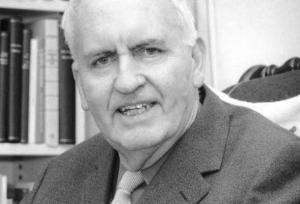
Professor Regin Prenter (1907-1990). Scandinavian Creation Theology
No, the theologian does not want to ask the scientist to pursue theology without a license. Nevertheless, the theologian should expect to see in what science uncovers about nature a receptical or medium for divine grace and healing.
This is an issue I take up with those in the history of Scandinavian Creation Theology. The inherited Scandinavian theological tradition has largely adopted what Ian Barbour called the independence model and what I call the two language model for relating faith and science. This is inadquate, I believe (T. Peters, Science and Religion: Ten Models of War, Truce, and Partnership 2018c).
One the one hand, Regin Prenter gets it right theologically, “Creation and redemption belong together….Creation is the beginning of redemption, and redemption is the consummation of creation” (Prenter 1967, 200).
So far, so good. But Prenter then takes a methodological turn away from the actual world in which we daily live, the world of nature described by science. “There is no real problem with respect to the relationship between natural science and faith in creation. The two do not deal with the same questions, unless one or the other fails to keep within its own proper field” (Prenter 1967, 226). In other words, even though there is but one road to reality these two disciplines, theology and science, should walk on different sides of the street.
Gustaf Aulén is even more off-putting. “God is not found by telescopes and chemical experiments” (Aulén 1960, 89).
What!? Why keep theology and science so separate? Are we not talking about the one world within which natural scientists and people of faith both live?
Should science become a source for Scandinavian Creation Theology? Yes.
I believe Gregersen improves on previous versions of Scandinavian Creation Theology by inviting natural science into the theological home.
“A theological ontology will thus assume that God is intimately present at the core of physical matter described by the sciences (and beyond that), without thereby conflating God the Creator with the world of creation” (N. H. Gregersen, 2014, 413).
Or,
“The dialogue partner of theology should primarily be the most established scientific theories representing the best available truth-candidates” (N. H. Gregersen 2020, 30).
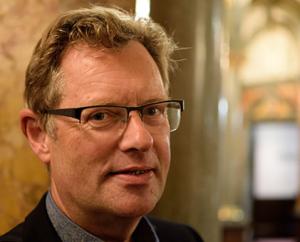
Professor Niels Henrik Gregersen. Scandinavian Creation Theology
The method of Niels Henrik Gregersen is quite different from his Nordic predecessors, especially Prenter. Rather than insulate the theology of creation from the scientific interpretation of the natural world, Gregersen steps into science like a firefighter steps into a hazmat suit (T. Peters, The Eye of Faith and the Eye of Science: Regin Prenter and Niels Henrik Gregersen on God’s Creation, 2018d).
Gregersen is by no means alone. The indominable Archbishop Emerita of Sweden, Antje Jackelén, authored Zeit und Ewigkeit: die Frage der Zeit in Kirche, Naturwissenschaft und Theologie and served as president of ESSSAT (European Society for the Study of Science and Theology).
There are more. Lutheran Olli-Pekka Vaino at the University of Helsinki is engaged in an ongoing study of physical cosmology and astrobiology from a theological perspective (Vaino, 2018). And Pentecostal theologian at Norway’s Volda University College, Knut-Willy Sæther, jumps with both feet into ecospirituality. Sæther melds holism in physics with ecotheology and human emotions to emphasize “belonging” and “feeling at home” within a constructed worldview he labels, “dynamic relational holism” (Saether, 2023, 27, 38). For Vaino and Sæther, science provides a source for theological, ethical, and spiritual construction.
So, just to be fair, Niels Henrik tells me, it should be mentioned that Løgstrup himself – alongside the science historian Olaf Pedersen – were strongly supporting the institutionalization of “Forum Naturvidenskab Teologi” at Aarhus University around 1980. And both Svend Andersen and Viggo Mortensen were then the main Aarhus organizers. In short, science has received an invitation to feel at home in SCT.
Conclusion
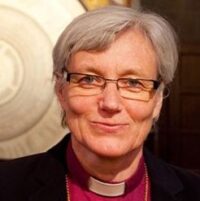
Archbishop Emerita Antje Jackelen. Scandanavian Creation Theology
If the sapling was growing in the decades following the Second World War, the SCT tree is now towering above the theological roof tops. The entire creation is graced to the same level as the incarnate Christ. The deep inner cherishing of our home which seems to be a universal inner yearning provides evidence that God is present in both the cosmos and our soul. Scandinavian Creation Theology is at work to remind us of this.
ST 2022 What is Scandinavian Creation Theology?
ST 2013 What is Public Systematic Theology? Part One
ST 2014 What is Public Systematic Theology? Part Two
ST 2015 What is Public Systematic Theology? Part Three
ST 2023 Pope Francis vs Jesus as the Only Way, Part 1
ST 2024 Pope Francis vs Jesus as the Only Way, Part 2
ST 2025 What is Comparative Theology?
▓
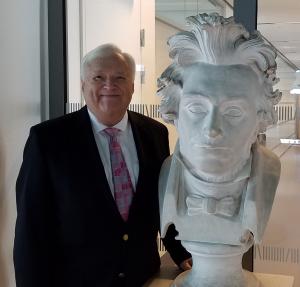
Ted Peters visiting Soren Kierkegaard at the University of Copenhagen
For Patheos, Ted Peters posts articles and notices in the field of Public Theology. He is a Lutheran pastor and emeritus professor at the Graduate Theological Union. He co-edits the journal, Theology and Science, with Robert John Russell on behalf of the Center for Theology and the Natural Sciences, in Berkeley, California, USA. His single volume systematic theology, God—The World’s Future, is now in the 3rd edition. He has also authored God as Trinity plus Sin: Radical Evil in Soul and Society as well as Sin Boldly: Justifying Faith for Fragile and Broken Souls. See his website: TedsTimelyTake.com.
▓
References
Aulén, Gustaf. 1960. The Faith of the Christian Church. Minneapolis MN: Fortress.
Gerle, Elisabeth. 2024. “Who Does Not Want to Have a Family?” In Bodies Inhabiting the World: Scandinavian Creation Theology and the Question of Home, by Niels Henrik Gregersen, Bengt Kristensson Uggla, eds Derek R Nelson, 61-72. Lanham MD: Lexington.
Gregersen, Niels Henrik. 2014. “God, matter, and information: towards a Stoicizing Logos Christology.” In Informatikon and the Nature of Reality, by eds Paul Davies and Niels Henrik Gregersen, 405-443. Cambridge UK: Cambridge University Press.
Gregersen, Niels Henrik. 2020. “Is the Universe a Sacrament? Denis Edward’s Contribution to Sacramental Thinking.” In God in the Natural World: Theological Explorations in Appreciation of Denis Edwards, by eds. Ted Peters and Marie Turner, 25-41. Adelaide: ATF Press.
Gregersen, Niels Henrik,. 2024b. “Deep Inhabitations: Home and Cosmos in Scandinavian Creation Theology.” In Bodies Inhabiting the World, by Niels Henrik Gregersen, and Bengt Kristensson Uggla, eds. Derek Nelson, 141-162. Lanham MD: Lexington.
Løgstrup, Knud. 1997. The Ethical Demand. Notre Dame IN: University of Notre Dame Press.
Nelson, Derek R. 2024. “Introduction.” In Bodies Inhabiting the World: Scandanavian Creation Theology and the Question of Home, by Derek R Nelson, Niels Henrik Gregersen and eds and Bengt Kristensson Uggla, ix-xxi. Lanham MD: Lexington.
Pedersen, Else Marie Wiberg. 2024. “Ordinary Lives and the Home as a Safe Place.” In Bodies Inhabiting the World: Scandanavian Creation Theology and the Question of Home, by Niels Henrik Gregersen, and Bengt Kristensson Uggla, eds Derek R. Nelson, 127-138. Lanham MD: Lexington.
Peters, Ted. 2018c. “Science and Religion: Ten Models of War, Truce, and Partnership.” Theology and Science 16:1: 1-43.
Peters, Ted. 2018d. “The Eye of Faith and the Eye of Science: Regin Prenter and Niels Henrik Gregersen on God’s Creation.” Dialog 57:2: 126-132.
Peters, Ted,. 2020. “Life in the Cosmos: Deep Incarnation in Deep Space.” In God in the Natural World: Theological Explorations in Appreciation of Denis Edwards, by eds. Ted Peters and Marie Turner, 107-138. Adelaide: ATF Press.
Prenter, Regin. 1967. Creation and Redemption. Minneapolis MN: Fortress.
Saether, Knut-Willy. 2023. “Seeing Nature as a Whole: Ecospirituality and the Human-Nature Relationship.” In Views of nature and dualism: rethinking philosophical, theological, and religious assumptions in the Anthropocene, by eds Thomas J Hastings and Knut-Willy Saether, 15-42. New York: Palgrave Macmillan.
Uggla, Bengt Kristenson. 2024. “Home and Creation Dynamics:The World Is Not an Alien Place, It Is Where We Belong.” In Bodies Inhabiting the World: Scandanavian Creation Theology and the Question of Home, by Niels Henrik Gregersen, and Bengt Kristensson Uggla, eds Derek R. Nelson, 3-14. Lanham: Lexington.
Vaino, Olli-Pekka, 2018. Cosmology in Theological Perspective. Cambridge UK: Cambridge University Press.
Technology and Religion
Scandinavian Creation Theology

About Ted Peters
For Patheos, Ted Peters posts articles and notices in the field of Public Theology. He is a Lutheran pastor and emeritus professor at the Graduate Theological Union. He co-edits the journal, Theology and Science, with Robert John Russell on behalf of the Center for Theology and the Natural Sciences, in Berkeley, California, USA. His single volume systematic theology, God—The World’s Future, is now in the 3rd edition. He has also authored God as Trinity plus Sin: Radical Evil in Soul and Society as well as Sin Boldly: Justifying Faith for Fragile and Broken Souls. See his website: TedsTimelyTake.com. You can read more about the author here.
Previous Post
September 20, 2024
Pope Francis vs Jesus as the Only Way, Part 2
Next Post

October 2, 2024 UAP: The Interdimensional Hypothesis
Browse Our Archives
Select a Category Afterlife America in Crisis Ancient Alien Apocalypse Art Artificial Intelligence Astrobiology Astrotheology Atheism Big History Buddhist Catholic Christian Nationalism Christmas Comparative Theology Death Ecology Ethics ETI Evangelical Evolution Existential Questions Free Will General Christian Hermeneutics Hindu https://www.patheos.com/blogs/allsetfree/2020/12/sins-we-need-to-talk-about/?utm_source=Newsletter&utm_medium=email&utm_campaign=Christians+For+a+Better+Christianity&utm_content=43&lct Interreligious Islam Jewish Justice Latter-Day Saints Literature Literature and Theology Lutheran Methodism Mormonism Nonreligious ontology Orthodox Pagam Prayer progressive Christian PT 6 Dignity Public Theology Race racial justice Religious Liberty Romance Satan Scapegoat Science & Religion Science and Religion social justice Spirituality SR 8 Transhumanism Systematic Theology Taoism Ted Peters UAP UFO Uncategorized War
Select a Month September 2026 August 2026 July 2026 June 2026 May 2026 April 2026 March 2026 February 2026 December 2025 November 2025 October 2025 September 2025 August 2025 July 2025 June 2025 May 2025 April 2025 March 2025 February 2025 January 2025 December 2024 November 2024 October 2024 September 2024 August 2024 July 2024 June 2024 May 2024 April 2024 March 2024 February 2024 January 2024 December 2023 November 2023 October 2023 September 2023 August 2023 July 2023 June 2023 May 2023 April 2023 March 2023 February 2023 January 2023 December 2022 November 2022 October 2022 September 2022 August 2022 July 2022 June 2022 May 2022 April 2022 March 2022 February 2022 January 2022 December 2021 November 2021 October 2021 September 2021
Follow Us!
TAKE THE
Religious Wisdom Quiz
Which Christian festival begins with Ash Wednesday and ends at Easter?
Select your answer to see how you score.
Advent Pentecost Epiphany Lent
Related posts from Public Theology

Why Public Theology Needs a Theology of Nature

America's 250th Birthday Gift: Civic Renewal

Do You Believe in UFOs? A Theologian's Answer.

Free Will and Christian Freedom TWO
TRENDING AT PATHEOS Progressive Christian

What Being a Modern-Day Apostle Means to Me
In my last column, I discussed the ins and outs of modern-day...

Did Ancient China Once Worship the God of...
Across human history, a common thread weaves through the origins of the...

Love Your Neighbor – Including Earth-Kin: Lev. 19,...
God’s command to love your neighbor means acting in an ethical and...

Lead a Church Study of “Jesus and Lao...
Guest writer Jack Thomas (The Irreverent Reverend) reflects on leading his church...

Pastoral Wisdom for Responding to Sermon Pushback
Getting sermon pushback on your social justice sermon? Learn practical, Proverbs-based strategies...

Principles for Understanding the Apostolic Ministry Today
Whenever people discover that my formal ministry title is "apostle," as in...
view all Progressive Christian blogs
Ad-Free & Subscriber Log-In Subscription Support
- About Us
- 2026 Calendar
- Videos
- Podcasts
- Library of World Religions
- Faith In Media Tracker
- Advertise With Us
- Write for Us
- Privacy Policy
- Terms of Service
- Do Not Sell My Data
- Contact Us
- Radiant Digital
- Manage Newsletter Subscriptions
- Unsubscribe From Notifications
- Sitemap
Copyright 2008-2026, Patheos. All rights reserved.
Subscription Support Ad-Free & Subscriber Log-In
Follow Patheos