
BuddhistCatholicContemplativeEvangelicalGeneral ChristianHinduJewishLatter-day SaintMuslimNew VisionsProgressive Christian
Beliefs
- Buddhist
- Catholic
- Contemplative
- Evangelical
- General Christian
- Hindu
- Jewish
- Latter-day Saint
- More Voices
- Muslim
- New Visions
- Pagan
- Progressive Christian
Topics
- Religion News
- Food and Religion
- Sports and Religion
- Religious Art
- Religious Music and Entertainment
- Religious Events
- History and Religion
- Style and Religion
- Politics and Religion
- Women in Religion
- Recreation Outdoors and Religion
- Business Finance and Religion
- Careers Workplace and Religion
- Education and Religion
- Family Parenting and Religion
- Health Fitness and Religion
- Home and Religion
- Relationships and Religion
- Technology and Religion
- Travel and Religion
Columnists
- Buddhist Columnists
- Business Finance and Religion Columnists
- Careers Workplace and Religion Columnists
- Catholic Columnists
- Contemplative Columnists
- Education and Religion Columnists
- Evangelists Columnists
- Family Parenting and Religion Columnists
- General Christian Columnists
- Health Fitness and Religion Columnists
- Hindu Columnists
- History and Religion Columnists
- Home and Religion Columnists
- Jewish Columnists
- More Voices Columnists
- Latter Day Columnists
- Muslim Columnists
- New Visions Columnists
- Nonreligious Columnists
- Pagan Columnists
- Politics and Religion Columnists
- Progressive Columnists
- Recreation Outdoors and Religion Columnists
- Relationships and Religion Columnists
- Religion News Columnists
- Religious Art Columnists
- Religious Events Columnists
- Religious Music and Entertainment Columnists
- Sports and Religion Columnists
- Style and Religion Columnists
- Technology and Religion Columnists
- Travel and Religion Columnists
- Women in Religion Columnists
Resource Library
- 2026 Calendar
- Library of World Religions
- The 100 Most Holy Places on Earth
- Patheos Answers
- Podcasts
- Videos
- Faith Leaders Database
- Anglican Episcopalian
- Bahai
- Baptist
- Buddhism
- Christianity
- Confucianism
- Eastern Orthodoxy
- Hinduism
- Holiness and Pentecostal
- ISKCON
- Islam
- Judaism
- Lutheran
- Methodist
- The Church of Jesus Christ of Latter-day Saints
- New Age
- Paganism
- Presbytarian and Reformed
- Protestantism
- Religion Behind the Scenes
- Roman Catholic
- Scientology
- Shia Islam
- Sikhism
- Sufism
- Sunni Islam
- Taoism
- Zen
- See all religions
Research Tools
 Ad-Free & Subscriber Log-In Subscription Support
Ad-Free & Subscriber Log-In Subscription Support
Follow Patheos 

- Trending:
- Forgiveness
- |
- Marriage
- |
- Consciousness
- |
- Death Penalty
- |
- Election
- |
- Halloween

- Home
- Progressive Christian
- Health, Fitness and Religion
- Justification of the Doubter
Justification of the Doubter
Last updated on: August 30, 2024 at 6:05 pm by Ted Peters
Justification of the Doubter 2024-08-30T18:05:48-07:00 Ted Peters
Patheos Explore the world's faith through different perspectives on religion and spirituality! Patheos has the views of the prevalent religions and spiritualities of the world.
Justification of the Doubter
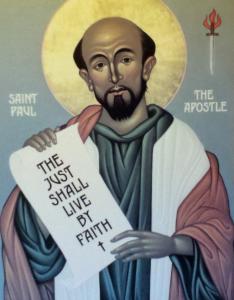
Justification of the doubter too?
Do you have those moments of doubt? Those moments when you doubt that God exists. Oh, yes, we learn from the Bible all kinds of wonderful things about the God who loves us. But what if there is no such person as God? What if there’s just nothing beyond? What if your or my life is nothing but a dying ember in a fire about to be extinguished?
To make matters worse for the Christian, we get told that we cannot be saved by this God if we don’t believe. We get told that if we doubt, then our faith relationship to God gets broken and we fall into the abyss. So, we try to will ourselves to believe God exists. But this doesn’t work. Does it?
What if God understands us in our doubt and graciously keeps us in relationship even with our doubt?
Paul Tillich on Doubt within Faith
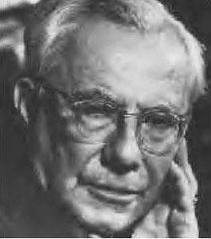
Paul Tillich
My favorite theologian as a teenager was Paul Tillich (1886-1965). In his widely read book, Dynamics of Faith, he said faith and doubt come together like a hot dog and mustard. Well, something like that. “Living faith includes the doubt about itself” (Tillich 1957, 102).
So, a living faith actually includes doubt within it. “Serious doubt is confirmation of faith. It indicates the seriousness of the concern, its ultimate character” (Tillich 1957, 22). If you or I seriously doubt, it tacitly means we are committed to truth. We want our belief to be grounded in truth, not falsity. Unconsciously, we have ultimate trust in the truth. And, paradoxically, God’s Spirit is truth. “The Spirit is the truth” (1 John 5:6).
Divine Justification of the Doubter: Samuel Andrew Shearn
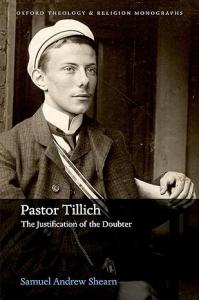
Justification of the Doubter. For book, click here.
Samuel Andrew Shearn has recently published a book on this topic, Pastor Tillich: The Justification of the Doubter. Here’s the key point: “Christ’s presence with the despairing sinner covers not only the sin but the sinner’s modern inability to believe the truth” (Shearn 2022, 219). What does this mean?
To figure out what this means we need to take a detour to the premodern past, to Wittenberg’s Martin Luther (1483-1546).
Divine Justification of the Doubter: Martin Luther
Daniel J. Peterson has written a fine book review that vividly shows just how Tillich borrowed Justification-by-Faith from Martin Luther and applied it to your and my modern experience of doubt. So, what’s the connection?
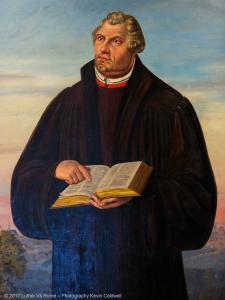
Martin Luther 1483-1546
Luther experienced a breakthrough by God’s grace when he was overcome by guilt for his own sin. It was the Bible that made the difference. He studied the letters of Paul, who teaches that salvation comes from God by grace alone. Nothing we do can make us right with God. This explains why God meets and embraces us unconditionally through Christ. This wondrous discovery is often called Luther’s ‘tower experience’, because it allegedly occurred while he was reading scripture in the tower of the monastery where he was living. The Word of God brought Luther immense relief from the debilitating fear that he could never merit God’s favor on his own. Further, it led Luther to seek the same for his parishioners by preaching to them the good news that God had freed them in Christ from having to earn God’s love through works of penance. Instead, good works should serve as a response born of gratitude for the unmerited love God offers us. This, says Peterson, is what initiated the Protestant Reformation (Peterson 2024, 1).
Divine Justification of the Doubter: Paul Tillich
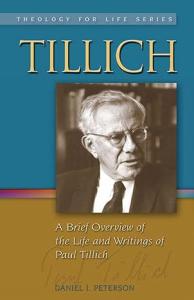
Daniel Peterson on Tillich. Click here for book.
“When Tillich took to the pulpit 400 years later, he also saw the need for an intervention among his parishioners based upon a similar ‘breakthrough’,” Peterson reports (Peterson 2024, 2). Christ meets the doubting sinner in the darkness of despair with a message of double grace: “You need do nothing, you need not hold anything to be true’” (Shearn 2022, 14). God’s grace covers our doubt.
We can imagine the relief such a message brought to the members of Tillich’s listening congregation who earnestly found themselves trying to believe, only to realize they could not convince themselves that ‘God exists’ simply by an act of will. Shearn and Peterson describe this as a moment of rescue for those of us who doubt. “But in this moment of rescue, Christ’s presence with the despairing sinner covers not only the sin but the sinner’s modern inability– the inability to believe the truth” (Shearn 2022, 219).
“The connection Shearn postulates between Luther and Tillich should thus be clear: both men not only sought relief from the burden placed upon them and their contemporaries thanks to graceless expressions of the Christian faith. They found it in the breakthrough they experienced of grace which they subsequently applied to the differing spiritual predicaments of the times in which they lived. By letting go of the desire to make oneself acceptable to God through morality or belief, a new encounter with the divine could emerge, the kind that led Luther from hating God to loving God” (Peterson 2024, 2).
Conclusion
If you like me find it impossible to simply will belief, then the part of the gospel that should impact us is that we remain members of God’s family by grace rather than belief.
One of my favorite seminary professors was Fred Meuser. Dr. Meuser offered some advice I’ve kept. When plagued by nagging doubt, he said, “first doubt your doubt. Then, doubt your faith.”
The volleyball we play in our minds between faith and doubt is a game that will not end until we see God face to face (1 Corinthians 13:12).
ST 2021 Justification of the Doubter
ST 2005 What is Justification by Faith?
▓
Ted Peters
For Patheos, Ted Peters posts articles and notices in the field of Public Theology. He is a Lutheran pastor and emeritus professor at the Graduate Theological Union. His single volume systematic theology, God—The World’s Future, is now in the 3rd edition. He has also authored God as Trinity plus Sin: Radical Evil in Soul and Society as well as Sin Boldly: Justifying Faith for Fragile and Broken Souls. He recently published. The Voice of Public Theology, with ATF Press. See his website: TedsTimelyTake.com and Patheos blog site on Public Theology.
▓
References
Peters, Ted. Sin Boldly! Minneapolis MN: Fortress Press, 2015.
Peterson, Daniel. “Book Review of Pastor Tillich: The Justification of the Doubter.” Scottish Journal of Theology , 2024: 1-2; DOI: https://doi.org/10.1017/S0036930624000176 .
Shearn, Samuel Andrew. Pastor Tillich: The Justification of the Doubter. Oxford: Oxford University Press, 2022.
Tillich, Paul. Dynamics of Faith. New York: Harper, 1957.
Health, Fitness and Religion

About Ted Peters
For Patheos, Ted Peters posts articles and notices in the field of Public Theology. He is a Lutheran pastor and emeritus professor at the Graduate Theological Union. His single volume systematic theology, God—The World’s Future, is now in the 3rd edition. He has also authored God as Trinity plus Sin: Radical Evil in Soul and Society as well as Sin Boldly: Justifying Faith for Fragile and Broken Souls. He recently published. The Voice of Public Theology, with ATF Press. See his website: TedsTimelyTake.com and Patheos blog site on Public Theology. You can read more about the author here.
Previous Post

August 27, 2024
Scientizing Ufology
Next Post

September 3, 2024 Are UAP from outer space?
Browse Our Archives
Select a Category Afterlife America in Crisis Ancient Alien Apocalypse Art Artificial Intelligence Astrobiology Astrotheology Atheism Big History Buddhist Catholic Christian Nationalism Christmas Comparative Theology Death Ecology Ethics ETI Evangelical Evolution Existential Questions Free Will General Christian Hermeneutics Hindu https://www.patheos.com/blogs/allsetfree/2020/12/sins-we-need-to-talk-about/?utm_source=Newsletter&utm_medium=email&utm_campaign=Christians+For+a+Better+Christianity&utm_content=43&lct Interreligious Islam Jewish Justice Latter-Day Saints Literature Literature and Theology Lutheran Methodism Mormonism Nonreligious ontology Orthodox Pagam Prayer progressive Christian PT 6 Dignity Public Theology Race racial justice Religious Liberty Romance Satan Scapegoat Science & Religion Science and Religion social justice Spirituality SR 8 Transhumanism Systematic Theology Taoism Ted Peters UAP UFO Uncategorized War
Select a Month September 2026 August 2026 July 2026 June 2026 May 2026 April 2026 March 2026 February 2026 December 2025 November 2025 October 2025 September 2025 August 2025 July 2025 June 2025 May 2025 April 2025 March 2025 February 2025 January 2025 December 2024 November 2024 October 2024 September 2024 August 2024 July 2024 June 2024 May 2024 April 2024 March 2024 February 2024 January 2024 December 2023 November 2023 October 2023 September 2023 August 2023 July 2023 June 2023 May 2023 April 2023 March 2023 February 2023 January 2023 December 2022 November 2022 October 2022 September 2022 August 2022 July 2022 June 2022 May 2022 April 2022 March 2022 February 2022 January 2022 December 2021 November 2021 October 2021 September 2021
Follow Us!
TAKE THE
Religious Wisdom Quiz
Which official opposed Nehemiah's wall-building and sent open letters to Jerusalem?
Select your answer to see how you score.
Haggai Tobiah Sanballat Geshem
Related posts from Public Theology

Why Public Theology Needs a Theology of Nature

America's 250th Birthday Gift: Civic Renewal

Do You Believe in UFOs? A Theologian's Answer.

Free Will and Christian Freedom TWO
TRENDING AT PATHEOS Progressive Christian

What Being a Modern-Day Apostle Means to Me
In my last column, I discussed the ins and outs of modern-day...

Did Ancient China Once Worship the God of...
Across human history, a common thread weaves through the origins of the...

Love Your Neighbor – Including Earth-Kin: Lev. 19,...
God’s command to love your neighbor means acting in an ethical and...

Lead a Church Study of “Jesus and Lao...
Guest writer Jack Thomas (The Irreverent Reverend) reflects on leading his church...

Pastoral Wisdom for Responding to Sermon Pushback
Getting sermon pushback on your social justice sermon? Learn practical, Proverbs-based strategies...

Principles for Understanding the Apostolic Ministry Today
Whenever people discover that my formal ministry title is "apostle," as in...
view all Progressive Christian blogs
Ad-Free & Subscriber Log-In Subscription Support
- About Us
- 2026 Calendar
- Videos
- Podcasts
- Library of World Religions
- Faith In Media Tracker
- Advertise With Us
- Write for Us
- Privacy Policy
- Terms of Service
- Do Not Sell My Data
- Contact Us
- Radiant Digital
- Manage Newsletter Subscriptions
- Unsubscribe From Notifications
- Sitemap
Copyright 2008-2026, Patheos. All rights reserved.
Subscription Support Ad-Free & Subscriber Log-In
Follow Patheos