
BuddhistCatholicContemplativeEvangelicalGeneral ChristianHinduJewishLatter-day SaintMuslimNew VisionsProgressive Christian
Beliefs
- Buddhist
- Catholic
- Contemplative
- Evangelical
- General Christian
- Hindu
- Jewish
- Latter-day Saint
- More Voices
- Muslim
- New Visions
- Pagan
- Progressive Christian
Topics
- Religion News
- Food and Religion
- Sports and Religion
- Religious Art
- Religious Music and Entertainment
- Religious Events
- History and Religion
- Style and Religion
- Politics and Religion
- Women in Religion
- Recreation Outdoors and Religion
- Business Finance and Religion
- Careers Workplace and Religion
- Education and Religion
- Family Parenting and Religion
- Health Fitness and Religion
- Home and Religion
- Relationships and Religion
- Technology and Religion
- Travel and Religion
Columnists
- Buddhist Columnists
- Business Finance and Religion Columnists
- Careers Workplace and Religion Columnists
- Catholic Columnists
- Contemplative Columnists
- Education and Religion Columnists
- Evangelists Columnists
- Family Parenting and Religion Columnists
- General Christian Columnists
- Health Fitness and Religion Columnists
- Hindu Columnists
- History and Religion Columnists
- Home and Religion Columnists
- Jewish Columnists
- More Voices Columnists
- Latter Day Columnists
- Muslim Columnists
- New Visions Columnists
- Nonreligious Columnists
- Pagan Columnists
- Politics and Religion Columnists
- Progressive Columnists
- Recreation Outdoors and Religion Columnists
- Relationships and Religion Columnists
- Religion News Columnists
- Religious Art Columnists
- Religious Events Columnists
- Religious Music and Entertainment Columnists
- Sports and Religion Columnists
- Style and Religion Columnists
- Technology and Religion Columnists
- Travel and Religion Columnists
- Women in Religion Columnists
Resource Library
- 2026 Calendar
- Library of World Religions
- The 100 Most Holy Places on Earth
- Patheos Answers
- Podcasts
- Videos
- Faith Leaders Database
- Anglican Episcopalian
- Bahai
- Baptist
- Buddhism
- Christianity
- Confucianism
- Eastern Orthodoxy
- Hinduism
- Holiness and Pentecostal
- ISKCON
- Islam
- Judaism
- Lutheran
- Methodist
- The Church of Jesus Christ of Latter-day Saints
- New Age
- Paganism
- Presbytarian and Reformed
- Protestantism
- Religion Behind the Scenes
- Roman Catholic
- Scientology
- Shia Islam
- Sikhism
- Sufism
- Sunni Islam
- Taoism
- Zen
- See all religions
Research Tools
 Ad-Free & Subscriber Log-In Subscription Support
Ad-Free & Subscriber Log-In Subscription Support
Follow Patheos 

- Trending:
- Forgiveness
- |
- Marriage
- |
- Consciousness
- |
- Death Penalty
- |
- Election
- |
- Halloween

- Home
- Progressive Christian
- Technology and Religion
- The Soul as Spiritual Core. Soul 8
The Soul as Spiritual Core. Soul 8
Last updated on: July 5, 2024 at 7:22 pm by Ted Peters
The Soul as Spiritual Core. Soul 8 2024-07-05T19:22:00-07:00 Ted Peters
Patheos Explore the world's faith through different perspectives on religion and spirituality! Patheos has the views of the prevalent religions and spiritualities of the world.
The Soul as Spiritual Core
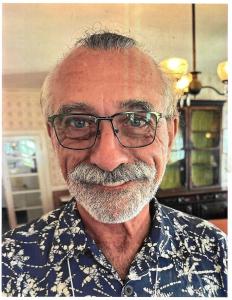
The Soul as Spiritual Core. John Calvin Chatlos, MD
To think of the soul as spiritual core is a proposal lifted up by medical doctor John Calvin Chatlos. Chatlos, a professor of psychiatry at Rutgers University, just published a pregnant article, “Is Spirituality a Master Controller for Human Well-Being?” Let’s take a moment to “test the spirits to see whether they are from God” (1 John 4:1).
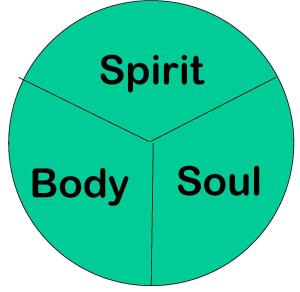
In an earlier post in this Patheos series, “Body, Soul, and Spirit: Soul 3,” I lifted up two proposals. My first proposal: we should think of all three — body, soul, and spirit — as making up the one person we are, the belovéd of God. My second proposal: let’s nudge our concept of the soul in the direction of our centered self. Now we can contrast soul and spirit. By spirit I mean that dimension we share with others and with God. But soul refers to the self that constitutes our core, our essence, our deepest identity. So, I wonder: might the Chatlos theory converge with my theory? Let’s see.
In the Framework of Spirituality, our soul is “Master Controller” for Well-Being
Chatlos practices Cognitive Behavioral Therapy (CBT). In his therapeutic work with substance abusers, Chatlos has repeatedly witnessed instant and marvelous life transformations. These transformations begin with what Sigmund Freud called the “oceanic feeling.” This spiritual experience — the sense of eternity and the feeling of being at one with the whole of realilty — provides the spark that fires up the soul to make the transformational decision to change, to embrace wellness, to heal.
Loss of faith is the chief trait of crushed souls, hurt souls, damaged souls. Faith as we know it in Paul Tillich’s Couraqge To Be provides the impetus to heal what is broken. The oceanic feeling prompts faith to grasp one’s self-worth.

The Oceanic Feeling of oneness with all reality.
The single most important factor in transformatory healing is the soul’s confidence that it is worthy. Self-Worth is indispensible. To unlock the spiritual power of the soul we need to treat the self with dignity, as valued, as loved.
“The keys to open awareness to spiritual experience are integrated experiences of self-worth (self-confidence, self-esteem, self-competence/self-efficacy) and dignity (choices with reason, empathy and compassion, courage beginning with honesty).”
Chatlos designates this self-transcending capacity of the soul with the Greek symbol Σ .
“Σ opens with mystical-type experiences to a new level of mind function now available for conscious use. The opening to the Creative Forces/ Creative Openings with its moral-truth core, that is open-hearted, loving and compassionate, and acts with indomitable faith with a powerful courage is the functional ‘soul’ experience….This yet to be known Σ, an added awareness appears to be an organized spiritual core with functional soul characteristics that operates as a Mater Controller.”

This figure illustrates Chatlos’ Framework of Spirituality beginning with the Cognitive Behavioral Therapy elements of thoughts, feelings, and behaviors. These expand into the distinction between self-worth and its expression as dignity. Self-worth and dignity frow further into wisdom, justice, and generosity. This expansion to Creative Forces / Creative Openings occurs as the spiritual core — the soul or Σ — is opened.
Note how ethical expression of the faith process includes universal agape love.
“The Faith Process involves adopting a spiritual attitude toward life by making a meaningful commitment to empowering the worth and dignity of every person – including ourself.”
The Soul as Spiritual Core is science, not theology.
Chatlos keeps his theory of the soul within the bounds of science.
“For spirituality to serve as a master controller, Σ, the spiritual core must have function within the brain and nervous system….The Framework of Spirituality provides a framework for the functional use of this neuroscience information.”
In personal conversation, Chatlos admits to being a reductionist. Even so, the scientific method falls short of explaining some dimensions of the soul and its faith process.
“For unknown reasons and yet to be identified is the source of the mystical characteristics that occur with the opening of Σ and the Creative Forces – connectedness, vitality, wholeness, serenity, meaning and purpose – and the soul experience of a person’s moral-truth core, with open-hearted compassion of agape love, and the moving forward into the here and now moment with faith as an action powered by a new release of courage.”
Dignity, Self-Worth, and Unconditional Positive Regard
During the rise of the pastoral care movement in the 1960s, Don Browning at the Univerfsity of Chicago and others contended that the therapist mediates God’s grace. God forgives sinners. God accepts us, regardles whether we accept ourselves. God’s unconditional positive regard is mediated through the relatioship when the therapist grants unconditional positive regard toward the client. Therein lies the power of healing John Calvin Chatlos describes — even if Chatlos does not credit mediated grace.
Soul as spiritual core? Does conferring worth lead to claiming self-worth?
Elsewhere, I refer to treating persons with unconditional postive regard as conferring dignity. When we confer dignity, the person on whom we confer dignity feels, “Hey! I’m worth it!” Dignity is first conferred, then it is claimed. For the soul be become our spiritual core, we first need the experience of an esprit de corps in the form of a relationship that cedes to us a sense of worth, of value, of dignity. Spiritual relationship first. Then core.
One way to conceive of the Christian mission is to see it as liberating the world by conferring dignity on everyone who is marginalized, outcast, or victimized. Even victimized by trauma or self-loathing, as are the patients of Doctor Chatlos.
Might I summarze three differences? First, where I put a therapeutic relationship characterized by unconditional positive regard, Chatlos puts spiritual experience and the faith process. Second, Chatlos understands the transformational process as I do. But he ascribes it solely to brain activity, to natural processes. Not to divine grace.
Our third difference? We diverge on defining dignity. I follow Immanuel Kant’s status of personhood: we treat each person as a moral end and never merely as a means. That’s the conferral of dignity. Chatlos works with a different view. Dignity is not a noun, says Chatlos. Dignity is not something a person has. Nor can dignity be conferred. Rather, “dignity is an expression of being.” It is what we honor most about being human in each domain — making choices with reason in thinking, having empathy and compassion in feeling, and living with courage and honesty in doing.
Remind me: what is the soul again?
It appears to me that Chatlos avoids providing us with a metaphysical description of the soul. Rather, he gives us a functional description. This is just fine. Let me simply point out that, for Chatlos, the soul is not a pre-existent or specially created immaterial entity that is imparted to the body at conception or birth. No substance dualism here.
Phenomenologically, the soul gets constructed through experience over time. A soul once crushed by trauma can become robust through transformation. That transformation is prompted by an oceanic experience which judges the soul to have worth, value, dignity. If the soul responds and enters into the faith process, then courage takes the reigns of control and drives the person toward universal loving. All this is the product of neuronal firings in our brain, contends Chatlos. Well, almost. Whether or not it is God who intervenes with a feeling of mystical unity cannot be explained scientifically.
What about Soul-Making?
Chatlos’ theory reminds me of philosopher John Hick. In his compendious tome, Death and Eternal Life, Hick proffers the notion of “soul-making.” The human end is to become a soul fit to live responsibly as a citizen in the kingdom of God. If we fall short of achieving this end in this life, we get a second chance in post-death Purgatory. In short, our soul is not an immaterial substance added to our body at birth. Rather, the soul is our essential self which travels the long hard road toward godliness.

The soul as spiritual core? Or esprit de corps?
The godly soul is the sanctified soul, according to John Wesley. Our soul will be sanctified according to Wesley — or “made” according to Hick — when we wake up each morning with only love for God and love for neighbor in our heart.
Let me ask: does all this suggest that our self becomes a soul only after it has been transformed through the faith process into a loving soul? What then would be the status of the pre-transformed self, the sinful self still in need of grace?
Put Chatlos on your 2025 calendar
During the summer of 2025, John Calvin Chatlos along with theologian Catherine Keller will lead a conference on this very subject matter. Click on the IRAS (Institute on Religion in an Age of Science) when details about the 2025 Star Island conference become available.
Conclusion
In this Patheos post, we’ve been testing the spirits of the soul as spiritual core.
In this larger Patheos series on the soul, I have previously tendered working definitions for the terms, ‘soul’ and ‘spirit’. Whereas the word ‘soul’ connotes who each of us is as an individual, our deepest essence; the word ‘spirit’ connotes that dimension of our inter-personal reality that unites us in relationship with others. To speak of ‘soul’ reminds us that we have a center, a centered self. To speak of ‘spirit’ reminds us that we have an apron of relationships. The power of the spirit unites us with something bigger than us. Our souls grow and develop in spiritual relationships. Our soul becomes immortal because of our spiritual relationship with the eternal God. To think of a human person in the fullest sense is to include body, soul, and spirit in relationship to human community and to God.
I certainly concede to Chatlos that your or my self is perpetually in process. Our self as soul is developing with experience, gaining identity through decision, and transforming by grace. More. I hold that we are becoming who we are — that is, our future and final destiny with God determines retroactively who we have been all along. But I hesitate to take out membership in the soul-making club if it requires positing that we are non-souls until after we have gone through the transformation process.
On the one hand, I’m attracted John Calvin Chatlos’ notion of the soul as spiritual core. At this juncture, I connect self and soul. Yet, on the other hand, I would avoid the implication that we are non-souls waiting for transformation to make our self into a soul.
Patheos ST 4141. Soul 8. The Soul as Spiritual Core
Patheos ST 4131 Soul 1 Theologies of the Soul
Patheos ST 4132 Soul 2 Substance Dualism
Patheos ST 4133 Soul 3 Trichotomy
Patheos ST 4134 Soul 4 Materialisms
Patheos ST 4135 Soul 5 Emergent Dualism
Patheos ST 4136 Soul 6 Non-Reductive Physicalism
Patheos ST 4137 Soul 7 Bodily Resurrection
Patheos ST 4141 Soul 8 The Soul as Spiritual Core
▓
Ted Peters
For Patheos, Ted Peters posts articles and notices in the field of Public Theology. He is a Lutheran pastor and emeritus professor at the Graduate Theological Union. He co-edits the journal, Theology and Science, with Robert John Russell on behalf of the Center for Theology and the Natural Sciences, in Berkeley, California, USA. His single volume systematic theology, God—The World’s Future, is now in the 3rd edition. He has also authored God as Trinity plus Sin: Radical Evil in Soul and Society as well as Sin Boldly: Justifying Faith for Fragile and Broken Souls. See his website: TedsTimelyTake.com.
▓
Technology and Religion

About Ted Peters
For Patheos, Ted Peters posts articles and notices in the field of Public Theology. He is a Lutheran pastor and emeritus professor at the Graduate Theological Union. He co-edits the journal, Theology and Science, with Robert John Russell on behalf of the Center for Theology and the Natural Sciences, in Berkeley, California, USA. His single volume systematic theology, God—The World’s Future, is now in the 3rd edition. He has also authored God as Trinity plus Sin: Radical Evil in Soul and Society as well as Sin Boldly: Justifying Faith for Fragile and Broken Souls. See his website: TedsTimelyTake.com. You can read more about the author here.
Previous Post
July 2, 2024
Are UUs going to Mars?
Next Post

July 7, 2024 ChatGPT Theology's Image of God?
Browse Our Archives
Select a Category Afterlife America in Crisis Ancient Alien Apocalypse Art Artificial Intelligence Astrobiology Astrotheology Atheism Big History Buddhist Catholic Christian Nationalism Christmas Comparative Theology Death Ecology Ethics ETI Evangelical Evolution Existential Questions Free Will General Christian Hermeneutics Hindu https://www.patheos.com/blogs/allsetfree/2020/12/sins-we-need-to-talk-about/?utm_source=Newsletter&utm_medium=email&utm_campaign=Christians+For+a+Better+Christianity&utm_content=43&lct Interreligious Islam Jewish Justice Latter-Day Saints Literature Literature and Theology Lutheran Methodism Mormonism Nonreligious ontology Orthodox Pagam Prayer progressive Christian PT 6 Dignity Public Theology Race racial justice Religious Liberty Romance Satan Scapegoat Science & Religion Science and Religion social justice Spirituality SR 8 Transhumanism Systematic Theology Taoism Ted Peters UAP UFO Uncategorized War
Select a Month September 2026 August 2026 July 2026 June 2026 May 2026 April 2026 March 2026 February 2026 December 2025 November 2025 October 2025 September 2025 August 2025 July 2025 June 2025 May 2025 April 2025 March 2025 February 2025 January 2025 December 2024 November 2024 October 2024 September 2024 August 2024 July 2024 June 2024 May 2024 April 2024 March 2024 February 2024 January 2024 December 2023 November 2023 October 2023 September 2023 August 2023 July 2023 June 2023 May 2023 April 2023 March 2023 February 2023 January 2023 December 2022 November 2022 October 2022 September 2022 August 2022 July 2022 June 2022 May 2022 April 2022 March 2022 February 2022 January 2022 December 2021 November 2021 October 2021 September 2021
Follow Us!
TAKE THE
Religious Wisdom Quiz
What Christian group is known for singing acapella during worship?
Select your answer to see how you score.
Catholics Methodists Churches of Christ Baptists
Related posts from Public Theology

Why Public Theology Needs a Theology of Nature

America's 250th Birthday Gift: Civic Renewal

Do You Believe in UFOs? A Theologian's Answer.

Free Will and Christian Freedom TWO
TRENDING AT PATHEOS Progressive Christian

What Being a Modern-Day Apostle Means to Me
In my last column, I discussed the ins and outs of modern-day...

Did Ancient China Once Worship the God of...
Across human history, a common thread weaves through the origins of the...

Love Your Neighbor – Including Earth-Kin: Lev. 19,...
God’s command to love your neighbor means acting in an ethical and...

Lead a Church Study of “Jesus and Lao...
Guest writer Jack Thomas (The Irreverent Reverend) reflects on leading his church...

Pastoral Wisdom for Responding to Sermon Pushback
Getting sermon pushback on your social justice sermon? Learn practical, Proverbs-based strategies...

Principles for Understanding the Apostolic Ministry Today
Whenever people discover that my formal ministry title is "apostle," as in...
view all Progressive Christian blogs
Ad-Free & Subscriber Log-In Subscription Support
- About Us
- 2026 Calendar
- Videos
- Podcasts
- Library of World Religions
- Faith In Media Tracker
- Advertise With Us
- Write for Us
- Privacy Policy
- Terms of Service
- Do Not Sell My Data
- Contact Us
- Radiant Digital
- Manage Newsletter Subscriptions
- Unsubscribe From Notifications
- Sitemap
Copyright 2008-2026, Patheos. All rights reserved.
Subscription Support Ad-Free & Subscriber Log-In
Follow Patheos