
BuddhistCatholicContemplativeEvangelicalGeneral ChristianHinduJewishLatter-day SaintMuslimNew VisionsProgressive Christian
Beliefs
- Buddhist
- Catholic
- Contemplative
- Evangelical
- General Christian
- Hindu
- Jewish
- Latter-day Saint
- More Voices
- Muslim
- New Visions
- Pagan
- Progressive Christian
Topics
- Religion News
- Food and Religion
- Sports and Religion
- Religious Art
- Religious Music and Entertainment
- Religious Events
- History and Religion
- Style and Religion
- Politics and Religion
- Women in Religion
- Recreation Outdoors and Religion
- Business Finance and Religion
- Careers Workplace and Religion
- Education and Religion
- Family Parenting and Religion
- Health Fitness and Religion
- Home and Religion
- Relationships and Religion
- Technology and Religion
- Travel and Religion
Columnists
- Buddhist Columnists
- Business Finance and Religion Columnists
- Careers Workplace and Religion Columnists
- Catholic Columnists
- Contemplative Columnists
- Education and Religion Columnists
- Evangelists Columnists
- Family Parenting and Religion Columnists
- General Christian Columnists
- Health Fitness and Religion Columnists
- Hindu Columnists
- History and Religion Columnists
- Home and Religion Columnists
- Jewish Columnists
- More Voices Columnists
- Latter Day Columnists
- Muslim Columnists
- New Visions Columnists
- Nonreligious Columnists
- Pagan Columnists
- Politics and Religion Columnists
- Progressive Columnists
- Recreation Outdoors and Religion Columnists
- Relationships and Religion Columnists
- Religion News Columnists
- Religious Art Columnists
- Religious Events Columnists
- Religious Music and Entertainment Columnists
- Sports and Religion Columnists
- Style and Religion Columnists
- Technology and Religion Columnists
- Travel and Religion Columnists
- Women in Religion Columnists
Resource Library
- 2026 Calendar
- Library of World Religions
- The 100 Most Holy Places on Earth
- Patheos Answers
- Podcasts
- Videos
- Faith Leaders Database
- Anglican Episcopalian
- Bahai
- Baptist
- Buddhism
- Christianity
- Confucianism
- Eastern Orthodoxy
- Hinduism
- Holiness and Pentecostal
- ISKCON
- Islam
- Judaism
- Lutheran
- Methodist
- The Church of Jesus Christ of Latter-day Saints
- New Age
- Paganism
- Presbytarian and Reformed
- Protestantism
- Religion Behind the Scenes
- Roman Catholic
- Scientology
- Shia Islam
- Sikhism
- Sufism
- Sunni Islam
- Taoism
- Zen
- See all religions
Research Tools
 Ad-Free & Subscriber Log-In Subscription Support
Follow Patheos 

- Trending:
- Advent
- |
- Forgiveness
- |
- Thanksgiving
- |
- Election
- |
- Seasonal Holidays
- |
- Marriage

- Home
- Progressive Christian
- Women in Religion
- Karen Lebacqz’s Christian Viewpoint on Abortion
Karen Lebacqz’s Christian Viewpoint on Abortion
Last updated on: April 8, 2024 at 4:51 pm by Ted Peters
Karen Lebacqz’s Christian Viewpoint on Abortion 2024-04-08T16:51:02-07:00 Ted Peters
Patheos Explore the world's faith through different perspectives on religion and spirituality! Patheos has the views of the prevalent religions and spiritualities of the world.
Karen Lebacqz’s Christian Viewpoint on Abortion: Abortion 4
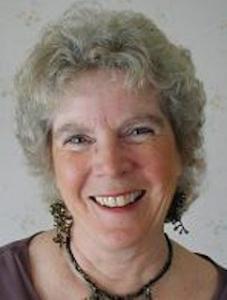
Professor Karen Lebacqz’s Christian Viewpoint on Abortion
“You’ve got it all wrong, Ted.” That’s what Karen Lebacqz tells me. If you’ve been following this Patheos series on the abortion controversy, you know that along with Professor Paul Lange at the University of Washington Med School I have been searching for just the right compromise between Anti-Abortion Republicans and Reproductive-Choice Democrats. I’ve been looking for that window – should it be 20 weeks following conception when the “humanness” of the fetus protects it? – within which an elective abortion is morally permissible. I’ve been looking for a position that could muster general agreement, uniting both sides in our national controversy.
“That’s the wrong approach, Ted,” Doctor Lebacqz warns me. “The ‘humanness’ question is irresolvable and cannot provide a correct answer to the abortion question,” she writes in a defining article, “Abortion: Getting the Ethics Straight” (Lebacqz 1982, 47). In this article she articulates Karen Lebacqz’s Christian viewpoint on abortion. In short, I have been asking the wrong question. So, what’s the right question? And what would a Christian viewpoint on abortion look like?
Meet Karen Lebacqz
Meet Karen Lebacqz. She is an ordained pastor in the United Church of Christ as well as a nationally known expert in bioethics. Professor Karen Lebacqz taught ethics for three decades to seminarians at Pacific School of Religion as well as doctoral students at the Graduate Theological Union in Berkeley. She might be best known for her pioneering book, Six Theories of Justice, which she is now revising for a second edition.
I had the delightful privilege and enriching experience of working with her elbow to elbow on numerous projects in gene ethics. Along with Gaymon Bennett, she and I co-authored what I think is the best treatment yet of human embryonic stem cells, Sacred Cells? Why Christians Should Support Stem Cell Research.
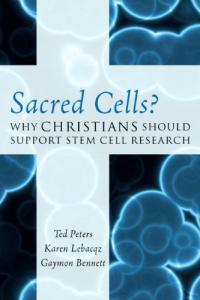
For more on Sacred Cells? click here.
What is Karen Lebacqz’s Christian Viewpoint on Abortion? Let’s see. We’ve already noted: Karen claims asking about the week when a fetus becomes human “is a dead-end street that obscures rather than clarifies moral questions” (Lebacqz 1982, 47).
Karen recognizes as I do that the term ‘human’ in this discussion actually means morally protectable dignity. When the unborn child is declared ‘human’, that means we have a person with a ‘right to life’ that “should be protected as are other human beings” (Lebacqz 1982, 48). With this in mind, I have been searching for just that moment in a pregnancy when morally protectable humanness occurs. Karen provides reasons why an embryo might cross the personhood or humanness threshold at two to three weeks after conception [what I refer to as the 14th day], because this is when the embryo becomes an individual and twinning is no longer possible. I dubbed this important in an earlier post, “Protecting Embryos in the Vatican.” Even if we could get Roman Catholics, evangelicals, and progressives all to agree that the 14th day after conception is a decisive threshold, Karen says this is morally irrelevant. What! Why?
We must grant at the outset that aborting a fetus from the mother’s body is an act of killing, declares Lebacqz. Let’s not try to avoid granting this inescapable fact. “Most abortions done today are on fetuses that have acquired some minimum of rights” (Lebacqz 1982, 50).
Killing a Future Human Person? Really?
So, let’s move on. Let’s ask Karen: is it always wrong to kill? No.
“It is not always wrong to kill human beings…The right to life is not absolute. The dominant tradition in Christianity has always permitted some killing of humans – in war, self-defense, and capital punishment. These are considered justifiable exceptions to the general prohibition against taking human life….The fetus may be human, but abortion might still be a justifiable exception to the rule against killing human beings. Everything depends on the moral arguments accepted as justifying exceptions” (Lebacqz 1982, 50).

This is just an excuse to show a picture of my grandaughter, Maddie Lulu.
In short, it is not possible to abort a fetus without killing. It is not possible to abort a fetus without deviating from our biblical commandment: Thou shalt not kill. Yet, in some circumstances, abortion might be justifiable. We’re getting closer here to Karen Lebacqz’s distinctive Christian perspective on abortion.
Even though Karen Lebacqz is not a card-carrying Lutheran, sometimes she thinks like a Lutheran. The Lutherans recognize that life is always already messy. Purely right moral choices with no sinful byproducts are not possible in this world. Even the saint — both Lebacqz and your next-door Lutheran neighbor would say — is simul justus et peccator (simultaneously just and sinful). So, we’re ready to ask: which moral option is the least harmful? What is the lesser of two evils? What does it take to justify the decision to abort?
What is Karen Lebacqz’s Christian Viewpoint on Abortion?
What is Karen Lebacqz’s distinctively Christian viewpoint on abortion? Christians, she argues, begin by understanding that we human beings are defined in an important way by our relationships: our relationship with one another; our relationship with the world; and our relationship with God. These relationships are dynamic, moving, shifting. We start our moral deliberation within a framework of relationship.
 Regarding the matter at hand, we focus now on the relationship of the woman and the fetus. Lebacqz defines ‘abortion’ as ending this relationship by “emptying the womb.”
“If abortion is understood as ‘emptying the womb’ or removing oneself from the fetus, then the woman has a right to do it even if the fetus is a person with rights. No one’s right to life gives them the right to the use of another’s body without that other’s consent. The woman does not, of course, have a right to kill the fetus or to seek its death; but she does have a right to remove herself from it” (Lebacqz 1982, 51).
Within the basic framework of relationality, Lebacqz draws in the notion of an individual’s right. In this case, the woman has a right to end a relationship with the unborn within her body.
Compassion for the Pregnant Woman
“Abortion is always perceived by the woman as the lesser of two evils – a regrettable but necessary act, the only way to walk away from an unmanageable burden” (Lebacqz 1982, 52). So, hold your moral judgments! We need to recognize that abortion takes place within a life that is already messy in one way or another.
Karen recognizes that a pregnant woman may be facing a crisis due to the denial of support from the man involved; lack of financial or other resources to support a child; social shaming; and a context of discrimination against women. Lebacqz calls this “tragic.”
“There is always something not quite justifiable about abortion….At the same time, the abortion may be necessary….the abortion is justified, in short, by the very same values that makes it tragic—the covenantal nature of pregnancy and the special bonds of relationship that surround it” (Lebacqz 1982, 57).
In sum, a decision to empty the womb is made within a messy even tragic context. In no way are we celebrating abortion or taking joy in it. The Christian community should provide support for women finding themselves faced with a crisis. That’s Karen Lebacqz’s Christian viewpoint on abortion.
Conclusion
Karen Lebacqz’s Christian viewpoint on abortion warns us to stop formulating the issue in terms of the point within a pregnancy where a fetus gains morally protectable humanness.
“The humanness of the fetus is not the issue, and will never solve the abortion question. The issue is one of covenant and community. What kind of people are we, and who do we wish to become? This is a Christian approach to the dilemma of abortion” (Lebacqz 1982, 58).
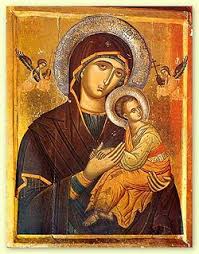
Karen Lebacqz’s Christian Viewpoint on Abortion
What Doctor Lebacqz has done for us is mandate the Christian community to provide compassionate support to a pregnant woman facing a crisis. Further, she has helped us to see that a crisis decision takes place within an already messy, even tragic, situation. Choosing the lesser of two evils is the only option. For this, we need communal support.
Here is my next question: granting that Karen Lebacqz aptly mandates the church community’s responsibility toward the woman in crisis, what about the government? Should we ask the state or federal government to behave like a supportive community of faith?
The next step is for the public theologian is to recommend what state and federal legislatures should enact, laws that set guardrails within which the humanness of the unborn is acknowledged and within which women and crisis are treated with compassion.
Patheos SR 5104. Abortion 4. Karen Lebacqz’s Christian Viewpoint on Abortion
Click here for previous posts. It appears I may need to change my mind in light of Karen Lebacqz’s Christian viewpoint on abortion.
SR 5101. Abortion 1. Are frozen embryos really children?
SR 5102. Abortion 2. Protecting Embryos in the Vatican
Patheos SR 5103. Abortion 3. Paul Lange on Abortion
▓

Ted Peters
Ted Peters pursues Public Theology at the intersection of science, religion, ethics, and public policy. Peters is an emeritus professor at the Graduate Theological Union, where he co-edits the journal, Theology and Science, on behalf of the Center for Theology and the Natural Sciences, in Berkeley, California, USA. His book, God in Cosmic History, traces the rise of the Axial religions 2500 years ago. He tackled the implications of genetic innovation for the future of humanity in Playing God? Genetic Determinism and Human Freedom? (Routledge, 2nd ed., 2002) as well as For the Love of Children: Genetic Technology and the Future of the Family (Westminster/John Knox 1997). His essays are collected in Science, Theology, and Ethics (Ashgate 2003) The Voice of Public Theology (ATF 2023).
Recently Ted edited AI and IA: Utopia or Extinction? (ATF 2019). Along with Arvin Gouw and Brian Patrick Green, he co-edited the new book, Religious Transhumanism and Its Critics hot off the press (Roman and Littlefield/Lexington, 2022). His fictional spy thriller, Cyrus Twelve, follows the twists and turns of a transhumanist plot.
Visit Ted Peters’ website, TedsTimelyTake.com.
▓
References
Alabama. LePage v. Center for Reproductive Medicine. Ruling, file:///C:/Users/Ted/OneDrive/Documents/My%20Research/2024%20Alabama%20Supreme%20Ct%20IVF%20text.pdf: Supreme Court of Alabama, 2024.
Lebacqz, Karen. “Abortion: Getting the Ethics Straight.” Logos 3, 1982: 47-60.
Peters, Ted, Karen Lebacqz, and and Gaymon Bennett. Sacred Cells? Why Christians Should Support Stem Cell Research. New York: Roman and Littlefield, 2008.
Women in Religion

About Ted Peters
Ted Peters pursues Public Theology at the intersection of science, religion, ethics, and public policy. Peters is an emeritus professor at the Graduate Theological Union, where he co-edits the journal, Theology and Science, on behalf of the Center for Theology and the Natural Sciences, in Berkeley, California, USA. His book, God in Cosmic History, traces the rise of the Axial religions 2500 years ago. He tackled the implications of genetic innovation for the future of humanity in Playing God? Genetic Determinism and Human Freedom? (Routledge, 2nd ed., 2002) as well as For the Love of Children: Genetic Technology and the Future of the Family (Westminster/John Knox 1997). His essays are collected in Science, Theology, and Ethics (Ashgate 2003) The Voice of Public Theology (ATF 2023). Recently Ted edited AI and IA: Utopia or Extinction? (ATF 2019). Along with Arvin Gouw and Brian Patrick Green, he co-edited the new book, Religious Transhumanism and Its Critics hot off the press (Roman and Littlefield/Lexington, 2022). His fictional spy thriller, Cyrus Twelve, follows the twists and turns of a transhumanist plot. Visit Ted Peters’ website, TedsTimelyTake.com. You can read more about the author here.
Previous Post
April 6, 2024
Anti-Christian Nationalist Progressives: Pamela Cooper-White
Next Post

April 10, 2024 Trump and Arizona on Abortion: Abortion 5
Browse Our Archives
Select a Category Afterlife America in Crisis Ancient Alien Apocalypse Art Artificial Intelligence Astrobiology Astrotheology Atheism Big History Buddhist Catholic Christian Nationalism Christmas Comparative Theology Death Ecology Ethics ETI Evangelical Evolution Existential Questions Free Will General Christian Hermeneutics Hindu https://www.patheos.com/blogs/allsetfree/2020/12/sins-we-need-to-talk-about/?utm_source=Newsletter&utm_medium=email&utm_campaign=Christians+For+a+Better+Christianity&utm_content=43&lct Interreligious Islam Jewish Justice Latter-Day Saints Literature Literature and Theology Lutheran Methodism Mormonism Nonreligious ontology Orthodox Pagam Prayer progressive Christian PT 6 Dignity Public Theology Race racial justice Religious Liberty Romance Satan Scapegoat Science & Religion Science and Religion social justice Spirituality SR 8 Transhumanism Systematic Theology Taoism Ted Peters UAP UFO Uncategorized War
Select a Month September 2026 August 2026 July 2026 June 2026 May 2026 April 2026 March 2026 February 2026 December 2025 November 2025 October 2025 September 2025 August 2025 July 2025 June 2025 May 2025 April 2025 March 2025 February 2025 January 2025 December 2024 November 2024 October 2024 September 2024 August 2024 July 2024 June 2024 May 2024 April 2024 March 2024 February 2024 January 2024 December 2023 November 2023 October 2023 September 2023 August 2023 July 2023 June 2023 May 2023 April 2023 March 2023 February 2023 January 2023 December 2022 November 2022 October 2022 September 2022 August 2022 July 2022 June 2022 May 2022 April 2022 March 2022 February 2022 January 2022 December 2021 November 2021 October 2021 September 2021
Follow Us!
TAKE THE
Religious Wisdom Quiz
What does Jesus say will set you free?
Select your answer to see how you score.
The truth Fame Money Power
Related posts from Public Theology

Why Public Theology Needs a Theology of Nature

America's 250th Birthday Gift: Civic Renewal

Do You Believe in UFOs? A Theologian's Answer.
Free Will and Christian Freedom TWO
TRENDING AT PATHEOS Progressive Christian

Can a Chatbot Touch Your Soul?
Can a chatbot offer genuine spiritual counsel? One conversation brought me to...

Religion and Politics: How Should We Then Live?
Two cultural axioms get repeated in polite company. Don't mix religion and...

7 Things We Get Wrong About Giving Thanks
It's a time of year when many of us turn to the...

Uncaging Truth: Spirituality Beyond Institutions
The Lost Connection: Why True Spirituality, Not Religion, Is the Key to...

Christ the King? Maybe We've Misunderstood the Crown
What do we mean when we say that Jesus is King? What...

Counter “Christ Is King” Nationalism with Christ THE...
Christ the King Sunday is an ideal time to address the heresy...
view all Progressive Christian blogs
Ad-Free & Subscriber Log-In Subscription Support
- About Us
- 2026 Calendar
- Videos
- Podcasts
- Library of World Religions
- Faith In Media Tracker
- Advertise With Us
- Write for Us
- Privacy Policy
- Terms of Service
- Do Not Sell My Data
- Contact Us
- Radiant Digital
- Manage Newsletter Subscriptions
- Unsubscribe From Notifications
- Sitemap
Copyright 2008-2026, Patheos, part of the Radiant Digital network of media brands. All rights reserved.
Subscription Support Ad-Free & Subscriber Log-In
Follow Patheos