
BuddhistCatholicContemplativeEvangelicalGeneral ChristianHinduJewishLatter-day SaintMuslimNew VisionsProgressive Christian
Beliefs
- Buddhist
- Catholic
- Contemplative
- Evangelical
- General Christian
- Hindu
- Jewish
- Latter-day Saint
- More Voices
- Muslim
- New Visions
- Pagan
- Progressive Christian
Topics
- Religion News
- Food and Religion
- Sports and Religion
- Religious Art
- Religious Music and Entertainment
- Religious Events
- History and Religion
- Style and Religion
- Politics and Religion
- Women in Religion
- Recreation Outdoors and Religion
- Business Finance and Religion
- Careers Workplace and Religion
- Education and Religion
- Family Parenting and Religion
- Health Fitness and Religion
- Home and Religion
- Relationships and Religion
- Technology and Religion
- Travel and Religion
Columnists
- Buddhist Columnists
- Business Finance and Religion Columnists
- Careers Workplace and Religion Columnists
- Catholic Columnists
- Contemplative Columnists
- Education and Religion Columnists
- Evangelists Columnists
- Family Parenting and Religion Columnists
- General Christian Columnists
- Health Fitness and Religion Columnists
- Hindu Columnists
- History and Religion Columnists
- Home and Religion Columnists
- Jewish Columnists
- More Voices Columnists
- Latter Day Columnists
- Muslim Columnists
- New Visions Columnists
- Nonreligious Columnists
- Pagan Columnists
- Politics and Religion Columnists
- Progressive Columnists
- Recreation Outdoors and Religion Columnists
- Relationships and Religion Columnists
- Religion News Columnists
- Religious Art Columnists
- Religious Events Columnists
- Religious Music and Entertainment Columnists
- Sports and Religion Columnists
- Style and Religion Columnists
- Technology and Religion Columnists
- Travel and Religion Columnists
- Women in Religion Columnists
Resource Library
- 2026 Calendar
- Library of World Religions
- The 100 Most Holy Places on Earth
- Patheos Answers
- Podcasts
- Videos
- Faith Leaders Database
- Anglican Episcopalian
- Bahai
- Baptist
- Buddhism
- Christianity
- Confucianism
- Eastern Orthodoxy
- Hinduism
- Holiness and Pentecostal
- ISKCON
- Islam
- Judaism
- Lutheran
- Methodist
- The Church of Jesus Christ of Latter-day Saints
- New Age
- Paganism
- Presbytarian and Reformed
- Protestantism
- Religion Behind the Scenes
- Roman Catholic
- Scientology
- Shia Islam
- Sikhism
- Sufism
- Sunni Islam
- Taoism
- Zen
- See all religions
Research Tools
 Ad-Free & Subscriber Log-In Subscription Support
Ad-Free & Subscriber Log-In Subscription Support
Follow Patheos 

- Trending:
- Forgiveness
- |
- Marriage
- |
- Consciousness
- |
- Death Penalty
- |
- Election
- |
- Halloween

- Home
- Progressive Christian
- Education and Religion
- Words and Worldview
Words and Worldview
Last updated on: August 21, 2023 at 10:29 am by Ted Peters
Words and Worldview 2023-08-21T10:29:35-07:00 Ted Peters
Patheos Explore the world's faith through different perspectives on religion and spirituality! Patheos has the views of the prevalent religions and spiritualities of the world.
Words and Worldview
 Words and worldviews come together like burgers and buns, or like cell phones and teenagers.
How many words do you know? I bet you know more words passively than you do actively. I bet you can recognize a few more words when you hear them than the number of words you include in the sentences you speak or write.
Now, I ask: is there a relationship between our words and worldviews? If we know more words are we likely to have a more comprehensive worldview?
How large is your vocabulary?
We can test your vocabulary. How? Simply count the different words you use in speech or, more easily, in what you write. We’re not talking about the total number of words. Rather, the total number of distinctive or unique words that appear in your utterances and scribbles.
Let’s talk in terms of English. Nobody in my neighborhood knows every word in the English language. I hear estimates range from 450,000 to 750,000 English words exist. I wonder how to count Gesundheit or c’est la vie. Mmmm? Does “dog food” count as one or two words? Mmmm?[1]
Some tests for vocabulary size are available. But I’m not confident in their accuracy. For historical figures, computers can count the individual words that appear in their speeches or writings. This numbers their active vocabulary.
Tested native English speakers
Babies don’t have any words.
A 4-year-old child can recognize 5000 words.
An 8-year-old child can recognize 10,000 words.
High school educated adult active: 10,000 words.
College educated adult active: 20,000 to 35,000 words.
ScienceDaily estimates recognition of 42,000 by adults
Foreign born test takers? average 4500 words.
One educator, Seldean Smith, reminds us that “words wield unparalleled power, the quest to master language and communication skills has always been a cornerstone of intellectual growth.”
Words and Worldview among US presidents
The Miller Center at the University of Virginia has cataloged 894 speeches of our U.S. presidents. This means data for active lexical measurement is available.
In 1823 President James Monroe promulgated the “Monroe Doctrine” with 11,000 different words. Similarly, the young President Teddy Roosevelt used 11,000 words in the 1902 address when he said, “Speak softly but carry a big stick.” Through the 20th century, the prize for the smallest vocabulary went to Lyndon Johnson. About 3000 words.

Former US President Donald J. Trump
But it has taken the 21st century produce the president with most miniscule vocabulary of any occupant of the White House, Donald J. Trump.
“An analysis of the President’s first 30,000 words uttered in office found Mr. Trump speaks at a third– to seventh-grade reading level – lower than any other President since 1929.”
According to Politico’s Jack Shafer, former President Trump…
“prefers to link short, blocky words into other short, blocky words to create short, blocky sentences that he then stacks into short, blocky paragraphs.”
Who leads our US presidents in lexical magnitude? Now, in my student years, I learned that the active vocabulary of President Woodrow Wilson was 140,000 words. But, as I searched around the internet, I’ve been unable to confirm this.
My hypothesis is that the more encyclopedic the vocabulary, the more inclusive the horizon of understanding. A presidential leader with enhanced words and worldview is more likely to perceive nuance, think profoundly, and render wise decisions.
Words and Worldview: The Question of Dignity
What is a worldview again? (Peters 2021). Canadian philosopher Charles Taylor tells us that “a world is something which people inhabit. It gives the shape of what they experience, feel, opine, see, etc.” (Taylor 2007, 557). Are words and worldview connected? Yes, indeed. The worldview we inhabit is largely constructed out of our vocabulary.
The connotation of our words affects our worldview. Let me try to demonstrate this.
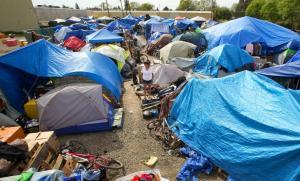 During the economic depression of the 1930s in the USA, men out-of-work rode the rails from city to city looking for employment. My grandmother would frequently take in such men. She gave them a bath and bed. Then she fed them well. One told another, and eventually a stream flowed to her front door.
These men hunting for work in that era were called, “the unemployed” or “indigent.” By the time I was growing up during the post war economic boom, unhoused persons became known as “hobos” or “bums.” They were unhoused not because of a lack of jobs. Rather, they were unhoused due to alcoholism and drug addiction. I can recall a song we sang as teenagers.
Cocaine Bill and Morphine Sue,
Strolling down the avenue.
Terms such as “bum” connoted that homelessness is a person’s own fault. If such a person would stay off the bottle or break the drug habit and get a job, then the problem would disappear.
A new explosion of homelessness took place during the years Ronald Regan become governor of California and then president of the United States. He withdrew government funding for mental health institutions and social services. Thousands of persons unable to care for themselves were suddenly dumped onto the streets. Tent cities under bridges sprung up.
The new word to describe them? “Homeless.” This particular term afforded a higher level of dignity to those living on the street. This term connoted that the sole problem street people have is lack of a roof over their head. It’s not a problem of substance abuse. It’s a housing availability problem.[2] This term elicited from the larger public a sense of compassion, a willingness to help.
Just recently, the vocabulary in America has changed again. Now the preferred term is “unhoused.” Unhoused people deserve public compassion and even governmental services. The United Nations dubs housing a human right.
Unhoused persons have dignity just like housed persons do. It is the task of the wider community to both clean up tent cities as well as attend to the physical health and mental health needs of those we wish to convert from unhoused to housed.
The connotative and qualitative difference between the word, “bum,” and the word, “unhoused,” is worthy of our attention here. “Bum” suggests that being unhoused is one’s own fault. “Unhoused” suggests that the street person is a victim of economic circumstances and worthy of society’s compassion. The first denies dignity. The second affirms dignity.
From the “N” word to “African American”
We might tell a parallel story perhaps more familiar. When I was a child growing up in an all-white Michigan neighborhood, my mother warned me not to use the “N” word.
“What should I say instead?” I asked.
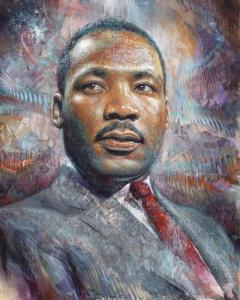
Martin Luther King Jr., painting by Paul Daniels
“Say, negro. It’s a lot nicer,” she replied. This turned out to be the term of choice for Martin Luther King, Jr., during the civil rights movement.
In 1968 the Black Power faction demanded a change from “negro” to “black.” Progressives adopted the new vocabulary immediately. Decades later, “black” was augmented with “African American.”
At each stage we witnessed a step up in the attribution of human dignity. A pluralistic society that welcomes Scandinavian Americans, Italian Americans, and African Americans lives within a worldview that understands human equality.
One takeaway from this discussion might be this: there’s more to worldview enrichment than merely expanding the quantity of words in one’s vocabulary.[3] Word choice plays a role in how one looks at surrounding realities. And one’s heart may influence word choice.
Even so, to be able to choose just the right word requires an array of options to choose from. A larger vocabulary will provide that array of options.
Words and Worldview in Hermeneutics
In my doctoral studies I swam in the deep waters of philosophical hermeneutics. My dissertation in part explicated the work of Heidelberg philosopher Hans-Georg Gadamer (1900-2002). One member of my committee who read that dissertation was Sorbonne philosopher Paul Ricoeur (1913-2005). Both of these sockdolagers proffered the view that language structures experience and guides thought.
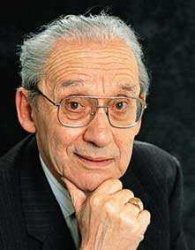
Paul Ricoeur (1913-2005)
The word comes first. The word is followed by thought. “The symbol gives rise to thought,” Ricoeur said repeatedly (Ricoeur 1967, 348). To say it another way, there are many thoughts you and I simply cannot think without the appropriate words.
As an obstreperous student, I sought to criticize Professor Ricoeur during his lectures. He was insisting that words come first and make thought possible.
At the time, my son Paul had just been born into my family. I studied this baby incessantly, watching every move. I thought I could perceive abstract thinking, awareness of his mommy even when the mommy was absent from the room.
Here was my logic. If baby Paul could imagine his mother even though she was not present in the room, this would count as abstract thinking. More. Baby Paul connected no name, “Mommy,” or noun, “mother,” with the absent person. Slam dunk, eh?
So, I would raise my hand during class and report ad nauseum what my baby had just done the night before.
Did I slip in a little bragging? You bet you.
Professor Ricoeur was not impressed. Nor did he take my criticisms seriously. Baby Paul, no matter how precocious, could not think about the Planet Saturn, he insisted.
? Because he did not have the word, “Saturn,” in his vocabulary. OK. I conceded this one.
To make matters worse, both Gadamer and Ricoeur contended that the sentence comes prior to the individual word. We don’t know the meaning of a word unless we grasp it within its sentence. Well, let’s not go there now. Or we’ll never return to our focus, namely, words and worldview.
Linguistic ontology?
There’s a bit more from hermeneutics to add here. The 20th century granddaddy of hermeneutics was Martin Heidegger (1889-1976) who held that “language is the house of being.” Do we have an ontology going here?
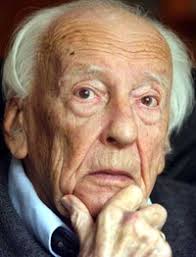
Hans-Georg Gadamer (1900-2002)
Gadamer developed a linguistic ontology, according to which our language provides the indispensable medium for life-experience itself. [Sprachlichkeit als Medium der hermeneutischen Erfahrung] (Gadamer 1965, 361). Words belong to the very phenomena we experience.
Words mediate experience while they give shape to our thinking. This means, among other things, that our worldview [Weltanschauung] is linguistically constructed. Words and worldview come together in a single package.
Although the sheer number of words in a person’s vocabulary is not enough to determine depth of insight or wisdom in judgment, the variety of words provides options to be incorporated into one’s deliberations. Words provide building materials for worldviews. An architect whose supplier could deliver only three thousand bricks would be restricted from building a mansion requiring combinations of bricks, granite cladding, travertine pedestals, and perhaps carved marble decor.
Are there any theological implications?
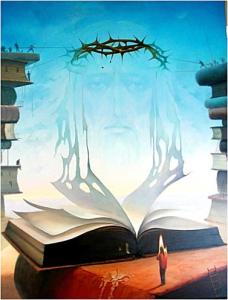
“Word of God” by Bregeda, St. Petersburg, Russia
Philosopher Paul Riceour was a closet Calvinist and Barthian. He contended that you and I would never learn to talk if someone else—our parents in most cases—would talk to us first. It takes a word to elicit a word. We don’t talk until we’ve been talked to.
Now, you’ve probably noticed how one brand of evolutionary biologist marks the threshold from pre-hominid to hominid as language. We humans are linguistic beings, contends Terrance Deacon at the University of California (Deacon 2012). That’s what distinguishes our species from amoebas and orangutans.
This leads to a puzzle. Who spoke first to the human race so that we became speakers? Ricoeur thought that this was God. It was the introduction of God’s Word into human evolution that elicited the entire linguistic capacity of our ancestors and progenitors.
We know from Genesis 1 and John 1 that God’s Word is creative. Might our daily linguistic experience testify to this creative divine Word?
Conclusion
Please don’t think that I’m advertising for one or another vocabulary building scheme. Rather, I’m simply trying to think through the relationship between words and worldview.
I must confess that I have not yet taken a test to measure the size of my vocabulary. I can’t give you a good reason why.
Even so, I believe my hypothesis still holds merit: the more encyclopedic our vocabulary, the more inclusive will be our horizon of understanding. If words and worldview connect as I have described, it follow that if we pursue a larger lexicon we will be more likely to perceive nuance, think profoundly, and render wise decisions.
Patheos PT 3106 Words and Worldview
—–
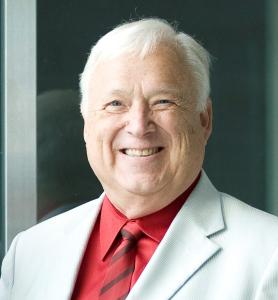
Ted Peters
Ted Peters (Ph.D., University of Chicago) is a public theologian directing traffic at the intersection of science, religion, and ethics. Peters is an emeritus professor at the Graduate Theological Union, where he co-edits the journal, Theology and Science, on behalf of the Center for Theology and the Natural Sciences, in Berkeley, California, USA. He recently co-edited Astrobiology: Science, Ethics, and Public Policy (Scrivener 2021) as well as Astrotheology: Science and Theology Meet Extraterrestrial Intelligence (Cascade 2018). He also co-edited Religious Transhumanism and Its Critics (Lexington 2022) and The CRISPR Revolution in Science, Ethics, and Religion (Praeger 2023). Peters is author of Playing God: Genetic Determinism and Human Freedom (Routledge, 2nd ed, 2002) and The Stem Cell Debate (Fortress 2007). See his blogsite [https://www.patheos.com/blogs/publictheology/] and his website [TedsTimelyTake.com].
Notes
[1] The National Library of Medicine database includes an entry from Frontiers in Psychology (2016) on our topic that provides more technical detail [doi: 10.3389/fpsyg.2016.01116].
“Based on an analysis of the literature and a large-scale crowdsourcing experiment, we estimate that an average 20-year-old native speaker of American English knows 42,000 lemmas and 4,200 non-transparent multiword expressions, derived from 11,100 word families. The numbers range from 27,000 lemmas for the lowest 5% to 52,000 for the highest 5%. Between the ages of 20 and 60, the average person learns 6,000 extra lemmas or about one new lemma every 2 days. The knowledge of the words can be as shallow as knowing that the word exists. In addition, people learn tens of thousands of inflected forms and proper nouns (names), which account for the substantially high numbers of ‘words known’ mentioned in other publications.”
[2] Writing in the Atlantic, Jerusalem Demsas tells us about “the Root Cause of the Homelessness Crisis.” What is it? Housing is too expensive.
“Thirty percent of the American homeless population and 50 percent of its unsheltered population live in California, more than 170,000 people total. Homelessness is primarily a function of the broader housing-unaffordability crisis, which in turn is primarily a function of how difficult local governments have made building new housing in the places that need it the most.”
[3] “As language enthusiasts and scholars know, vocabulary is not a monolithic entity but rather a tapestry woven from various threads. It encompasses a range of dimensions beyond mere word quantity, emphasizing the quality and versatility of one’s lexicon. These dimensions include: (1) depth of vocabulary; (2) contextual understanding; and (3) specialized terminology.”
Works Cited
Deacon, Terrence. 2012. Incomplete Nature: How Mind Emerged from Nature. New York: W W Norton.
Gadamer, Hans-Georg. 1965. Wahrheit und Methode. Tubingen: J.C.B. Mohr (Paul Siebeck).
Peters, Ted. 2021. “Public Theology, Discourse Clarification, and Worldview Construction.” Theology and Science 19:1 1-4; DOI.org/10.1080/14746700.2020.1869672 .
Ricoeur, Paul. 1967. The Symbolism of Evil. Boston: Beacon.
Taylor, Charles. 2007. A Secular Age. Cambridge MA: Harvard University Press.
More Voices
Education and Religion

About Ted Peters
Ted Peters (Ph.D., University of Chicago) is a public theologian directing traffic at the intersection of science, religion, and ethics. Peters is an emeritus professor at the Graduate Theological Union, where he co-edits the journal, Theology and Science, on behalf of the Center for Theology and the Natural Sciences, in Berkeley, California, USA. He recently co-edited Astrobiology: Science, Ethics, and Public Policy (Scrivener 2021) as well as Astrotheology: Science and Theology Meet Extraterrestrial Intelligence (Cascade 2018). He also co-edited Religious Transhumanism and Its Critics (Lexington 2022) and The CRISPR Revolution in Science, Ethics, and Religion (Praeger 2023). Peters is author of Playing God: Genetic Determinism and Human Freedom (Routledge, 2nd ed, 2002) and The Stem Cell Debate (Fortress 2007). See his blogsite [https://www.patheos.com/blogs/publictheology/] and his website [TedsTimelyTake.com]. You can read more about the author here.
Previous Post

August 3, 2023
Are UFOs demonic?
Next Post

August 7, 2023 UFOs and Aliens at the Vatican
Browse Our Archives
Select a Category Afterlife America in Crisis Ancient Alien Apocalypse Art Artificial Intelligence Astrobiology Astrotheology Atheism Big History Buddhist Catholic Christian Nationalism Christmas Comparative Theology Death Ecology Ethics ETI Evangelical Evolution Existential Questions Free Will General Christian Hermeneutics Hindu https://www.patheos.com/blogs/allsetfree/2020/12/sins-we-need-to-talk-about/?utm_source=Newsletter&utm_medium=email&utm_campaign=Christians+For+a+Better+Christianity&utm_content=43&lct Interreligious Islam Jewish Justice Latter-Day Saints Literature Literature and Theology Lutheran Methodism Mormonism Nonreligious ontology Orthodox Pagam Prayer progressive Christian PT 6 Dignity Public Theology Race racial justice Religious Liberty Romance Satan Scapegoat Science & Religion Science and Religion social justice Spirituality SR 8 Transhumanism Systematic Theology Taoism Ted Peters UAP UFO Uncategorized War
Select a Month September 2026 August 2026 July 2026 June 2026 May 2026 April 2026 March 2026 February 2026 December 2025 November 2025 October 2025 September 2025 August 2025 July 2025 June 2025 May 2025 April 2025 March 2025 February 2025 January 2025 December 2024 November 2024 October 2024 September 2024 August 2024 July 2024 June 2024 May 2024 April 2024 March 2024 February 2024 January 2024 December 2023 November 2023 October 2023 September 2023 August 2023 July 2023 June 2023 May 2023 April 2023 March 2023 February 2023 January 2023 December 2022 November 2022 October 2022 September 2022 August 2022 July 2022 June 2022 May 2022 April 2022 March 2022 February 2022 January 2022 December 2021 November 2021 October 2021 September 2021
Follow Us!
TAKE THE
Religious Wisdom Quiz
What character trait is praised in the Parable of the Good Samaritan?
Select your answer to see how you score.
Selfishness Deceit Pride Compassion
Related posts from Public Theology
Our Confession of Evangelical Conviction: the New Barmen?
Anti-Anti-Christian Nationalism, Part 1
Project 2025 on Christian Nationalism
No Threat of Christian Nationalism
TRENDING AT PATHEOS Progressive Christian

What Being a Modern-Day Apostle Means to Me
In my last column, I discussed the ins and outs of modern-day...

Did Ancient China Once Worship the God of...
Across human history, a common thread weaves through the origins of the...

Love Your Neighbor – Including Earth-Kin: Lev. 19,...
God’s command to love your neighbor means acting in an ethical and...

Lead a Church Study of “Jesus and Lao...
Guest writer Jack Thomas (The Irreverent Reverend) reflects on leading his church...

Pastoral Wisdom for Responding to Sermon Pushback
Getting sermon pushback on your social justice sermon? Learn practical, Proverbs-based strategies...

Principles for Understanding the Apostolic Ministry Today
Whenever people discover that my formal ministry title is "apostle," as in...
view all Progressive Christian blogs
Ad-Free & Subscriber Log-In Subscription Support
- About Us
- 2026 Calendar
- Videos
- Podcasts
- Library of World Religions
- Faith In Media Tracker
- Advertise With Us
- Write for Us
- Privacy Policy
- Terms of Service
- Do Not Sell My Data
- Contact Us
- Radiant Digital
- Manage Newsletter Subscriptions
- Unsubscribe From Notifications
- Sitemap
Copyright 2008-2026, Patheos. All rights reserved.
Subscription Support Ad-Free & Subscriber Log-In
Follow Patheos