
BuddhistCatholicContemplativeEvangelicalGeneral ChristianHinduJewishLatter-day SaintMuslimNew VisionsProgressive Christian
Beliefs
- Buddhist
- Catholic
- Contemplative
- Evangelical
- General Christian
- Hindu
- Jewish
- Latter-day Saint
- More Voices
- Muslim
- New Visions
- Pagan
- Progressive Christian
Topics
- Religion News
- Food and Religion
- Sports and Religion
- Religious Art
- Religious Music and Entertainment
- Religious Events
- History and Religion
- Style and Religion
- Politics and Religion
- Women in Religion
- Recreation Outdoors and Religion
- Business Finance and Religion
- Careers Workplace and Religion
- Education and Religion
- Family Parenting and Religion
- Health Fitness and Religion
- Home and Religion
- Relationships and Religion
- Technology and Religion
- Travel and Religion
Columnists
- Buddhist Columnists
- Business Finance and Religion Columnists
- Careers Workplace and Religion Columnists
- Catholic Columnists
- Contemplative Columnists
- Education and Religion Columnists
- Evangelists Columnists
- Family Parenting and Religion Columnists
- General Christian Columnists
- Health Fitness and Religion Columnists
- Hindu Columnists
- History and Religion Columnists
- Home and Religion Columnists
- Jewish Columnists
- More Voices Columnists
- Latter Day Columnists
- Muslim Columnists
- New Visions Columnists
- Nonreligious Columnists
- Pagan Columnists
- Politics and Religion Columnists
- Progressive Columnists
- Recreation Outdoors and Religion Columnists
- Relationships and Religion Columnists
- Religion News Columnists
- Religious Art Columnists
- Religious Events Columnists
- Religious Music and Entertainment Columnists
- Sports and Religion Columnists
- Style and Religion Columnists
- Technology and Religion Columnists
- Travel and Religion Columnists
- Women in Religion Columnists
Resource Library
- 2026 Calendar
- Library of World Religions
- The 100 Most Holy Places on Earth
- Patheos Answers
- Podcasts
- Videos
- Faith Leaders Database
- Anglican Episcopalian
- Bahai
- Baptist
- Buddhism
- Christianity
- Confucianism
- Eastern Orthodoxy
- Hinduism
- Holiness and Pentecostal
- ISKCON
- Islam
- Judaism
- Lutheran
- Methodist
- The Church of Jesus Christ of Latter-day Saints
- New Age
- Paganism
- Presbytarian and Reformed
- Protestantism
- Religion Behind the Scenes
- Roman Catholic
- Scientology
- Shia Islam
- Sikhism
- Sufism
- Sunni Islam
- Taoism
- Zen
- See all religions
Research Tools
 Ad-Free & Subscriber Log-In Subscription Support
Follow Patheos 

- Trending:
- Advent
- |
- Forgiveness
- |
- Thanksgiving
- |
- Election
- |
- Seasonal Holidays
- |
- Marriage

- Home
- Progressive Christian
- History and Religion
- 2023 Parliament of the World’s Religions: Ultimate Unity
2023 Parliament of the World’s Religions: Ultimate Unity
Last updated on: August 21, 2023 at 10:27 am by Ted Peters
2023 Parliament of the World’s Religions: Ultimate Unity 2023-08-21T10:27:58-07:00 Ted Peters
Patheos Explore the world's faith through different perspectives on religion and spirituality! Patheos has the views of the prevalent religions and spiritualities of the world.
Ultimate Unity
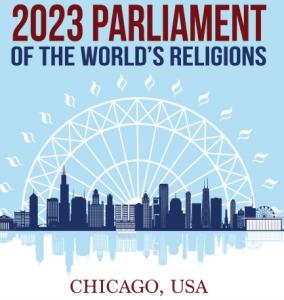
2023 Parliament of the World’s Religions
It was 1893, during the first Parliament of World Religions held in Chicago, that Swami Vivikananda (1863-1902) brought the Ramakrishna Movement first to the shores of Lake Michigan and then as the Vedanta Society to all of America. Vivikananda taught religious tole therance plus more. He taught a sense of unity within plurality (Vivikananda, 1893). That same sense is alive and well in 2023 during 130th year anniversary meeting in Chicago, from where I write this blog post.
The parliament theme is “Defending Freedom and Human Rights.” This is a meeting for progressives within a variety of religious contexts, not tradtionalists.
All is one in Brahman at the Parliament of World Religions.

Fortunately, I bumped into Swami Vivikananda. He has not aged at bit since 1893.
In an earlier Patheos post, “Evolution and Involution in Vedic Science,” I gave Vivikananda some attention due to his contribution to today’s curious mixing of Hindu theology with Western science. Important here is the swami’s metaphysical commitment to unity beyond duality. Attuned to Shankara’s Advaida (non-dualism), Vivekananda held that there is…
“…one substance, manifesting in different ways and in various forms; the one life that runs through all like a continuous chain, of which all these various forms represent the links, link after link, extending almost infinitely, but of the same one chain. This is what is called evolution …. There is one thing more, which the ancients perceived, but which in modern times is not yet so clearly perceived, and that is involution.” (Vivekananda 1994, 2:227).
Where does involution end up? Right where it stared. That’s with Brahman, the source and destiny of all that is. Every religious tradition, whether it’s proponents know it or not, are ineluctably Brahman worshippers in essence. Pluralists such as John Hick have called it “the Real.” If reality is ultimately one, then we religious persons on Earth should ethically exemplify that oneness.
Accordingly, an inter-religious spirituality can absorb, interpret, and celebrate religious symbols that derive from separate histories because they always return our attention to Brahman, to the Real. Note the collection of symbols on the stole worn here by my Berkeley friend, Kala Perkins.

Kala Perkins with stole of multiple religious symbols.
The ultimately Real: is it personal or supra-personal?
We have a theological problem here. Religious studies scholars frequently follow Paul Tillich in averring that religious symbols connect us spiritually with what is ultimate. Symbols bare ultimate valence. I employ the term “confessional universalism” to describe those symbols systems that orient the believer around what is ultimately real. I’ve coined the term, “supra-confessional universalism,” to describe philosophers of “the Real” who themselves don’t confess belief in the real through the symbols they study.

The Graduate Theological Union fosters multi-religious cooperation presuming ultimate unity
The symbols for God shared by Jews, Christians, and Muslims, imply that ultimate reality is personal. For Christians, the personhood of Father, Son, and Holy Spirit is ultimate. There is no reality beyond these these three persons.
But the symbol, Brahman, like Tillich’s “Ground of Being,” is beyond personality. Because personality implies differentiation, a reality beyond differentiation cannot itself be personal. Yet, for both Tillich and Vivekananda, Brahman expresses itself in the personal dimesnions of differentiated actuality. Personhood is one step removed from the really Real.
So, I’ve become a tad uneasy with supra-confessional universalists who substitute their abstract notion of “the Real” for a symbol of the ultimate, such as “Brahman.” I’m a bit befuddled that one could believe in either an abstract “the Real” or sombody else’s symbol for the ultimate. Yet, before my very eyes, I see it among these individuals. I see many of us milling around the 2023 Parliament of the World’s Religions drawing upon a variety of symbol systems cooperating together on behalf of freedom and human rights. Does the oneness of the Real manifest itself ethically through the ideal of the unity of the human race? Or even the unity of Earth’s biosphere?
Conclusion
Actually, I have no conclusion. More exciting adventures at the 2023 Parliament of the World’s Religions to come,.
Here’s my series of posts from the Parliament.
2023 Parliament of the World’s Religions: Ultimate Unity
2023 Parliament of the World’s Religions: Planetary Hugs
2023 Parliament of the World’s Religions: How Big is God?
2023 Parliament of the World’s Religions: Food Insecurity
2023 Parliament of the World’s Religions: Gaia’s Wizard
2023 Parliament of the World’s Religions: Ultimate Unity
▓
Ted Peters
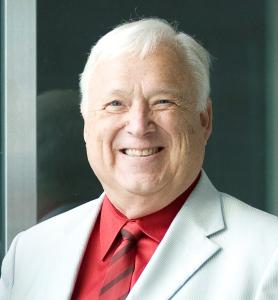
Ted Peters is Distinguished Research Professor Emeritus of Symstematic Theology and Ethics at Pacific Lutheran Theological Seminary and the Graduate Theological Union. Along with Robert John Russell he co-edits the journal, Theology and Science, published by CTNS. He is author of Playing God? Genetic Determinism and Human Freedom (Routledge, 2nd ed., 2002) plus a single volume systematic theology, God—The World’s Future (Fortress, 3rd ed., 2015). Along with evolutionary virologist Martinez Hewlett, he has co-authored three books on the evolution controversy. Peters’ edited and co-edited books such as AI and IA: Utopia or Extinction? (ATF 2019) and The CRISPR Revolution (forthcoming Praeger 2023) explore technological and ethical scenarios that alert us to the need for public policy formulation before matters get out of hand. Ted has just published a new book, The Voice of Public Theology, with ATF (2023). Visit his website, TedsTimelyTake.com and his Patheos blog site on Public Theology.
▓
Bibliography
Vivekananda, Swami, 1893. 1893 Speech at the First Parlaiment of World Religions. Chicago: Chicago Art Institute.
—, 1994. The Complete Works of Swami Vivekananda, 8 Volumes. Calcutta: Advaita Ashram.
New Visions
History and Religion
'Parliament of the World’s Religions

About Ted Peters
Ted Peters is Distinguished Research Professor Emeritus of Symstematic Theology and Ethics at Pacific Lutheran Theological Seminary and the Graduate Theological Union. Along with Robert John Russell he co-edits the journal, Theology and Science, published by CTNS. He is author of Playing God? Genetic Determinism and Human Freedom (Routledge, 2nd ed., 2002) plus a single volume systematic theology, God—The World’s Future (Fortress, 3rd ed., 2015). Along with evolutionary virologist Martinez Hewlett, he has co-authored three books on the evolution controversy. Peters’ edited and co-edited books such as AI and IA: Utopia or Extinction? (ATF 2019) and The CRISPR Revolution (forthcoming Praeger 2023) explore technological and ethical scenarios that alert us to the need for public policy formulation before matters get out of hand. Ted has just published a new book, The Voice of Public Theology, with ATF (2023). Visit his website, TedsTimelyTake.com and his Patheos blog site on Public Theology. You can read more about the author here.
Previous Post

August 7, 2023
UFOs and Aliens at the Vatican
Next Post
August 16, 2023 2023 Parliament of the World's Religions: How Big is God?
Browse Our Archives
Select a Category Afterlife America in Crisis Ancient Alien Apocalypse Art Artificial Intelligence Astrobiology Astrotheology Atheism Big History Buddhist Catholic Christian Nationalism Christmas Comparative Theology Death Ecology Ethics ETI Evangelical Evolution Existential Questions Free Will General Christian Hermeneutics Hindu https://www.patheos.com/blogs/allsetfree/2020/12/sins-we-need-to-talk-about/?utm_source=Newsletter&utm_medium=email&utm_campaign=Christians+For+a+Better+Christianity&utm_content=43&lct Interreligious Islam Jewish Justice Latter-Day Saints Literature Literature and Theology Lutheran Methodism Mormonism Nonreligious ontology Orthodox Pagam Prayer progressive Christian PT 6 Dignity Public Theology Race racial justice Religious Liberty Romance Satan Scapegoat Science & Religion Science and Religion social justice Spirituality SR 8 Transhumanism Systematic Theology Taoism Ted Peters UAP UFO Uncategorized War
Select a Month September 2026 August 2026 July 2026 June 2026 May 2026 April 2026 March 2026 February 2026 December 2025 November 2025 October 2025 September 2025 August 2025 July 2025 June 2025 May 2025 April 2025 March 2025 February 2025 January 2025 December 2024 November 2024 October 2024 September 2024 August 2024 July 2024 June 2024 May 2024 April 2024 March 2024 February 2024 January 2024 December 2023 November 2023 October 2023 September 2023 August 2023 July 2023 June 2023 May 2023 April 2023 March 2023 February 2023 January 2023 December 2022 November 2022 October 2022 September 2022 August 2022 July 2022 June 2022 May 2022 April 2022 March 2022 February 2022 January 2022 December 2021 November 2021 October 2021 September 2021
Follow Us!
TAKE THE
Religious Wisdom Quiz
Which Psalm is the longest chapter in the Bible?
Select your answer to see how you score.
Psalm 50 Psalm 1 Psalm 23 Psalm 119
Related posts from Public Theology
Pope Francis vs Jesus as the Only Way,...
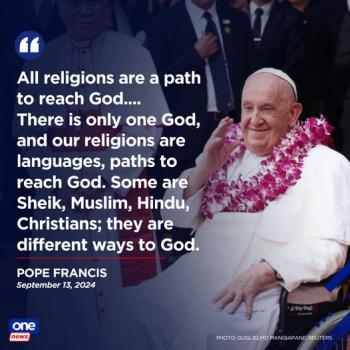
Pope Francis vs Jesus as the Only Way,...


Are frozen embryos really children? Abortion 1
TRENDING AT PATHEOS Progressive Christian

The Secret behind A Charlie Brown Thanksgiving
Do you know the secret behind A Charlie Brown Thanksgiving? Sparky was...

Bridging the Gap Between God and Man
From Far Off to the Ultimate Embrace “God is a Spirit: and...

Let Matthew 25 Guide You to a Greater...
With the crisp feel of fall in the air, our minds quickly...

Can a Chatbot Touch Your Soul?
Can a chatbot offer genuine spiritual counsel? One conversation brought me to...

Religion and Politics: How Should We Then Live?
Two cultural axioms get repeated in polite company. Don't mix religion and...

7 Things We Get Wrong About Giving Thanks
It's a time of year when many of us turn to the...
view all Progressive Christian blogs
Ad-Free & Subscriber Log-In Subscription Support
- About Us
- 2026 Calendar
- Videos
- Podcasts
- Library of World Religions
- Faith In Media Tracker
- Advertise With Us
- Write for Us
- Privacy Policy
- Terms of Service
- Do Not Sell My Data
- Contact Us
- Radiant Digital
- Manage Newsletter Subscriptions
- Unsubscribe From Notifications
- Sitemap
Copyright 2008-2026, Patheos, part of the Radiant Digital network of media brands. All rights reserved.
Subscription Support Ad-Free & Subscriber Log-In
Follow Patheos