
BuddhistCatholicContemplativeEvangelicalGeneral ChristianHinduJewishLatter-day SaintMuslimNew VisionsProgressive Christian
Beliefs
- Buddhist
- Catholic
- Contemplative
- Evangelical
- General Christian
- Hindu
- Jewish
- Latter-day Saint
- More Voices
- Muslim
- New Visions
- Pagan
- Progressive Christian
Topics
- Religion News
- Food and Religion
- Sports and Religion
- Religious Art
- Religious Music and Entertainment
- Religious Events
- History and Religion
- Style and Religion
- Politics and Religion
- Women in Religion
- Recreation Outdoors and Religion
- Business Finance and Religion
- Careers Workplace and Religion
- Education and Religion
- Family Parenting and Religion
- Health Fitness and Religion
- Home and Religion
- Relationships and Religion
- Technology and Religion
- Travel and Religion
Columnists
- Buddhist Columnists
- Business Finance and Religion Columnists
- Careers Workplace and Religion Columnists
- Catholic Columnists
- Contemplative Columnists
- Education and Religion Columnists
- Evangelists Columnists
- Family Parenting and Religion Columnists
- General Christian Columnists
- Health Fitness and Religion Columnists
- Hindu Columnists
- History and Religion Columnists
- Home and Religion Columnists
- Jewish Columnists
- More Voices Columnists
- Latter Day Columnists
- Muslim Columnists
- New Visions Columnists
- Nonreligious Columnists
- Pagan Columnists
- Politics and Religion Columnists
- Progressive Columnists
- Recreation Outdoors and Religion Columnists
- Relationships and Religion Columnists
- Religion News Columnists
- Religious Art Columnists
- Religious Events Columnists
- Religious Music and Entertainment Columnists
- Sports and Religion Columnists
- Style and Religion Columnists
- Technology and Religion Columnists
- Travel and Religion Columnists
- Women in Religion Columnists
Resource Library
- 2026 Calendar
- Library of World Religions
- The 100 Most Holy Places on Earth
- Patheos Answers
- Podcasts
- Videos
- Faith Leaders Database
- Anglican Episcopalian
- Bahai
- Baptist
- Buddhism
- Christianity
- Confucianism
- Eastern Orthodoxy
- Hinduism
- Holiness and Pentecostal
- ISKCON
- Islam
- Judaism
- Lutheran
- Methodist
- The Church of Jesus Christ of Latter-day Saints
- New Age
- Paganism
- Presbytarian and Reformed
- Protestantism
- Religion Behind the Scenes
- Roman Catholic
- Scientology
- Shia Islam
- Sikhism
- Sufism
- Sunni Islam
- Taoism
- Zen
- See all religions
Research Tools
 Ad-Free & Subscriber Log-In Subscription Support
Ad-Free & Subscriber Log-In Subscription Support
Follow Patheos 

- Trending:
- Forgiveness
- |
- Marriage
- |
- Consciousness
- |
- Death Penalty
- |
- Election
- |
- Halloween

- Home
- Progressive Christian
- Politics and Religion
- MAGA and Moral Decline
MAGA and Moral Decline
Last updated on: June 16, 2023 at 6:55 am by Ted Peters
MAGA and Moral Decline 2023-06-16T06:55:02-07:00 Ted Peters
Patheos Explore the world's faith through different perspectives on religion and spirituality! Patheos has the views of the prevalent religions and spiritualities of the world.
MAGA and Moral Decline

MAGA and Moral Decline?
PT 3103 MAGA, Moral Decline, and Public Theology
What does MAGA mean?
MAGA means “Make America Great Again”.
Well, hasn’t America always been great? Maybe back at the beginning. Back when the Declaration of Independence was signed in 1976. But America has since fallen into the hands of evildoers. Who are those evil doers? The deep state. Progressive liberals. Politically correct sissies. Anyone who would put someone other than a white man in the White House.
During the 2016 presidential election cycle, for twenty-five dollars you could buy your very own MAGA cap from the Donald Trump campaign. Candidate Donald Trump borrowed the slogan, “Make America Great Again,” from former candidates for this office such as Ronald Reagan and Bill Clinton.
Please take note of the three-stage structure of this campaign slogan. First, America was great at its beginning. Second, America fell into sin, into estrangement from its great beginning. Third, we now need to elect a messianic savior who will return our fallen nation to its original harmony, power and glory. Who might that messianic savior be? Here’s Donald Trump’s answer: ““Nobody knows the system better than me, which is why I alone can fix it.”

MAGA and Moral Decline
This three-part narrative is what political philosopher Eric Voegelin (1901-1985) called the “gnostic redeemer myth.”[1] It’s the powerful myth that carries would-be tyrants into power (Voegelin). Just recall Adolf Hitler’s Third Reich, and I think you’ll begin to understand the assignment.
Regardless of the number of MAGA hats we see at Trump political rallies, let’s ask the question: is America really in moral decline? And also the question: how does the perception of moral decline precipitate the justification of tyranny?
Is America in moral decline or not?
In an earliter post we asked: is America in religious decline? Here we ask: Is America in moral decline? Is our planetary society in moral decline? Or not? How might one objectively discern the accuracy of such a claim?
Let’s distinguish between the factual claim that America is in moral decline from the perception that such a moral decline is taking place. Might there be a reason that one might want want to perceive that America is in moral decline, whether it’s true or not?
Do you understand the assignment yet?
Yes, America is in Moral Decline!
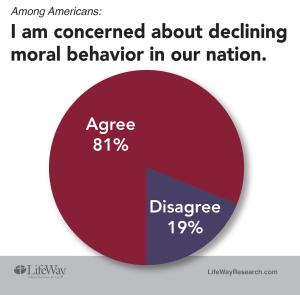
Moral Decline? Source: Lifeway
Yes, America is in Moral Decline contends the online Ethical Sage.
“Mass shootings, racial hatred, social injustice, incivility, fraud, and White Supremacy are just a few of the examples of the moral decay in America. These extremes forms of behavior have occurred because of a decline in morality and ethical behavior.”
Note how this complaint references both moral standards and ethical behavior.
Yes, America is in moral decline answers Rabbi Efram Goldberg.
“Moral decline can be seen in the deterioration in civility, the increase in litigation, the lack of integrity, out-of-wedlock births and breakup of families, vulgarity, promiscuity, and immodesty. As quickly as we have progressed technologically, medically and scientifically, morally we are rapidly going backwards, confused about basic fundamental values and institutions that much more primitive people understood clearly.”
Yes, America is in moral decline say respondents to a Gallup Poll.
A record-high 50% of Americans rate the overall state of moral values in the U.S. as “poor,” and another 37% say it is “only fair.” Just 1% think the state of moral values is “excellent” and 12% “good.”
No, America is not in moral decline!
No, America is not in moral decline, say two scientists, Adam Mastroianni at Columbia and Daniel Gilbert at Harvard. Writing in the distinguished journal, Nature, these two claim that the idea of moral decline is in fact an “illusion.” Contrary to this illusion, what is factually true is that American society is as full of kindness and caring as it has always been. This applies globally as well as nationally.
“On average, modern humans treat each other far better than their forebears ever did—which is not what one would expect if honesty, kindness, niceness and goodness had been decreasing steadily, year after year, for millennia.”
How can Mastroianni and Gilbert declare that this is factual? What is their scientific method? In brief, these two researchers did a survey of surveys. Evidently, their surveying revealed that moral conduct is not in decline. And, in addition, it revealed that people generally believe that moral decline is taking place. Both.
Now, I will not evaluate nor challenge the credibility of this scientific claim. No critique. I would rather take as axiomatic that that the claim—moral decline is an illusion—is confirmed or at least confirmable. Then, I would like to ask: why? Why might you or I be inclined to believe in moral decline?
Is there a shallow sociological explanation? Or might there be a deeper philosophical if not theological interpretation to be uncovered here? Might the public theologian offer something to the discourse on this topic?
Do you understand the assignment yet?
Why do we want to believe morality is declining?
Mastroianni and Gilbert proffer two reasons to explain this widespread illusion. The first is the biased exposure effect. Accordingly, we as individuals tend to look for negative information more frequently than positive information. And, we also pay more attention to that negative information. So, media “disproportionately focus” on negative rather than positive behaviors.
Second, the biased memory effect helps explain why we see moral decline when it’s not actually there. Accordingly, events from the past, even negative events, are remembered more positively. Perhaps this is due to their weakening emotional impact.
Just a tad more detail on the biased memory effect.
“Specifically, biased exposure to information about current morality may make the present seem like a moral wasteland, biased memory for information about past morality may make the past seem like a moral wonderland and when people in a wasteland remember being in a wonderland, they may naturally conclude that the landscape has changed.”
This might be important. Is it our natural propensity to remember the past as the Garden of Eden and think of the present as a fall from that Eden? Is that what these scientists are telling us? Have we begun to wade in the shallows of the otherwise deep waters of myth?
The Three Chapter Redeemer Myth
The illusion of moral decline plays into the hands of would-be autocrats who promulgate a narrative that feeds their hunger for popularity and power. They gain their popularity and power by promising a return to the moral paradise from which we have declined. Allegedly declined.
When myth bleeds into history, according to philosopher Eric Voegelin, would-be tyrants re-write history according to the illusion of moral decline (Voegelin). The typical narrative goes like this.
- Back at the beginning, our ancestors lived in an Edenic paradise.
- Then, the world fell into sin and became alienated from that paradise.
- Now, under the leadership of an emerging charismatic leader, we hear the promise of return and renewal.
The science-as-savior myth of modernity, for example, finds the equivalent of Eden among the philosophers of ancient Athens. Western civilization then fell into superstitious religion during the “dark ages” of Christendom. But the 18th Century Age of Reason, the Enlightenment, has brought us into the epoch of salvific science, technology, and democracy. This myth of modernity bolsters today’s self-appointed redeemers who depict science as our savior. What we need is “international science” to “be our salvation,” astrophysicist Martin Reese has recently declared.
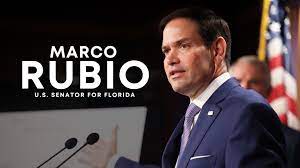 Contemporary political rhetoric, for a second example, cashes in on the virile potency of the three-stage redeemer myth. Florida Senator Marco Rubio just published—pay attention to this title—Decades of Decadence: How our spoiled elites blew America’s inheritance of liberty, security, and prosperity (Rubio). In the beginning, says Rubio, America lived in an Eden of liberty, security, and prosperity. Then, America fell into sin–into the claws of an elite progressive liberalism–and lost its Eden. When did this fall take place? During or following the presidency of Ronald Reagan (1981-1989).
“Rather than shoring up our manufacturing capacity, businesses exported jobs to places like Mexico and China, leaving many American workers without the means to provide for their families. Rather than placing our trust in institutions, we took them for granted and began carelessly destroying those institutions. And rather than enacting policies that put key values such as family and community at their center, we came to focus on consumption above all else. Americans, who see themselves as workers, fathers, and citizens, came to be viewed by policymakers as simply consumers who bought products—nothing more….[Today’s] elites say we don’t need traditional families anymore. The elites say you can find everything you need online.” (Rubio Kindle xii-xiii)
During the Reagan years, 20,000 to 30,000 high paying US manufacturing jobs per month were exported to China, Mexico, and elsewhere. Why? Because a principle of Reaganomics was to drive down the price of labor within the US while cutting taxes on large corporations. University of Chicago’s Milton Frieman provided the brains behind what was then thought of as neo-conservative economics.[2] So, I find it curious that Rubio blames this on the “progressive liberals” in his book.
My friend, Donnie, was a Teamster truck driver. When Ronald Reagan moved into the White House, Donnie was earning $24 per hour. When Reagan moved out of the White House, Donnie’s earnings had dropped to $14 per hour. Is this how a president makes America great again?
With his rewrite of history in mind, Rubio wants us to ask this question: Who can save us from this dark post-Reagan age? Who can return us to the pre-Reagan America we have lost? Who will become America’s next messiah? Answer: the Republican who gets elected to the White House in 2024.
Dissecting the Trump Factor
Now, let’s return to the Trump factor in the illusion of moral decline.
On the one hand, America’s fascination with Donald Trump gives the appearance that the nation is falling deeper and deeper into moral decline. At least, this is the opinion of David Carlin writing in the Providence Journal.
“If America today had halfway decent standards of taste or manners or morals, Donald Trump would not be a serious candidate for president of the United States. Americans would long before now have said ‘No, thank you’ to a man who is a bully, a braggart, and a shallow-minded megalomaniac.”
On the other hand, curiously, Trump draws his voter support from those who wish to protect us from moral decline.
 Franklin Graham, son of the famed revivalist Billy Graham, led a September 2020 Washington event with this prayer.
“Father, our country is in trouble, we need your help. And father we pray today specifically for the president, Donald J. Trump.”
This prayer indicates that Pastor Graham believes the nation is in decline and that his moral hero, Donald Trump, can save the nation.
If we live in a fallen world, we pray for a messianic king to defeat the forces of evil and establish a kingdom of righteousness. In America today, the number of voters who believe a messianic promise applies to the disgraced president Trump numbers in the millions.
Self-Justification, Pride, Scapegoating, and Tyranny
In our Patheos analysis of public discourse we have frequently uncovered the structure of self-justification that leads to scapegoating and then violence. Drawing upon theological anthropology, we have placed under the magnifying glass our near universal human propensity to identify with what is good, right, and just. Like Adam and Eve in the first Garden of Eden, we draw a line between good ‘n’ evil. Then, we place ourselves on the good side of the line. Once on the good side of the line, we place anyone who disagrees with us on the evil side of the line. In the case of Adam and Eve in Genesis 2-3, this required placing God on the evil side of the line they had drawn.
Telling the gnostic redeemer story in three chapters is one way we today draw a line between good ‘n’ evil while placing ourselves on the good side of the line. Those whom we oppose get placed on the evil side of the line. Because they are evil doers, this justifies our scapegoating them and perhaps even eliminating them. All in the name of our own goodness, righteousness, and zeal for justice. These are the seeds that could blossom into messianic tyranny.
The New Testament gospel declares that the only true messiah became a victim of human morality. He died on a cross. Other would-be messiahs look quite different.
If you believe America or even the world is in moral decline, take a private moment. Look in the mirror. What do you see?
Conclusion
The gnostic redeemer myth that invisibly structures the historical narratives promulgated by self-appointed messiahs feeds megalomania like a bleeding swimmer feeds a shoal of piranha.
Our task here has been a simple one. We’re simply engaging in discourse clarification.
▓
Ted Peters
Ted Peters directs traffic at the intersection of science, religion, and ethics. For Patheos, he posts articles and notices in the field of Public Theology.
Peters is an emeritus professor at the Graduate Theological Union, where he co-edits the journal, Theology and Science, on behalf of the Center for Theology and the Natural Sciences, in Berkeley, California, USA. He authored Playing God? Genetic Determinism and Human Freedom? (Routledge, 2nd ed., 2002) as well as Science, Theology, and Ethics (Ashgate 2003). He is editor of AI and IA: Utopia or Extinction? (ATF 2019). Along with Arvin Gouw and Brian Patrick Green, he co-edited the new book, Religious Transhumanism and Its Critics hot off the press (Roman and Littlefield/Lexington, 2022). He has just published The Voice of Christian Public Theology (ATF 2022). See his website: TedsTimelyTake.com.
His fictional spy thriller, Cyrus Twelve, follows the twists and turns of a transhumanist plot.
▓
Notes
[1] We need not keep the term, gnosis, to uncover the three-stage narrative of the historicized redeemer myth. Gnosis, for Voegelin, refers to the immanentization of the eschaton in the doctrine of progress. “The death of the spirit is the price of progress…This gnostic murder is constantly committed by [those] who sacrifice God to civilization. The more fervently all human energies are thrown into the great enterprise of salvation through world-immanent action, the farther the human beings who engage in this enterprise move away from the life of the spirit. And since the life of the spirit is the source of order in [the human soul] and society, the very success of a gnostic civilization is the cause of its decline” (Voegelin 5:195).
[2] Neoconservatism generally endorses free markets and capitalism, favoring supply-side economics, according to Wikipedia.
Works Cited
Mastroianni, A.M., and D.T. Gilbert. “The illusion of moral decline.” Nature (2023): https://www.nature.com/articles/s41586-023-06137-x.
Rubio, Marco. Decades of Decadence. New York: Broadside, 2023.
Voegelin, Eric. The New Science of Polticis. The Collected Works of Eric Voegelin. 34 Volumes. Louisian State University Press, 1990-1995; 5:75-241. Chicago: University of Chicago Press, 1952.
Politics and Religion

About Ted Peters
Ted Peters directs traffic at the intersection of science, religion, and ethics. For Patheos, he posts articles and notices in the field of Public Theology. Peters is an emeritus professor at the Graduate Theological Union, where he co-edits the journal, Theology and Science, on behalf of the Center for Theology and the Natural Sciences, in Berkeley, California, USA. He authored Playing God? Genetic Determinism and Human Freedom? (Routledge, 2nd ed., 2002) as well as Science, Theology, and Ethics (Ashgate 2003). He is editor of AI and IA: Utopia or Extinction? (ATF 2019). Along with Arvin Gouw and Brian Patrick Green, he co-edited the new book, Religious Transhumanism and Its Critics hot off the press (Roman and Littlefield/Lexington, 2022). He has just published The Voice of Christian Public Theology (ATF 2022). See his website: TedsTimelyTake.com. His fictional spy thriller, Cyrus Twelve, follows the twists and turns of a transhumanist plot. You can read more about the author here.
Previous Post

June 4, 2023
Evolution and Involution in Vedic Science
Next Post

June 19, 2023 The proleptic power of new creation. Miracles 7
Browse Our Archives
Select a Category Afterlife America in Crisis Ancient Alien Apocalypse Art Artificial Intelligence Astrobiology Astrotheology Atheism Big History Buddhist Catholic Christian Nationalism Christmas Comparative Theology Death Ecology Ethics ETI Evangelical Evolution Existential Questions Free Will General Christian Hermeneutics Hindu https://www.patheos.com/blogs/allsetfree/2020/12/sins-we-need-to-talk-about/?utm_source=Newsletter&utm_medium=email&utm_campaign=Christians+For+a+Better+Christianity&utm_content=43&lct Interreligious Islam Jewish Justice Latter-Day Saints Literature Literature and Theology Lutheran Methodism Mormonism Nonreligious ontology Orthodox Pagam Prayer progressive Christian PT 6 Dignity Public Theology Race racial justice Religious Liberty Romance Satan Scapegoat Science & Religion Science and Religion social justice Spirituality SR 8 Transhumanism Systematic Theology Taoism Ted Peters UAP UFO Uncategorized War
Select a Month September 2026 August 2026 July 2026 June 2026 May 2026 April 2026 March 2026 February 2026 December 2025 November 2025 October 2025 September 2025 August 2025 July 2025 June 2025 May 2025 April 2025 March 2025 February 2025 January 2025 December 2024 November 2024 October 2024 September 2024 August 2024 July 2024 June 2024 May 2024 April 2024 March 2024 February 2024 January 2024 December 2023 November 2023 October 2023 September 2023 August 2023 July 2023 June 2023 May 2023 April 2023 March 2023 February 2023 January 2023 December 2022 November 2022 October 2022 September 2022 August 2022 July 2022 June 2022 May 2022 April 2022 March 2022 February 2022 January 2022 December 2021 November 2021 October 2021 September 2021
Follow Us!
TAKE THE
Religious Wisdom Quiz
What does Paul, as a spiritual father of the Corinthians, beseech them to do?
Select your answer to see how you score.
Eat Pray Send Paul Money Be Followers of Him
Related posts from Public Theology

Why Public Theology Needs a Theology of Nature

America's 250th Birthday Gift: Civic Renewal

Do You Believe in UFOs? A Theologian's Answer.

Free Will and Christian Freedom TWO
TRENDING AT PATHEOS Progressive Christian

What Being a Modern-Day Apostle Means to Me
In my last column, I discussed the ins and outs of modern-day...

Did Ancient China Once Worship the God of...
Across human history, a common thread weaves through the origins of the...

Love Your Neighbor – Including Earth-Kin: Lev. 19,...
God’s command to love your neighbor means acting in an ethical and...

Lead a Church Study of “Jesus and Lao...
Guest writer Jack Thomas (The Irreverent Reverend) reflects on leading his church...

Pastoral Wisdom for Responding to Sermon Pushback
Getting sermon pushback on your social justice sermon? Learn practical, Proverbs-based strategies...

Principles for Understanding the Apostolic Ministry Today
Whenever people discover that my formal ministry title is "apostle," as in...
view all Progressive Christian blogs
Ad-Free & Subscriber Log-In Subscription Support
- About Us
- 2026 Calendar
- Videos
- Podcasts
- Library of World Religions
- Faith In Media Tracker
- Advertise With Us
- Write for Us
- Privacy Policy
- Terms of Service
- Do Not Sell My Data
- Contact Us
- Radiant Digital
- Manage Newsletter Subscriptions
- Unsubscribe From Notifications
- Sitemap
Copyright 2008-2026, Patheos. All rights reserved.
Subscription Support Ad-Free & Subscriber Log-In
Follow Patheos