
BuddhistCatholicContemplativeEvangelicalGeneral ChristianHinduJewishLatter-day SaintMuslimNew VisionsProgressive Christian
Beliefs
- Buddhist
- Catholic
- Contemplative
- Evangelical
- General Christian
- Hindu
- Jewish
- Latter-day Saint
- More Voices
- Muslim
- New Visions
- Pagan
- Progressive Christian
Topics
- Religion News
- Food and Religion
- Sports and Religion
- Religious Art
- Religious Music and Entertainment
- Religious Events
- History and Religion
- Style and Religion
- Politics and Religion
- Women in Religion
- Recreation Outdoors and Religion
- Business Finance and Religion
- Careers Workplace and Religion
- Education and Religion
- Family Parenting and Religion
- Health Fitness and Religion
- Home and Religion
- Relationships and Religion
- Technology and Religion
- Travel and Religion
Columnists
- Buddhist Columnists
- Business Finance and Religion Columnists
- Careers Workplace and Religion Columnists
- Catholic Columnists
- Contemplative Columnists
- Education and Religion Columnists
- Evangelists Columnists
- Family Parenting and Religion Columnists
- General Christian Columnists
- Health Fitness and Religion Columnists
- Hindu Columnists
- History and Religion Columnists
- Home and Religion Columnists
- Jewish Columnists
- More Voices Columnists
- Latter Day Columnists
- Muslim Columnists
- New Visions Columnists
- Nonreligious Columnists
- Pagan Columnists
- Politics and Religion Columnists
- Progressive Columnists
- Recreation Outdoors and Religion Columnists
- Relationships and Religion Columnists
- Religion News Columnists
- Religious Art Columnists
- Religious Events Columnists
- Religious Music and Entertainment Columnists
- Sports and Religion Columnists
- Style and Religion Columnists
- Technology and Religion Columnists
- Travel and Religion Columnists
- Women in Religion Columnists
Resource Library
- 2026 Calendar
- Library of World Religions
- The 100 Most Holy Places on Earth
- Patheos Answers
- Podcasts
- Videos
- Faith Leaders Database
- Anglican Episcopalian
- Bahai
- Baptist
- Buddhism
- Christianity
- Confucianism
- Eastern Orthodoxy
- Hinduism
- Holiness and Pentecostal
- ISKCON
- Islam
- Judaism
- Lutheran
- Methodist
- The Church of Jesus Christ of Latter-day Saints
- New Age
- Paganism
- Presbytarian and Reformed
- Protestantism
- Religion Behind the Scenes
- Roman Catholic
- Scientology
- Shia Islam
- Sikhism
- Sufism
- Sunni Islam
- Taoism
- Zen
- See all religions
Research Tools
 Ad-Free & Subscriber Log-In Subscription Support
Ad-Free & Subscriber Log-In Subscription Support
Follow Patheos 

- Trending:
- Forgiveness
- |
- Marriage
- |
- Consciousness
- |
- Death Penalty
- |
- Election
- |
- Halloween

- Home
- Progressive Christian
- Technology and Religion
- AI Warning: Utopia or Extinction?
AI Warning: Utopia or Extinction?
Last updated on: June 16, 2023 at 10:04 am by Ted Peters
AI Warning: Utopia or Extinction? 2023-06-16T10:04:40-07:00 Ted Peters
Patheos Explore the world's faith through different perspectives on religion and spirituality! Patheos has the views of the prevalent religions and spiritualities of the world.
AI Warning: Utopia or Extinction?
Adventures in Artificial Intelligence and Faith, H+ 2002
It’s getting serious. Real serious. Our techie friends with an eye to the future are trembling with fear over the prospects of runaway AI (Artificial Intelligence). Malicious malware could so upset the global economic and cultural system that our planet might never recover.
 We’ve just been issued an AI warning. Let’s pause for six months to think this over! Let’s ask our ethicists and policy makers to install guardrails before everthing runs off track!
AI Warning in the “Open Letter”
Along with Elon Musk and countless persons I’ll never meet, I’ve signed the Pause Giant AI Experiments: An Open Letter. The AI Warning is stark.
“Contemporary AI systems are now becoming human-competitive at general tasks, and we must ask ourselves: Should we let machines flood our information channels with propaganda and untruth? Should we automate away all the jobs, including the fulfilling ones? Should we develop nonhuman minds that might eventually outnumber, outsmart, obsolete and replace us? Should we risk loss of control of our civilization?”
“Risk the loss of control of our civilization.” Really!
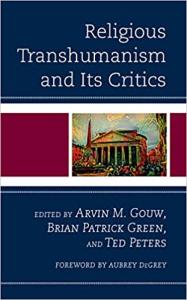
New Book! “Religious Transhumanism and Its Critics” Click here for more on the book.
Our transhumanist friends are willing to take this risk. Transhumanists hope gleefully for the Singularity, the threshold crossing to superintelligence that will replace today’s Homo sapiens with tomorrow’s posthuman species. Transhumanists hopes for a digital utopia. The transhumanist vision includes extinction for us and utopia for our successors.
Religious transhumanists believe that AI enhancement could lead to deepened spirituality and even sanctification. Here we find optimism, enthusiasm, and even utopianism.
Our day-to-day digital geniuses in the lab, much to the contrary, are not naive optimists. Rather, they fear that such a leap to superintelligence risks the “loss of control of our civilization.” This prospect deserves at least a six month shut-down with a think-over.
“Malicious Use of Artificial Intelligence”
Long before we cross the singularity threshold into the transhumanist utopia, civilization will succumb to the shere power of AI to manipulate, distort, and devour our worldview. Twenty-six experts have composed an analysis and roadmap, Malicious Use of Artificial Intelligence. Digital security is at stake. Prevention of cyberattacks is at stake. The nature of the threats will change constantly. There is reason to expect “attacks enabled by the growing use of AI to be especially effective, finely targeted, difficult to attribute, and likely to exploit vulnerabilities in AI systems.” Therefore, “policymakers should collaborate closely with technical researchers to investigate, prevent, and mitigate potential malicious uses of AI.” That’s the AI warning.
To heed this AI warning, we need not begin at point zero. Good things are already happening. The Association for the Advancement of Artificial Intelligence lifts up ethical ideals for cyber professionals. AI professionals should “contribute to society and to human well-being, acknowledging that all people are stakeholders in computing.”
The Blueprint for an AI Bill of Rights contends that “you should be protected from unsafe or ineffective systems.”
And the Brookings Institute recommends that we…
- maintain mechanisms for human oversight and control, and
- penalize malicious AI behavior and promote cybersecurityThe Association for the Advancement of Artificial Intelligence lifts up ideals for cyber professionals.
AI and Faith

Ted Peters, ed. “AI and IA: Utopia or Extinction.” For more on this book, click here.
Rising to the occasion of the AI warning is the Seattle-based online ogranization, AI and Faith. Sparked by David Brenner, this multi-religious assemblage of computer techies and theologians is monitoring the frontier of innovation. AI and Faith envisions “a world where the effects of technology are exclusively life-affirming, promoting the dignity and wellbeing of all humans and improving their interactions through meaningful community and a just society.”
Musk’s proposed six month think-over might well benefit from input by such an organization dedicated to “meaninful community and a just society.”
Is Artificial Intelligence really intelligent?

Noreen Herzfeld, “The Artifice of Intelligence.” For more on the book, click here.
Is Artificial Intelligence really intelligent? No. It only seems that way. In her TED talk, “Does AI Actually Understand Us?“, Aloyna Fyshe reminds us that AI only appears to be intelligent. It’s not. AI calculates at amazing speed, to be sure. But, there’s no mind akin to a human mind at home there.
My favorite expert in this field is Noreen Herzfeld. Noreen teaches both computer science and theology at St. John’s University in Minnesota. She’s a long time veteran of the interaction between human intelligence and machine intelligence. She’s skeptical that AGI (Artificial General Intelligence) is even on the horizon.
“While an AGI remains the ultimate goal, most programs that are called AI today remain limited in scope and utilize the strengths of the computer’s speed and memory rather than human-like procedures. For now, while programs that are new and exciting are called AI, a true AI that captures the essence of human intelligence remains elusive” (Herzfeld, 2023, p. 8).
Noreen’s new book hot off the press, The Artifice of Intelligence, is a must read!
Here is the import of what has just been said. Our fears about the future of AI should not focus on superintelligence let alone a posthuman species. Rather, what we should rightly fear is malice. Human malice. Not AI malice.
To put it another way, the problem we must face is not smart AI. Rather, the problem we must face is ourselves. “I fear that AI’s dangers are all too predictable, because the problem with AI is us,” writes Jessica Mesman in The Christian Century.

“Adam and EVe” by Franz von Stuck
The power of AI is ripe for harvesting by politicians bent on spreading disinformation and even gerating fake photos, hackers who aim to drain your bank account of its funds, gangsters who hold cities hostage while extorting their budgets, graffitiests who pollute and tarnish otherwise beautiful things, militarists who design autonmous killing robots and drones, and terrorists who recruit new disciples. In short, what we fear is not intelligence but rather sin.
The only way to curb sin and reduce the damage it causes is by enforcing law. Regulatory laws that exhibit justice, civility, and harmony. The European Commission is already formulating a “regulatory framework proposal for Artificial Intelligence.” Musk’s six month think-over would provide time to formulate laws that could help in this curbing of maliciousness.
If we understand the human species as “God’s created co-creator,” we must build into this concept the moral mandate to advance technology for the common good. Yet, human creativity is ambiguous. It’s subject to both beneficence and malificence. Realism requires that we anticipate malificence. That’s what the AI warning entails.
Will AI techies avoid the mistakes of the Sorcerer’s Apprentice?
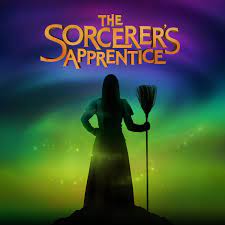 In Johann Wolfgang von Goethe’s 1797 “The Sorcerer’s Apprentice” (Der Zauberlehrling), the apprentice invokes a magic that gets out of hand. A disastrous flood portends doom on the sorcerer’s house. Just in the nick of time, the master sorcerer returns and once again regains control over the magic. This prevents destruction. Whew. A close call.
In our present situation, we have received the AI warning. There is no master sorcerer to come to our aid. If AI runs away with our future, there is no repair service to call to fix the matter. Right now, whether we like it or not, our society must face the crisis with knowledge, foresight, and sound judgment.
Conclusion
We’ve received an AI warning. Could the public theologian and the bioethicist along with the conscientious techie help us heed the warning? You betcha!
Adventures in Artificial Intelligence and Faith
Patheos H+ 2001: Is ChatGPT Intelligent?
Patheos H+ 2002: AI Warning: Utopia or Extinction?
Patheos H+ 2003: Your Robot Pastor is Here
Patheos H+ 2004: AI Brinkmanship
Patheos H+ 2005: Is AI a shortcut to virtue? To holiness?
Patheos H+ 2006: Creating an AI Co-Creator? Philip Hefner’s Mind
▓
Ted Peters
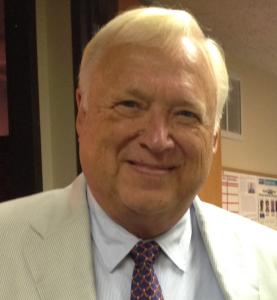
Ted Peters recently published an edited volume, AI and IA: Utopia or Extinction? For Patheos, Professor Peters posts articles and notices in the field of Public Theology. He is a Lutheran pastor and emeritus professor at the Graduate Theological Union. He co-edits the journal, Theology and Science, on behalf of the Center for Theology and the Natural Sciences, in Berkeley, California, USA. He is a founding member of AI and Faith. He is now releasing a new volume, The Voice of Public Theology. See his website: TedsTimelyTake.com.
▓
References
Gouw, Arvin; Brian Patrick Green; and Ted Peters, eds., 2022. Religious Transhumanism and Its Critics (Lanham MA: Lexington, 2022).
Herzfeld, Noreen, 2023. The Artifice of Intelligence. Minneapolis MN: Fortress.
Lee, Newton, ed., 2019. The Transhumanist Handbook. Switzerland: Springer.
Peters, Ted, ed., 2019. AI and IA: Utopia or Extinction. Adelaide: ATF Press.
Technology and Religion
Pause Giant AI Experiments: An Open Letter

About Ted Peters
▓ Ted Peters recently published an edited volume, AI and IA: Utopia or Extinction? For Patheos, Professor Peters posts articles and notices in the field of Public Theology. He is a Lutheran pastor and emeritus professor at the Graduate Theological Union. He co-edits the journal, Theology and Science, on behalf of the Center for Theology and the Natural Sciences, in Berkeley, California, USA. He is a founding member of AI and Faith. He is now releasing a new volume, The Voice of Public Theology. See his website: TedsTimelyTake.com. ▓ You can read more about the author here.
Previous Post

March 30, 2023
School Shootings Meet AR-15 Lapel Pins
Next Post

April 2, 2023 Easter Resurrection of the Body. Afterlife 10
Browse Our Archives
Select a Category Afterlife America in Crisis Ancient Alien Apocalypse Art Artificial Intelligence Astrobiology Astrotheology Atheism Big History Buddhist Catholic Christian Nationalism Christmas Comparative Theology Death Ecology Ethics ETI Evangelical Evolution Existential Questions Free Will General Christian Hermeneutics Hindu https://www.patheos.com/blogs/allsetfree/2020/12/sins-we-need-to-talk-about/?utm_source=Newsletter&utm_medium=email&utm_campaign=Christians+For+a+Better+Christianity&utm_content=43&lct Interreligious Islam Jewish Justice Latter-Day Saints Literature Literature and Theology Lutheran Methodism Mormonism Nonreligious ontology Orthodox Pagam Prayer progressive Christian PT 6 Dignity Public Theology Race racial justice Religious Liberty Romance Satan Scapegoat Science & Religion Science and Religion social justice Spirituality SR 8 Transhumanism Systematic Theology Taoism Ted Peters UAP UFO Uncategorized War
Select a Month September 2026 August 2026 July 2026 June 2026 May 2026 April 2026 March 2026 February 2026 December 2025 November 2025 October 2025 September 2025 August 2025 July 2025 June 2025 May 2025 April 2025 March 2025 February 2025 January 2025 December 2024 November 2024 October 2024 September 2024 August 2024 July 2024 June 2024 May 2024 April 2024 March 2024 February 2024 January 2024 December 2023 November 2023 October 2023 September 2023 August 2023 July 2023 June 2023 May 2023 April 2023 March 2023 February 2023 January 2023 December 2022 November 2022 October 2022 September 2022 August 2022 July 2022 June 2022 May 2022 April 2022 March 2022 February 2022 January 2022 December 2021 November 2021 October 2021 September 2021
Follow Us!
TAKE THE
Religious Wisdom Quiz
What is the name of the tree whose fruit Adam and Eve were forbidden to eat?
Select your answer to see how you score.
Tree of Life Olive Tree Tree of the Knowledge of Good and Evil Fig Tree
Related posts from Public Theology


AI and Sin: How Sloth, Bias, and Power...

Washington’s Attack on Lutherans
Working on Science and Religion: Update
TRENDING AT PATHEOS Progressive Christian

What Being a Modern-Day Apostle Means to Me
In my last column, I discussed the ins and outs of modern-day...

Did Ancient China Once Worship the God of...
Across human history, a common thread weaves through the origins of the...

Love Your Neighbor – Including Earth-Kin: Lev. 19,...
God’s command to love your neighbor means acting in an ethical and...

Lead a Church Study of “Jesus and Lao...
Guest writer Jack Thomas (The Irreverent Reverend) reflects on leading his church...

Pastoral Wisdom for Responding to Sermon Pushback
Getting sermon pushback on your social justice sermon? Learn practical, Proverbs-based strategies...

Principles for Understanding the Apostolic Ministry Today
Whenever people discover that my formal ministry title is "apostle," as in...
view all Progressive Christian blogs
Ad-Free & Subscriber Log-In Subscription Support
- About Us
- 2026 Calendar
- Videos
- Podcasts
- Library of World Religions
- Faith In Media Tracker
- Advertise With Us
- Write for Us
- Privacy Policy
- Terms of Service
- Do Not Sell My Data
- Contact Us
- Radiant Digital
- Manage Newsletter Subscriptions
- Unsubscribe From Notifications
- Sitemap
Copyright 2008-2026, Patheos. All rights reserved.
Subscription Support Ad-Free & Subscriber Log-In
Follow Patheos