
BuddhistCatholicContemplativeEvangelicalGeneral ChristianHinduJewishLatter-day SaintMuslimNew VisionsProgressive Christian
Beliefs
- Buddhist
- Catholic
- Contemplative
- Evangelical
- General Christian
- Hindu
- Jewish
- Latter-day Saint
- More Voices
- Muslim
- New Visions
- Pagan
- Progressive Christian
Topics
- Religion News
- Food and Religion
- Sports and Religion
- Religious Art
- Religious Music and Entertainment
- Religious Events
- History and Religion
- Style and Religion
- Politics and Religion
- Women in Religion
- Recreation Outdoors and Religion
- Business Finance and Religion
- Careers Workplace and Religion
- Education and Religion
- Family Parenting and Religion
- Health Fitness and Religion
- Home and Religion
- Relationships and Religion
- Technology and Religion
- Travel and Religion
Columnists
- Buddhist Columnists
- Business Finance and Religion Columnists
- Careers Workplace and Religion Columnists
- Catholic Columnists
- Contemplative Columnists
- Education and Religion Columnists
- Evangelists Columnists
- Family Parenting and Religion Columnists
- General Christian Columnists
- Health Fitness and Religion Columnists
- Hindu Columnists
- History and Religion Columnists
- Home and Religion Columnists
- Jewish Columnists
- More Voices Columnists
- Latter Day Columnists
- Muslim Columnists
- New Visions Columnists
- Nonreligious Columnists
- Pagan Columnists
- Politics and Religion Columnists
- Progressive Columnists
- Recreation Outdoors and Religion Columnists
- Relationships and Religion Columnists
- Religion News Columnists
- Religious Art Columnists
- Religious Events Columnists
- Religious Music and Entertainment Columnists
- Sports and Religion Columnists
- Style and Religion Columnists
- Technology and Religion Columnists
- Travel and Religion Columnists
- Women in Religion Columnists
Resource Library
- 2026 Calendar
- Library of World Religions
- The 100 Most Holy Places on Earth
- Patheos Answers
- Podcasts
- Videos
- Faith Leaders Database
- Anglican Episcopalian
- Bahai
- Baptist
- Buddhism
- Christianity
- Confucianism
- Eastern Orthodoxy
- Hinduism
- Holiness and Pentecostal
- ISKCON
- Islam
- Judaism
- Lutheran
- Methodist
- The Church of Jesus Christ of Latter-day Saints
- New Age
- Paganism
- Presbytarian and Reformed
- Protestantism
- Religion Behind the Scenes
- Roman Catholic
- Scientology
- Shia Islam
- Sikhism
- Sufism
- Sunni Islam
- Taoism
- Zen
- See all religions
Research Tools
 Ad-Free & Subscriber Log-In Subscription Support
Follow Patheos 

- Trending:
- Advent
- |
- Forgiveness
- |
- Thanksgiving
- |
- Election
- |
- Seasonal Holidays
- |
- Marriage

- Home
- Progressive Christian
- History and Religion
- Third Day Afterlife. Afterlife 4
Third Day Afterlife. Afterlife 4
Last updated on: September 14, 2023 at 9:49 am by Ted Peters
Third Day Afterlife. Afterlife 4 2023-09-14T09:49:54-07:00 Ted Peters
Patheos Explore the world's faith through different perspectives on religion and spirituality! Patheos has the views of the prevalent religions and spiritualities of the world.
Third Day Afterlife
Three Days After Life?

Chumash Amerindians. Santa Barbara Museum of Natural History. What is the Chumash third day afterlife belief?
This post takes up the widespread Third Day Afterlife experience, especially as we find it among ancient Persian Zoroastrians and California’s Chumash tribe.
In an earlier post, we looked what naturalists believe: “when yer dead, yer dead!” This rejection of an afterlife certainly applies to neurocentrists who believe the mind is reducible to the brain. Patricia Churchland, for example, contends that when the brain dies the mind or soul dies with it.
“The death of the brain, the facts suggest, entails the death of the mind….What could a soul be, since memory, skill, knowledge, temperament, and feeling all seem to depend on activities of neurons in the brain?” (Churchland 2013, 264).
Our ancestors were not neurocentrists. Many of them believed in an afterlife. What that afterlife looks like differed from culture to culture, to be sure. Yet, one belief seems to be either multicultural or transcultural. That’s the belief that the disembodied soul of the deceased remains local for about three days or so before it departs to eternity. So, in this post we’ll look at Third Day Afterlife beliefs found in many archaic cultures.
The Third Day Afterlife in Ancient Persia
The regnant religion of ancient Persia (renamed Iran) was Zoroastrianism with its promise of the ultimate defeat of evil by the forces of good. The third day afterlife rule belonged to Persian eschatology.

Accordingly, the soul leaves the body at death. The soul remains within the material world for three days and three nights. During this three day period the soul is under the special protection of the deity Sraoša, who personifies the recitation and hearing of the sacred texts, the Avesta. At dawn on the fourth morning the soul feels a wind. If the deceased person was good during life, then this wind will feel like a pleasant southerly breeze. For the evil doers, it will feel like a cold northern gale.

Činwad Bridge of Judgment in Zoroastrian third day afterlife belief.
A judgement has begun at this point. A vision of a woman, personifying one’s deeds on earth, is presented. The more good deeds the person does during his or her lifetime, the more beautiful the woman appears to the soul. Conversely, the more bad deeds prevail, the more horrible and frightful she appears.
The soul then must cross the Bridge of Accounting, or Činwad Bridge. On the bridge the soul faces final judgement. Good and bad deeds are weighed on scales held by the god of justice, Rašnu. The good soul crosses the Bridge easily. The good soul happily moves on to the bright House of Welcome, where the high god Ahura Mazdā and his spiritual creations dwell. But, in the case of the evil soul, the Bridge contracts to a sharp knife’s edge and the terrified soul tumbles down into the House of Deceit, Evil’s home of hellish existence. At this time the eternal destiny of the disembodied soul commences (Almut Hinze, “Zoroastrian afterlife beliefs and funerary practices,” Routledge Hanbook to Death and Dying, Chapter 9).
Note three elements to this Zoroastrian version of the third day afterlife scenario. First, though the soul is disembodied, it remains for three days engaged in finite interactions. Second, judgment for one’s earthly life determines what happens in the afterlife. Third, after the three days, the soul departs for eternity.
The Circuit of the Chumash Soul

Third Day Afterlife. Three days after death the soul rides the circuit of the sky from east to west and settles on the Channel islands.
We can learn much about third day afterlife traditions by reminding ourselves of what the Chumash Amerindians believed happens at death. There is no historical connection between Persian Zoroastrianism and the California Chumash that I know of.
At the arrival of Europeans in the 17th century, perhaps 10,000 hunter-gatherer Chumash lived on the mainland where Santa Barbara, California, is located today.[1] The Chumash territory included three Channel Islands now named: Santa Cruz, Santa Rosa, and San Miguel.
When a person would die, the Chumash believed, the person’s soul would loiter in the area of death for three days. Bereaved family members could enjoy the disembodied presence of the deceased during this period as burial arrangements would be made. On the third day, the soul would depart. The soul would rise with the sun and cross the circuit of the sky. In the evening, at sundown, the soul would come to rest on the western horizon. The sun would deposit the soul at the western most location that Chumash eyes could see, namely, the Channel Islands.
Four Ingredients of the Third Day Afterlife Pie
I taste four ingredients in the Chumash third day afterlife pie. First, the soul or perhaps an astral body leaves the body. Yet, both soul and body remain located in space and time.

Chumash culture map.
Second, as if to say “good-bye,” the disembodied soul remains where embodied loved ones are located. Later the disembodied component of the person departs. Where to? Eternity?
Third, three days is the standard duration. Not just for the Chumash. Check out this trailer for a novel by Brenda Hasse, On the Third Day: An Afterlife Journey, in three volumes.
“Since she cannot be seen or heard by those in the physical world, how will she convey her heartfelt messages? Will her soul find the closure it seeks before her time runs out on the third day?”
As already mentioned, I find astounding how this three-day period of the localized disembodied soul is found in many archaic cultures, including the Zoroastrians in Persia. This widespread belief in a third day afterlife seems to inform the Bible (Matthew 12:40; Mark 8:31) too.
Third Day Resurrection in the Bible

“Resurection” by Pierra della Francesca
Flummoxed Christians ask: where was Jesus for the three days between his death and resurrection? Technically, we might observe that the three days were not between death and resurrection. Between death on Friday afternoon and resurrection Sunday morning there are less than two full days. Third day, yes. Three days, well, not quite.
Even so, the Bible talks about a three-day period. I wonder if the very concept of the third day afterlife shares a Hebrew history (Jonah 1:17; Hosea 6:1-2) along with the phenomenology of death we have been looking at.
Does this suggest that perhaps our archaic ancestors actually experienced a double departure: a physical death followed after three days by a subsequent spiritual departure?
Death’s Third Day Afterlife
Here’s a fourth ingredient to the third day afterlife Chumash pie. The soul travels to a final resting place that lies beyond our vision. Beyond time and space. That eternal destiny beyond our vision raises metaphysical questions.
I don’t want to ask metaphysical questions right now. Apart from such metaphysical questions, here’s what I want to ask: can we talk to the dead? And if we can, when? Can we talk to the dead only within the three-day period? Or at any time thereafter?
There’s a word for talking to the dead, necromancy. Does necromancy belong to the afterlife? In one of our future posts we will take up the matter of communicating with the dead.
- The Denial of Death
- Naturalism: When yer dead yer dead!
- Astral Body? Ka? Or Angel?
- Third Day Afterlife
- Immortal Soul
- Reincarnation
- Near Death Experiences
- Communication with the Dead (Necromancy)
- Absorption into the Mystical Infinite
- Resurrection of the Body
- Heaven
- Hell
Conclusion
Might there be any symbolic or historical connection between third day afterlife beliefs and what the New Testament reports about Jesus’ death and resurrection?
The post-resurrection appearances of Jesus occurred over a period of forty days, not three. Yet, there is something symbolically important about Jesus’ Easter resurrection on the third day. Does it connect at all with the kind of human experience of the afterlife shared by the Chumash, Persians, and others?
The next posts in our afterlife series will take up our inherited axial belief in the immortal soul, sometimes connected to reincarnation. Our shared human experience with a diseased and dying body prompts our defiant spirit to look forward to a pain-free afterlife in disembodied form. Our archaic ancestors especially in Greece and India formulated a worldview that includes immortality of the soul, moral judgment in the afterlife, purgation of evil, and pure knowledge of truth. More than merely an afterlife is greeted here. So also is salvation.
ST 4114. Third Day Afterlife. Afterlife 4
▓
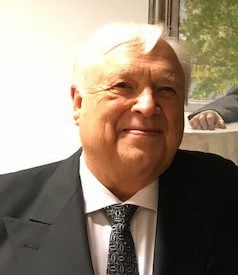
Ted Peters
Ted Peters is a Lutheran pastor an emeritus professor at the Graduate Theological Union. He co-edits the journal, Theology and Science, with Robert John Russell on behalf of the Center for Theology and the Natural Sciences, in Berkeley, California, USA. His single volume systematic theology, God—The World’s Future, is now in the 3rd edition. He has also authored God as Trinity plus Sin: Radical Evil in Soul and Society as well as Sin Boldly: Justifying Faith for Fragile and Broken Souls. See his website: TedsTimelyTake.com.
Watch for his new 2023 book, The Voice of Public Theology, to be published by ATF Press.
▓
[1] The post-contact period was disastrous for the Chumash peoples as well as other Native Americans. At the hands of the Spanish, then the Mexicans, and finally the Gold Rush settlers, Chumash died from labor enslavement, disease, and even murder. By 1920 only 75 or so remained on the Santa Ynez Valley reservation. Today Chumash descendants number only a few thousand.
Pagan
History and Religion

About Ted Peters
Ted Peters is a Lutheran pastor an emeritus professor at the Graduate Theological Union. He co-edits the journal, Theology and Science, with Robert John Russell on behalf of the Center for Theology and the Natural Sciences, in Berkeley, California, USA. His single volume systematic theology, God—The World’s Future, is now in the 3rd edition. He has also authored God as Trinity plus Sin: Radical Evil in Soul and Society as well as Sin Boldly: Justifying Faith for Fragile and Broken Souls. See his website: TedsTimelyTake.com. Watch for his new 2023 book, The Voice of Public Theology, to be published by ATF Press. You can read more about the author here.
Previous Post

February 11, 2023
Are UFOs Real? A Sea Change?
Next Post

February 14, 2023 Don't Trust Your Pastor!
Browse Our Archives
Select a Category Afterlife America in Crisis Ancient Alien Apocalypse Art Artificial Intelligence Astrobiology Astrotheology Atheism Big History Buddhist Catholic Christian Nationalism Christmas Comparative Theology Death Ecology Ethics ETI Evangelical Evolution Existential Questions Free Will General Christian Hermeneutics Hindu https://www.patheos.com/blogs/allsetfree/2020/12/sins-we-need-to-talk-about/?utm_source=Newsletter&utm_medium=email&utm_campaign=Christians+For+a+Better+Christianity&utm_content=43&lct Interreligious Islam Jewish Justice Latter-Day Saints Literature Literature and Theology Lutheran Methodism Mormonism Nonreligious ontology Orthodox Pagam Prayer progressive Christian PT 6 Dignity Public Theology Race racial justice Religious Liberty Romance Satan Scapegoat Science & Religion Science and Religion social justice Spirituality SR 8 Transhumanism Systematic Theology Taoism Ted Peters UAP UFO Uncategorized War
Select a Month September 2026 August 2026 July 2026 June 2026 May 2026 April 2026 March 2026 February 2026 December 2025 November 2025 October 2025 September 2025 August 2025 July 2025 June 2025 May 2025 April 2025 March 2025 February 2025 January 2025 December 2024 November 2024 October 2024 September 2024 August 2024 July 2024 June 2024 May 2024 April 2024 March 2024 February 2024 January 2024 December 2023 November 2023 October 2023 September 2023 August 2023 July 2023 June 2023 May 2023 April 2023 March 2023 February 2023 January 2023 December 2022 November 2022 October 2022 September 2022 August 2022 July 2022 June 2022 May 2022 April 2022 March 2022 February 2022 January 2022 December 2021 November 2021 October 2021 September 2021
Follow Us!
TAKE THE
Religious Wisdom Quiz
What food did Jesus say He is, symbolically?
Select your answer to see how you score.
Honey from the Rock Bread of Life Salt of the Earth Fruit of the Vine
Related posts from Public Theology
Does Reason Prove the Afterlife? Gödel’s Surprising Argument

Pope Francis vs Jesus as the Only Way,...

Pope Francis vs Jesus as the Only Way,...
TRENDING AT PATHEOS Progressive Christian

Can a Chatbot Touch Your Soul?
Can a chatbot offer genuine spiritual counsel? One conversation brought me to...

Religion and Politics: How Should We Then Live?
Two cultural axioms get repeated in polite company. Don't mix religion and...

7 Things We Get Wrong About Giving Thanks
It's a time of year when many of us turn to the...

Uncaging Truth: Spirituality Beyond Institutions
The Lost Connection: Why True Spirituality, Not Religion, Is the Key to...

Christ the King? Maybe We've Misunderstood the Crown
What do we mean when we say that Jesus is King? What...

Counter “Christ Is King” Nationalism with Christ THE...
Christ the King Sunday is an ideal time to address the heresy...
view all Progressive Christian blogs
Ad-Free & Subscriber Log-In Subscription Support
- About Us
- 2026 Calendar
- Videos
- Podcasts
- Library of World Religions
- Faith In Media Tracker
- Advertise With Us
- Write for Us
- Privacy Policy
- Terms of Service
- Do Not Sell My Data
- Contact Us
- Radiant Digital
- Manage Newsletter Subscriptions
- Unsubscribe From Notifications
- Sitemap
Copyright 2008-2026, Patheos, part of the Radiant Digital network of media brands. All rights reserved.
Subscription Support Ad-Free & Subscriber Log-In
Follow Patheos