
BuddhistCatholicContemplativeEvangelicalGeneral ChristianHinduJewishLatter-day SaintMuslimNew VisionsProgressive Christian
Beliefs
- Buddhist
- Catholic
- Contemplative
- Evangelical
- General Christian
- Hindu
- Jewish
- Latter-day Saint
- More Voices
- Muslim
- New Visions
- Pagan
- Progressive Christian
Topics
- Religion News
- Food and Religion
- Sports and Religion
- Religious Art
- Religious Music and Entertainment
- Religious Events
- History and Religion
- Style and Religion
- Politics and Religion
- Women in Religion
- Recreation Outdoors and Religion
- Business Finance and Religion
- Careers Workplace and Religion
- Education and Religion
- Family Parenting and Religion
- Health Fitness and Religion
- Home and Religion
- Relationships and Religion
- Technology and Religion
- Travel and Religion
Columnists
- Buddhist Columnists
- Business Finance and Religion Columnists
- Careers Workplace and Religion Columnists
- Catholic Columnists
- Contemplative Columnists
- Education and Religion Columnists
- Evangelists Columnists
- Family Parenting and Religion Columnists
- General Christian Columnists
- Health Fitness and Religion Columnists
- Hindu Columnists
- History and Religion Columnists
- Home and Religion Columnists
- Jewish Columnists
- More Voices Columnists
- Latter Day Columnists
- Muslim Columnists
- New Visions Columnists
- Nonreligious Columnists
- Pagan Columnists
- Politics and Religion Columnists
- Progressive Columnists
- Recreation Outdoors and Religion Columnists
- Relationships and Religion Columnists
- Religion News Columnists
- Religious Art Columnists
- Religious Events Columnists
- Religious Music and Entertainment Columnists
- Sports and Religion Columnists
- Style and Religion Columnists
- Technology and Religion Columnists
- Travel and Religion Columnists
- Women in Religion Columnists
Resource Library
- 2026 Calendar
- Library of World Religions
- The 100 Most Holy Places on Earth
- Patheos Answers
- Podcasts
- Videos
- Faith Leaders Database
- Anglican Episcopalian
- Bahai
- Baptist
- Buddhism
- Christianity
- Confucianism
- Eastern Orthodoxy
- Hinduism
- Holiness and Pentecostal
- ISKCON
- Islam
- Judaism
- Lutheran
- Methodist
- The Church of Jesus Christ of Latter-day Saints
- New Age
- Paganism
- Presbytarian and Reformed
- Protestantism
- Religion Behind the Scenes
- Roman Catholic
- Scientology
- Shia Islam
- Sikhism
- Sufism
- Sunni Islam
- Taoism
- Zen
- See all religions
Research Tools
 Ad-Free & Subscriber Log-In Subscription Support
Follow Patheos 

- Trending:
- Advent
- |
- Forgiveness
- |
- Thanksgiving
- |
- Election
- |
- Seasonal Holidays
- |
- Marriage

- Home
- Progressive Christian
- History and Religion
- Astral Body? Ka? or Angel? Afterlife 3
Astral Body? Ka? or Angel? Afterlife 3
Last updated on: March 27, 2023 at 10:13 am by Ted Peters
Astral Body? Ka? or Angel? Afterlife 3 2023-03-27T10:13:23-07:00 Ted Peters
Patheos Explore the world's faith through different perspectives on religion and spirituality! Patheos has the views of the prevalent religions and spiritualities of the world.
ST 4113. Afterlife 3
Astral Body? Ka? or Angel?
The New Age Astral Body, the Egyptian Ka, and the Biblical Angelic Body

ASTRAL BODY. A conceptual image of a woman having an out of body experience.
Trying to imagine death without death makes my brain hurt. What are the options? Previously we looked at the position taken by naturalists: “when yer dead, yer dead.” Atheistic materialists usually support this naturalist position. They deny any subjective consciousness beyond the moment of death.
Not everyone in human history has held this view. The ancient Egyptians imagined that each of us has a non-material second body called the ka. Our new age friends imagine that this second body is ethereal; it’s an astral body.
Afterlife in the Astral Body
The concept of the astral body or star body is distinct from that of the immortal soul. Yet, it too is dualistic. The astral body has a shape. It’s the shape of our physical body. But, being made of stardust, it is not solid nor is it ephemeral. It exists in the same space as our physical body. Occasionally in dreams and finally at death it separates from the body. It proceeds then on the path toward eternity.
I once spoke with a woman whose twenty-year old daughter was tragically killed in an auto accident. The surviving mother lived in Washington state while the deceased daughter had resided in Colorado. When the Colorado branch of the family met with the funeral director, the mother traveled from Washington to Colorado in her astral body to attend the meeting.
Our conversation took place amid this funeral planning period. The mother was uncontrollably distraught. Some weeks later, the mother telephoned me. She reported that her deceased daughter had appeared to her in her astral body. The daughter was accompanied by Jesus on her arm. “I’m gonna be alright, Mom,” the daughter said. Then, she and Jesus walked away and disappeared.
[For a penetrating look at today’s New Age movements, see my book, The Cosmic Self. First published by Harper, it’s now out of print. Knock-offs and used copies are readily available.][1]
Afterlife as the Egyptian Ka
** **The predecessor for the idea of the astral body may have come from ancient Egypt. The wall paintings in the pyramids show a second form hovering near the physical body of the pharaoh, the ka. The ka was an immaterial double of the physical body. It would be the ka who would live on in the tomb to enjoy the kas of the toys left there for the afterlife.
In today’s New Age spirituality, spiritual technicians teach methods whereby one can detach the astral body and fly from one geographical location to another. Astral travel saves money on air fares. When we die, the astral body makes its way up the ladder of being, passing through each of the seven heavens until it attains an immortality that includes absorption into the infinite.
In ancient Gnosticism this ascent through the seven heavens would lead to the ogdoad, the Empyrean, or heaven. Surviving death in the astral body may be a good way to beat death for a New Ager. But even better is dissolving like a drop into the ocean of mystical being.
On the one hand, New Age spirituality could be considered dualistic regarding the separation of the body from our true self. Yet the astral body belief could be considered monistic at entrance to the Empyrean where the self dissolves into the whole of reality. New Age mysticism is a spiritual monism, not a material monism.
Afterlife as an Angel
Would you like to become an angel in the afterlife? Your job as an angel would include, among other duties, singing te deums in a choir around the throne of God.
“And all the angels stood around the throne and around the elders and the four living creatures, and they fell on their faces before the throne and worshipped God, singing, ‘Amen! Blessing and glory and wisdom and thanksgiving and honour and power and might be to our God for ever and ever! Amen.” (Revelation 8:11-12)
 Angel [Greek ἄγγελος] literally means, “messenger.” When taking a break from choir rehearsal, you might be assigned the task of delivering a message from the eternal throne of grace to the rest of us mortals. It was a heavenly angel who delivered a message to shepherds on the first Christmas night that the Messiah had been born.
“The angel said to them, Do not be afraid; behold, I bring you good news of a great rejoicing for the whole people” (Luke 2:9).
Angels are depicted by artists and iconographers as having human—though immortal–bodies. Systematic theologian Thomas Aquinas (1225-1274) was not one of these artists. Thomas held that angels are intellectual substances who no longer need to acquire knowledge through their bodily senses. Therefore, angels are bodiless.[2]
Does it appear that when we become angelified after death that we become disembodied yet retain a bodily form? I still ask: how might an angel sing without vocal chords?
Angelification in the afterlife was believed by the Essenes [ Hebrew: אִסִּיִים], a Jewish sect who lived near the Dead Sea just prior to the time of Jesus. This idea of dying and becoming an angel was extant and widely believed by the people who heard Jesus’ teachings. “Historical Christianity inherited its belief in angels from Jewish spiritual ancestors.” says Patheos columnist Greg Smith. “Jewish angelology, in turn, owes much of its understanding to Egyptian, Babylonian, and Persian influence.”
Hindus have angels, according to Padma Kuppa. According to B.J. Oropeza, angels mediate between the divine and the human.
An important theological question is this: do people become angels in the afterlife? For the most part, angeologists presume that angels and humans are both creatures but of a different sort. Patheos columnist Coleman Glenn, however, points out that some biblical references can be interpreted to signify that these heavenly messangers are angelified humans. So, if you’d like to become angelified in the afterlife, start taking those voice lessons now.
Models of the Afterlife
What are the options? Here are the models of the afterlife we are looking at in this Patheos series on the afterlife.
- The Denial of Death
- Naturalism: When yer dead yer dead!
- Astral Body? Ka? Or Angel?
- Third Day Afterlife
- Immortal Soul
- Reincarnation
- Near Death Experiences
- Communication with the Dead
- Absorption into the Mystical Infinite
- Resurrection of the Body
Conclusion
When eulogizing a recently deceased sports coach at a memorial service, the team will typically hear the eulogizer say something like, “Coach is now looking down on us today.” Such rhetorical vacuity seems to presuppose a variant of angelification. Or at least astral presence. Typically, if we are on our best behavior, we do not ask metaphysical questions at a memorial service.
But, we like to ask metaphysical questions here. That’s our task as we review the options regarding belief in an afterlife.
What about belief in the immortality of the soul? We’ll look at the immortal soul after we’ve looked at a curiosity, namely, the widespread belief that the disembodied soul hangs around the family for three days after death.
▓
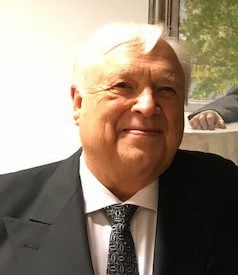
Ted Peters
Ted Peters directs traffic at the intersection of science, religion, and ethics. For Patheos, he posts articles and notices in the field of Public Theology.
Peters is an emeritus professor at the Graduate Theological Union, where he co-edits the journal, Theology and Science, on behalf of the Center for Theology and the Natural Sciences, in Berkeley, California, USA. He authored Playing God? Genetic Determinism and Human Freedom? (Routledge, 2nd ed., 2002) as well as Science, Theology, and Ethics (Ashgate 2003). He is editor of AI and IA: Utopia or Extinction? (ATF 2019). Along with Arvin Gouw and Brian Patrick Green, he co-edited the new book, Religious Transhumanism and Its Critics hot off the press (Roman and Littlefield/Lexington, 2022). He has just published The Voice of Christian Public Theology (ATF 2022). See his website: TedsTimelyTake.com.
His fictional spy thriller, Cyrus Twelve, follows the twists and turns of a transhumanist plot.
Notes
[1] Astral escape from the body is not the primary form of afterlife for New Ageers. Reincarnation is. “The New Age movement understands death and the afterlife in a multitude of ways, but all forms of the New Age uphold belief in the continuation of the individual after death. Additionally, New Age practitioners tend to possess a generally positive view of death as merely a doorway to the next life…New Agers tend to view incarnation as a human being on earth as only one option for a reincarnating soul. Most New Age practitioners believe that souls can take life on a variety of planets and planes of existence.” See the Patheos series on Beliefs, “New Age: Afterlife and Salvation.”
[2] “not all intellectual substances are united to bodies; but some are quite separated from bodies, and these we call angels.” St. Thomas Aquinas, Summa Theologica, Q51.
New Visions
History and Religion
ST 4113 Afterlife 3 Astral Body

About Ted Peters
Ted Peters is a Lutheran pastor an emeritus professor at the Graduate Theological Union. He co-edits the journal, Theology and Science, with Robert John Russell on behalf of the Center for Theology and the Natural Sciences, in Berkeley, California, USA. His single volume systematic theology, God—The World’s Future, is now in the 3rd edition. He has also authored God as Trinity plus Sin: Radical Evil in Soul and Society as well as Sin Boldly: Justifying Faith for Fragile and Broken Souls. See his website: TedsTimelyTake.com. Watch for his new 2023 book, The Voice of Public Theology, to be published by ATF Press. You can read more about the author here.
Previous Post
February 3, 2023
When yer dead, yer dead! Afterlife 2
Next Post

February 11, 2023 Are UFOs Real? A Sea Change?
Browse Our Archives
Select a Category Afterlife America in Crisis Ancient Alien Apocalypse Art Artificial Intelligence Astrobiology Astrotheology Atheism Big History Buddhist Catholic Christian Nationalism Christmas Comparative Theology Death Ecology Ethics ETI Evangelical Evolution Existential Questions Free Will General Christian Hermeneutics Hindu https://www.patheos.com/blogs/allsetfree/2020/12/sins-we-need-to-talk-about/?utm_source=Newsletter&utm_medium=email&utm_campaign=Christians+For+a+Better+Christianity&utm_content=43&lct Interreligious Islam Jewish Justice Latter-Day Saints Literature Literature and Theology Lutheran Methodism Mormonism Nonreligious ontology Orthodox Pagam Prayer progressive Christian PT 6 Dignity Public Theology Race racial justice Religious Liberty Romance Satan Scapegoat Science & Religion Science and Religion social justice Spirituality SR 8 Transhumanism Systematic Theology Taoism Ted Peters UAP UFO Uncategorized War
Select a Month September 2026 August 2026 July 2026 June 2026 May 2026 April 2026 March 2026 February 2026 December 2025 November 2025 October 2025 September 2025 August 2025 July 2025 June 2025 May 2025 April 2025 March 2025 February 2025 January 2025 December 2024 November 2024 October 2024 September 2024 August 2024 July 2024 June 2024 May 2024 April 2024 March 2024 February 2024 January 2024 December 2023 November 2023 October 2023 September 2023 August 2023 July 2023 June 2023 May 2023 April 2023 March 2023 February 2023 January 2023 December 2022 November 2022 October 2022 September 2022 August 2022 July 2022 June 2022 May 2022 April 2022 March 2022 February 2022 January 2022 December 2021 November 2021 October 2021 September 2021
Follow Us!
TAKE THE
Religious Wisdom Quiz
Who found baby Moses in the river?
Select your answer to see how you score.
Pharaoh’s daughter Pharaoh himself An Egyptian priest Miriam
Related posts from Public Theology
Does Reason Prove the Afterlife? Gödel’s Surprising Argument

Are frozen embryos really children? Abortion 1
Nonreductive Physicalism. Soul 6
TRENDING AT PATHEOS Progressive Christian

The Secret behind A Charlie Brown Thanksgiving
Do you know the secret behind A Charlie Brown Thanksgiving? Sparky was...

Bridging the Gap Between God and Man
From Far Off to the Ultimate Embrace “God is a Spirit: and...

Let Matthew 25 Guide You to a Greater...
With the crisp feel of fall in the air, our minds quickly...

Can a Chatbot Touch Your Soul?
Can a chatbot offer genuine spiritual counsel? One conversation brought me to...

Religion and Politics: How Should We Then Live?
Two cultural axioms get repeated in polite company. Don't mix religion and...

7 Things We Get Wrong About Giving Thanks
It's a time of year when many of us turn to the...
view all Progressive Christian blogs
Ad-Free & Subscriber Log-In Subscription Support
- About Us
- 2026 Calendar
- Videos
- Podcasts
- Library of World Religions
- Faith In Media Tracker
- Advertise With Us
- Write for Us
- Privacy Policy
- Terms of Service
- Do Not Sell My Data
- Contact Us
- Radiant Digital
- Manage Newsletter Subscriptions
- Unsubscribe From Notifications
- Sitemap
Copyright 2008-2026, Patheos, part of the Radiant Digital network of media brands. All rights reserved.
Subscription Support Ad-Free & Subscriber Log-In
Follow Patheos