
BuddhistCatholicContemplativeEvangelicalGeneral ChristianHinduJewishLatter-day SaintMuslimNew VisionsProgressive Christian
Beliefs
- Buddhist
- Catholic
- Contemplative
- Evangelical
- General Christian
- Hindu
- Jewish
- Latter-day Saint
- More Voices
- Muslim
- New Visions
- Pagan
- Progressive Christian
Topics
- Religion News
- Food and Religion
- Sports and Religion
- Religious Art
- Religious Music and Entertainment
- Religious Events
- History and Religion
- Style and Religion
- Politics and Religion
- Women in Religion
- Recreation Outdoors and Religion
- Business Finance and Religion
- Careers Workplace and Religion
- Education and Religion
- Family Parenting and Religion
- Health Fitness and Religion
- Home and Religion
- Relationships and Religion
- Technology and Religion
- Travel and Religion
Columnists
- Buddhist Columnists
- Business Finance and Religion Columnists
- Careers Workplace and Religion Columnists
- Catholic Columnists
- Contemplative Columnists
- Education and Religion Columnists
- Evangelists Columnists
- Family Parenting and Religion Columnists
- General Christian Columnists
- Health Fitness and Religion Columnists
- Hindu Columnists
- History and Religion Columnists
- Home and Religion Columnists
- Jewish Columnists
- More Voices Columnists
- Latter Day Columnists
- Muslim Columnists
- New Visions Columnists
- Nonreligious Columnists
- Pagan Columnists
- Politics and Religion Columnists
- Progressive Columnists
- Recreation Outdoors and Religion Columnists
- Relationships and Religion Columnists
- Religion News Columnists
- Religious Art Columnists
- Religious Events Columnists
- Religious Music and Entertainment Columnists
- Sports and Religion Columnists
- Style and Religion Columnists
- Technology and Religion Columnists
- Travel and Religion Columnists
- Women in Religion Columnists
Resource Library
- 2026 Calendar
- Library of World Religions
- The 100 Most Holy Places on Earth
- Patheos Answers
- Podcasts
- Videos
- Faith Leaders Database
- Anglican Episcopalian
- Bahai
- Baptist
- Buddhism
- Christianity
- Confucianism
- Eastern Orthodoxy
- Hinduism
- Holiness and Pentecostal
- ISKCON
- Islam
- Judaism
- Lutheran
- Methodist
- The Church of Jesus Christ of Latter-day Saints
- New Age
- Paganism
- Presbytarian and Reformed
- Protestantism
- Religion Behind the Scenes
- Roman Catholic
- Scientology
- Shia Islam
- Sikhism
- Sufism
- Sunni Islam
- Taoism
- Zen
- See all religions
Research Tools
 Ad-Free & Subscriber Log-In Subscription Support
Ad-Free & Subscriber Log-In Subscription Support
Follow Patheos 

- Trending:
- Forgiveness
- |
- Marriage
- |
- Consciousness
- |
- Death Penalty
- |
- Election
- |
- Halloween

- Home
- Progressive Christian
- Technology and Religion
- To Eat No-Kill Cultivated Meat. Part Three: Hindu? Jain?
To Eat No-Kill Cultivated Meat. Part Three: Hindu? Jain?
Last updated on: November 22, 2022 at 2:50 pm by Ted Peters
To Eat No-Kill Cultivated Meat. Part Three: Hindu? Jain? 2022-11-22T14:50:22-08:00 Ted Peters
Patheos Explore the world's faith through different perspectives on religion and spirituality! Patheos has the views of the prevalent religions and spiritualities of the world.
To Eat No-Kill Cultivated Meat
Part Three: Hindu? Jain? An Interview with Rita Sherma
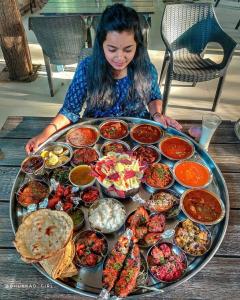
Hindu food. Will no-kill cultivated meat be attractive to Hindus? Jains?
In this series of Patheos posts in public theology we began by asking in Part One: should we eat no-kill cultivated meat? Then, in Part Two, we asked Jewish Studies scholar Sam Shonkoff: is cultivated meat kosher? We are furthering a discussion begun by our friends in Kerela, India, who have recently addressed the “Global Food Crisis and Food Justice” in the magazine Pax Lumina.
On the face of it, widespread consumption of cultivated meat–also called cultured, in vitro, artificial, lab-grown meat–could contribute substantially to both human and planetary flourishing. Cultivated meat could provide affordable protein to the many victims of the current global food crisis. Cultivated meat could reduce if not eliminate the slaughter of animals. Finally, cultivated meat could indirectly contribute to the restoration of our planet’s fecundity by reducing grazing land and reducing release of methane gases. The science of cultivate meat has its critics, to be sure. Yet, it’s time to get prepared for the future.
What we need at this point in the game is to solicit theological and ethical responses from religious traditions. Just what do various religious traditions hold regarding the relationship of humans to animals? Just what dietary practices have developed? Just what theological reasoning has led to these practices? And, might the notion of no-kill cultivated meat stimulate new theological thinking and perhaps a change in practice?
Might cultivated meat attract vegetarians?
In the first post in this series on no-kill cultivated meat, we asked about vegetarianism in India. We noted how the Pew Research Center reports that the vast majority of Indian adults (81%) follow some restrictions on meat in their diet, including refraining from eating certain meats, not eating meat on certain days, or both. However, most Indians do not abstain from meat altogether – only 39% of Indian adults describe themselves as “vegetarian,” according to a new Pew Research Center survey. While there are many ways to define “vegetarian” in India, the survey left the definition up to the respondent.
Let’s ask specifically about Hindus and Jains. We will ask Rita Sherma.

Global Food Crisis & Food Justice
Meet Rita Sherma
Rita Sherma is Associate Professor of Dharma Studies and Director of the Center for Dharma Studies at the Graduate Theological Union in Berkeley, California. Professor Sherma is co-founder of the American Academy of Religion’s Hinduism Program Unit. She is also the founding Vice President of DANAM (Dharma Academy of North America)—a scholarly society for research on Hindu, Buddhist, and Jain religious & interreligious studies—and serves as Vice President of the Society for Hindu-Christian Studies.

Professor Rita D. Sherma, Director of Dharma Studies, Graduate Theological Union
Quite relevant to the issue of cultivated meat is Professor Sherma’s ongoing scholarship on behalf of restoring the fecund health of Planet Earth. She is an ecotheologian. She recently co-edited an important book, Religion and Sustainability: Interreligious Resources, Interdisciplinary Responses. She is just the right person to provide succinct and accurate answers to our queries.
Question 1. What would you forecast to be the response of a Dharma vegetarian to the prospect of eating cultivated meat?
Rita Sherma. Hindus and Jains would not eat cultivated meat for two reasons. First, there is the problem of desiring meat of other sentient beings which is not considered conducive to spiritual advancement. Second, there is no need. This is because Indian food—with its variety of delicious food created from protein sources derived from various plant-based sources such as diverse lentils, legumes, milk solids (paneer), etc.—provides savor and satisfaction for those who like flavorful Indian food.
Question 2. What is your own considered response from a theological perspective?
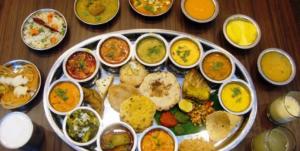
Jain Food
Rita Sherma. The food chain developed and evolved through natural process. Therefore, it is not intrinsically immoral. However, from the viewpoint of diverse religious ethics, we may cause moral injury to ourselves by engaging in the slaughter and consumption of other sentient beings. This is being researched by studies that look at brutality to animals and trace the trajectory to more serious crimes—to crimes against other humans. Certain Hindu traditions do not permit the eating of meat. But others do permit it. Jainism absolutely forbids it.
What’s Next?
This is where we have been and plan to go.
To Eat No-Kill Cultivated Meat. Part One: The Science
To Eat No-Kill Cultivated Meat. Part Two: Kosher? Sam Shonkoff
To Eat No-Kill Cultivated Meat. Part Three: Hindu? Jain? Rita Sherma
To Eat No-Kill Cultivated Meat. Part Four: Mormon? Lincoln Cannon
To Eat No-Kill Cultivated Meat. Part Five: Muslim? Mahjabeen Dahla
To Eat No-Kill Cultivated Meat: Part Six: Catholic? lisa Fullam
To Eat No-Kill Cultivated Meat. Part Seven: Christian Vegetarianism? John Ryder
To Eat No-Kill Cultivated Meat. Part Eight: Food Theology? Norman Wirzba
What’s next? Lets ask LDS theologian Lincoln Cannon to report on the place of animals in Mormon theology.
Authors
Brian Brozovic is a student at Pacific Lutheran Theological Seminary and Ted Peters is an emeritus professor at Pacific Lutheran Theological Seminary in Berkeley, California, USA. Visit Professor Peters’ website: TedsTimelyTake.com .
Hindu
General Christian
Technology and Religion
History and Religion
Food and Religion
Business, Finance and Religion

About Brian Brosovic and Ted Peters
Brian Brozovic is a student at Pacific Lutheran Theological Seminary and Ted Peters is an emeritus professor at Pacific Lutheran Theological Seminary in Berkeley, California, USA. Visit Professor Peters’ Patheos column on Public Theology: https://www.patheos.com/blogs/publictheology/ . You can read more about the author here.
Previous Post

September 21, 2022
To Eat No-Kill Cultivated Meat. Part Two: Kosher?
Next Post
September 26, 2022 How does Jesus save? Part Four: Satisfaction
Browse Our Archives
Select a Category Afterlife America in Crisis Ancient Alien Apocalypse Art Artificial Intelligence Astrobiology Astrotheology Atheism Big History Buddhist Catholic Christian Nationalism Christmas Comparative Theology Death Ecology Ethics ETI Evangelical Evolution Existential Questions Free Will General Christian Hermeneutics Hindu https://www.patheos.com/blogs/allsetfree/2020/12/sins-we-need-to-talk-about/?utm_source=Newsletter&utm_medium=email&utm_campaign=Christians+For+a+Better+Christianity&utm_content=43&lct Interreligious Islam Jewish Justice Latter-Day Saints Literature Literature and Theology Lutheran Methodism Mormonism Nonreligious ontology Orthodox Pagam Prayer progressive Christian PT 6 Dignity Public Theology Race racial justice Religious Liberty Romance Satan Scapegoat Science & Religion Science and Religion social justice Spirituality SR 8 Transhumanism Systematic Theology Taoism Ted Peters UAP UFO Uncategorized War
Select a Month September 2026 August 2026 July 2026 June 2026 May 2026 April 2026 March 2026 February 2026 December 2025 November 2025 October 2025 September 2025 August 2025 July 2025 June 2025 May 2025 April 2025 March 2025 February 2025 January 2025 December 2024 November 2024 October 2024 September 2024 August 2024 July 2024 June 2024 May 2024 April 2024 March 2024 February 2024 January 2024 December 2023 November 2023 October 2023 September 2023 August 2023 July 2023 June 2023 May 2023 April 2023 March 2023 February 2023 January 2023 December 2022 November 2022 October 2022 September 2022 August 2022 July 2022 June 2022 May 2022 April 2022 March 2022 February 2022 January 2022 December 2021 November 2021 October 2021 September 2021
Follow Us!
TAKE THE
Religious Wisdom Quiz
In 3 John, what does John say he has no greater joy than?
Select your answer to see how you score.
Seeing souls saved Serving the church Hearing that his children are walking in the truth Preaching the gospel
Related posts from Public Theology

Why Public Theology Needs a Theology of Nature

America's 250th Birthday Gift: Civic Renewal

Do You Believe in UFOs? A Theologian's Answer.

Free Will and Christian Freedom TWO
TRENDING AT PATHEOS Progressive Christian

What Being a Modern-Day Apostle Means to Me
In my last column, I discussed the ins and outs of modern-day...

Did Ancient China Once Worship the God of...
Across human history, a common thread weaves through the origins of the...

Love Your Neighbor – Including Earth-Kin: Lev. 19,...
God’s command to love your neighbor means acting in an ethical and...

Lead a Church Study of “Jesus and Lao...
Guest writer Jack Thomas (The Irreverent Reverend) reflects on leading his church...

Pastoral Wisdom for Responding to Sermon Pushback
Getting sermon pushback on your social justice sermon? Learn practical, Proverbs-based strategies...

Principles for Understanding the Apostolic Ministry Today
Whenever people discover that my formal ministry title is "apostle," as in...
view all Progressive Christian blogs
Ad-Free & Subscriber Log-In Subscription Support
- About Us
- 2026 Calendar
- Videos
- Podcasts
- Library of World Religions
- Faith In Media Tracker
- Advertise With Us
- Write for Us
- Privacy Policy
- Terms of Service
- Do Not Sell My Data
- Contact Us
- Radiant Digital
- Manage Newsletter Subscriptions
- Unsubscribe From Notifications
- Sitemap
Copyright 2008-2026, Patheos. All rights reserved.
Subscription Support Ad-Free & Subscriber Log-In
Follow Patheos