
BuddhistCatholicContemplativeEvangelicalGeneral ChristianHinduJewishLatter-day SaintMuslimNew VisionsProgressive Christian
Beliefs
- Buddhist
- Catholic
- Contemplative
- Evangelical
- General Christian
- Hindu
- Jewish
- Latter-day Saint
- More Voices
- Muslim
- New Visions
- Pagan
- Progressive Christian
Topics
- Religion News
- Food and Religion
- Sports and Religion
- Religious Art
- Religious Music and Entertainment
- Religious Events
- History and Religion
- Style and Religion
- Politics and Religion
- Women in Religion
- Recreation Outdoors and Religion
- Business Finance and Religion
- Careers Workplace and Religion
- Education and Religion
- Family Parenting and Religion
- Health Fitness and Religion
- Home and Religion
- Relationships and Religion
- Technology and Religion
- Travel and Religion
Columnists
- Buddhist Columnists
- Business Finance and Religion Columnists
- Careers Workplace and Religion Columnists
- Catholic Columnists
- Contemplative Columnists
- Education and Religion Columnists
- Evangelists Columnists
- Family Parenting and Religion Columnists
- General Christian Columnists
- Health Fitness and Religion Columnists
- Hindu Columnists
- History and Religion Columnists
- Home and Religion Columnists
- Jewish Columnists
- More Voices Columnists
- Latter Day Columnists
- Muslim Columnists
- New Visions Columnists
- Nonreligious Columnists
- Pagan Columnists
- Politics and Religion Columnists
- Progressive Columnists
- Recreation Outdoors and Religion Columnists
- Relationships and Religion Columnists
- Religion News Columnists
- Religious Art Columnists
- Religious Events Columnists
- Religious Music and Entertainment Columnists
- Sports and Religion Columnists
- Style and Religion Columnists
- Technology and Religion Columnists
- Travel and Religion Columnists
- Women in Religion Columnists
Resource Library
- 2026 Calendar
- Library of World Religions
- The 100 Most Holy Places on Earth
- Patheos Answers
- Podcasts
- Videos
- Faith Leaders Database
- Anglican Episcopalian
- Bahai
- Baptist
- Buddhism
- Christianity
- Confucianism
- Eastern Orthodoxy
- Hinduism
- Holiness and Pentecostal
- ISKCON
- Islam
- Judaism
- Lutheran
- Methodist
- The Church of Jesus Christ of Latter-day Saints
- New Age
- Paganism
- Presbytarian and Reformed
- Protestantism
- Religion Behind the Scenes
- Roman Catholic
- Scientology
- Shia Islam
- Sikhism
- Sufism
- Sunni Islam
- Taoism
- Zen
- See all religions
Research Tools
 Ad-Free & Subscriber Log-In Subscription Support
Ad-Free & Subscriber Log-In Subscription Support
Follow Patheos 

- Trending:
- Forgiveness
- |
- Marriage
- |
- Consciousness
- |
- Death Penalty
- |
- Election
- |
- Halloween

- Home
- Progressive Christian
- Health, Fitness and Religion
- To Eat No-Kill Cultivated Meat, Part One: The Science
To Eat No-Kill Cultivated Meat, Part One: The Science
Last updated on: September 29, 2023 at 4:11 pm by Ted Peters
To Eat No-Kill Cultivated Meat, Part One: The Science 2023-09-29T16:11:14-07:00 Ted Peters
Patheos Explore the world's faith through different perspectives on religion and spirituality! Patheos has the views of the prevalent religions and spiritualities of the world.
Cultivated Meat? An Anticipated Treat?
To Eat No-Kill Cultivated Meat
Part One: The Science of Cultivated Meat

Pax Lumina (September 2022)
It’s time to meet no-kill cultivated meat. Soon you’ll enjoy a steak or lamb chop without any animal being slaughtered. Here in Patheos we ask: what are the theological implications of no-kill cultivated meat?
Right now, 193 million persons on our planet confront daily food insecurity. We ask: what are the ecological implications of no-kill cultivated meat?
The exemplar magazine in public theology, Pax Lumina, published by Jesuits in India, has run a set of articles on the global food crisis, “Global Food Crisis and Food Justice.” An already difficult global situation suddenly worsened with Russia’s invasion of Ukraine. Ukraine had been exporting 50 million tons of wheat per year, which is now cut off from hungry mouths in Africa and even China. It’s time to think long term about the future of food. We—Brian and Ted—offered an article, “Meet the New Meat.” Here in Patheos we’d like to pick up that discussion where it left off.
One item on the public theologian’s to-do list is to develop a theology of nature informed by science. In this post, we will begin taking steps toward a theology of nature–actually an ecotheology–drawing from the new science of meat cultivation. We may take only a few initial steps here. But, we hope to leave some footprints pointing to the best path to take.
In what follows we’ll ask whether and how cultivating meat from stem cells or fibroblasts without slaughtering an animal might partially mitigate the coming food crisis. We will then provide some historical background that illustrates the schizoid or even contradictory relationship we Homo sapiens sapiens have toward animals. On the one hand, we make them work or we slaughter them for food. On the other hand, we love them as pets and try to save their species from extinction. Conscientious vegetarians and animal rights groups are pleading for us to realize the fraternal oneness we share with all of life in our ecosphere.
Then, we will turn to religious and vegetarian responses to the futurist’s forecast about cultivated meat. We would expect different perspectives. Collecting religious responses to the prospect of cultivated meat should contribute to the development of a theology of nature.
Mitigating the Global Food Crisis with No-Kill Cultivated Meat
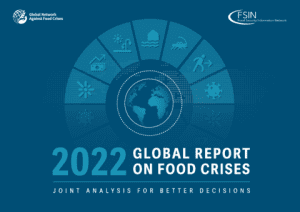
Global Report on Food Crises
In the face of the looming global food crisis and the justice questions we anticipate, might cultivated—sometimes called cultured—meat provide some level of mitigation? In our previous article, we asked these questions.
- How might we increase availability of low-cost protein to the world’s poor who lack a healthy diet?
- How might we tantalize the taste buds of the world’s affluent with new protein delicacies that will reduce their consumption of burgers, steaks, chops, and Kentucky Fried Chicken?
- How might we meet the demand for meat with a supply that virtually eliminates the slaughtering of beef cattle and chicken factory farms?
- How might vegetarian and vegan diets up their animal-based protein without the suffering of animals?
- How might animal rights advocates win a victory on behalf of nonhuman sentient creatures?
Our friends at Pax Lumina address the global food crisis with food justice in mind. We ask: might the possible revolution in meat production offer a hopeful technological fix? But, we must also ask a cultural question: how might our very understanding of meat be affected by traditional religious doctrines and values?
Humans and Other Animals
How did we get to where we are?
Since the beginning of Homo sapiens’ prehistory, when hunting became the primary source of animal proteins, very little has changed. Nothing has massively moved the needle in terms of technology. We have made great advances in meat science and technology, to be sure. But these advances have typically been around how we produce better quality products. By better quality we think of taste, texture, and nutrient content.

Isaiah 11. The Peaceable Kingdom. The Lion lies down with the lamb.
The advent of animal domestication provided an advance over hunting. Domestication made the food source easier to secure and easier to maintain consistent supply. The industrialization of domesticated animal agriculture took it one step further by creating an environment that could reproduce consistency with stellar results. Selective breeding and programmed heredity have led to technologies such as artificial insemination and genetic alteration to improve species’ pre-mortem and post-mortem merits.
Today, however, we find ourselves on the brink of a dramatic food revolution. What is about to happen is not merely an improvement in the quality or quantity of meat production. Rather, the new meat technology will lead us to re-think meat. Just what is meat? And, how does meat fit into a larger worldview, a worldview inclusive of the human diet plus living on a planet with so many of God’s nonhuman yet sentient creatures? (Thompson, 2020)
The First Option: Plant-Based Meat Substitutes
It’s the “Impossible Burger”! It may be called, “meat.” But, it’s really vegetable.
The advent of using plant-based ingredients to mimic the taste, texture, and nutrient content of animal-based meat products is a promise to meat-eaters who want to break the habit. Vegetarians or vegans who like the word, “meat,” yet avoid eating meat, welcome veggie burgers.
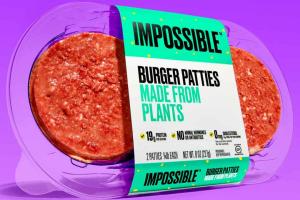
Impossible burger patties. Vegetarian.
How do we get the fake meat? The impossible meat? One technology is to extract soy leghemoglobin from genetically engineered yeast. What Impossible™ calls “heme” is the iron rich molecule like that of animal-based hemoglobin. (Impossible) This soy leghemoglobin is the ingredient that Impossible™ uses to help make the color, and presumably the eating experience, resemble that of real meat.
Plant based alternative proteins and hybrid products have produced some creative meat substitutes. A market for those who like the taste and texture of meat substitutes is growing. The question remains whether the customer is going to accept the organoleptic properties, which are sure to improve through advances in technology. Let’s see if the sourcing of raw materials will stand up to the demand.
Does fake meat attract vegetarians?
Could this be good news in India? According to the Pew Research Center, the vast majority of Indian adults (81%) follow some restrictions on meat in their diet, including refraining from eating certain meats, not eating meat on certain days, or both. However, most Indians do not abstain from meat altogether – only 39% of Indian adults describe themselves as “vegetarian,” according to a new Pew Research Center survey. While there are many ways to define “vegetarian” in India, the survey left the definition up to the respondent.
What is puzzling is the apparent contradiction between ideological vegetarianism and the fiction of fake meat. If one becomes a vegetarian guided by moral principles such as avoiding the sacrifice of animals, then pretending to dine on meat at dinner seems like ceding primacy to the carnivores. One would expect so-called “impossible meat” to have a name such as, “impossible legumes.” Be that as it may, the moral and ethical issues become far more acute when we turn to cultivated meat products proper.
The Second Option: Authentic No-Kill Cultivated Meat
The second and even more revolutionary technology that has seen advances recently is the use of cellular based meat products without the need of an animal source. To be clear, without the need of slaughtering an animal to obtain roasts, steaks or chops. To be even more clear, to initiate cellular based meat production a cell colony of at least one animal must be obtained and most likely without the animal’s permission. No harm is done to the animal.

Long horn steer in Utah. Photo by Johnny Adolphson, 2019.
This new technology is known by a variety of labels, even if the technology is similar: Cell/cellular based meat, cultivated meat, Cultured meat, in vitro cell cultures, alternative meats.
Singapore is the only country to grant approval for cultivated meats as of this writing. We expect the U.S. to follow soon. Look for products from Aleph Farms and Future Meat Technologies in Israel. In the U.S. watch for Upside Foods, Eat Just, and the non-profit Good Food Institute.
Here is what is so startling and welcome: this technology promises to eliminate the need for animals for food production, at least after a minimally invasive initial DNA sample (essentially a biopsy) of cells that can be secured and then stored away in a cell bank. This is no-kill meat.
“Cultivated meat is animal meat that does not require any farming, slaughtering, or harming of animals.” (Future Meat/Believer Meats)
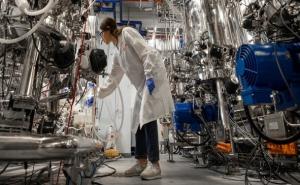
New Future Meat Technologies production facility located in Rehovot, Israel.
Does the initial sample not harm the sentient animal? We know we feel pain from biopsies. So, will consumers who see this way refuse to eat a product that was originally sourced using a potentially painful, albeit minimal, approach? Or, will a biopsy be seen as more humane than slaughtering?
Cultivated meat technology is centered on a few assumptions that make the products preferred above live animal agriculture and slaughter. By having a shorter production cycle of only 2 to 8 weeks, according to the Good Food Institute (Good Food Institute), a nonprofit tasked with promoting plant based alternative protein and cell-based products, the turn around of product is considerably faster than traditional animal agriculture and will help lend itself to feeding a growing population and demand for protein products. Professor Yaakov Nahmias, founder and chief scientific officer of Believer Meats (formerly Future Meat Technologies):
“This facility demonstrates our proprietary media rejuvenation technology in scale, allowing us to reach production densities 10-times higher than the industrial standard.” (Meat & Poultry)
Is cultivated meat kosher?
The science of cultivated meat technology leads to interesting eco-theological implications. We find ourselves overlapping with the stem cell debate in bioethics.
Yaakov Nahmias acknowledges that cultured meat can be made from a variety of cell types. While most companies choose to work with stem cells, these cells are unstable and difficult to expand. This is because embryonic stem cells in nature exist for a very short time. Adult stem cells may live longer. But adult stem cells require specialized environments. Efforts to grow these cells at large scale require either genetic intervention or expensive growth conditions.
Instead, Nahmias tells us, Future Meat Technologies has chosen to draw on fibroblasts. These are cells of the connective tissue that are robust and grow efficiently, even in difficult environments. This is because fibroblasts are naturally called upon to rapidly repair injuries such as cuts and bruises. More importantly, fibroblasts can undergo a process termed spontaneous immortalization in which cells rearrange their chromosomes and start growing indefinitely without genetic intervention. Thus, Future Meat’s cell stock for chicken, lamb, beef, and pork is non-GMO.
Now, for one theological implication. Would cultivated meat be kosher? Yes, says Nahmias. Nahmias goes to the Hebrew Bible. Here is a relevant prohibition . Ever Min Ha-Hai (Heb. אבר מן החי) is a biblical injunction against a removal of a piece of flesh from a living animal and its consumption. Deuteronomy 12:23 states “and thou shalt not eat the life with the flesh”. This prohibition is one of the seven Noachian Laws (Genesis 9:4).
To keep cultivated meat kosher, Future Meat Technologies does not isolate cells from a biopsy from a living animal. Instead, they isolate fibroblasts from discarded tissue taken from an animal that was slaughtered in a Kosher process (Heb. שחיטה). This ensures that the meat produced would be both kosher and halal. As the cells immortalize and grow forever, the process of taking the cells only has to happen once and no other contact with animals or their ingredients occurs during the manufacturing process of cultured meat.
Even if “no-kill” does not obtain here, kosher does. At least according to Nahmias.

Just, Sustainable, Participatory, and Planetary Society.
From Cultivated Meat to Ecological Healing
It is our hope that cultivated meat technology will have benefits for ecology. and ecotheology. It reduces the need for live animals to take up space and devour resources. Fewer live animals means less land and water depletion. It means producing less greenhouse gases. It means reducing agriculture deforestation and biodiversity loss. It means less zoonotic outbreaks. And it means less antibiotic resistance. Now, the data is not yet definitive on a scalable level. Yet, a cultivated meat industry on a large scale should make any eco-ethicist’s mouth water.
From a food safety perspective, the cellular based technology touts a reduced risk of enteric pathogens of concern. Yet, because it is a food product, there is still risk from non-enteric sources.
In the United States of America, the production of cellular based meat products is highly regulated by both the FDA (United States Food and Drug Administration) as well as the USDA (United States Department of Agriculture.) Overly simplified, the FDA has regulatory authority of the cell growth phase of production, whereas the USDA has regulatory authority of the produced biomass through packaging and distribution.
While the technology of cellular based meat is cutting edge to the food industry, it is not new to other fields. Using similar biotechnology in other sectors such as medicine has been ongoing. (Specht et al.)
“Decades of accumulated knowledge in cell culture, stem cell biology, tissue engineering, fermentation, and chemical and bioprocess engineering preceded the field of cultivated meat” (Good Food Institute)
The technology used in biomedical engineering and cell cultured meat products is also being used in food applications other than meat, including in milk and dairy products, without the need of animal agriculture.

Global Network for Public Theology
What’s Next?
“We really must treat the planet as our commons,” writes sockdolager eco-theologian Larry Rasmussen; “and nurture human good and the good of others that share in the commons.” This is the framework within which we approach the topic of no-kill cultivated meat.
This treatment of no-kill cultivated meat is an exercise in public theology, especially ecotheology. We would like to garner religious responses to the forecast that no-kill meat options could be made available for our dinner tables and restaurants in the medium range future. We hypothesize that no-kill meat will come as welcome relief to our steers, hogs, and chickens. It will come as welcome relief to those of us who love animals. It will come as welcome relief for those of us looking to rescue our planet from continued degradation.
But, before jumping to conclusions, we’d like to ask people what they think. In Part Two of To Eat No-Kill Cultivated Meat, we will do just that. We will ask Jewish Studies Professor Sam Shonkoff to provide more detail on the question: is cultivated meat kosher? In future posts we’ll ask Dharma scholar Rita Sherma to answer for Hindus and Jains. We’ll ask LDS theologian, Lincoln Cannon, to approach cultivated meat from a Mormon perspective. And, we’ll ask Muslim Mahjabeen Dhala whether cultivated meat would be halal. Get ready to click.
Here is an illuminating video from TED.
Which is better for you: real meat or fake meat?
Here is where we are and what’s coming.
To Eat No-Kill Cultivated Meat. Part One: The Science with Brian Brosovic
To Eat No-Kill Cultivated Meat. Part Two: Kosher? Interview with Sam Shonkoff
To Eat No-Kill Cultivated Meat. Part Three: Hindu? Jain? Interview with Rita Sherma
To Eat No-Kill Cultivated Meat. Part Four: Mormon? Interview with Lincoln Cannon
To Eat No-Kill Cultivated Meat. Part Five: Muslim? Interview with Mahjabeen Dahla
To Eat No-Kill Cultivated Meat: Part Six: Catholic? Interview with Lisa Fullam
To Eat No-Kill Cultivated Meat. Part Seven: Christian Vegetarian? Interview with John Ryder
To Eat No-Kill Cultivated Meat. Part Eight: Food Theology? Interview with Norman Wirzba
▓
 Brian Brozovic is a student at Pacific Lutheran Theological Seminary and Ted Peters is an emeritus professor at Pacific Lutheran Theological Seminary in Berkeley, California, USA. Visit Professor Peters’ website: TedsTimelyTake.com.
▓
References
Ito, N. I. (2017). Direct reprogramming of fibroblasts into skeletal muscle progenitor cells by transcription factors enriched in undifferentiated subpopulation of satellite cells. Sci Rep 7:8097, https://doi.org/10.1038/s41598-017-08232-2.
Peters, T. (2018). Public Theology: Its Pastoral, Apologetic, Scientific, Politial, and Prophetic Tasks. International Journal of Public Theology 12:2, 153-177; https://brill.com/abstract/journals/ijpt/12/1/ijpt.12.issue-1.xml.
Specht, E. D. (2018). Opportunities for applying biomedical production and manufacturing methods to the development of the clean meat industry. Biochemical Engineering Journal 132, 161-168. doi.org/10.1016/j.bej.2018.01.015.
Thompson, P. (2020). Food Biotechnology in Ethical Perspective, 3rd ed. Heidelberg: Springer.
Wu, W. Y. (2017). Directly reprogramming fibroblasts into adipogenic, neurogenic and hepatogenic differentiation lineages by defined factors. Exp Ther Med 6, 2685-2690. . doi: 10.3892/etm.2017.4365. Epub 2017 Apr 20. PMID: 28587331; PMCID: PMC5450766.
Pagan
Jewish
Interfaith
Hindu
General Christian
Evangelical
Eastern Orthodox
Catholic
Buddhism
Health, Fitness and Religion
Food and Religion

About Brian Brosovic and Ted Peters
Brian Brozovic is a student at Pacific Lutheran Theological Seminary and Ted Peters is an emeritus professor at Pacific Lutheran Theological Seminary in Berkeley, California, USA. Visit Professor Peters’ website: TedsTimelyTake.com. You can read more about the author here.
Previous Post

September 16, 2022
How does Jesus save? Part Three: Christus Victor
Next Post
September 20, 2022 The Public Theology of Sharon Delgado, Part Two
Recent Comments
Browse Our Archives
Select a Category Afterlife America in Crisis Ancient Alien Apocalypse Art Artificial Intelligence Astrobiology Astrotheology Atheism Big History Buddhist Catholic Christian Nationalism Christmas Comparative Theology Death Ecology Ethics ETI Evangelical Evolution Existential Questions Free Will General Christian Hermeneutics Hindu https://www.patheos.com/blogs/allsetfree/2020/12/sins-we-need-to-talk-about/?utm_source=Newsletter&utm_medium=email&utm_campaign=Christians+For+a+Better+Christianity&utm_content=43&lct Interreligious Islam Jewish Justice Latter-Day Saints Literature Literature and Theology Lutheran Methodism Mormonism Nonreligious ontology Orthodox Pagam Prayer progressive Christian PT 6 Dignity Public Theology Race racial justice Religious Liberty Romance Satan Scapegoat Science & Religion Science and Religion social justice Spirituality SR 8 Transhumanism Systematic Theology Taoism Ted Peters UAP UFO Uncategorized War
Select a Month September 2026 August 2026 July 2026 June 2026 May 2026 April 2026 March 2026 February 2026 December 2025 November 2025 October 2025 September 2025 August 2025 July 2025 June 2025 May 2025 April 2025 March 2025 February 2025 January 2025 December 2024 November 2024 October 2024 September 2024 August 2024 July 2024 June 2024 May 2024 April 2024 March 2024 February 2024 January 2024 December 2023 November 2023 October 2023 September 2023 August 2023 July 2023 June 2023 May 2023 April 2023 March 2023 February 2023 January 2023 December 2022 November 2022 October 2022 September 2022 August 2022 July 2022 June 2022 May 2022 April 2022 March 2022 February 2022 January 2022 December 2021 November 2021 October 2021 September 2021
Follow Us!
TAKE THE
Religious Wisdom Quiz
Who was the first woman created by God?
Select your answer to see how you score.
Rebekah Sarah Eve Mary
Related posts from Public Theology

Why Public Theology Needs a Theology of Nature

America's 250th Birthday Gift: Civic Renewal

Do You Believe in UFOs? A Theologian's Answer.

Free Will and Christian Freedom TWO
TRENDING AT PATHEOS Progressive Christian

What Being a Modern-Day Apostle Means to Me
In my last column, I discussed the ins and outs of modern-day...

Did Ancient China Once Worship the God of...
Across human history, a common thread weaves through the origins of the...

Love Your Neighbor – Including Earth-Kin: Lev. 19,...
God’s command to love your neighbor means acting in an ethical and...

Lead a Church Study of “Jesus and Lao...
Guest writer Jack Thomas (The Irreverent Reverend) reflects on leading his church...

Pastoral Wisdom for Responding to Sermon Pushback
Getting sermon pushback on your social justice sermon? Learn practical, Proverbs-based strategies...

Principles for Understanding the Apostolic Ministry Today
Whenever people discover that my formal ministry title is "apostle," as in...
view all Progressive Christian blogs
Ad-Free & Subscriber Log-In Subscription Support
- About Us
- 2026 Calendar
- Videos
- Podcasts
- Library of World Religions
- Faith In Media Tracker
- Advertise With Us
- Write for Us
- Privacy Policy
- Terms of Service
- Do Not Sell My Data
- Contact Us
- Radiant Digital
- Manage Newsletter Subscriptions
- Unsubscribe From Notifications
- Sitemap
Copyright 2008-2026, Patheos. All rights reserved.
Subscription Support Ad-Free & Subscriber Log-In
Follow Patheos