
BuddhistCatholicContemplativeEvangelicalGeneral ChristianHinduJewishLatter-day SaintMuslimNew VisionsProgressive Christian
Beliefs
- Buddhist
- Catholic
- Contemplative
- Evangelical
- General Christian
- Hindu
- Jewish
- Latter-day Saint
- More Voices
- Muslim
- New Visions
- Pagan
- Progressive Christian
Topics
- Religion News
- Food and Religion
- Sports and Religion
- Religious Art
- Religious Music and Entertainment
- Religious Events
- History and Religion
- Style and Religion
- Politics and Religion
- Women in Religion
- Recreation Outdoors and Religion
- Business Finance and Religion
- Careers Workplace and Religion
- Education and Religion
- Family Parenting and Religion
- Health Fitness and Religion
- Home and Religion
- Relationships and Religion
- Technology and Religion
- Travel and Religion
Columnists
- Buddhist Columnists
- Business Finance and Religion Columnists
- Careers Workplace and Religion Columnists
- Catholic Columnists
- Contemplative Columnists
- Education and Religion Columnists
- Evangelists Columnists
- Family Parenting and Religion Columnists
- General Christian Columnists
- Health Fitness and Religion Columnists
- Hindu Columnists
- History and Religion Columnists
- Home and Religion Columnists
- Jewish Columnists
- More Voices Columnists
- Latter Day Columnists
- Muslim Columnists
- New Visions Columnists
- Nonreligious Columnists
- Pagan Columnists
- Politics and Religion Columnists
- Progressive Columnists
- Recreation Outdoors and Religion Columnists
- Relationships and Religion Columnists
- Religion News Columnists
- Religious Art Columnists
- Religious Events Columnists
- Religious Music and Entertainment Columnists
- Sports and Religion Columnists
- Style and Religion Columnists
- Technology and Religion Columnists
- Travel and Religion Columnists
- Women in Religion Columnists
Resource Library
- 2026 Calendar
- Library of World Religions
- The 100 Most Holy Places on Earth
- Patheos Answers
- Podcasts
- Videos
- Faith Leaders Database
- Anglican Episcopalian
- Bahai
- Baptist
- Buddhism
- Christianity
- Confucianism
- Eastern Orthodoxy
- Hinduism
- Holiness and Pentecostal
- ISKCON
- Islam
- Judaism
- Lutheran
- Methodist
- The Church of Jesus Christ of Latter-day Saints
- New Age
- Paganism
- Presbytarian and Reformed
- Protestantism
- Religion Behind the Scenes
- Roman Catholic
- Scientology
- Shia Islam
- Sikhism
- Sufism
- Sunni Islam
- Taoism
- Zen
- See all religions
Research Tools
 Ad-Free & Subscriber Log-In Subscription Support
Follow Patheos 

- Trending:
- Advent
- |
- Forgiveness
- |
- Thanksgiving
- |
- Election
- |
- Seasonal Holidays
- |
- Marriage

- Home
- Progressive Christian
- Travel and Religion
- Taiwan Crisis?
Taiwan Crisis?
Last updated on: July 4, 2023 at 8:49 pm by Ted Peters
Taiwan Crisis? 2023-07-04T20:49:19-07:00 Ted Peters
Patheos Explore the world's faith through different perspectives on religion and spirituality! Patheos has the views of the prevalent religions and spiritualities of the world.
Taiwan Crisis of 2022?
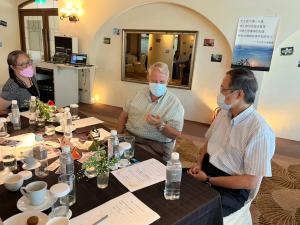
PT 3301. Professor Frank Budenholzer at Fu Jen Catholic University

Taiwan crisis?
If you’ve been worried about the loss of freedom in Hong Kong, is it time to worry about Taiwan too? Mother China—the Peoples Republic of China—seems to want to return her island children to the womb. Forcibly. The world now has the Fourth Taiwan Crisis to worry about.[1]
In a previous post—“The Public Theology of Kang Phee Seng”—we learned that today’s Hong Kong is no longer the one we’ve come to love. Local freedoms have been gobbled up by the mainland dragon. Might Taiwan’s crisis end with the dragon gobbling up more?
A recent webinar, “Taiwan’s Christians: What’s at Risk if China Takes Taiwan,” certainly frightened me.
So, it’s time to meet Frank Budenholzer, S.V.D. Fr. Frank is a Roman Catholic priest and member of the Society of the Divine Word. He is also Professor Emeritus of Chemistry at Fu Ren Catholic University in Taipei, Taiwan. Over the decades he has ferried back and forth between Taiwan and mainland China twice a month or so. Let’s ask Frank for his sober evaluation of the Taiwan crisis.
Question 1. Frank, how long have you been a professor at Fu Jen Catholic University in Taipei? How have things changed in recent months as Beijing threatens to bring Taiwan back to the motherland?

Professor Frank Budenholzer, SVD. Fu Jen Catholic University. Taipei, Taiwan.
Frank Budenholzer. I came to Taiwan in 1978, after professing perpetual vows as a member of the Society of the Divine Word, ordination to the Catholic priesthood and completing an MA in theology at the Catholic Theological Union in Chicago and my Ph.D. in physical chemistry at the University of Illinois in Chicago. I began full time at Fu Jen Catholic University in 1980. I retired as a professor in 2009. From 2008 until 2017 I held an administrative position with my religious community and regularly visited Mainland China, Hong Kong and Macau. I am now back at Fu Jen University as the executive trustee. I have not recently visited China, Hong Kong or Macau because of the covid-19 pandemic.
We are, of course, aware of the threats of Beijing to join Taiwan to the Mainland using military force if necessary. However, the threats and international media attention focused on the Taiwan crisis have had very little impact on our day-to-day lives, at least here at the university and among my colleagues and friends. We sometimes joke while dining that Taiwan people are the least concerned about the threat.
Question 2. Is it realistic to forecast that mainland China will try to take Taiwan by military force? Are there movements within Taiwan who want to reunite with mainland China and become communist?
Frank Budenholzer. In talking with friends in China, there is clearly a consensus in China that Taiwan should be re-united with the Mainland. It is a very dangerous situation. There is always a concern the Chinese leadership will use the Taiwan situation to distract the Chinese population from problems at home. There is also no doubt here in Taiwan that the Mainland military is continually increasing in strength. Perhaps most worrying from the Chinese perspective is the fact that the clear majority of people in Taiwan consider themselves simply Taiwanese with a smaller group identifying as Chinese and Taiwanese. Very, very few identify as simply Chinese.
At present the vast majority of Taiwan citizens favor maintaining the status quo and avoiding a declaration of independence which would anger Mainland China. There is a small group who favor unification with China as the long-term goal. I have never met anyone who suggests becoming communist.
Question 3. Many around the world fear that the future of Christianity could be at stake. Under Beijing rule, Taiwanese Roman Catholics and other Christians would lose their precious freedom to think independently and to worship Jesus Christ as Lord of Lords and King of Kings. Is this your assessment of the Taiwan crisis?
Fu Jen Catholic University, Taipei, Taiwan.
Frank Budenholzer. The Chinese constitution guarantees freedom of religion but is also a declared atheist state. Catholic, Protestants and other faiths are allowed to worship in China. China is a huge country, so the situation varies considerably from one province to another. However, the government is, no doubt, increasingly repressive. For example, for a long time there has been a rule that those under 18 years of age should not participate in religious services. However, the rule is only now being enforced in many places.
The Chinese government shows little interest in the belief systems of Christians. The Chinese government feels the need to control religious organizations and, in principle, does not allow any formal relationship with foreign entities. In Hong Kong and Macau political freedom has been sharply curtailed. However, the Catholic and Protestant churches and parishes continue to operate more or less as before the crackdown. Private church-sponsored schools continue operate in Hong Kong and still receive government subsidies. Opinions vary on the future of religious freedoms in the Special Administrative Regions. Presumably, if Taiwan would be controlled by Beijing, the situation, at least initially, would be similar to that in Hong Kong and Macau. It is more difficult to speculate on the long-term situation. But is hard to be too optimistic.
There are private universities in Mainland China but, as far as I know, none identify as religiously based institutions. There are also both Catholic and Protestant schools of theology for the training of clergy and religious, closely monitored by the government. Would Fu Jen Catholic University, as well as other Catholic and Protestant universities in Taiwan, be allowed to continue operating if Taiwan would come under Mainland Chinese control? Initially probably so, but it is difficult to know in the long term.
Question 4. Currently the Vatican and Beijing have an agreement that permits Roman Catholics within the Peoples Republic of China to have some elbow room. Are you happy with this agreement? Many are asking Pope Francis to nullify this agreement. What is your stand on the issue?
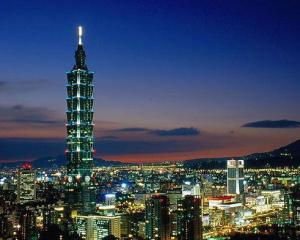
Taipei 101 Tower. Notice the upside down pagoda architecture. Taiwan crisis?
Frank Budenholzer. The agreement between the Vatican and the Peoples Republic of China was first signed in September 2018 and was renewed in 2000. The agreement will up for renewal in October 2022. The agreement is limited in scope and has never been made public. However, the basic content of the agreement is clear that the Vatican and the Chinese government will cooperate in the selection of bishops and the final appointment will be made by the pope. Presumably the Vatican has veto power on names presented by the Chinese government. But this is not completely clear. There was a similar understanding in place for many years before the agreement and the majority of the Catholic bishops in China also have the approval of the Holy See. The bishops appointed by the Chinese government without the approval of the Holy See have always been kept at a distance, both by the underground church and by the rank-and-file of the government sanctioned above ground church.
The agreement is controversial both within Catholic circles in China and overseas. It is also controversial within the Chinese government. From the Chinese side, the agreement seems to violate the basic principle, enunciated from the early years of the Marxist government, that Chinese religious institutions should sever any ties with foreign authorities. From the church side, the increasing repression of the church is quite clear. And it is not clear that the Chinese authorities have kept the agreement.
Should the agreement be renewed later this year? I tend to agree with Pope Francis that it is worth trying to come to some kind of agreement. However, if the Chinese authorities do not keep to the agreement and if they continue the practice of using the agreement to put pressure on both priests and lay Catholics to join the patriotic association, when in conscience they prefer not to, then perhaps it is better to let the agreement lapse.
Global Network for Public Theology
Conclusion
Thank you, Frank Budenholzer.
 This engagement with the Taiwan crisis has been an exercise in public theology. It takes the form of discourse clarification. We are attempting to understand a situation with many unknowns. The chief unknown is this: what will Beijing do? Because we do not know yet, it’s difficult to measure the Taiwan crisis.
Repeatedly I’ve proffered that public theology is conceived in the church, critically honed in the academy, and offered to the world for the sake of the common good. In the case of the Taiwan crisis, I believe the common good includes relative independence for the Taiwanese people and liberty for the Taiwanese Christians.
[1] The First Taiwan crisis was 1954-1955. The Second Taiwan crisis took place in 1958 and the Third in 1995-1996. Historians dub the present situation the Fourth Taiwan Crisis.
▓

Ted Peters, CYRUS TWELVE, a fictional spy thriller.
Ted Peters pursues Public Theology at the intersection of science, religion, ethics, and public policy. Peters is an emeritus professor at the Graduate Theological Union, where he co-edits the journal, Theology and Science, on behalf of the Center for Theology and the Natural Sciences, in Berkeley, California, USA. His book, God in Cosmic History, traces the rise of the Axial religions 2500 years ago. He previously authored Playing God? Genetic Determinism and Human Freedom? (Routledge, 2nd ed., 2002) as well as Science, Theology, and Ethics (Ashgate 2003). He is editor of AI and IA: Utopia or Extinction? (ATF 2019). Along with Arvin Gouw and Brian Patrick Green, he co-edited the new book, Religious Transhumanism and Its Critics hot off the press (Roman and Littlefield/Lexington, 2022). Soon he will publish The Voice of Christian Public Theology (ATF 2022). See his website: TedsTimelyTake.com. This fictional spy thriller, Cyrus Twelve, includes scenes within Taipei 101 Tower.
General Christian
Catholic
Travel and Religion
Technology and Religion
Politics and Religion
History and Religion
Education and Religion
Business, Finance and Religion

About Ted Peters
Ted Peters pursues Public Theology at the intersection of science, religion, ethics, and public policy. Peters is an emeritus professor at the Graduate Theological Union, where he co-edits the journal, Theology and Science, on behalf of the Center for Theology and the Natural Sciences, in Berkeley, California, USA. His book, God in Cosmic History, traces the rise of the Axial religions 2500 years ago. He previously authored Playing God? Genetic Determinism and Human Freedom? (Routledge, 2nd ed., 2002) as well as Science, Theology, and Ethics (Ashgate 2003). He is editor of AI and IA: Utopia or Extinction? (ATF 2019). Along with Arvin Gouw and Brian Patrick Green, he co-edited the new book, Religious Transhumanism and Its Critics hot off the press (Roman and Littlefield/Lexington, 2022). Soon he will publish The Voice of Christian Public Theology (ATF 2022). See his website: TedsTimelyTake.com. NOTE: The fictional spy thriller, "Cyrus Twelve," includes scenes within Taipei 101 Tower. You can read more about the author here.
Previous Post

September 26, 2022
How does Jesus save? Part Four: Satisfaction
Next Post
September 30, 2022 How does Jesus save? Part Five: Penal Substitution
Browse Our Archives
Select a Category Afterlife America in Crisis Ancient Alien Apocalypse Art Artificial Intelligence Astrobiology Astrotheology Atheism Big History Buddhist Catholic Christian Nationalism Christmas Comparative Theology Death Ecology Ethics ETI Evangelical Evolution Existential Questions Free Will General Christian Hermeneutics Hindu https://www.patheos.com/blogs/allsetfree/2020/12/sins-we-need-to-talk-about/?utm_source=Newsletter&utm_medium=email&utm_campaign=Christians+For+a+Better+Christianity&utm_content=43&lct Interreligious Islam Jewish Justice Latter-Day Saints Literature Literature and Theology Lutheran Methodism Mormonism Nonreligious ontology Orthodox Pagam Prayer progressive Christian PT 6 Dignity Public Theology Race racial justice Religious Liberty Romance Satan Scapegoat Science & Religion Science and Religion social justice Spirituality SR 8 Transhumanism Systematic Theology Taoism Ted Peters UAP UFO Uncategorized War
Select a Month September 2026 August 2026 July 2026 June 2026 May 2026 April 2026 March 2026 February 2026 December 2025 November 2025 October 2025 September 2025 August 2025 July 2025 June 2025 May 2025 April 2025 March 2025 February 2025 January 2025 December 2024 November 2024 October 2024 September 2024 August 2024 July 2024 June 2024 May 2024 April 2024 March 2024 February 2024 January 2024 December 2023 November 2023 October 2023 September 2023 August 2023 July 2023 June 2023 May 2023 April 2023 March 2023 February 2023 January 2023 December 2022 November 2022 October 2022 September 2022 August 2022 July 2022 June 2022 May 2022 April 2022 March 2022 February 2022 January 2022 December 2021 November 2021 October 2021 September 2021
Follow Us!
TAKE THE
Religious Wisdom Quiz
Which Psalm is the longest chapter in the Bible?
Select your answer to see how you score.
Psalm 50 Psalm 1 Psalm 23 Psalm 119
Related posts from Public Theology

Why Public Theology Needs a Theology of Nature

America's 250th Birthday Gift: Civic Renewal

Do You Believe in UFOs? A Theologian's Answer.
Free Will and Christian Freedom TWO
TRENDING AT PATHEOS Progressive Christian

The Secret behind A Charlie Brown Thanksgiving
Do you know the secret behind A Charlie Brown Thanksgiving? Sparky was...

Bridging the Gap Between God and Man
From Far Off to the Ultimate Embrace “God is a Spirit: and...

Let Matthew 25 Guide You to a Greater...
With the crisp feel of fall in the air, our minds quickly...

Can a Chatbot Touch Your Soul?
Can a chatbot offer genuine spiritual counsel? One conversation brought me to...

Religion and Politics: How Should We Then Live?
Two cultural axioms get repeated in polite company. Don't mix religion and...

7 Things We Get Wrong About Giving Thanks
It's a time of year when many of us turn to the...
view all Progressive Christian blogs
Ad-Free & Subscriber Log-In Subscription Support
- About Us
- 2026 Calendar
- Videos
- Podcasts
- Library of World Religions
- Faith In Media Tracker
- Advertise With Us
- Write for Us
- Privacy Policy
- Terms of Service
- Do Not Sell My Data
- Contact Us
- Radiant Digital
- Manage Newsletter Subscriptions
- Unsubscribe From Notifications
- Sitemap
Copyright 2008-2026, Patheos, part of the Radiant Digital network of media brands. All rights reserved.
Subscription Support Ad-Free & Subscriber Log-In
Follow Patheos