
BuddhistCatholicContemplativeEvangelicalGeneral ChristianHinduJewishLatter-day SaintMuslimNew VisionsProgressive Christian
Beliefs
- Buddhist
- Catholic
- Contemplative
- Evangelical
- General Christian
- Hindu
- Jewish
- Latter-day Saint
- More Voices
- Muslim
- New Visions
- Pagan
- Progressive Christian
Topics
- Religion News
- Food and Religion
- Sports and Religion
- Religious Art
- Religious Music and Entertainment
- Religious Events
- History and Religion
- Style and Religion
- Politics and Religion
- Women in Religion
- Recreation Outdoors and Religion
- Business Finance and Religion
- Careers Workplace and Religion
- Education and Religion
- Family Parenting and Religion
- Health Fitness and Religion
- Home and Religion
- Relationships and Religion
- Technology and Religion
- Travel and Religion
Columnists
- Buddhist Columnists
- Business Finance and Religion Columnists
- Careers Workplace and Religion Columnists
- Catholic Columnists
- Contemplative Columnists
- Education and Religion Columnists
- Evangelists Columnists
- Family Parenting and Religion Columnists
- General Christian Columnists
- Health Fitness and Religion Columnists
- Hindu Columnists
- History and Religion Columnists
- Home and Religion Columnists
- Jewish Columnists
- More Voices Columnists
- Latter Day Columnists
- Muslim Columnists
- New Visions Columnists
- Nonreligious Columnists
- Pagan Columnists
- Politics and Religion Columnists
- Progressive Columnists
- Recreation Outdoors and Religion Columnists
- Relationships and Religion Columnists
- Religion News Columnists
- Religious Art Columnists
- Religious Events Columnists
- Religious Music and Entertainment Columnists
- Sports and Religion Columnists
- Style and Religion Columnists
- Technology and Religion Columnists
- Travel and Religion Columnists
- Women in Religion Columnists
Resource Library
- 2026 Calendar
- Library of World Religions
- The 100 Most Holy Places on Earth
- Patheos Answers
- Podcasts
- Videos
- Faith Leaders Database
- Anglican Episcopalian
- Bahai
- Baptist
- Buddhism
- Christianity
- Confucianism
- Eastern Orthodoxy
- Hinduism
- Holiness and Pentecostal
- ISKCON
- Islam
- Judaism
- Lutheran
- Methodist
- The Church of Jesus Christ of Latter-day Saints
- New Age
- Paganism
- Presbytarian and Reformed
- Protestantism
- Religion Behind the Scenes
- Roman Catholic
- Scientology
- Shia Islam
- Sikhism
- Sufism
- Sunni Islam
- Taoism
- Zen
- See all religions
Research Tools
 Ad-Free & Subscriber Log-In Subscription Support
Ad-Free & Subscriber Log-In Subscription Support
Follow Patheos 

- Trending:
- Forgiveness
- |
- Marriage
- |
- Consciousness
- |
- Death Penalty
- |
- Election
- |
- Halloween

- Home
- Progressive Christian
- Technology and Religion
- What is Truth in Science and Theology? Part One
What is Truth in Science and Theology? Part One
Last updated on: May 27, 2023 at 9:23 am by Ted Peters
What is Truth in Science and Theology? Part One 2023-05-27T09:23:43-07:00 Ted Peters
Patheos Explore the world's faith through different perspectives on religion and spirituality! Patheos has the views of the prevalent religions and spiritualities of the world.
What is Truth in Science and Theology?
SR 4000
 What is truth? This is the question we asked in a previous post, “What is truth?” Here is the answer I tendered there: Truth is the revelation and acceptance of what is genuinely real. We will follow this up in “What is Truth in Science and Theology? Part Two” and in “What is Theological Methodology?“
Now I ask: can truth in science and theology cooperate with one another? I answer: the public theologian should ally with those scientists who offer confirmable propositions about physical reality and are committed to truth-telling.
Truth, says theologian Roger Olson rightly, is “reality itself whether anyone knows it or not.” But, we want to know it.
Whenever we ask for truth, we are asking reality to reveal itself to us. The experience of truth takes place when what is real becomes disclosed, unconcealed, uncovered. In short, when reality reveals itself we come to know truth.
The public theologian should anchor public discourse in the truth like a pile driver anchors the support pillars of a skyscraper. Wherever bedrock commitment to truth can be found, the public theologian can confidently gather building materials for worldview construction.
But, “Houston! We have a problem!” What is the problem? Misinformation. Worse? Disinformation. Still worse? Lies. Even still worse, fake face generation to distribute the lies.
Here is my bottom line regarding truth in science and theology: the public theologian should become an ally with the scientific community. Our scientists, for the most part, embrace a morality of knowledge that is committed to truth-telling. The common good of our wider society requires such truth-telling to maintain its sanity and avoid devolving into mania.
Are ancient aliens responsible for the assassination of President Kennedy?

Ancient Aliens, Georgio Tsoukalos
Example. Like so many of us, my wife, Karen, and I enjoy watching ancient alien documentaries. These alleged scientific investigations into archaeology purport to nullify the religious claims of our ancestors and replace them with accounts of extraterrestrial technology. Instead of hearing the Word of God or the melody of the angels, could the ancient Hebrews have been listening to more advanced engineers from another planet? Instead of a whale swallowing Jonah, could Jonah have been abducted by a submersed flying saucer piloted by aliens?
But, that is not all. Ancient alien directors along with UFO documentaries add a conspiracy theory to their alternative archaeology. Which conspiracy theory? Here it is: the U.S. government is secretly allied with one or more alien civilizations. Further, for military reasons, the government has kept this relationship ultra-top secret since the 1940s. The mantra of the UFO lobby: we want disclosure!
Ancient Aliens
Richard Dolan
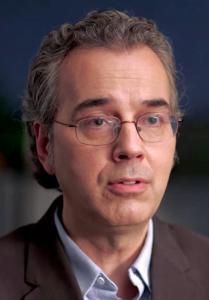
In a recent episode of UFOs: The Lost Evidence, interviewees such as Richard Dolan and Nick Pope—called “Top Cast”–invoked the term, “deep state.” Further, the deep state was said to be responsible for the assassination of President John F. Kennedy. Why would aliens and their terrestrial accomplices want Kennedy dead? Suggested answer: to keep that particular president from revealing to the public the connection between America and extraterrestrials. Really?
Now, how should we classify such a claim made within the framework of a documentary that has the trappings of being a scientific investigation into archaeology? Is it misinformation? Or is it deliberate disinformation for the purpose of stirring up audience interest in the subject of UFOs? Or, worse, do the directors and interviewees actually know that this is a lie? Do they actually know that such a claim is unconfirmable by any empirical evidence?
Here’s what is important for our approach here to the truth question. Misinformation regarding the relationship of UFOs to USA is being served on a silver platter that looks and sounds like science.

Ancient Aliens
Nick Pope
What I recommend is that the public theologian distinguish between genuine science and pseudoscience. The task of discourse clarification includes pointing out misinformation, disinformation, and lies. Discourse clarification prepares us to ask about truth in science and theology.
Science Friction and the loss of truth
Scientists are complaining about this matter. Because television documentaries such as the ancient alien series pretend to be scientific treatments of sensational topics, they rely on interviews with experts. But, what if an expert disagrees with the message of the documentary director? No problem. The director simply selects phrases from within the interview that support the film’s thesis. Interviewed scientists complain because their words have been “taken out of context.”
Why the deception? Could it be motivated by sensationalism? Alarmism? Mystery mongering? Or, in the case of the ancient alien series, to propagate a technological materialism to replace an alleged atavistic spiritualism?

Sarcophagus of King Pakal, Temple of the Inscriptions, Palenque, 400-600AD. Does it look like King Pakal is piloting a rocket ship?
Brian Dunning has just released his own counter-documentary, Science Friction, on this topic. Dunning gives scientists an opportunity to clear the record. David Anderson, an expert on Mayan civilization, for example, describes how an ancient alien episode turned what he actually said into meaning exactly the opposite.
Eric voGeorgio Tsoukalosn Däniken, in Chariots of the Gods?, said the sarcophagus of King Pakal entombed in the Temple of the Inscriptions at Palenque (400-600 CE) looked like an astronaut captaining a rocket. Despite what it looks like, said Professor Anderson, that is not what is depicted here. Anderson pleaded for alternative archaeologists to examine the ancient Mayan context. This was deleted in the broadcast.
Kenny Feder, an archaeologist also interviewed in Science Friction, tells us he is committed to providing only honest reports of his scientific findings. But, such honesty is something his documentary director cavalierly disregards.
In my own research leading to the book, UFOs–God’s Chariots?, I provide an extensive analysis of Eric von Däniken and his ancient astronaut theory. When I wrote the first edition in 1976, the von Däniken phenomenon was brand new. Since then, like an acorn sown in pseudo-scientific soil, it has grown uncontrollably into a gargantuan tree.
In sum, here’s what the public theologian’s discourse clarification could elucidate: scientists work with a morality of knowledge that invests them in sober honesty about what is real. Our scientists deserve public support for waving the banner of truth-telling. This does not apply to ancient alien programs on the History Channel.
Why is Truth so Difficult in our Digital Age?
Distinguishing truth from untruth is about as easy as distinguishing Jupiter from Venus on a foggy night. The truth-hiding-fog comes to us in the form of webthink, Twitter rants, science denial, anti-religious vitriol, and even terrorist recruitment.
What might discourse clarification reveal here about truth in science and theology? A couple things. First, the scientific community maintains a rigorous reverence for factual knowledge which complements religious faith’s thirst for ultimate truth. The public theologian should occasionally thank the scientist for this vigilance. Second, neither facts nor faith are welcome in the media. Reverence for either factual knowledge or faith’s testimony are as welcome on the web as a dead rat in a Christmas eggnog bowl.
Here is the problem from the scientist’s point of view.
“This new and open model [the internet] has given anyone with web access a global platform to propagate information that is mistakenly or intentionally false. This is especially problematic when it comes to scientific information, which is critical to rational policy-making in areas like health, environmental protection, and national security, and at its best is often misinterpreted by the lay public” (Weiss 27 October 2017).
The challenge facing the public theologian is twofold and enigmatic. On the one hand, we live in a post-truth political climate awash in a sea of public communication influenced if not dominated by the webmind. The webmind is deluged by a relentless flood of claims, counter-claims, disinformation, and fabricated lies disguised as facts. Inside the webmind we find a free-for-all.
“Former distinctions between state, civil society and citizenry are becoming increasingly blurred. The political landscape is one of a ‘mixed polity’ in which models from the legacy of modernity coexist with postmodern novelties to form a welter of jurisdictions, networks and domains, some defined in terms of recognized territories, some defined in formal institutional terms, some based on interests and affinities, some constituted online, but many defined in hybrid terms” (Stoddard 2008, 334).
Cyberdemocracy and religious pluralism
In the eye of the hurricane we find good news. No one is marginalized in the era of cyberdemocracy with its inescapable pluralism. During the increasingly effete modern period believers were excluded from the public square, sequestered in a ghetto of subjective perspective, arbitrary authority, or private opinion. Now, because of pluralism, the public square may be opening up again to religious contributions.
A politically sober church should ready itself to engage in this communications free-for-all with a rational and prophetic message which, due to its own inherent integrity, has a good chance of gaining rightful attention. Further, courageous religious leaders should offer aid, comfort, and support to scientists who defend evidence-based facts against current threats to psychic peace and social stability.
What comes next?
Here in Part One of “What is truth in science and theology?”, we have distinguished between genuine science and pseudo-science. I recommend that the public theologian heartily embrace genuine science as an ally in the pursuit of truth.
We are asking about truth in science and theology in this series of posts. In Part Two coming up, we will distinguish between genuine science and scientism, the materialist ideology all too forceful in social media. There, as you can imagine, I will recommend that the public theologian embrace genuine science and eschew scientism.
▓
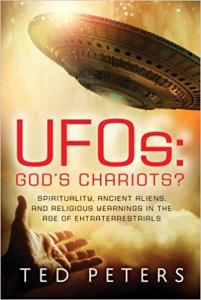 Ted Peters directs traffic at the intersection of science, religion, and ethics. Peters is an emeritus professor at the Graduate Theological Union, where he co-edits the journal, Theology and Science, on behalf of the Center for Theology and the Natural Sciences, in Berkeley, California, USA. He authored Playing God? Genetic Determinism and Human Freedom? (Routledge, 2nd ed., 2002) as well as Science, Theology, and Ethics (Ashgate 2003). Along with Martinez Hewlett, Joshua Moritz, and Robert John Russell, he co-edited, Astrotheology: Science and Theology Meet Extraterrestrial Intelligence (2018). Along with Octavio Chon Torres, Joseph Seckbach, and Russell Gordon, he co-edited, Astrobiology: Science, Ethics, and Public Policy (Scrivener 2021). He is also author of UFOs: God’s Chariots? Spirituality, Ancient Aliens, and Religious Yearnings in the Age of Extraterrestrials (Career Press New Page Books, 2014). See his website: TedsTimelyTake.com.
▓
References
Murphy, Nancey, and George Ellis. 1996. On the Moral Nature of the Universe: Theology, Cosmology, and Ethics. Minneapolis MN: Fortress Press.
Peters, Ted. 2021. “Public Theology, Discourse Clarification, and Worldview Construction.” Theology and Science 19:1 1-4; DOI.org/10.1080/14746700.2020.1869672 .
Peters, Ted. 2018. “Public Theology: Its Pastoral, Apologetic, Scientific, Politial, and Prophetic Tasks.” International Journal of Public Theology 12:2 153-177; https://brill.com/abstract/journals/ijpt/12/1/ijpt.12.issue-1.xml.
Pigliucci, Massimo. 2022. “What Does It Mean to ‘Interpret’ Quantum Mechanics?” The Skeptical Inquirer 46:4 23-24.
Pope, John Paul II. 1998. “Evolution and the Living God.” In Science and Theology: The New Consonance, by ed Ted Peters, 149-152. Boulder CO: Harper/Westview https://www.ewtn.com/library/PAPALDOC/JP961022.HTM.
Stenmark, Lisa. 2013. Religion, Science, and Democracy: A Disputational Friendship. Lanham MA: Lexington.
Stoddard, Eric. 2008. “Yes, no, cancel: clicking our way to a public theology of cyberdemocracy.” International Journal of Public Theology 2:3 328-353.
Tracy, David. 1984. “The Role of Theology in Public Life: Some Reflections.” Word and World 4:3 230-239.
Weiss, Rick. 27 October 2017. “Nip Misinformation in the Bud.” Science 358:6362 427.
New Visions
Interfaith
Humanist
General Christian
Evangelical
Eastern Orthodox
Catholic
Technology and Religion
History and Religion
Education and Religion

About Ted Peters
Ted Peters directs traffic at the intersection of science, religion, and ethics. Peters is an emeritus professor at the Graduate Theological Union, where he co-edits the journal, Theology and Science, on behalf of the Center for Theology and the Natural Sciences, in Berkeley, California, USA. He authored Playing God? Genetic Determinism and Human Freedom? (Routledge, 2nd ed., 2002) as well as Science, Theology, and Ethics (Ashgate 2003). Along with Martinez Hewlett, Joshua Moritz, and Robert John Russell, he co-edited, Astrotheology: Science and Theology Meet Extraterrestrial Intelligence (2018). Along with Octavio Chon Torres, Joseph Seckbach, and Russell Gordon, he co-edited, Astrobiology: Science, Ethics, and Public Policy (Scrivener 2021). He is also author of UFOs: God's Chariots? Spirituality, Ancient Aliens, and Religious Yearnings in the Age of Extraterrestrials (Career Press New Page Books, 2014). See his website: TedsTimelyTake.com. You can read more about the author here.
Previous Post

July 29, 2022
Politics vs Common Good Governing, Part One
Next Post
August 1, 2022 What is Truth in Science and Theology? Part Two
Browse Our Archives
Select a Category Afterlife America in Crisis Ancient Alien Apocalypse Art Artificial Intelligence Astrobiology Astrotheology Atheism Big History Buddhist Catholic Christian Nationalism Christmas Comparative Theology Death Ecology Ethics ETI Evangelical Evolution Existential Questions Free Will General Christian Hermeneutics Hindu https://www.patheos.com/blogs/allsetfree/2020/12/sins-we-need-to-talk-about/?utm_source=Newsletter&utm_medium=email&utm_campaign=Christians+For+a+Better+Christianity&utm_content=43&lct Interreligious Islam Jewish Justice Latter-Day Saints Literature Literature and Theology Lutheran Methodism Mormonism Nonreligious ontology Orthodox Pagam Prayer progressive Christian PT 6 Dignity Public Theology Race racial justice Religious Liberty Romance Satan Scapegoat Science & Religion Science and Religion social justice Spirituality SR 8 Transhumanism Systematic Theology Taoism Ted Peters UAP UFO Uncategorized War
Select a Month September 2026 August 2026 July 2026 June 2026 May 2026 April 2026 March 2026 February 2026 December 2025 November 2025 October 2025 September 2025 August 2025 July 2025 June 2025 May 2025 April 2025 March 2025 February 2025 January 2025 December 2024 November 2024 October 2024 September 2024 August 2024 July 2024 June 2024 May 2024 April 2024 March 2024 February 2024 January 2024 December 2023 November 2023 October 2023 September 2023 August 2023 July 2023 June 2023 May 2023 April 2023 March 2023 February 2023 January 2023 December 2022 November 2022 October 2022 September 2022 August 2022 July 2022 June 2022 May 2022 April 2022 March 2022 February 2022 January 2022 December 2021 November 2021 October 2021 September 2021
Follow Us!
TAKE THE
Religious Wisdom Quiz
What character trait is praised in the Parable of the Good Samaritan?
Select your answer to see how you score.
Selfishness Deceit Pride Compassion
Related posts from Public Theology

Why Public Theology Needs a Theology of Nature

America's 250th Birthday Gift: Civic Renewal

Do You Believe in UFOs? A Theologian's Answer.

Free Will and Christian Freedom TWO
TRENDING AT PATHEOS Progressive Christian

What Being a Modern-Day Apostle Means to Me
In my last column, I discussed the ins and outs of modern-day...

Did Ancient China Once Worship the God of...
Across human history, a common thread weaves through the origins of the...

Love Your Neighbor – Including Earth-Kin: Lev. 19,...
God’s command to love your neighbor means acting in an ethical and...

Lead a Church Study of “Jesus and Lao...
Guest writer Jack Thomas (The Irreverent Reverend) reflects on leading his church...

Pastoral Wisdom for Responding to Sermon Pushback
Getting sermon pushback on your social justice sermon? Learn practical, Proverbs-based strategies...

Principles for Understanding the Apostolic Ministry Today
Whenever people discover that my formal ministry title is "apostle," as in...
view all Progressive Christian blogs
Ad-Free & Subscriber Log-In Subscription Support
- About Us
- 2026 Calendar
- Videos
- Podcasts
- Library of World Religions
- Faith In Media Tracker
- Advertise With Us
- Write for Us
- Privacy Policy
- Terms of Service
- Do Not Sell My Data
- Contact Us
- Radiant Digital
- Manage Newsletter Subscriptions
- Unsubscribe From Notifications
- Sitemap
Copyright 2008-2026, Patheos. All rights reserved.
Subscription Support Ad-Free & Subscriber Log-In
Follow Patheos