
BuddhistCatholicContemplativeEvangelicalGeneral ChristianHinduJewishLatter-day SaintMuslimNew VisionsProgressive Christian
Beliefs
- Buddhist
- Catholic
- Contemplative
- Evangelical
- General Christian
- Hindu
- Jewish
- Latter-day Saint
- More Voices
- Muslim
- New Visions
- Pagan
- Progressive Christian
Topics
- Religion News
- Food and Religion
- Sports and Religion
- Religious Art
- Religious Music and Entertainment
- Religious Events
- History and Religion
- Style and Religion
- Politics and Religion
- Women in Religion
- Recreation Outdoors and Religion
- Business Finance and Religion
- Careers Workplace and Religion
- Education and Religion
- Family Parenting and Religion
- Health Fitness and Religion
- Home and Religion
- Relationships and Religion
- Technology and Religion
- Travel and Religion
Columnists
- Buddhist Columnists
- Business Finance and Religion Columnists
- Careers Workplace and Religion Columnists
- Catholic Columnists
- Contemplative Columnists
- Education and Religion Columnists
- Evangelists Columnists
- Family Parenting and Religion Columnists
- General Christian Columnists
- Health Fitness and Religion Columnists
- Hindu Columnists
- History and Religion Columnists
- Home and Religion Columnists
- Jewish Columnists
- More Voices Columnists
- Latter Day Columnists
- Muslim Columnists
- New Visions Columnists
- Nonreligious Columnists
- Pagan Columnists
- Politics and Religion Columnists
- Progressive Columnists
- Recreation Outdoors and Religion Columnists
- Relationships and Religion Columnists
- Religion News Columnists
- Religious Art Columnists
- Religious Events Columnists
- Religious Music and Entertainment Columnists
- Sports and Religion Columnists
- Style and Religion Columnists
- Technology and Religion Columnists
- Travel and Religion Columnists
- Women in Religion Columnists
Resource Library
- 2026 Calendar
- Library of World Religions
- The 100 Most Holy Places on Earth
- Patheos Answers
- Podcasts
- Videos
- Faith Leaders Database
- Anglican Episcopalian
- Bahai
- Baptist
- Buddhism
- Christianity
- Confucianism
- Eastern Orthodoxy
- Hinduism
- Holiness and Pentecostal
- ISKCON
- Islam
- Judaism
- Lutheran
- Methodist
- The Church of Jesus Christ of Latter-day Saints
- New Age
- Paganism
- Presbytarian and Reformed
- Protestantism
- Religion Behind the Scenes
- Roman Catholic
- Scientology
- Shia Islam
- Sikhism
- Sufism
- Sunni Islam
- Taoism
- Zen
- See all religions
Research Tools
 Ad-Free & Subscriber Log-In Subscription Support
Follow Patheos 

- Trending:
- Advent
- |
- Forgiveness
- |
- Thanksgiving
- |
- Election
- |
- Seasonal Holidays
- |
- Marriage

- Home
- Progressive Christian
- Technology and Religion
- Science for the Church? Greg Cootsona
Science for the Church? Greg Cootsona
Last updated on: May 30, 2023 at 6:06 pm by Ted Peters
Science for the Church? Greg Cootsona 2023-05-30T18:06:10-07:00 Ted Peters
Patheos Explore the world's faith through different perspectives on religion and spirituality! Patheos has the views of the prevalent religions and spiritualities of the world.
Science for the Church:
A Dialogue between Gregory Cootsona and Ted Peters [Click here]
SR 5021

Greg Cootsona, Science for the Church
Science for the Church! This is what Dr. Gregory Cootsona prescribes.
So, what’s the disease that requires this therapy? Public theologian Noreen Herzfeld (Herzfeld, 2017) tells us frankly in the blog post, “The Public Theology of Noreen Herzfeld.”
“We in America live in a culture that has suffered from a perceived disconnect between faith and science. This disconnect between science and religion has played a part in the tragic denial of climate change and vaccine technology by large segments of the evangelical community.”
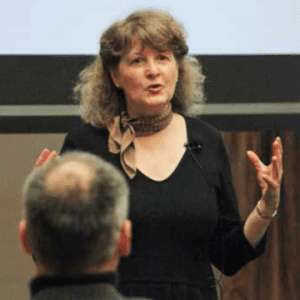
Noreen Herzfeld, St. John’s University and College of St. Benedict
How can we reconnect what has been disconnected? By asking our public theologians along with our working preachers to develop a Theology of Nature that incorporates the best scientific knowledge of our era.[1] We need to think of science for the church. [2]
Whether at the pulpit or online, today’s pastor speaks to and for a public wider than the church alone. “By public life,” writes Princeton’s William Storrar, “I mean that common life which we share with all people in society, where we meet in public places, events, forums and forms of association” (Storrar, 2011, p. 28). Do the natural sciences belong to this wider public? You betcha.
We all share the natural world. We all share the knowledge and benefits of science and technology. For the pastor to share the gospel in public requires incorporation of scientific knowledge as well as caution regarding overextending what this knowledge means. In this wider public context, faith’s advocates must “combine respect for scientific research with caution in regard to its application,” Paul Scherz reminds us (Scherz, 2018, p. 1049)
Meet Gregory Cootsona
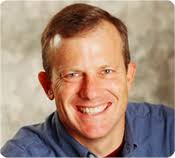
Gregory Cootsona, Science for the Church
The Rev. Dr. Mr. Gregory Cootsona is a Presbyterian pastor who teaches Humanities, Religion, Philosophy, and Sociology at California State University, Chico. Greg is equally at home in the pulpit, behind the lectern, at the seminar table, or online.
Along with Drew Rich Miller, Greg is Co-Director of Science for the Church. This project brings science to Christian congregations as a resource for spiritual growth.
In the past Greg has also directed projects funded by grants from the John Templeton Foundation, the American Academy of Religion, the Louisville Institute, and the Lilly Endowment. His most recent project, STEAM (Science and Theology for Emerging Adult Ministries) offered resources for leaders of emerging adult ministries on how to engage Christian faith with mainstream science. He directed Science for Students and Emerging, Young Adults, a project, funded by the John Templeton Foundation grant, which studies 18-30 year olds’ attitudes on faith and science and how these attitudes are formed and change.
Science for the Church in Crisis
Our Christian churches today face a crisis. Other religious traditions face this crisis as well. It’s a crisis of credibility. No longer can religion claim credibility in wider society for integrity or even morality. One reason is clear: it is widely believed that religion is anti-science. Whether this reputation is true or false matters little. That’s the reputation that precipitates the crisis.
In order to tackle this credibility problem, Gregory Cootsona returns to a mid-twentieth century thinker, C.S. Lewis. Might Lewis be able to help us today? Yes, surmises Cootsona.
“His [C.S. Lewis] apologetics have helped many and can be grouped as follows: the crisis of materialism, the argument with the most contemporary resonance that naturalism is self-defeating; the crisis of meaninglessness, his case that we sense there is something more than the things of this world; and finally, the crisis of anomie, the argument that natural law implies God as the lawgiver.” (Cootsona, C S Lewis and the Crisis of a Christian, 2014, p.11).
In serving up science for the church, Cootsona goes to the pantry and draws out a large portion of C.S. Lewis. He garnishes Lewis lugubriously with more recent scholars in the field of Theology and Science such as Ian Barbour and Robert John Russell.
Science for the Church: a Theology of Nature
 As we cultivate science for the church, let’s avoid confusing natural theology with a theology of nature. When we think about science for the church, it is the latter that we advise. By no means should the preacher substitute a lab report for the Bible. Rather, nature’s interpretation through microscopes and telescopes requires a secondary interpretation by the pastor or preacher. That additional layer of interpretation comes from looking through the lens of special revelation. Oxford’s Celia Deane-Drummond makes this point with force. “A theology of nature is appropriate as long as it is suitably qualified by proper attention to revealed theology” (Deane-Drummond, 2009, p. xvi).
In short, the public theologian need not prove beyond a doubt that a theistic explanation for the natural order is superior to that of a scientific explanation. Rather, much more modestly, the public theologian strives to make a theology of nature consonant with what is known scientifically and, thereby, intelligible.
Science for the Church: Intelligibility, Coherence, and Consonance
Science for the church borders on apologetics, but does not necessarily cross over that border. Developing a theology of nature belongs inherently to faith seeking understanding, fides quaerens intellectum. Because scientific reasoning is also public reasoning, seeking understanding automatically makes theological reasoning public reasoning. It places systematic theology into conversation with disciplines outside of theology. This allows–but does not require–apologetic theology.
Evangelical systematician Roger Olson reminds us of the limits to apologetics.
“The problem with Christian apologetics is that, too often, anyway, it claims to accomplish too much. I do not think even the best argument can persuade a reluctant person to embrace the gospel of Jesus Christ. There is no such thing as “evidence that demands a verdict” or a knock-down, drag-out proof that leaves no room for Kierkegaard’s “leap of faith.”
No matter how eloquent the apologist might be, the leap of faith remains requisite.
Science for the church aims at intelligibility along with credibility, not persuadability. Intelligibility requires internal coherence plus external consonance between theological and scientific claims, to be sure; but persuadability may be more than we can require of the public theologian.
The late John Polkinghorne–a hybrid physicist and theologian–sought the intelligibility of Christian claims and affirmed consonance between theological and scientific claims.
“Science raises questions of intelligibility…Theism provides a coherent response, as well as furnishing a foundation for the human encounter with value. Evolutionary insight affords some insight in relation to problems of physical evil, but eventual cosmic futility can only find an answer in the faithfulness of a Creator whose purposes are not frustrated by death.”
If this were to be persuasive, then that would be an added extra. In the meantime, intelligibility through consonance will suffice.
Science for the Church: A Dialogue between Gregory Cootsona and Ted Peters [Click here]
Visit the Patheos Science and Religin Resource Page [click here]
▓
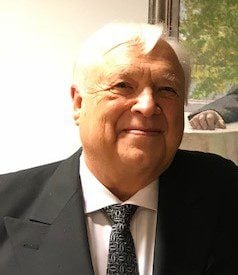
Ted Peters
Ted Peters directs traffic at the intersection of science, religion, and ethics. Peters is an emeritus professor at the Graduate Theological Union, where he co-edits the journal, Theology and Science, on behalf of the Center for Theology and the Natural Sciences, in Berkeley, California, USA. He authored Playing God? Genetic Determinism and Human Freedom? (Routledge, 2nd ed., 2002) as well as Science, Theology, and Ethics (Ashgate 2003). He is editor of AI and IA: Utopia or Extinction? (ATF 2019). Along with Arvin Gouw and Brian Patrick Green, he co-edited the new book, Religious Transhumanism and Its Critics hot off the press (Roman and Littlefield/Lexington, 2022). Soon he will publish The Voice of Christian Public Theology (ATF 2022). See his website: TedsTimelyTake.com.
This fictional spy thriller, Cyrus Twelve, follows the twists and turns of a transhumanist plot.
▓
[1] Theology of Nature “asks how belief in God based on religious experience and in historical tradition can be related to the scientific understanding of nature today” (Barbour, 2006, p. 114). [2] There are resources as I frequently point out. If you are an evangelical Christian, tether yourself to BioLogos. If you are a Muslim, note how Iranian physicist, Medhi Golshani, collects affirmative testimonies in his series of books, Can Science Dispense with Religion? *(*Golshani, 2021) If you are Jewish, then visit Sinai and Synapses. If you are a Lutheran, join the Lutheran Alliance for Faith, Science, and Technology and visit monthly Covalence Magazine.
At the AAAS in Washington DC, astronomer Jennifer Wisemen directs DoSER (Dialogue on Science, Ethics, and Religion). (ESSSAT (European Society for the Study of Science and Theology) publishes a fine newsletter. Visit also Greg Cootsona’s blog, Science for the Church, along with reading the Science and Religion Initiative Newsletter. The journal, Zygon, has been a pioneer publication for half a century, drawing scholars from IRAS (Institute for Religion in an Age of Science). For a pirate’s treasure chest of resources both video and written visit Adrian Wyard’s website, Counterbalance.
The Clergy Letter Project under the leadership of Michael Zimmerman focuses on the evolution controversy and the ecological crisis. At Cambridge University, Denis Alexander leads the Faraday Institute for Science and Religion. Are you down under? Then try Australia’s thriving organization, ISCAST (Institute for the Study of Christianity in an Age of Science and Technology).
In Berkeley, I work with physicist-theologian Robert John Russell at the Center for Theology and the Natural Sciences, which is part of the Graduate Theological Union. For two decades we have published a fine scholarly journal, Theology and Science. The science-religion sandbox is filled with lots and lots of toys for our minds to play with.
For levity, sing along with Francis Collins, former director of the U.S. National Institutes of Health, and Paul Vischer, creator of Veggie Tales.
Bibliography
Barbour, I. G. (2006). Indeterminacy, Holism, and God’s Action. In God’s Action in Nature’s World: Essays in Honor of Robert John Russell (pp. 113-128). Aldershot UK: Ashgate.
Cootsona, G. (2002). Creation and Last Things at the Intersection of Theology and Science. Geneva: Geneva Press.
Cootsona, G. (2014). C S Lewis and the Crisis of a Christian. Louisville KY: Westminster John Knox.
Deane-Drummond, C. (2009). Christ and Evolution: Wonder and Wisdom. Minneapolis MN: Fortress Press.
Herzfeld, N. (2017). Introduction: Religion and the New Technologies. Religions 8:7, 1-3.
Peters, T. (2015). Science in Seminary? Really? Dialog, 54(2), 121-124.
Peters, T. (2018). Public Theology: Its Pastoral, Apologetic, Scientific, Politial, and Prophetic Tasks. International Journal of Public Theology 12:2, 153-177; https://brill.com/abstract/journals/ijpt/12/1/ijpt.12.issue-1.xml.
Peters, T. (2018). Science and Religion: Ten Models of War, Truce, and Partnership. Theology and Science 16:1, 1-43.
Peters, T. (2021). Public Theology, Discourse Clarification, and Worldview Construction. Theology and Science 19:1, 1-4; DOI.org/10.1080/14746700.2020.1869672 .
Scherz, P. (2018). Laudato Si and the Use of Scientific Research in Theology and Public Theology. Heythrop Journal LIX, 1049-1059.
Storrar, W. (2011). The Naming of Parts: Doing Public Theology in a Global Era. International Journal of Public Theology 5, 23-43.
Evangelical
Technology and Religion

About Ted Peters
Ted Peters directs traffic at the intersection of science, religion, and ethics. Peters is an emeritus professor at the Graduate Theological Union, where he co-edits the journal, Theology and Science, on behalf of the Center for Theology and the Natural Sciences, in Berkeley, California, USA. He authored Playing God? Genetic Determinism and Human Freedom? (Routledge, 2nd ed., 2002) as well as Science, Theology, and Ethics (Ashgate 2003). He is editor of AI and IA: Utopia or Extinction? (ATF 2019). Along with Arvin Gouw and Brian Patrick Green, he co-edited the new book, Religious Transhumanism and Its Critics hot off the press (Roman and Littlefield/Lexington, 2022). Soon he will publish The Voice of Christian Public Theology (ATF 2022). See his website: TedsTimelyTake.com. You can read more about the author here.
Previous Post

July 12, 2022
How to become an Astrotheologian?
Next Post
July 25, 2022 Ecotheology when It's "Time to Act"
Recent Comments
Browse Our Archives
Select a Category Afterlife America in Crisis Ancient Alien Apocalypse Art Artificial Intelligence Astrobiology Astrotheology Atheism Big History Buddhist Catholic Christian Nationalism Christmas Comparative Theology Death Ecology Ethics ETI Evangelical Evolution Existential Questions Free Will General Christian Hermeneutics Hindu https://www.patheos.com/blogs/allsetfree/2020/12/sins-we-need-to-talk-about/?utm_source=Newsletter&utm_medium=email&utm_campaign=Christians+For+a+Better+Christianity&utm_content=43&lct Interreligious Islam Jewish Justice Latter-Day Saints Literature Literature and Theology Lutheran Methodism Mormonism Nonreligious ontology Orthodox Pagam Prayer progressive Christian PT 6 Dignity Public Theology Race racial justice Religious Liberty Romance Satan Scapegoat Science & Religion Science and Religion social justice Spirituality SR 8 Transhumanism Systematic Theology Taoism Ted Peters UAP UFO Uncategorized War
Select a Month September 2026 August 2026 July 2026 June 2026 May 2026 April 2026 March 2026 February 2026 December 2025 November 2025 October 2025 September 2025 August 2025 July 2025 June 2025 May 2025 April 2025 March 2025 February 2025 January 2025 December 2024 November 2024 October 2024 September 2024 August 2024 July 2024 June 2024 May 2024 April 2024 March 2024 February 2024 January 2024 December 2023 November 2023 October 2023 September 2023 August 2023 July 2023 June 2023 May 2023 April 2023 March 2023 February 2023 January 2023 December 2022 November 2022 October 2022 September 2022 August 2022 July 2022 June 2022 May 2022 April 2022 March 2022 February 2022 January 2022 December 2021 November 2021 October 2021 September 2021
Follow Us!
TAKE THE
Religious Wisdom Quiz
Which Psalm is the longest chapter in the Bible?
Select your answer to see how you score.
Psalm 50 Psalm 1 Psalm 23 Psalm 119
Related posts from Public Theology

Why Public Theology Needs a Theology of Nature

America's 250th Birthday Gift: Civic Renewal

Do You Believe in UFOs? A Theologian's Answer.
Free Will and Christian Freedom TWO
TRENDING AT PATHEOS Progressive Christian

The Secret behind A Charlie Brown Thanksgiving
Do you know the secret behind A Charlie Brown Thanksgiving? Sparky was...

Bridging the Gap Between God and Man
From Far Off to the Ultimate Embrace “God is a Spirit: and...

Let Matthew 25 Guide You to a Greater...
With the crisp feel of fall in the air, our minds quickly...

Can a Chatbot Touch Your Soul?
Can a chatbot offer genuine spiritual counsel? One conversation brought me to...

Religion and Politics: How Should We Then Live?
Two cultural axioms get repeated in polite company. Don't mix religion and...

7 Things We Get Wrong About Giving Thanks
It's a time of year when many of us turn to the...
view all Progressive Christian blogs
Ad-Free & Subscriber Log-In Subscription Support
- About Us
- 2026 Calendar
- Videos
- Podcasts
- Library of World Religions
- Faith In Media Tracker
- Advertise With Us
- Write for Us
- Privacy Policy
- Terms of Service
- Do Not Sell My Data
- Contact Us
- Radiant Digital
- Manage Newsletter Subscriptions
- Unsubscribe From Notifications
- Sitemap
Copyright 2008-2026, Patheos, part of the Radiant Digital network of media brands. All rights reserved.
Subscription Support Ad-Free & Subscriber Log-In
Follow Patheos