
BuddhistCatholicContemplativeEvangelicalGeneral ChristianHinduJewishLatter-day SaintMuslimNew VisionsProgressive Christian
Beliefs
- Buddhist
- Catholic
- Contemplative
- Evangelical
- General Christian
- Hindu
- Jewish
- Latter-day Saint
- More Voices
- Muslim
- New Visions
- Pagan
- Progressive Christian
Topics
- Religion News
- Food and Religion
- Sports and Religion
- Religious Art
- Religious Music and Entertainment
- Religious Events
- History and Religion
- Style and Religion
- Politics and Religion
- Women in Religion
- Recreation Outdoors and Religion
- Business Finance and Religion
- Careers Workplace and Religion
- Education and Religion
- Family Parenting and Religion
- Health Fitness and Religion
- Home and Religion
- Relationships and Religion
- Technology and Religion
- Travel and Religion
Columnists
- Buddhist Columnists
- Business Finance and Religion Columnists
- Careers Workplace and Religion Columnists
- Catholic Columnists
- Contemplative Columnists
- Education and Religion Columnists
- Evangelists Columnists
- Family Parenting and Religion Columnists
- General Christian Columnists
- Health Fitness and Religion Columnists
- Hindu Columnists
- History and Religion Columnists
- Home and Religion Columnists
- Jewish Columnists
- More Voices Columnists
- Latter Day Columnists
- Muslim Columnists
- New Visions Columnists
- Nonreligious Columnists
- Pagan Columnists
- Politics and Religion Columnists
- Progressive Columnists
- Recreation Outdoors and Religion Columnists
- Relationships and Religion Columnists
- Religion News Columnists
- Religious Art Columnists
- Religious Events Columnists
- Religious Music and Entertainment Columnists
- Sports and Religion Columnists
- Style and Religion Columnists
- Technology and Religion Columnists
- Travel and Religion Columnists
- Women in Religion Columnists
Resource Library
- 2026 Calendar
- Library of World Religions
- The 100 Most Holy Places on Earth
- Patheos Answers
- Podcasts
- Videos
- Faith Leaders Database
- Anglican Episcopalian
- Bahai
- Baptist
- Buddhism
- Christianity
- Confucianism
- Eastern Orthodoxy
- Hinduism
- Holiness and Pentecostal
- ISKCON
- Islam
- Judaism
- Lutheran
- Methodist
- The Church of Jesus Christ of Latter-day Saints
- New Age
- Paganism
- Presbytarian and Reformed
- Protestantism
- Religion Behind the Scenes
- Roman Catholic
- Scientology
- Shia Islam
- Sikhism
- Sufism
- Sunni Islam
- Taoism
- Zen
- See all religions
Research Tools
 Ad-Free & Subscriber Log-In Subscription Support
Ad-Free & Subscriber Log-In Subscription Support
Follow Patheos 

- Trending:
- Forgiveness
- |
- Marriage
- |
- Consciousness
- |
- Death Penalty
- |
- Election
- |
- Halloween

- Home
- Progressive Christian
- Religious Events
- A More Compassionate America?
A More Compassionate America?
Last updated on: November 25, 2023 at 6:12 pm by Ted Peters
A More Compassionate America? 2023-11-25T18:12:29-08:00 Ted Peters
Patheos Explore the world's faith through different perspectives on religion and spirituality! Patheos has the views of the prevalent religions and spiritualities of the world.
Will the Trump Tyranny fall?
Will a more compassionate America emerge?
PT 3212.

American Flag with Eagle
Are we watching the fall of the Trump Tyranny? That is a good question. Should we take bold action to make it happen? That’s another good question.
Here is a more important question: does America want to define itself as a nation of compassion? If we want a more compassionate America, then preventing a resurgence of the Trump Tyranny will be required.
Our new heroine is Liz Cheney. Like the courageous Saint George going out to fight the dragon, Wyoming Congresswoman Liz Cheney walks right into the flames thrown by the tyrannous Trump. Not with swords loud clashing! But with deeds of love and mercy. And, most decisively, justice. That’s how the kingdom of God comes. That is also how a compassionate America comes.
Voices and bugles are sounding. Patheos challenges us: “Taking Freedom for Granted or To Heart this 4th of July?” Erich Schneidewind, President of AARP, issues a clarion call. “Help Make America Compassionate Again!”
The January 6 Congressional Hearings

Congresswoman Liz Cheney, Wyoming
The Congressional Hearings on the January 6, 2021 assault against the 2020 election results have been revelatory. The evidence is now out. Then president Donald Trump purveyed a “big lie” that the election had been stolen. He claimed falsely that Joe Biden did not become the legitimate president of the United States. Furthermore, Donald Trump instigated an insurrection type of assault on the Capitol in order to overturn the election results. Why? To remain in power.
The assault on the Capitol was only a symptom of the national cancer. This particular person, Donald Trump, is so intoxicated with power that he has no regard for protocol, no regard for the peaceful transition of power, no regard for the rule of law. Trump’s unassailable megalomania is like a California forest fire on a windy October day. It sweeps erratically over the landscape without regard to the welfare of those caught in its path of destruction. Another term as president could result in a scorched earth.
Callousness Versus Compassion

The Trump who would be king. Cartoon Movement Corporation.
What defines such a callous personality is that the nation must serve Donald Trump along with those oligarchs who make a profit from his tyranny. Rather than the president serving the nation, the nation feeds the insatiable appetite of the president for applause, obeisance, and glory.
This stands in sharp contrast to a constitutional America, according to which the government rules by consent of the governed. This stands in sharp contrast to a compassionate America, where the governed concede great power to the president so that the president can pursue the common good of the nation and even the world.
A more compassionate America
I vote for a more compassionate America. Will such a vote count?
Striving to become a more compassionate America belongs to this nation’s covenant. What do I mean?
In a previous article, “Covenant, Blood, and Violence: America at War with Itself and Others,” I argued that there are two fundamental symbols or models—covenant and blood–for America’s self-understanding.
Covenant Versus Blood: Covenant
First, covenant. In the 17th century, the Puritans relied on connecting American destiny and God’s covenant with ancient Israel. God, thought the Puritans, was making a new covenant with America. If Americans would pursue righteousness and justice, God would bless America. If Americans would pursue carnal selfishness and economic greed, God would judge America with wrath. “We must entertain each other in brotherly affection,” admonished John Winthrop when elaborating on the common good. “We must be willing to abridge ourselves of our superfluities, for the supply of others’ necessities” (cited in Gorski, 2017,37). In the name of the common good, the rich should share with the poor.
Covenant symbology draws the line between good and evil right through America’s heart (Bellah, 1975). The idea of covenant permits us Americans to examine ourselves, confess our sins, repent, reconcile, and resolve to pursue the common good once again.
Non-Christians may not identify with a covenant between America and the God of Israel. Non-Christians must still decide, however, whether or not they want a more compassionate America.
Covenant Versus Blood: Blood
Second, blood. In the 18th century, the American revolutionaries were ready and willing to shed the Crown’s blood. With the American Revolution of 1776, to covenant symbology was added conquest. Although the earlier covenant idea never abated, it was supplemented with manifest destiny, exceptionalism, and expansionism. As “the dark side of civil religion, according to Yale’s Philip Gorski, Religious Nationalism became “a red-hued canvas in heavy oils, filled with the blood and fire of war and apocalypse, and replete with battle scenes in which the forces of good and evil square off on land, on sea, and in the air…justice and peace can be achieved only through violence and bloodshed” (Gorski 2017, 35,34).

George Washington at Surrender of Charles Cornwallis. Artist: John Turnbull
The blood symbols remain biblical. Yet, they draw the line between good and evil not through America’s heart but between America and its enemies. Here is what is theologically significant: whereas for the covenant symbol God’s judgment is rendered against America, for the blood symbol God’s judgment is rendered against America’s enemies.
It is clear: a more compassionate America would rely more on covenant symbolism and less on blood symbolism.
Regardless of the historic symbology, the non-Christian right along with the Christian will have to decide whether to pursue compassion or tyranny.
Public Theology: Toward a More Compassionate America
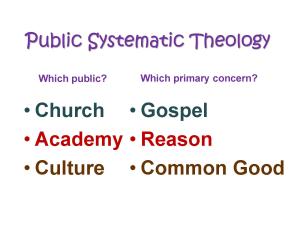 This post is an exercise in public theology.[1] Public theology, I contend, is conceived in the church, critically reasoned in the academy, and offered to the wider culture for the sake of the global common good.[2]
At this moment of national decision-making, the public theologian should take a stand. I recommend a stand on behalf of a more compassionate America. This will require a firm renunciation of the Trump Tyranny.[3]
Yes, of course, the moral status of both Donald Trump and Liz Cheney is ambiguous. Neither is a devil or a saint. There is no pure goodness or pure evil here. Nevertheless, within that ambiguity, it is imperative that we take a stand. Without fervent commitment, no redemptive action is possible.
Covenant symbology inspires and guides us to deliberate, decide, and take action on behalf of a more compassionate America.
This post is PT 3212. A More Compassionate America? Trump Tyranny
▓
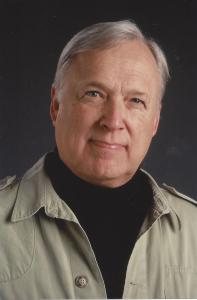
Ted Peters, 2000
Ted Peters is a Lutheran pastor and emeritus seminary professor. He is author of Short Prayers and The Cosmic Self. His one volume systematic theology is now in its 3rd edition, God—The World’s Future (Fortress 2015). His book, God in Cosmic History, traces the rise of the Axial religions 2500 years ago. He has undertaken a thorough examination of the sin-and-grace dialectic in two works, Sin: Radical Evil in Soul and Society (Eerdmans 1994) and Sin Boldly! (Fortress 2015). Watch for his forthcoming, The Voice of Christian Public Theology (ATF 2022). See his website: TedsTimelyTake.com.
Ted Peters’ fictional series of espionage thrillers features Leona Foxx, a hybrid woman who is both a spy and a parish pastor.
▓
[1] Public theology, I say often, is conceived in the church, critically refined in the academy, and offered to the wider culture for the sake of the global common good. This is how I carry on the legacy of my University of Chicago mentor, David Tracy, for whom: “Theology is distinctive among the disciplines for speaking to and from three distinct publics: academy, church, and the general culture” (Tracy, The Role of Theology in Public Life: Some Reflections 1984, 230).
[2] “In a nutshell, public theology (theologia publica) is concerned with the public affairs or institutions of society (res publica) to promote the common good of society.” (Chung 2022, 11).
[3] According to Katie Day and Sebastian Kim, “Public Theology is thus theologically informed public discourse about public issues, addressed to the church, synagogue, mosque, temple or other religious body, as well as the larger public or publics, argued in ways that can be evaluated and judged by publicly available warrants and criteria” (Day 2017, 4).
References
Bellah, Robert. 1975. The Broken Covenant: American Civil Religion in Time of Trial. New York: Seabury.
Chung, Paul. 2022. Public Theology and Civil Society: Constructive Formation. Madris: EBL.
Day, Katie, and Sebastian Kim. 2017. “Introduction.” A Companion to Public Theology. Eds, Katie Day and Sebastian Kim. Leiden: Brill. 1-21.
Gorski, Philip. 2017. American Covenant: A History of Civil Religion from the Puritans to the Present. Princeton NJ: Princeton University Press.
Peters, Ted. 2018. “Public Theology: Its Pastoral, Apologetic, Scientific, Politial, and Prophetic Tasks.” International Journal of Public Theology 12:2 153-177; https://brill.com/abstract/journals/ijpt/12/1/ijpt.12.issue-1.xml.
Tracy, David. 1984. “The Role of Theology in Public Life: Some Reflections.” Word and World 4:3: 230-239.
Religious Events

About Ted Peters
Ted Peters is a Lutheran pastor and emeritus seminary professor. He is author of Short Prayers and The Cosmic Self. His one volume systematic theology is now in its 3rd edition, God—The World’s Future (Fortress 2015). His book, God in Cosmic History, traces the rise of the Axial religions 2500 years ago. He has undertaken a thorough examination of the sin-and-grace dialectic in two works, Sin: Radical Evil in Soul and Society (Eerdmans 1994) and Sin Boldly! (Fortress 2015). Watch for his forthcoming, The Voice of Christian Public Theology (ATF 2022). See his website: TedsTimelyTake.com. Ted Peters’ fictional series of espionage thrillers features Leona Foxx, a hybrid woman who is both a spy and a parish pastor. You can read more about the author here.
Previous Post

July 1, 2022
What is Truth?
Next Post
July 5, 2022 America's Two Killing Fields
Recent Comments
Browse Our Archives
Select a Category Afterlife America in Crisis Ancient Alien Apocalypse Art Artificial Intelligence Astrobiology Astrotheology Atheism Big History Buddhist Catholic Christian Nationalism Christmas Comparative Theology Death Ecology Ethics ETI Evangelical Evolution Existential Questions Free Will General Christian Hermeneutics Hindu https://www.patheos.com/blogs/allsetfree/2020/12/sins-we-need-to-talk-about/?utm_source=Newsletter&utm_medium=email&utm_campaign=Christians+For+a+Better+Christianity&utm_content=43&lct Interreligious Islam Jewish Justice Latter-Day Saints Literature Literature and Theology Lutheran Methodism Mormonism Nonreligious ontology Orthodox Pagam Prayer progressive Christian PT 6 Dignity Public Theology Race racial justice Religious Liberty Romance Satan Scapegoat Science & Religion Science and Religion social justice Spirituality SR 8 Transhumanism Systematic Theology Taoism Ted Peters UAP UFO Uncategorized War
Select a Month September 2026 August 2026 July 2026 June 2026 May 2026 April 2026 March 2026 February 2026 December 2025 November 2025 October 2025 September 2025 August 2025 July 2025 June 2025 May 2025 April 2025 March 2025 February 2025 January 2025 December 2024 November 2024 October 2024 September 2024 August 2024 July 2024 June 2024 May 2024 April 2024 March 2024 February 2024 January 2024 December 2023 November 2023 October 2023 September 2023 August 2023 July 2023 June 2023 May 2023 April 2023 March 2023 February 2023 January 2023 December 2022 November 2022 October 2022 September 2022 August 2022 July 2022 June 2022 May 2022 April 2022 March 2022 February 2022 January 2022 December 2021 November 2021 October 2021 September 2021
Follow Us!
TAKE THE
Religious Wisdom Quiz
Which official opposed Nehemiah's wall-building and sent open letters to Jerusalem?
Select your answer to see how you score.
Haggai Tobiah Sanballat Geshem
Related posts from Public Theology

Why Public Theology Needs a Theology of Nature

America's 250th Birthday Gift: Civic Renewal

Do You Believe in UFOs? A Theologian's Answer.

Free Will and Christian Freedom TWO
TRENDING AT PATHEOS Progressive Christian

What Being a Modern-Day Apostle Means to Me
In my last column, I discussed the ins and outs of modern-day...

Did Ancient China Once Worship the God of...
Across human history, a common thread weaves through the origins of the...

Love Your Neighbor – Including Earth-Kin: Lev. 19,...
God’s command to love your neighbor means acting in an ethical and...

Lead a Church Study of “Jesus and Lao...
Guest writer Jack Thomas (The Irreverent Reverend) reflects on leading his church...

Pastoral Wisdom for Responding to Sermon Pushback
Getting sermon pushback on your social justice sermon? Learn practical, Proverbs-based strategies...

Principles for Understanding the Apostolic Ministry Today
Whenever people discover that my formal ministry title is "apostle," as in...
view all Progressive Christian blogs
Ad-Free & Subscriber Log-In Subscription Support
- About Us
- 2026 Calendar
- Videos
- Podcasts
- Library of World Religions
- Faith In Media Tracker
- Advertise With Us
- Write for Us
- Privacy Policy
- Terms of Service
- Do Not Sell My Data
- Contact Us
- Radiant Digital
- Manage Newsletter Subscriptions
- Unsubscribe From Notifications
- Sitemap
Copyright 2008-2026, Patheos. All rights reserved.
Subscription Support Ad-Free & Subscriber Log-In
Follow Patheos