
BuddhistCatholicContemplativeEvangelicalGeneral ChristianHinduJewishLatter-day SaintMuslimNew VisionsProgressive Christian
Beliefs
- Buddhist
- Catholic
- Contemplative
- Evangelical
- General Christian
- Hindu
- Jewish
- Latter-day Saint
- More Voices
- Muslim
- New Visions
- Pagan
- Progressive Christian
Topics
- Religion News
- Food and Religion
- Sports and Religion
- Religious Art
- Religious Music and Entertainment
- Religious Events
- History and Religion
- Style and Religion
- Politics and Religion
- Women in Religion
- Recreation Outdoors and Religion
- Business Finance and Religion
- Careers Workplace and Religion
- Education and Religion
- Family Parenting and Religion
- Health Fitness and Religion
- Home and Religion
- Relationships and Religion
- Technology and Religion
- Travel and Religion
Columnists
- Buddhist Columnists
- Business Finance and Religion Columnists
- Careers Workplace and Religion Columnists
- Catholic Columnists
- Contemplative Columnists
- Education and Religion Columnists
- Evangelists Columnists
- Family Parenting and Religion Columnists
- General Christian Columnists
- Health Fitness and Religion Columnists
- Hindu Columnists
- History and Religion Columnists
- Home and Religion Columnists
- Jewish Columnists
- More Voices Columnists
- Latter Day Columnists
- Muslim Columnists
- New Visions Columnists
- Nonreligious Columnists
- Pagan Columnists
- Politics and Religion Columnists
- Progressive Columnists
- Recreation Outdoors and Religion Columnists
- Relationships and Religion Columnists
- Religion News Columnists
- Religious Art Columnists
- Religious Events Columnists
- Religious Music and Entertainment Columnists
- Sports and Religion Columnists
- Style and Religion Columnists
- Technology and Religion Columnists
- Travel and Religion Columnists
- Women in Religion Columnists
Resource Library
- 2026 Calendar
- Library of World Religions
- The 100 Most Holy Places on Earth
- Patheos Answers
- Podcasts
- Videos
- Faith Leaders Database
- Anglican Episcopalian
- Bahai
- Baptist
- Buddhism
- Christianity
- Confucianism
- Eastern Orthodoxy
- Hinduism
- Holiness and Pentecostal
- ISKCON
- Islam
- Judaism
- Lutheran
- Methodist
- The Church of Jesus Christ of Latter-day Saints
- New Age
- Paganism
- Presbytarian and Reformed
- Protestantism
- Religion Behind the Scenes
- Roman Catholic
- Scientology
- Shia Islam
- Sikhism
- Sufism
- Sunni Islam
- Taoism
- Zen
- See all religions
Research Tools
 Ad-Free & Subscriber Log-In Subscription Support
Ad-Free & Subscriber Log-In Subscription Support
Follow Patheos 

- Trending:
- Forgiveness
- |
- Marriage
- |
- Consciousness
- |
- Death Penalty
- |
- Election
- |
- Halloween

- Home
- Progressive Christian
- Careers, Workplace and Religion
- Science in Seminary? Really?
Science in Seminary? Really?
Last updated on: October 1, 2022 at 4:51 pm by Ted Peters
Science in Seminary? Really? 2022-10-01T16:51:16-07:00 Ted Peters
Patheos Explore the world's faith through different perspectives on religion and spirituality! Patheos has the views of the prevalent religions and spiritualities of the world.
Science in Seminary? Really? Yes.
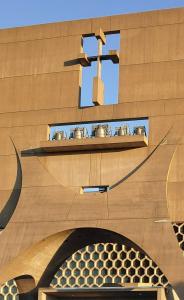
St. John’s University and College of St. Benedict, Collegeville, Minnesota
Should seminary students preparing for parish ministry or priesthood engage the natural sciences in their theological studies? Should there be science in seminary? Yes, indeed.
“Oh no!” A seminarian might complain. “I came to seminary to study God.” Or, more likely, “I came to seminary because I advocate for social justice and liberation of the oppressed. Don’t waste my time with natural science. After all, science is only a social construction that props up Europe’s patriarchal colonial powers that oppress and enslave subaltern peoples!”
How does it look from the other side? There is a “war on science,” our science friends whine. The theological seminary–as it appears to the marginalized scientist–is boot camp for those preparing for combat against science in society. But, I ask: is this really the case? Ought it to be the case?
In this set of Patheos posts on science and religion, I will frequently refer to the work of Noreen Herzfeld. She is a pioneer blazing trails for the rest of us to follow.
Science in Seminary at St. John’s University and the College of St. Benedict
I’ve just finished up a three day consultation in Collegeville, Minnesota, at St. John’s University and the College of St. Benedict. I was part of a team of consultants contributing to the “Science in the Seminaries Workshop.” The PI (Principal Investigator) is computer scientist and theologian Noreen Herzfeld. Her program is funded by AAAS (American Association for the Advancement of Science) in Washington DC. Astronomer Jennifer Weisman directs the AAAS DoSER (Dialogue on Science Ethics and Religion) program which provides such a creative leaven.
You may recall Noreen Herzfeld. I interviewed her some time ago on “public theology” for Patheos. Noreen is a public theologian for whom natural science partially defines the public.

Jennifer Alexander, Dir. of Grad. Studies in History of Science and Technology, Univ. Minnesota. Noreen Herzfeld, Prof. Computer Science & Theology. Dale Launderville, Prof. Old Testament.
What we find already operative at St. John’s is the inclusion of Darwinian evolution in courses on the Pentateuch by Old Testament professor, Dale Launderville. New Testament professor, Michael Patella, includes Christopher Southgate‘s insightful work on theodicy in evolution in his teaching. A professor of worship, Benjamin Durheim, incorporates Big Bang cosmology along with Critical Realism when treating liturgy and the sacraments. And Barbara Sutton, who conducts diocesan workshops, draws heavily on neuroscience and neurotheology in her spirituality. In short, seminary education in Collegeville has begun taking giant steps toward integration of the scientific and traditional worldviews.
Worldview Construction in Science and Religion
Karl Barth once said the preacher should enter the pulpit with the Bible in one hand and the newspaper in the other. I wonder if we might substitute for the newspaper a chart of the human genome or a photograph of Andromeda or a textbook in neuroscience. That pulpit may start to look cluttered. But, at least the preacher will be ready to deliver a contextually meaningful message.
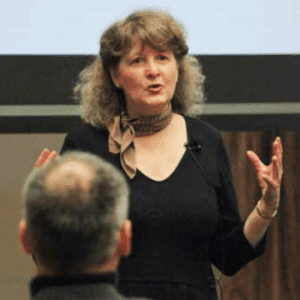
Noreen Herzfeld, St. John’s University and College of St. Benedict
For half of a millennium now we have lived in a worldview that modern science has constructed, that technology has transformed, and that industry, along with weapons, has contaminated. Gradually yet ineluctably science has reconstructed our worldview, our picture of reality, our self-understanding. No longer do biblical concepts or theological notions make immediate sense. Our religious roots need fertilization and pruning if they are to flower in our scientized and technologized garden.
Let me suggest three reasons for introducing science into seminary study for both future pastors and other church leaders.
1. Science is intrinsically fascinating
First, science is intrinsically fascinating. Well, not exactly. It’s nature that is intrinsically fascinating; and the scientist simply uncovers nature so we can better see it. Science interprets nature like the exegete interprets the Bible. Nature is wondrous, beautiful, elegant. It speaks of God the creator. We have two books to read to understand God: the book of nature for general revelation and the Bible for special revelation.
2. Science floods our contemporary worldview
Second, science so frames the modern worldview that it floods our contemporary context. To understand ourselves, we must do so breathing texts which pulsate through the worldview of today’s committed Christians. Yet, today, understanding God’s relationship to the world as creator and sustainer must be carried out in relationship to four of the most intriguing and exciting domains of contemporary science: Big Bang cosmology, evolutionary biology, genetics, and neuroscience.
The secular story of creation now playing in Big History courses in our universities and as entertainment on the History Channel of our televisions is Big Bang. Just how do we understand Genesis 1:1-2:4a in light of Big Bang and its 13.82-billion year history? How do we arm our future pastors for the battle they will inevitably face over Darwinian evolution? When it comes to Adam and Eve, the imago Dei, the fall into sin, and human nature in general, recent developments in genetics and neuroscience are almost daily exposing us to new knowledge about who we are as human beings.
3. Youth need to be schooled in the best science
Third, the younger generation sitting in our pews needs to have access to the best science and be encouraged to celebrate the best science. Oh yes, it is the responsibility of the school, not the church, to teach the best science. Yet, the church can make a supporting contribution. We can’t allow our youth to be sidetracked by creationism or intelligent design or other diversions, even if piously touted. Rather, if our youth are to succeed as engineers, nurses, doctors, chemists, educators, and such they must be schooled in the best our society offers.
Perhaps our youth can school the older generations on hand-held technology. As we speak, the worldview for young people is changing. Oh, yes, it’s still science flooded. But, if as Marshall McLuhan said, “the medium is the message,” hand-held access to undifferentiated information and disinformation is ramifying throughout our social interactions. We need the resources of both scientific honesty and theological anthropology to grasp and assess the changes taking place before our eyes.
Are Christians anti-science?
Adding to these challenges is a rumor. The problem is that a rumor is going around, a rumor that says Christians are anti-science. According to this rumor, virtually all Christians are fundamentalistic, atavistic, dogmatic, luddite, and combative. We must dispel this rumor. Our clergy must encourage if not inspire today’s youth to become tomorrow’s scientists, or at least to become scientifically informed. With the priest’s or pastor’s encouraging demeanor within the congregation a young person might become more receptive to a calling—a vocation—that may involve employing science to make this a better world.
Conclusion
 In Berkeley at CTNS (the Center for Theology and the Natural Sciences), our focus within the field of science and religion is the creative mutual interaction between science and theology. We rely on the bridge metaphor. We frequently hold up a picture of silhouette of the Golden Gate Bridge still under construction. Our focus within the field of science and religion is the creative mutual interaction between science and theology.
We see our task is finishing the bridge so that traffic and go two ways. One way is from science to theology. Theology will be greatly enriched when incorporating knowledge of the natural world into our understanding of God’s creation. Conversely, science could be enriched if and when theology proposes progressive research programs. Theological insights into human nature could be of special value when advancing research into the human being. In addition, the theologian with a critical eye can point out the hubris of scientism by critiquing the myths–the non-scientific assumptions–right in the heart of science.
The preacher in the pulpit need not rival Einstein in knowledge of nature, to be sure. But, if the preacher sounds like a braying jack ass when alluding to matters where scientific knowledge has established itself, then the credibility of even the gospel might be placed into doubt.
In sum, there is good reason for our seminary faculties to include the scientific mindset in their curricula.
▓
 Ted Peters directs traffic at the intersection of science, religion, and ethics. Peters is an emeritus professor at the Graduate Theological Union, where he co-edits the journal, Theology and Science, on behalf of the Center for Theology and the Natural Sciences, in Berkeley, California, USA. He authored Playing God? Genetic Determinism and Human Freedom? (Routledge, 2nd ed., 2002) as well as Science, Theology, and Ethics (Ashgate 2003). He is editor of AI and IA: Utopia or Extinction? (ATF 2019). Along with Arvin Gouw and Brian Patrick Green, he co-edited the new book, Religious Transhumanism and Its Critics hot off the press (Roman and Littlefield/Lexington, 2022). Soon he will publish The Voice of Christian Public Theology (ATF 2022). See his website: TedsTimelyTake.com.
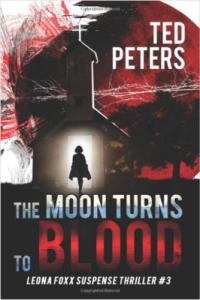
Ted has also written a series fictional spy thrillers. The protagonist is a woman pastor in Chicago who is an astrobiologist as well as a CIA operative. The second in the series, Cyrus Twelve, follows the twists and turns of a transhumanist plot.
Catholic
Evangelical
General Christian
Careers, Workplace and Religion
Education and Religion
Technology and Religion

About Ted Peters
Ted Peters directs traffic at the intersection of science, religion, and ethics. Peters is an emeritus professor at the Graduate Theological Union, where he co-edits the journal, Theology and Science, on behalf of the Center for Theology and the Natural Sciences, in Berkeley, California, USA. He authored Playing God? Genetic Determinism and Human Freedom? (Routledge, 2nd ed., 2002) as well as Science, Theology, and Ethics (Ashgate 2003). He is editor of AI and IA: Utopia or Extinction? (ATF 2019). Along with Arvin Gouw and Brian Patrick Green, he co-edited the new book, Religious Transhumanism and Its Critics hot off the press (Roman and Littlefield/Lexington, 2022). Soon he will publish The Voice of Christian Public Theology (ATF 2022). See his website: TedsTimelyTake.com. Ted has also written a series fictional spy thrillers. The protagonist is a woman pastor in Chicago who is an astrobiologist as well as a CIA operative. The second in the series, Cyrus Twelve, follows the twists and turns of a transhumanist plot. You can read more about the author here.
Previous Post

June 8, 2022
Religious Transhumanism 12: Catholic?
Next Post
June 14, 2022 Religious Transhumanism 13. Methodist?
Recent Comments
Browse Our Archives
Select a Category Afterlife America in Crisis Ancient Alien Apocalypse Art Artificial Intelligence Astrobiology Astrotheology Atheism Big History Buddhist Catholic Christian Nationalism Christmas Comparative Theology Death Ecology Ethics ETI Evangelical Evolution Existential Questions Free Will General Christian Hermeneutics Hindu https://www.patheos.com/blogs/allsetfree/2020/12/sins-we-need-to-talk-about/?utm_source=Newsletter&utm_medium=email&utm_campaign=Christians+For+a+Better+Christianity&utm_content=43&lct Interreligious Islam Jewish Justice Latter-Day Saints Literature Literature and Theology Lutheran Methodism Mormonism Nonreligious ontology Orthodox Pagam Prayer progressive Christian PT 6 Dignity Public Theology Race racial justice Religious Liberty Romance Satan Scapegoat Science & Religion Science and Religion social justice Spirituality SR 8 Transhumanism Systematic Theology Taoism Ted Peters UAP UFO Uncategorized War
Select a Month September 2026 August 2026 July 2026 June 2026 May 2026 April 2026 March 2026 February 2026 December 2025 November 2025 October 2025 September 2025 August 2025 July 2025 June 2025 May 2025 April 2025 March 2025 February 2025 January 2025 December 2024 November 2024 October 2024 September 2024 August 2024 July 2024 June 2024 May 2024 April 2024 March 2024 February 2024 January 2024 December 2023 November 2023 October 2023 September 2023 August 2023 July 2023 June 2023 May 2023 April 2023 March 2023 February 2023 January 2023 December 2022 November 2022 October 2022 September 2022 August 2022 July 2022 June 2022 May 2022 April 2022 March 2022 February 2022 January 2022 December 2021 November 2021 October 2021 September 2021
Follow Us!
TAKE THE
Religious Wisdom Quiz
What Old Testament law was summarized as "love your neighbor as yourself"?
Select your answer to see how you score.
Only 10th commandment The whole law Book of Leviticus only First five commandments
Related posts from Public Theology

Why Public Theology Needs a Theology of Nature

America's 250th Birthday Gift: Civic Renewal

Do You Believe in UFOs? A Theologian's Answer.

Free Will and Christian Freedom TWO
TRENDING AT PATHEOS Progressive Christian

What Being a Modern-Day Apostle Means to Me
In my last column, I discussed the ins and outs of modern-day...

Did Ancient China Once Worship the God of...
Across human history, a common thread weaves through the origins of the...

Love Your Neighbor – Including Earth-Kin: Lev. 19,...
God’s command to love your neighbor means acting in an ethical and...

Lead a Church Study of “Jesus and Lao...
Guest writer Jack Thomas (The Irreverent Reverend) reflects on leading his church...

Pastoral Wisdom for Responding to Sermon Pushback
Getting sermon pushback on your social justice sermon? Learn practical, Proverbs-based strategies...

Principles for Understanding the Apostolic Ministry Today
Whenever people discover that my formal ministry title is "apostle," as in...
view all Progressive Christian blogs
Ad-Free & Subscriber Log-In Subscription Support
- About Us
- 2026 Calendar
- Videos
- Podcasts
- Library of World Religions
- Faith In Media Tracker
- Advertise With Us
- Write for Us
- Privacy Policy
- Terms of Service
- Do Not Sell My Data
- Contact Us
- Radiant Digital
- Manage Newsletter Subscriptions
- Unsubscribe From Notifications
- Sitemap
Copyright 2008-2026, Patheos. All rights reserved.
Subscription Support Ad-Free & Subscriber Log-In
Follow Patheos