
BuddhistCatholicContemplativeEvangelicalGeneral ChristianHinduJewishLatter-day SaintMuslimNew VisionsProgressive Christian
Beliefs
- Buddhist
- Catholic
- Contemplative
- Evangelical
- General Christian
- Hindu
- Jewish
- Latter-day Saint
- More Voices
- Muslim
- New Visions
- Pagan
- Progressive Christian
Topics
- Religion News
- Food and Religion
- Sports and Religion
- Religious Art
- Religious Music and Entertainment
- Religious Events
- History and Religion
- Style and Religion
- Politics and Religion
- Women in Religion
- Recreation Outdoors and Religion
- Business Finance and Religion
- Careers Workplace and Religion
- Education and Religion
- Family Parenting and Religion
- Health Fitness and Religion
- Home and Religion
- Relationships and Religion
- Technology and Religion
- Travel and Religion
Columnists
- Buddhist Columnists
- Business Finance and Religion Columnists
- Careers Workplace and Religion Columnists
- Catholic Columnists
- Contemplative Columnists
- Education and Religion Columnists
- Evangelists Columnists
- Family Parenting and Religion Columnists
- General Christian Columnists
- Health Fitness and Religion Columnists
- Hindu Columnists
- History and Religion Columnists
- Home and Religion Columnists
- Jewish Columnists
- More Voices Columnists
- Latter Day Columnists
- Muslim Columnists
- New Visions Columnists
- Nonreligious Columnists
- Pagan Columnists
- Politics and Religion Columnists
- Progressive Columnists
- Recreation Outdoors and Religion Columnists
- Relationships and Religion Columnists
- Religion News Columnists
- Religious Art Columnists
- Religious Events Columnists
- Religious Music and Entertainment Columnists
- Sports and Religion Columnists
- Style and Religion Columnists
- Technology and Religion Columnists
- Travel and Religion Columnists
- Women in Religion Columnists
Resource Library
- 2026 Calendar
- Library of World Religions
- The 100 Most Holy Places on Earth
- Patheos Answers
- Podcasts
- Videos
- Faith Leaders Database
- Anglican Episcopalian
- Bahai
- Baptist
- Buddhism
- Christianity
- Confucianism
- Eastern Orthodoxy
- Hinduism
- Holiness and Pentecostal
- ISKCON
- Islam
- Judaism
- Lutheran
- Methodist
- The Church of Jesus Christ of Latter-day Saints
- New Age
- Paganism
- Presbytarian and Reformed
- Protestantism
- Religion Behind the Scenes
- Roman Catholic
- Scientology
- Shia Islam
- Sikhism
- Sufism
- Sunni Islam
- Taoism
- Zen
- See all religions
Research Tools
 Ad-Free & Subscriber Log-In Subscription Support
Follow Patheos 

- Trending:
- Advent
- |
- Forgiveness
- |
- Thanksgiving
- |
- Election
- |
- Seasonal Holidays
- |
- Marriage

- Home
- Progressive Christian
- Technology and Religion
- Religious Transhumanism 12: Catholic?
Religious Transhumanism 12: Catholic?
Last updated on: July 1, 2023 at 10:38 am by Ted Peters
Religious Transhumanism 12: Catholic? 2023-07-01T10:38:38-07:00 Ted Peters
Patheos Explore the world's faith through different perspectives on religion and spirituality! Patheos has the views of the prevalent religions and spiritualities of the world.
Roman Catholic Transhumanism? Yes and No
H+ 16 / 2026. Religious Transhumanism
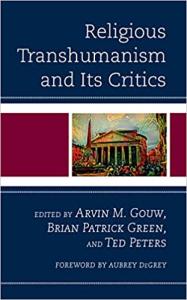
New Book! “Religious Transhumanism and Its Critics”
“Do not conform to the pattern of this world, but be transformed by the renewing of your mind.” (Romans 12:2)
Both religion and transhumanism invite us to transformation. Should these two partner with one another to make Religious Transhumanism? Might a distinctively Roman Catholic Religious Transhumanism anticipate the Singularity?
According to Natasha Vita-More and the Transhumanist Manifesto, transhumanism is “a worldview that seeks a quality of life that brings about perpetual progress, self-transformation, practical optimism, visionary solutions, and critical thinking—the transhuman.” Might we think there could be religious transhumanism? A Roman Catholic transhumanism?
If so, then might a Roman Catholic public theologian build on the Vatican‘s foundational commitment to self-realization and transformation? “The person cannot achieve self-realization apart from the absolute and gracious love of God in Christ Jesus. Through this saving transformation of the person through Christ and the Holy Spirit, everything in the universe is also transformed and comes to share in the glory of God (Rom.8:21)” (Vatican, Communion and Stewardship, 2015, 47). What direction does this suggest for the idea of a Roman Catholic Transhumanism? We pose this question to public theologian and ethicist Brian Patrick Green.
Brian Patrick Green is not schizoid. But he’s clear: Yes and No. Green’s thoughtful analysis is below.
From H+ to RH+ and even C+
In this Patheos series in Public Theology we have been tracking the convergence of secular transhumansim (H+) with religious transhumanism (RH+). One would expect these two to run on parallel tracks. One would expect no crossing, colliding, or converging. But, occasionally, H+ or RH+ switches to the other’s track. Why?
 Transhumanism appears to be a secular religion in its own right. H+ looks like a religious or spiritual worldview camouflaged in the garb of science, technology, and robotics (World Transhumanist Association, 2015) (Lee, 2019). Theologian Ilia Delio dubs it the “religion of technology.” Apart from RH+, H+ seems to suffice as a religion in its own right.
By enhancing human intelligence, H+ plans to liberate the human race from biological limitations. “Transhumanists support the abandonment of religion in favor of science by detailing science’s many victories,” Donald Braxton tells us (Braxton, 2021, p. 4). Is H+ running down both tracks at the same time? “Almost all the promises of religion can be better achieved by the accomplishments of science. If salvation is to be attained it will be the result of further human evolution driven by the advance of scientific understanding” (Braxton, 2021, p. 4).
Why, then, religious transhumanism? Why might a Christian or a Buddhist switch to the transhumanist track? We’ve been asking this question: do you support religious transhumanism? We’ve received positive answers from Micah Redding on Evangelical H+; Michael LaTorra on Buddhist H+; Lincoln Cannon on Mormon H+; and James Hughes on UU H+. We’ve also received a resounding repudiation by Hava Tirosch-Samuelson on Jewish H+.
For Micah Redding and the Christian Transhumanist Association, Christian transhumanism or C+ is truly transformative. When it comes to a distinctively Catholic Transhumanism, Brian Patrick Green is a tad more cautious.
Meet Brian Patrick Green
Now we ask: what about Roman Catholic Religious Transhumanism? Brian Patrick Green is careful and judicious. As if stepping gingerly into the ocean tide at the beach to test the water’s temperature, Brian takes baby steps from the shallow to the deep. In the interview that follows, we will follow Brian with equal discernment.
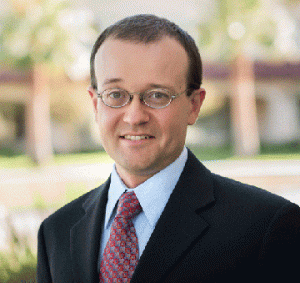
Brian Patrick Green on Catholic Transhumanism
Brian Patrick Green is the director of technology ethics at the Markkula Center for Applied Ethics at Santa Clara University in Santa Clara, California. His work is focused on the ethics of technology, including such topics as AI and ethics, the ethics of space exploration and use, the ethics of technological manipulation of humans, the ethics of mitigation of and adaptation towards risky emerging technologies (including ones with catastrophic risk potential), and various aspects of the impact of technology and engineering on human life and society including the relationship between technology and religion (particularly the Catholic Church). Green teaches AI ethics in Santa Clara University’s Graduate School of Engineering and formerly taught several other graduate engineering ethics courses.
Professor Green is author of the new book, Space Ethics (Rowman & Littlefield International, 2021). Along with Arvin Gouw and myself, as already mentioned, he co-edited Religious Transhumanism and Its Critics (Lexington, 2022). Green’s method provides discourse analysis of H+, grounding ethics in natural law. A list of his academic writings can be found on his Google Scholar page, and the full text of many at his academia.edu page.
An Interview with Brian Patrick Green on Roman Catholic Transhumanism
TP. Brian, you are a Roman Catholic theologian and ethicist. Why are you interested in transhumanism?
BPG. Transhumanism interests me because it raises deep questions about the nature of who we are as human beings. Human beings are creatures who create technology, and then we turn technology back upon ourselves – most obviously through medicine (healing us), but also through media (informing or deforming our minds), weapons (killing and maiming us), and reproductive technologies (controlling who is begotten or made).

Biotechnologies and electronic implants offer yet further ways to change who we are, for example by using CRISPR to change our somatic or germline genetic code, or brain-computer interfaces (BCIs) to directly connect human nerves and electronics.
If we create technologies that change ourselves, and even our very natures, as some transhumanists desire, what does this mean about who we are and who we are meant to be? In a previous paper I have looked at whether “natural law” ethics (an ethics with a normative understanding of human nature) would change if human nature changed. The answer to that is, somewhat unsatisfyingly, that it depends on what theory of human nature you are using and what exactly about human nature you find to be normative: our mental attributes, our bodily attributes, both, or neither.
Technological Progress is good only if…
BPG. In my chapter in Religious Transhumanism and Its Critics I argue that technological progress is good only if it is always judged by ethical standards that benefit humanity and the environment. Technological progress which does not do that is not progress at all. Rather, it is a degradation that will ultimately lead to destruction. Since I don’t want the human race destroyed, I have a bit of a strong interest in the topic. So I want to exhort to all who will listen: let’s keep humanity alive by making good choices about technology. Let’s avoid the death that will be quite inevitable if we make bad choices.
To recall Deuteronomy 30:19: “I have set before you life and death, blessings and curses: choose life so that you and your descendants may live.”
TP. Are you a public theologian? I believe public theology is conceived in the church, honed critically in the academy, and meshed with the wider culture for the sake of the common good. Might you consider yourself a public theologian in this sense?
BPG. I consider myself to be a Roman Catholic technology ethicist who is partly theologically trained and deeply interested in the religious context of technology. I haven’t taken enough classes from Ted Peters to qualify as a “real” theologian! But When it comes to ethics of technology I cannot keep my mouth shut. I have lots of thoughts to share, and I especially want to help people to make their own good decisions about technology. When it comes to technology ethics, the people who are in the best position to make the best decisions about tech are the technologists themselves – but only if they are properly trained and incentivized to do so.
 Most technologists these days have about zero formal ethics training, and many are actively discouraged from being interested in studying ethics. The best tech companies are reversing this state, working actively to train their technologists and incentivize ethical thinking. (Some examples would be Microsoft, IBM, and others.) Educational institutions are also catching up (and here I must say good things about Santa Clara University which has been graduating ethically-trained engineers for well over a century), but the lack of skill is literally an emergency, as tech companies create products that are used by billions of people and subtly – or not so subtly – steer global society towards disaster.
TP. Your chapter in Religious Transhumanism and Its Critics has this title, “A Roman Catholic View: Technological Progress? Yes. Transhumanism? No.” Why do you say “yes” to technological progress?
BPG. The Roman Catholic Church is an organization that has been deeply involved in the development of science and technology. And yet no-one seems to know this history! In Europe, scientific and technological progress were driven almost exclusively by the Church and its monks, priests, and women religious for about 1000 years. Wikipedia has a great list of clergy-scientists – and the lay scientists are another whole article. And those are just scientists, some of these scientists were also technologists, and some technologists do not appear on this list.
It is really shocking when you get into it — I think it is no exaggeration to say that the Catholic Church in the Middle Ages set the tone in Western culture (that exists even to today) towards being techno-optimistic, techno-positive, and techno-progressive (in the philosophical, not political sense).
To get to your question exactly: I say “yes” to technological progress because it helps humanity become what it is meant to be. We are technology makers and users and this expresses a God-given gift in us. God made the natural world and humankind, and in turn we create technology in order to explore God’s universe and become better people, more fully living out the purpose that God has given to us: to love God, to help each other, and to steward Creation.
Insofar as technology helps us to do that we should pursue it diligently. And insofar as technology obstructs us from that purpose, then we ought to avoid it. Weapons technologies in particular are harmful to humankind and the environment, and so ought to be judged very carefully, and technologies that might change or damage human nature are also of significant concern.
TP. Why do you say “no” to transhumanism?
BPG. Transhumanism has an intrinsically destructive element to it. The “trans-” reflects a desire to move on to the next thing, which, when applied to human nature, implies two things. First, that human nature is something to get past, as though we are intrinsically defective in our innermost being. And second that humans are at the same time wise enough to move on to something better than we are.

Futurism. Impiglia. 2021.
This is a fascinating tension, and one that certainly ethicists, philosophers, theologians, and other thinkers have been exploring for generations. But when some transhumanists explore this tension they tend to do so with an unselfconscious hubris, as though technology is all that we need, combined with our desires, to create a utopia.
The problem with utopia is that as an infinite good it can also be used to justify any finite evil. And indeed I have heard some transhumanists argue for some pretty evil things, such as government enforced eugenics and banning anti-transhumanist speech. This self-destructive impulse that simultaneously declares that humankind is intrinsically defective and that we defective humans should implement totalitarian measures to make ourselves better is an open contradiction that can only end in horrible suffering, much like the worst totalitarianisms of the 20th century.
Humankind can do better and we should do better when it comes to ethics. But we will not do it by declaring that some of us are suited to rule and others are only suited to obey, while at the same time using technology to surveil, oppress, and manipulate humanity into something impossible: a utopian ideal like the unselfish “communist man” of the past century, who was promised but never appeared because he was impossible. We need to acknowledge our limits and gain the benefits of technology that we can, without the hubris of seeking the impossible that we can’t.
Religious Transhumanism and Its Critics
Roman Catholic Religious Transhumanism? Well, yes and no.
Here in this Patheos series on public theology, we are constructing a scientifically informed vision of humanity’s future in light of God’s eschatological promises for ultimate transformation and renewal. In H+ 1, we asked whether AI could provide a shortcut to virtue or holiness? In H+ 2, we parsed the transhuman, the posthuman, and the truly human. In H+ 3, we distinguished Radical Life Extension, Cybernetic Immortality, and Resurrection of the Body. In H+ 9, we distinguished Christian Transhumanism from Transhumanist Christianity. In H+ 10, we distinguished between Transhumanism and Posthumanism. Then, in H+ 11, we asked about the role of the body in H+ from a Lutheran point of view, a point of view affirming embodiment that is embraced by some Roman Catholics as well.
On the one hand, transhumanuism touts a worldview that competes with religious worldviews. H+ replaces religion. On the other hand, the vision of human transformation lifted up by transhumanists is attractive to certain theologians.
When it comes to Christian public theologians engaged in discourse clarification and worldview construction, the H+ worldview overlooks the Trojan Horse that will destroy if from within. That tragic flaw within is human sinfulness. No amount of superintelligence will erase the human propensity for deceit, self-deceit, and self-destruction. This means that progress in technology inevitably enhances the human capacity to destroy more, faster and with greater efficiency. Unless the hurdle of human sin is jumped, the transhumanist cannot finish this race.
▓
 Ted Peters directs traffic at the intersection of science, religion, and ethics. Peters is an emeritus professor at the Graduate Theological Union, where he co-edits the journal, Theology and Science, on behalf of the Center for Theology and the Natural Sciences, in Berkeley, California, USA. He authored Playing God? Genetic Determinism and Human Freedom? (Routledge, 2nd ed., 2002) as well as Science, Theology, and Ethics (Ashgate 2003). He is editor of AI and IA: Utopia or Extinction? (ATF 2019). Along with Arvin Gouw and Brian Patrick Green, he co-edited the new book, Religious Transhumanism and Its Critics hot off the press (Roman and Littlefield/Lexington, 2022). Soon he will publish The Voice of Christian Public Theology (ATF 2022). See his website: TedsTimelyTake.com.
▓
Bibliography
Braxton, D. (2021). Religion Promises but Science Delivers. The Fourth R: Westar Institute 34:3, 3-9.
Cole-Turner, R. (2022). Steps Toward a Theology of Christian Transhumanism. In B. P. Arvin Gouw, Religious Transhumanism and Its Critics (pp. 129-142). Lanham MA: Lexington.
Gouw, A. (2022b). Epilogue: Introducing a New Transhumanist Theology. In B. P. Arvin Gouw, Religious Transhumanism and Its Critics (pp. 409-424). Lanham MA: Lexington.
Gouw, A., & Brian Patrick Green and Ted Peters, e. (2022). Religious Transhumanism and Its Critics. Lanham MA: Rowman and Littlefield / Lexington.
Lee, N. e. (2019). The Transhumanism Handbook. Switzerland: Springer ISBN 978-3-030-16922-0.
Mercer, C. a. (2014). Transhumanism and the Body: The World Religions Speak. New York: Palgrave Macmillan.
Mercer, C. a. (2015). The Unknown Future of Human Enhancement. Westport CT: Praeger.
Mercer, C. a. (2021). Religion and the Technological Future: An Introduction to Biohacking, Artificial Intelligence, and Transhumanism. New York: Macmillan Palgrave.
More, M. a.-M. (2013). The Transhumanist Reader: Classical and Contemporary Essays on the Science, Technology, and the Philosophy of the Human Future. Oxford: Wiley-Blackwell.
Peters, T. (2018). Public Theology: Its Pastoral, Apologetic, Scientific, Politial, and Prophetic Tasks. International Journal of Public Theology 12:2, 153-177; https://brill.com/abstract/journals/ijpt/12/1/ijpt.12.issue-1.xml.
Peters, T. (2019). The Ebullient Transhumanist and the Sober Theologian. Sciencia et Fides 7:2, 97-117.
Peters, T. (2021). Are UFOs Secret Technology or God’s Chariots? https://www.patheos.com/blogs/rogereolson/2021/05/guest-post-are-ufos-secret-technology-or-gods-chariots/?utm_medium=email&utm_source=BRSS&utm_campaign=Evangelical&utm_content=259: Roger Olson’s Patheos Blog.
Redding, M. (2022). Why Christian Transhumanism? In B. P. Arvin M Gouw, Religious Transhumanism and Its Critics (pp. 113-128). Lanham MA: Lexington.
Vita-More, N. (2018). Transhumanism: What is it? Published by author.
World Transhumanist Association. (2015). Transhumanist Declaration. http://humanityplus.org/philosophy/transhumanist-declaration/.
Technology and Religion
Religious Transhumanism and Its Critics

About Ted Peters
Ted Peters directs traffic at the intersection of science, religion, and ethics. Peters is an emeritus professor at the Graduate Theological Union, where he co-edits the journal, Theology and Science, on behalf of the Center for Theology and the Natural Sciences, in Berkeley, California, USA. He authored Playing God? Genetic Determinism and Human Freedom? (Routledge, 2nd ed., 2002) as well as Science, Theology, and Ethics (Ashgate 2003). He is editor of AI and IA: Utopia or Extinction? (ATF 2019). Along with Arvin Gouw and Brian Patrick Green, he co-edited the new book, Religious Transhumanism and Its Critics hot off the press (Roman and Littlefield/Lexington, 2022). Soon he will publish The Voice of Christian Public Theology (ATF 2022). See his website: TedsTimelyTake.com. You can read more about the author here.
Previous Post

June 6, 2022
Quantum Theory, God, and Carl Peterson
Next Post
June 9, 2022 Science in Seminary? Really?
Recent Comments
Browse Our Archives
Select a Category Afterlife America in Crisis Ancient Alien Apocalypse Art Artificial Intelligence Astrobiology Astrotheology Atheism Big History Buddhist Catholic Christian Nationalism Christmas Comparative Theology Death Ecology Ethics ETI Evangelical Evolution Existential Questions Free Will General Christian Hermeneutics Hindu https://www.patheos.com/blogs/allsetfree/2020/12/sins-we-need-to-talk-about/?utm_source=Newsletter&utm_medium=email&utm_campaign=Christians+For+a+Better+Christianity&utm_content=43&lct Interreligious Islam Jewish Justice Latter-Day Saints Literature Literature and Theology Lutheran Methodism Mormonism Nonreligious ontology Orthodox Pagam Prayer progressive Christian PT 6 Dignity Public Theology Race racial justice Religious Liberty Romance Satan Scapegoat Science & Religion Science and Religion social justice Spirituality SR 8 Transhumanism Systematic Theology Taoism Ted Peters UAP UFO Uncategorized War
Select a Month September 2026 August 2026 July 2026 June 2026 May 2026 April 2026 March 2026 February 2026 December 2025 November 2025 October 2025 September 2025 August 2025 July 2025 June 2025 May 2025 April 2025 March 2025 February 2025 January 2025 December 2024 November 2024 October 2024 September 2024 August 2024 July 2024 June 2024 May 2024 April 2024 March 2024 February 2024 January 2024 December 2023 November 2023 October 2023 September 2023 August 2023 July 2023 June 2023 May 2023 April 2023 March 2023 February 2023 January 2023 December 2022 November 2022 October 2022 September 2022 August 2022 July 2022 June 2022 May 2022 April 2022 March 2022 February 2022 January 2022 December 2021 November 2021 October 2021 September 2021
Follow Us!
TAKE THE
Religious Wisdom Quiz
I am a small member of the body, yet I boast great things. I am a fire, a world of iniquity. What am I?
Select your answer to see how you score.
The eye The tongue The hand The heart
Related posts from Public Theology

Why Public Theology Needs a Theology of Nature

America's 250th Birthday Gift: Civic Renewal

Do You Believe in UFOs? A Theologian's Answer.
Free Will and Christian Freedom TWO
TRENDING AT PATHEOS Progressive Christian

Can a Chatbot Touch Your Soul?
Can a chatbot offer genuine spiritual counsel? One conversation brought me to...

Religion and Politics: How Should We Then Live?
Two cultural axioms get repeated in polite company. Don't mix religion and...

7 Things We Get Wrong About Giving Thanks
It's a time of year when many of us turn to the...

Uncaging Truth: Spirituality Beyond Institutions
The Lost Connection: Why True Spirituality, Not Religion, Is the Key to...

Christ the King? Maybe We've Misunderstood the Crown
What do we mean when we say that Jesus is King? What...

Counter “Christ Is King” Nationalism with Christ THE...
Christ the King Sunday is an ideal time to address the heresy...
view all Progressive Christian blogs
Ad-Free & Subscriber Log-In Subscription Support
- About Us
- 2026 Calendar
- Videos
- Podcasts
- Library of World Religions
- Faith In Media Tracker
- Advertise With Us
- Write for Us
- Privacy Policy
- Terms of Service
- Do Not Sell My Data
- Contact Us
- Radiant Digital
- Manage Newsletter Subscriptions
- Unsubscribe From Notifications
- Sitemap
Copyright 2008-2026, Patheos, part of the Radiant Digital network of media brands. All rights reserved.
Subscription Support Ad-Free & Subscriber Log-In
Follow Patheos