
BuddhistCatholicContemplativeEvangelicalGeneral ChristianHinduJewishLatter-day SaintMuslimNew VisionsProgressive Christian
Beliefs
- Buddhist
- Catholic
- Contemplative
- Evangelical
- General Christian
- Hindu
- Jewish
- Latter-day Saint
- More Voices
- Muslim
- New Visions
- Pagan
- Progressive Christian
Topics
- Religion News
- Food and Religion
- Sports and Religion
- Religious Art
- Religious Music and Entertainment
- Religious Events
- History and Religion
- Style and Religion
- Politics and Religion
- Women in Religion
- Recreation Outdoors and Religion
- Business Finance and Religion
- Careers Workplace and Religion
- Education and Religion
- Family Parenting and Religion
- Health Fitness and Religion
- Home and Religion
- Relationships and Religion
- Technology and Religion
- Travel and Religion
Columnists
- Buddhist Columnists
- Business Finance and Religion Columnists
- Careers Workplace and Religion Columnists
- Catholic Columnists
- Contemplative Columnists
- Education and Religion Columnists
- Evangelists Columnists
- Family Parenting and Religion Columnists
- General Christian Columnists
- Health Fitness and Religion Columnists
- Hindu Columnists
- History and Religion Columnists
- Home and Religion Columnists
- Jewish Columnists
- More Voices Columnists
- Latter Day Columnists
- Muslim Columnists
- New Visions Columnists
- Nonreligious Columnists
- Pagan Columnists
- Politics and Religion Columnists
- Progressive Columnists
- Recreation Outdoors and Religion Columnists
- Relationships and Religion Columnists
- Religion News Columnists
- Religious Art Columnists
- Religious Events Columnists
- Religious Music and Entertainment Columnists
- Sports and Religion Columnists
- Style and Religion Columnists
- Technology and Religion Columnists
- Travel and Religion Columnists
- Women in Religion Columnists
Resource Library
- 2026 Calendar
- Library of World Religions
- The 100 Most Holy Places on Earth
- Patheos Answers
- Podcasts
- Videos
- Faith Leaders Database
- Anglican Episcopalian
- Bahai
- Baptist
- Buddhism
- Christianity
- Confucianism
- Eastern Orthodoxy
- Hinduism
- Holiness and Pentecostal
- ISKCON
- Islam
- Judaism
- Lutheran
- Methodist
- The Church of Jesus Christ of Latter-day Saints
- New Age
- Paganism
- Presbytarian and Reformed
- Protestantism
- Religion Behind the Scenes
- Roman Catholic
- Scientology
- Shia Islam
- Sikhism
- Sufism
- Sunni Islam
- Taoism
- Zen
- See all religions
Research Tools
 Ad-Free & Subscriber Log-In Subscription Support
Ad-Free & Subscriber Log-In Subscription Support
Follow Patheos 

- Trending:
- Forgiveness
- |
- Marriage
- |
- Consciousness
- |
- Death Penalty
- |
- Election
- |
- Halloween

- Home
- Progressive Christian
- Short Prayers 25: Buddha
Short Prayers 25: Buddha
Last updated on: February 25, 2022 at 3:50 pm by Ted Peters
Short Prayers 25: Buddha 2022-02-25T15:50:21-08:00 Ted Peters
Patheos Explore the world's faith through different perspectives on religion and spirituality! Patheos has the views of the prevalent religions and spiritualities of the world.
 Jesus told his disciples, “If any want to become my followers, let them deny themselves and take up their cross and follow me.” (Matthew 16:24)
Self-Sacrificial Love & Buddha’s Self-Renunciation (Anatta or non-self). Are they the same? Sometimes it’s hard to know how it matters.
The Story of the Buddha
It was story time. The children were sitting around the dining room table. I fished through my mind for a story to tell, one they might not have heard before. I decided to tell them a story which I find very meaningful and hold in high respect, namely, the biography of the Buddha. After all, the Buddha story makes a good point that would be helpful in life, namely, self-renunciation And parents are supposed to leave their children with noble ideals, aren’t they?
Because the oldest of my three listeners was only six, I had to modify a few details to keep their interest. I nicknamed the protagonist, Sidharta Gautama the Sakyamuni who became the Buddha, Sid. I told how Sid grew up in a castle as the son of the king. But instead of describing Sid as a young man whose monarch father sent him an endless supply of fine drink and sexy dancing girls to keep his manly interests occupied, I described the young Buddha as a child like those sitting around the table. Instead of booze and sex, in my version the king lavished the young boy with an endless supply of toys and treats. His bedroom was filled to overflowing with tricycles, baseball mitts, dolls, trucks, miniature furniture, and even had its own freezer loaded with ice cream bars.
But, alas, all of these worldly pleasures failed to make little Sid happy. He wanted something deeper. He wanted to know the meaning of life. So, he went out to search. During his three secret trips outside the palace walls he saw a very old person, a very sick person, and the corpse of someone who had died. Realizing that someday he too might become afflicted with old age or disease and have to die, young Sid was shocked. So, he abandoned his royal life in the palace. He left all of his toys and ice cream bars,. And, he headed out on his own to find the meaning of life.
Then, I described how Sid went to the opposite extreme of self-renunciation. How Sid embraced total poverty. How Sid denied himself all worldly pleasures. How Sid fasted until his body was weakened from lack of food. I followed this with the account of Sid’s sitting all night beneath the Bodhi tree, the tree of enlightenment. I explained how the goal of Sid’s great search was reached through a mystical vision. The question of the meaning of life had been answered.
With considerable drama I had those kids sitting on the edge of their chairs in anticipation. The story’s climax was at hand. “Do you know what the Buddha discovered to be the secret meaning to all existence?” I asked.
“No, what?” they demanded.
Then I found myself pondering: how can I sum up the Four Noble Truths of Buddhism? What can I say about self-renunciation that might have a lasting impact on these tender young lives? How can I best formulate the message I am about to deliver?
I went with this: “The great insight that Sid the Buddha learned that night was this:
If we want something we cannot have, then we will feel sorry for ourselves and suffer pain. But, if we can let go of our desire to possess the things of this world, then we can find true fulfillment and happiness in a life of selfless devotion.”
I wasn’t sure just how historically accurate this was, but it sounded profound to me.
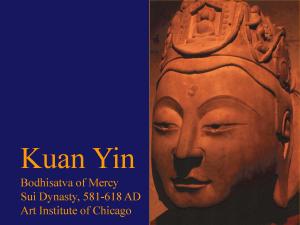 Buddha’s Self-Renunciation? Really?
Every eye was still concentrated on me. The children seemed aghast even amazed and deeply impressed by what I had said. What a wedding of masterful story telling and attentive listening! For a moment I felt that little twinge of victory, as if this were a triumph of fatherhood in which I had successfully executed my responsibility for leading the young toward high-minded maturity.
Kathy Kim, then age five, was the first to speak. “Daddy,” she said still pondering the importance of what had gone on; “when Sid left his bedroom at the palace, he never went back, did he?”
“No, never.” I had the feeling that with this period of dialogical interchange we might be able to reinforce the great lesson that was at stake.
“Then,” Kathy Kim went on, “I bet all those toys and ice cream bars are still there in the bedroom. Do you think the king would mind if we went there to play with them?”
A pin had just pricked and burst my balloon. Whatever self-congratulations I had just commended to myself immediately dissipated. I had to laugh at myself. I had to come to appreciate both the seriousness of the children’s attention and, in its own way, the beauty of their preoccupations.
Perhaps in some small fashion I, like the Buddha himself, was being shocked into realizing the ephemerality of attachments to things in this world. This might include my attachment to masterful story-telling and responsible fatherhood.
Maybe the Middle Way for a Christian is to love and appreciate our life just the way it is today, while still maintaining the awareness that this day will pass and a new reality will eventually take its place. In the meantime, a sense of humor helps.
PRAYER
O God, who creates this world and the next, guide us into seeing both the profundity and the humor of this your beloved creation. Amen.
▓
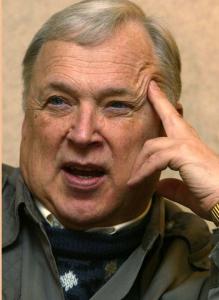 Ted Peters is a Lutheran pastor and emeritus seminary professor. He is author of Short Prayers and The Cosmic Self. His one volume systematic theology is now in its 3rd edition, God—The World’s Future (Fortress 2015). He has undertaken a thorough examination of the sin-and-grace dialectic in two works, Sin: Radical Evil in Soul and Society (Eerdmans 1994) and Sin Boldly! (Fortress 2015). Watch for his forthcoming, The Voice of Public Christian Theology (ATF 2022). See his website: TedsTimelyTake.com.
▓

About Ted Peters
Ted Peters is a Lutheran pastor and emeritus seminary professor. He is author of Short Prayers and The Cosmic Self. His one volume systematic theology is now in its 3rd edition, God—The World’s Future (Fortress 2015). He has undertaken a thorough examination of the sin-and-grace dialectic in two works, Sin: Radical Evil in Soul and Society (Eerdmans 1994) and Sin Boldly! (Fortress 2015). Watch for his forthcoming, The Voice of Public Christian Theology (ATF 2022). See his website: TedsTimelyTake.com. You can read more about the author here.
Previous Post

February 25, 2022
Short Prayers 24: Grace
Next Post
February 25, 2022 Short Prayers 26: Mysticism
Browse Our Archives
Select a Category Afterlife America in Crisis Ancient Alien Apocalypse Art Artificial Intelligence Astrobiology Astrotheology Atheism Big History Buddhist Catholic Christian Nationalism Christmas Comparative Theology Death Ecology Ethics ETI Evangelical Evolution Existential Questions Free Will General Christian Hermeneutics Hindu https://www.patheos.com/blogs/allsetfree/2020/12/sins-we-need-to-talk-about/?utm_source=Newsletter&utm_medium=email&utm_campaign=Christians+For+a+Better+Christianity&utm_content=43&lct Interreligious Islam Jewish Justice Latter-Day Saints Literature Literature and Theology Lutheran Methodism Mormonism Nonreligious ontology Orthodox Pagam Prayer progressive Christian PT 6 Dignity Public Theology Race racial justice Religious Liberty Romance Satan Scapegoat Science & Religion Science and Religion social justice Spirituality SR 8 Transhumanism Systematic Theology Taoism Ted Peters UAP UFO Uncategorized War
Select a Month September 2026 August 2026 July 2026 June 2026 May 2026 April 2026 March 2026 February 2026 December 2025 November 2025 October 2025 September 2025 August 2025 July 2025 June 2025 May 2025 April 2025 March 2025 February 2025 January 2025 December 2024 November 2024 October 2024 September 2024 August 2024 July 2024 June 2024 May 2024 April 2024 March 2024 February 2024 January 2024 December 2023 November 2023 October 2023 September 2023 August 2023 July 2023 June 2023 May 2023 April 2023 March 2023 February 2023 January 2023 December 2022 November 2022 October 2022 September 2022 August 2022 July 2022 June 2022 May 2022 April 2022 March 2022 February 2022 January 2022 December 2021 November 2021 October 2021 September 2021
Follow Us!
TAKE THE
Religious Wisdom Quiz
How many times did Elijah pray for rain?
Select your answer to see how you score.
9 7 3 5
Related posts from Public Theology

Why Public Theology Needs a Theology of Nature

America's 250th Birthday Gift: Civic Renewal

Do You Believe in UFOs? A Theologian's Answer.

Free Will and Christian Freedom TWO
TRENDING AT PATHEOS Progressive Christian

What Being a Modern-Day Apostle Means to Me
In my last column, I discussed the ins and outs of modern-day...

Did Ancient China Once Worship the God of...
Across human history, a common thread weaves through the origins of the...

Love Your Neighbor – Including Earth-Kin: Lev. 19,...
God’s command to love your neighbor means acting in an ethical and...

Lead a Church Study of “Jesus and Lao...
Guest writer Jack Thomas (The Irreverent Reverend) reflects on leading his church...

Pastoral Wisdom for Responding to Sermon Pushback
Getting sermon pushback on your social justice sermon? Learn practical, Proverbs-based strategies...

Principles for Understanding the Apostolic Ministry Today
Whenever people discover that my formal ministry title is "apostle," as in...
view all Progressive Christian blogs
Ad-Free & Subscriber Log-In Subscription Support
- About Us
- 2026 Calendar
- Videos
- Podcasts
- Library of World Religions
- Faith In Media Tracker
- Advertise With Us
- Write for Us
- Privacy Policy
- Terms of Service
- Do Not Sell My Data
- Contact Us
- Radiant Digital
- Manage Newsletter Subscriptions
- Unsubscribe From Notifications
- Sitemap
Copyright 2008-2026, Patheos. All rights reserved.
Subscription Support Ad-Free & Subscriber Log-In
Follow Patheos