
BuddhistCatholicContemplativeEvangelicalGeneral ChristianHinduJewishLatter-day SaintMuslimNew VisionsProgressive Christian
Beliefs
- Buddhist
- Catholic
- Contemplative
- Evangelical
- General Christian
- Hindu
- Jewish
- Latter-day Saint
- More Voices
- Muslim
- New Visions
- Pagan
- Progressive Christian
Topics
- Religion News
- Food and Religion
- Sports and Religion
- Religious Art
- Religious Music and Entertainment
- Religious Events
- History and Religion
- Style and Religion
- Politics and Religion
- Women in Religion
- Recreation Outdoors and Religion
- Business Finance and Religion
- Careers Workplace and Religion
- Education and Religion
- Family Parenting and Religion
- Health Fitness and Religion
- Home and Religion
- Relationships and Religion
- Technology and Religion
- Travel and Religion
Columnists
- Buddhist Columnists
- Business Finance and Religion Columnists
- Careers Workplace and Religion Columnists
- Catholic Columnists
- Contemplative Columnists
- Education and Religion Columnists
- Evangelists Columnists
- Family Parenting and Religion Columnists
- General Christian Columnists
- Health Fitness and Religion Columnists
- Hindu Columnists
- History and Religion Columnists
- Home and Religion Columnists
- Jewish Columnists
- More Voices Columnists
- Latter Day Columnists
- Muslim Columnists
- New Visions Columnists
- Nonreligious Columnists
- Pagan Columnists
- Politics and Religion Columnists
- Progressive Columnists
- Recreation Outdoors and Religion Columnists
- Relationships and Religion Columnists
- Religion News Columnists
- Religious Art Columnists
- Religious Events Columnists
- Religious Music and Entertainment Columnists
- Sports and Religion Columnists
- Style and Religion Columnists
- Technology and Religion Columnists
- Travel and Religion Columnists
- Women in Religion Columnists
Resource Library
- 2026 Calendar
- Library of World Religions
- The 100 Most Holy Places on Earth
- Patheos Answers
- Podcasts
- Videos
- Faith Leaders Database
- Anglican Episcopalian
- Bahai
- Baptist
- Buddhism
- Christianity
- Confucianism
- Eastern Orthodoxy
- Hinduism
- Holiness and Pentecostal
- ISKCON
- Islam
- Judaism
- Lutheran
- Methodist
- The Church of Jesus Christ of Latter-day Saints
- New Age
- Paganism
- Presbytarian and Reformed
- Protestantism
- Religion Behind the Scenes
- Roman Catholic
- Scientology
- Shia Islam
- Sikhism
- Sufism
- Sunni Islam
- Taoism
- Zen
- See all religions
Research Tools
 Ad-Free & Subscriber Log-In Subscription Support
Ad-Free & Subscriber Log-In Subscription Support
Follow Patheos 

- Trending:
- Forgiveness
- |
- Marriage
- |
- Consciousness
- |
- Death Penalty
- |
- Election
- |
- Halloween

- Home
- Progressive Christian
- Religious Events
- The Public Theology of Rudolf von Sinner
The Public Theology of Rudolf von Sinner
Last updated on: July 4, 2023 at 12:26 pm by Ted Peters
The Public Theology of Rudolf von Sinner 2023-07-04T12:26:12-07:00 Ted Peters
Patheos Explore the world's faith through different perspectives on religion and spirituality! Patheos has the views of the prevalent religions and spiritualities of the world.
 The Public Theology of Rudolf von Sinner
Patheos PT 5001
Brazilian Rudolf von Sinner is one of the world’s leading public theologians. We interview him in this Patheos post.
If you want more resources on Public Theology, click here.
What is public theology?
What is public theology? We will ask Rudolf von Sinner. He will tell us that there are many definitions. Even so, public theologians can gather together and focus on important matters confronting the public sphere.
Brazilian theologian Rudolf von Sinner chairs the Executive Committee of the Global Network for Public Theology (GNPT). Currently, the GNPT has released a call for papers for its upcoming 6th international conference, October 3-6, 2022, on “Public Theologies in Vibrating Cities: Precious and Precarious,” in Curitiba, Brazil.
In this Patheos series we are asking: what is public theology? We have interviewed a number of conscientious public theologians who are passionate about the common good. Meet Katie Day, Binoy Jacob, Robert Benne, Noreen Herzfeld, Paul Chung, Kang Phee Seng, Mwaambi Gideon Mbûûi, and Karen Bloomquist. Here are more Public Theology Resources. Our working notion has been this: public theology is conceived in the church, critically honed in the academy, and meshed with the world for the sake of the world’s common good.
How do you and the Global Network for Public Theology define “Public Theology”?
RUDOLF VON SINNER. There is no one single definition of public theology in its conceptual and contextual definition. There has been quite a bit of discussion on this. Asking, “what is public theology?” occupied the first issues of the International Journal of Public Theology, which was founded by and together with the Global Network of Public Theology (GNPT) in 2007.
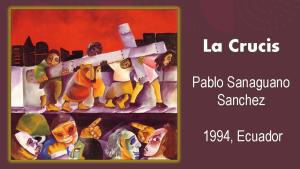
In fact, it is a continuous discussion. Therefore, I always speak of “a” and not “the” public theology. What we in some way all share among those who use the term is a concern about the role and place of religion and theology in the public sphere. We understand the public sphere to be the space in which public opinion and position is formed and debated, namely through organizations of civil society, among them Christian churches.
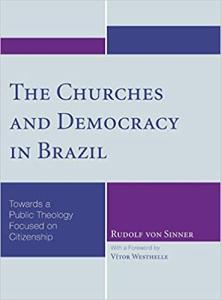
I myself focus on public theology as a theology of citizenship in Brazil. I understand citizenship not restricted to one nation, to one specific country. Rather, a citizen is entitled and aware of rights and duties as well as having effective access to recognition, protection, health, education, leisure and the like according to such human and fundamental rights. Citizenship is, therefore, an inclusive and not exclusive concept.
Public theology also critically analyzes the factual presence of the religions, mainly of Christian churches, in specific public spheres. The public theologian discusses the pertinence of such presence and constructively provides orientation to both the churches and state authorities on such presence. The public theologian offers contribution (and not imposition) from within civil society, while being in constant dialogue with other religions, other associations of civil society and the academy. As resources, the public theologian harvests both Scripture and its tradition and interpretation throughout the centuries and an interdisciplinary interpretation of contemporary society in a global context.
Curitiba, October 3-6, 2022. What will the Global Network for Public Theology accomplish?
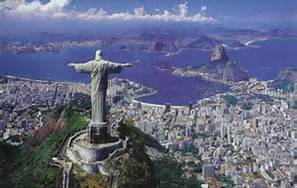
RUDOLF VON SINNER. The Curitiba conference has as its main theme “Public Theologies in Vibrating Cities: Precious and Precarious”. As stated on the Global Network of Public Theology’s website (gnpublictheology.net), the rationale behind the theme is that “Cities vibrate, shine, resonate.” They are vibrant, tourist brochures tell us – lively, that is, interesting for those who seek for good food, nightlife, and entertainment. But much more than that, public life is vibrating. What do these vibrations mean? What kind of vibrations are we feeling? Which ones are we systematically closing our senses to?
 Cities are both precious and precarious. They represent the precious: creativity, mobility, sound, colour, construction, organization, interaction. But they also feature the precarious: poverty, traffic jams, noise, smog, destruction, chaos, exclusion. A diversity of publics, of interests, of beliefs, of needs, of longings and belongings emerge from the cities.
Thus, by amplifying our understanding on publics and theologies, by appreciating the preciousness and discovering the precariousness, by realizing that there is preciousness in what is considered precarious, and that there is precarity in what is regarded as precious, we believe that there may be a more complete analysis of cities’ ambiguities and the critical and constructive role public theology can play in this context.”
For the first time, this 6th GNPT Consultation works with 14 Working Groups approved by the Executive, under one of which a paper can be submitted for presentation at the Consultation. Among them are groups touching on migration, cities in Asia, affordable and sustainable housing, theological education in future cities, gender and sexuality, ecology, digitality, Dietrich Bonhoeffer, political and public theologies and so on (for a full list with names and affiliation of the co-ordinators and a short description see the mentioned website).
The Call for Papers & Registration
RUDOLF VON SINNER. The Call for Papers is open until 01 March, 2022. A proposal can be sent according to the norms stated in the Call for Papers (https://gnpublictheology.net/2021/12/11/call-for-papers-2022/) by e-mail to [email protected]. Each submission will then be evaluated by the respective Working Group co-ordinators and a decision and/or considerations will be sent to the applicant until 20 March, 2022.
Registration opens on 01 April, online, when the conference fee of EUR 150,00 (BRL 150,00 or equivalent for Latin Americans) is due to confirm registration. We are aware that while for some this is a very reasonable amount, in many parts of the world this is a high sum; the applicant may, thus, signal how much he or she can pay and this will be analyzed and decided upon by the Executive. The Consultation will be held on the Campus of the Pontifical Catholic University of Paraná at Curitiba and be transmitted only for registered participants who wish to participate remotely. It is, thus, a hybrid conference format. For any questions, please contact [email protected]. Welcome!
Conclusion
TED PETERS AGAIN. The public theologian cannot avoid playing conceptual volley ball. On one side of the net is globalization. On the other side of the net is contextualization. In 1979 the World Future Society coined the operative phrase, “think globally, act locally.” Von Sinner thinks about the vibrancy of cities around the globe. Yet, he also recognizes that local and contextual assessment and action. Princeton public theologian, the late Max L. Stackhouse, tried to formulate the concern.
Globalization, understood in its more complex meanings, could be “for good” — both lasting and for human well-being. It could promote a highly pluralistic global civilization with increased prospect for peace with justice. In the final analysis, however, it is unlikely co happen unless it finds its focus in Christ as Lord, for Christ is the one who has, and can ever and again, renew the covenant between God and humanity, and point souls toward reconciliation with God and neighbor, and societies coward a New Jerusalem.
Now, I prefer the term, planetization, over globalization. But, that’s beside the point.
I believe the public theologian’s vision of the common good includes the principle of subsidiarity. The good of the individual and the good of the local context must remain in dialectical interaction with the overall common good. We see this dialectic in the work of Rudolf von Sinner, and we thank him for it.
▓
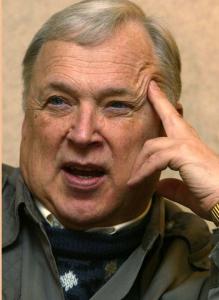 Ted Peters is a Lutheran pastor and emeritus seminary professor. His one volume systematic theology is now in its 3rd edition, God—The World’s Future (Fortress 2015). He has undertaken a thorough examination of the sin-and-grace dialectic in two works, Sin: Radical Evil in Soul and Society (Eerdmans 1994) and Sin Boldly! (Fortress 2015). Watch for his forthcoming, The Voice of Public Christian Theology (ATF 2022). See his website: TedsTimelyTake.com.
▓
Religious Events
Education and Religion
Global Network for Public Theology

About Ted Peters
Ted Peters is a Lutheran pastor and emeritus seminary professor. His one volume systematic theology is now in its 3rd edition, God—The World’s Future (Fortress 2015). He has undertaken a thorough examination of the sin-and-grace dialectic in two works, Sin: Radical Evil in Soul and Society (Eerdmans 1994) and Sin Boldly! (Fortress 2015). Watch for his forthcoming, The Voice of Public Christian Theology (ATF 2022). See his website: TedsTimelyTake.com. You can read more about the author here.
Previous Post

January 12, 2022
A Progressive Race Narrative (Part 2)
Browse Our Archives
Select a Category Afterlife America in Crisis Ancient Alien Apocalypse Art Artificial Intelligence Astrobiology Astrotheology Atheism Big History Buddhist Catholic Christian Nationalism Christmas Comparative Theology Death Ecology Ethics ETI Evangelical Evolution Existential Questions Free Will General Christian Hermeneutics Hindu https://www.patheos.com/blogs/allsetfree/2020/12/sins-we-need-to-talk-about/?utm_source=Newsletter&utm_medium=email&utm_campaign=Christians+For+a+Better+Christianity&utm_content=43&lct Interreligious Islam Jewish Justice Latter-Day Saints Literature Literature and Theology Lutheran Methodism Mormonism Nonreligious ontology Orthodox Pagam Prayer progressive Christian PT 6 Dignity Public Theology Race racial justice Religious Liberty Romance Satan Scapegoat Science & Religion Science and Religion social justice Spirituality SR 8 Transhumanism Systematic Theology Taoism Ted Peters UAP UFO Uncategorized War
Select a Month September 2026 August 2026 July 2026 June 2026 May 2026 April 2026 March 2026 February 2026 December 2025 November 2025 October 2025 September 2025 August 2025 July 2025 June 2025 May 2025 April 2025 March 2025 February 2025 January 2025 December 2024 November 2024 October 2024 September 2024 August 2024 July 2024 June 2024 May 2024 April 2024 March 2024 February 2024 January 2024 December 2023 November 2023 October 2023 September 2023 August 2023 July 2023 June 2023 May 2023 April 2023 March 2023 February 2023 January 2023 December 2022 November 2022 October 2022 September 2022 August 2022 July 2022 June 2022 May 2022 April 2022 March 2022 February 2022 January 2022 December 2021 November 2021 October 2021 September 2021
Follow Us!
TAKE THE
Religious Wisdom Quiz
What Old Testament law was summarized as "love your neighbor as yourself"?
Select your answer to see how you score.
Only 10th commandment The whole law Book of Leviticus only First five commandments
Related posts from Public Theology

Why Public Theology Needs a Theology of Nature

America's 250th Birthday Gift: Civic Renewal

Do You Believe in UFOs? A Theologian's Answer.

Free Will and Christian Freedom TWO
TRENDING AT PATHEOS Progressive Christian

What Being a Modern-Day Apostle Means to Me
In my last column, I discussed the ins and outs of modern-day...

Did Ancient China Once Worship the God of...
Across human history, a common thread weaves through the origins of the...

Love Your Neighbor – Including Earth-Kin: Lev. 19,...
God’s command to love your neighbor means acting in an ethical and...

Lead a Church Study of “Jesus and Lao...
Guest writer Jack Thomas (The Irreverent Reverend) reflects on leading his church...

Pastoral Wisdom for Responding to Sermon Pushback
Getting sermon pushback on your social justice sermon? Learn practical, Proverbs-based strategies...

Principles for Understanding the Apostolic Ministry Today
Whenever people discover that my formal ministry title is "apostle," as in...
view all Progressive Christian blogs
Ad-Free & Subscriber Log-In Subscription Support
- About Us
- 2026 Calendar
- Videos
- Podcasts
- Library of World Religions
- Faith In Media Tracker
- Advertise With Us
- Write for Us
- Privacy Policy
- Terms of Service
- Do Not Sell My Data
- Contact Us
- Radiant Digital
- Manage Newsletter Subscriptions
- Unsubscribe From Notifications
- Sitemap
Copyright 2008-2026, Patheos. All rights reserved.
Subscription Support Ad-Free & Subscriber Log-In
Follow Patheos