
BuddhistCatholicContemplativeEvangelicalGeneral ChristianHinduJewishLatter-day SaintMuslimNew VisionsProgressive Christian
Beliefs
- Buddhist
- Catholic
- Contemplative
- Evangelical
- General Christian
- Hindu
- Jewish
- Latter-day Saint
- More Voices
- Muslim
- New Visions
- Pagan
- Progressive Christian
Topics
- Religion News
- Food and Religion
- Sports and Religion
- Religious Art
- Religious Music and Entertainment
- Religious Events
- History and Religion
- Style and Religion
- Politics and Religion
- Women in Religion
- Recreation Outdoors and Religion
- Business Finance and Religion
- Careers Workplace and Religion
- Education and Religion
- Family Parenting and Religion
- Health Fitness and Religion
- Home and Religion
- Relationships and Religion
- Technology and Religion
- Travel and Religion
Columnists
- Buddhist Columnists
- Business Finance and Religion Columnists
- Careers Workplace and Religion Columnists
- Catholic Columnists
- Contemplative Columnists
- Education and Religion Columnists
- Evangelists Columnists
- Family Parenting and Religion Columnists
- General Christian Columnists
- Health Fitness and Religion Columnists
- Hindu Columnists
- History and Religion Columnists
- Home and Religion Columnists
- Jewish Columnists
- More Voices Columnists
- Latter Day Columnists
- Muslim Columnists
- New Visions Columnists
- Nonreligious Columnists
- Pagan Columnists
- Politics and Religion Columnists
- Progressive Columnists
- Recreation Outdoors and Religion Columnists
- Relationships and Religion Columnists
- Religion News Columnists
- Religious Art Columnists
- Religious Events Columnists
- Religious Music and Entertainment Columnists
- Sports and Religion Columnists
- Style and Religion Columnists
- Technology and Religion Columnists
- Travel and Religion Columnists
- Women in Religion Columnists
Resource Library
- 2026 Calendar
- Library of World Religions
- The 100 Most Holy Places on Earth
- Patheos Answers
- Podcasts
- Videos
- Faith Leaders Database
- Anglican Episcopalian
- Bahai
- Baptist
- Buddhism
- Christianity
- Confucianism
- Eastern Orthodoxy
- Hinduism
- Holiness and Pentecostal
- ISKCON
- Islam
- Judaism
- Lutheran
- Methodist
- The Church of Jesus Christ of Latter-day Saints
- New Age
- Paganism
- Presbytarian and Reformed
- Protestantism
- Religion Behind the Scenes
- Roman Catholic
- Scientology
- Shia Islam
- Sikhism
- Sufism
- Sunni Islam
- Taoism
- Zen
- See all religions
Research Tools
 Ad-Free & Subscriber Log-In Subscription Support
Ad-Free & Subscriber Log-In Subscription Support
Follow Patheos 

- Trending:
- Forgiveness
- |
- Marriage
- |
- Consciousness
- |
- Death Penalty
- |
- Election
- |
- Halloween

- Home
- Progressive Christian
- Women in Religion
- Karen Bloomquist: Another Worldview Must Be Enacted Today
Karen Bloomquist: Another Worldview Must Be Enacted Today
Last updated on: July 4, 2023 at 12:43 pm by Ted Peters
Karen Bloomquist: Another Worldview Must Be Enacted Today 2023-07-04T12:43:05-07:00 Ted Peters
Patheos Explore the world's faith through different perspectives on religion and spirituality! Patheos has the views of the prevalent religions and spiritualities of the world.
 Karen Bloomquist: Another Worldview Must Be Enacted Today
Patheos PT 5013
Ted Peters along with Karen Bloomquist are both writing in this post.
Ted Peters here. In addition to discourse clarification, I have held that the public theologian should be continually engaged in worldview construction.
As the very term, worldview, suggests, we are considering two things at once: the world and the way we view it. Even if we are aware that there is more to the cosmos than what we can perceive or conceive, we still presuppose in our minds a picture of the whole of reality. And we place ourselves within that whole picture. In fact, our picture of the whole world allows us to objectify our self, to measure our self in terms of our relationships. “The interdependence of ego-self and world is the basic ontological structure and implies all the others,” Paul Tillich rightly observed (Tillich 1951-1963, 1:171)
Our worldview is unavoidably perspectival. This means we can apply the term, constructed, to it. Each of our respective worldviews is constructed out of language, tradition, personal experience, and decisive moments of education or revelation. A worldview is meaningful almost by definition, sweeping both self and world up into a single meaningful package.
The task of worldview construction taken up by the Christian public theologian is to make intelligible and inviting a worldview in which all things in reality are oriented toward the one God of grace.
In our pluralistic global network of communications, multiple worldviews compete for loyalty. Some worldviews support megalomania, discrimination, victimization, and injustice. Other worldviews emit vibrations of wholeness, healing, bonding, and peace.
Meet Karen Bloomquist
Meet Karen Bloomquist. Dr. Bloomquist has advocated theologically for social justice throughout her distinguished career. She pastored congregations, taught in seminaries, served as Director for Studies in the Division for Church in Society of the ELCA, and for over a decade, directed theological work of the Lutheran World Federation.
Below Karen Bloomquist stresses the urgency of worldview construction in our contentious world.
Another worldview must be enacted today
Karen Bloomquist here. 
Over fifty years ago, many of us began to realize that worldviews that led to dominating, conquering, making a profit from other people or parts of the created world would not suffice. Writing about different worldviews, especially of those previously left out (those of another gender, race/ethnicity, class, more indigenous parts of the world) was occurring then. Many songs then looked toward a new world of justice and peace. Folk songs sung in the early 70s bring back nostalgic memories. New music has continued and expanded significantly (even into rap music), but the overall situations of injustice have gotten even worse, not only in the U.S. but throughout the world. Although many (usually academics) were writing about different worldviews, many felt left out of these discussions, resulting in today’s resentments and “cancel culture” cries. A shortcoming is that these other worldviews were talked about but not enacted……Where lies hope for change now?
This means not just repeating the same slogans and analyses. They now have become political fighting and fundraising words, and often lead to increasing polarization. There is a need for new language and strategies that go beyond what has been. “Liberal” or even “progressive” labels are insufficient – they continue according to Western linear logics and worldviews that increasingly are questioned. Can this be re-framed, move beyond “us” vs. “them” politics, in ways that affirm new-found identities, but in ever-transforming intersectional, fluid and not rigid ways? How can these be connected in new ways and result in actual transformative changes today? …
Worldviews are sustained and nourished through spirituality. New worldviews cannot be birthed apart from spirituality. This is often overlooked as societies become increasingly secularized and often agnostic or atheistic. Instead, political or cultural positions become absolute “gods,” such as struggles for social justice, or ends in themselves. No wonder “culture wars” and polarization have increased! …. Re-imagining is that in which spiritual traditions have long specialized. … Categorizing legitimates supremacies. It forms a “rational” basis for dominating others, especially when fueled by power.
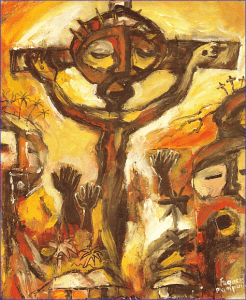
I maintain that rather than only changing policies and practices according to prevailing ideologies – e.g., making small changes in policies related to racism, health care, policing, climate change — what is needed now are changes into overall, more integrated worldviews. This is a distinctive theological (holistic, underlying reality) endeavor. It is more sweeping, transformative of overall systems. It is neither “liberal” nor “conservative.” It is interfaith – drawing upon age-old traditions and worldviews that may not be considered “religious” and that attract those with no particular religious faith. Advocacy of different policies for the sake of what furthers the good of all is important, but this needs to be re-framed and connected with or articulated from out of an overall worldview, and not primarily driven by ideological commitments, especially those that set “us” against “others” (such as Democrats and Republicans), and often lead to alignments and blockages in which no actual change occurs. Profiting or raising funds from these polarizing tendencies loom large. Countless emails plead us to donate to defeat “the other side.”… (Painting by Francis Mampuya Kita, Congo, 1997)
Furthermore, culture and spirituality are intertwined for the majority of peoples around the world. They simply cannot be addressed separately, because spirituality includes economics, politics, etc. It’s part of the whole. The shortfall (of western developed societies) is in not realizing this. Being human cannot occur from some kind of faith or spirituality. As a Snohomish banner proclaims, “Before we were human, we existed in a spiritual world.” Spirituality shapes worldviews; they are deeply interconnected. Being in community with others is how faith is expressed throughout the world.
In our time, especially in the West, in encountering and embracing spiritualities that are not Christian-based, this increasingly is occurring. Fears of syncretism — of being tainted by other traditions – is fading, even though some resist such, and want to return to the supposed purity of how things have been. … Keeping “my” spirituality pure or untainted from that of others is considered essential.
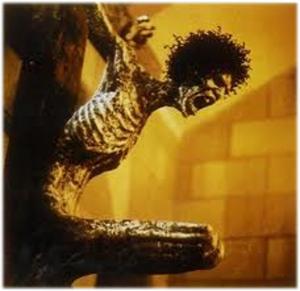
Yet more is involved than blending spiritualities for the sake of lowest common denominators. Each is concerned with what is good for all, especially for those most vulnerable. But each is connected with an overall worldview, which must be recognized and appreciated on its own terms. This may be expressed through dance or other practices. Spiritually-based worldviews — not necessarily religious institutions — are needed. Community is essential, and sustains people in struggles of justice….. (Minjung Cross Painting)
Appreciating the worldviews and stories of others is crucial, for the birthing of new movements together. This involves crossing the usual “us” vs. “them” divides. In this sense, the intersectionality of diverse justice struggles can be promising. With careful listening to others, it can lead to in depth solidarity across forces that divide, and action together – to confront injustice and end supremacy of all kinds from out of a different worldview. For example, Jesus proposed a new worldview, which probably led to his death according to an imperial worldview. The cues and leadership for this need to come from those who previously have been left out, with the rest of us joining together in solidarity with them. This necessitates collaborating across generations, drawing on the experience and wisdom of those who are older together with those who are younger, and with those who political polarization has split apart, for the sake of greater justice for all today.
▓
Ted Peters is a Lutheran pastor and seminary professor. Peters is a Patheos columnist on “Public Theology.” Karen Bloomquist is a Lutheran pastor and seminary professor. She served as Director for Studies in the Division for Church in Society of the ELCA, and for over a decade, directed theological work of the Lutheran World Federation.
▓
Works Cited
Tillich, Paul. 1951-1963. Systematic Theology. 1st. 3 Volumes: Chicago: University of Chicago Press.
Women in Religion

About Ted Peters & Karen Bloomquist
Ted Peters is a Lutheran pastor and seminary professor. Peters is a Patheos columnist on “Public Theology.” Karen Bloomquist is a Lutheran pastor and seminary professor. She served as Director for Studies in the Division for Church in Society of the ELCA, and for over a decade, directed theological work of the Lutheran World Federation. You can read more about the author here.
Previous Post

October 28, 2021
The Reformation Faith: Belief? Trust? Or Indwelling Presence?
Next Post

November 1, 2021 Can Science Dispense with Religion?
Browse Our Archives
Select a Category Afterlife America in Crisis Ancient Alien Apocalypse Art Artificial Intelligence Astrobiology Astrotheology Atheism Big History Buddhist Catholic Christian Nationalism Christmas Comparative Theology Death Ecology Ethics ETI Evangelical Evolution Existential Questions Free Will General Christian Hermeneutics Hindu https://www.patheos.com/blogs/allsetfree/2020/12/sins-we-need-to-talk-about/?utm_source=Newsletter&utm_medium=email&utm_campaign=Christians+For+a+Better+Christianity&utm_content=43&lct Interreligious Islam Jewish Justice Latter-Day Saints Literature Literature and Theology Lutheran Methodism Mormonism Nonreligious ontology Orthodox Pagam Prayer progressive Christian PT 6 Dignity Public Theology Race racial justice Religious Liberty Romance Satan Scapegoat Science & Religion Science and Religion social justice Spirituality SR 8 Transhumanism Systematic Theology Taoism Ted Peters UAP UFO Uncategorized War
Select a Month September 2026 August 2026 July 2026 June 2026 May 2026 April 2026 March 2026 February 2026 December 2025 November 2025 October 2025 September 2025 August 2025 July 2025 June 2025 May 2025 April 2025 March 2025 February 2025 January 2025 December 2024 November 2024 October 2024 September 2024 August 2024 July 2024 June 2024 May 2024 April 2024 March 2024 February 2024 January 2024 December 2023 November 2023 October 2023 September 2023 August 2023 July 2023 June 2023 May 2023 April 2023 March 2023 February 2023 January 2023 December 2022 November 2022 October 2022 September 2022 August 2022 July 2022 June 2022 May 2022 April 2022 March 2022 February 2022 January 2022 December 2021 November 2021 October 2021 September 2021
Follow Us!
TAKE THE
Religious Wisdom Quiz
Which New Testament book quotes Psalm 110 to describe Jesus as the eternal High Priest?
Select your answer to see how you score.
Revelation Romans Hebrews Acts
Related posts from Public Theology

Why Public Theology Needs a Theology of Nature

America's 250th Birthday Gift: Civic Renewal

Do You Believe in UFOs? A Theologian's Answer.

Free Will and Christian Freedom TWO
TRENDING AT PATHEOS Progressive Christian

What Being a Modern-Day Apostle Means to Me
In my last column, I discussed the ins and outs of modern-day...

Did Ancient China Once Worship the God of...
Across human history, a common thread weaves through the origins of the...

Love Your Neighbor – Including Earth-Kin: Lev. 19,...
God’s command to love your neighbor means acting in an ethical and...

Lead a Church Study of “Jesus and Lao...
Guest writer Jack Thomas (The Irreverent Reverend) reflects on leading his church...

Pastoral Wisdom for Responding to Sermon Pushback
Getting sermon pushback on your social justice sermon? Learn practical, Proverbs-based strategies...

Principles for Understanding the Apostolic Ministry Today
Whenever people discover that my formal ministry title is "apostle," as in...
view all Progressive Christian blogs
Ad-Free & Subscriber Log-In Subscription Support
- About Us
- 2026 Calendar
- Videos
- Podcasts
- Library of World Religions
- Faith In Media Tracker
- Advertise With Us
- Write for Us
- Privacy Policy
- Terms of Service
- Do Not Sell My Data
- Contact Us
- Radiant Digital
- Manage Newsletter Subscriptions
- Unsubscribe From Notifications
- Sitemap
Copyright 2008-2026, Patheos. All rights reserved.
Subscription Support Ad-Free & Subscriber Log-In
Follow Patheos