
BuddhistCatholicContemplativeEvangelicalGeneral ChristianHinduJewishLatter-day SaintMuslimNew VisionsProgressive Christian
Beliefs
- Buddhist
- Catholic
- Contemplative
- Evangelical
- General Christian
- Hindu
- Jewish
- Latter-day Saint
- More Voices
- Muslim
- New Visions
- Pagan
- Progressive Christian
Topics
- Religion News
- Food and Religion
- Sports and Religion
- Religious Art
- Religious Music and Entertainment
- Religious Events
- History and Religion
- Style and Religion
- Politics and Religion
- Women in Religion
- Recreation Outdoors and Religion
- Business Finance and Religion
- Careers Workplace and Religion
- Education and Religion
- Family Parenting and Religion
- Health Fitness and Religion
- Home and Religion
- Relationships and Religion
- Technology and Religion
- Travel and Religion
Columnists
- Buddhist Columnists
- Business Finance and Religion Columnists
- Careers Workplace and Religion Columnists
- Catholic Columnists
- Contemplative Columnists
- Education and Religion Columnists
- Evangelists Columnists
- Family Parenting and Religion Columnists
- General Christian Columnists
- Health Fitness and Religion Columnists
- Hindu Columnists
- History and Religion Columnists
- Home and Religion Columnists
- Jewish Columnists
- More Voices Columnists
- Latter Day Columnists
- Muslim Columnists
- New Visions Columnists
- Nonreligious Columnists
- Pagan Columnists
- Politics and Religion Columnists
- Progressive Columnists
- Recreation Outdoors and Religion Columnists
- Relationships and Religion Columnists
- Religion News Columnists
- Religious Art Columnists
- Religious Events Columnists
- Religious Music and Entertainment Columnists
- Sports and Religion Columnists
- Style and Religion Columnists
- Technology and Religion Columnists
- Travel and Religion Columnists
- Women in Religion Columnists
Resource Library
- 2026 Calendar
- Library of World Religions
- The 100 Most Holy Places on Earth
- Patheos Answers
- Podcasts
- Videos
- Faith Leaders Database
- Anglican Episcopalian
- Bahai
- Baptist
- Buddhism
- Christianity
- Confucianism
- Eastern Orthodoxy
- Hinduism
- Holiness and Pentecostal
- ISKCON
- Islam
- Judaism
- Lutheran
- Methodist
- The Church of Jesus Christ of Latter-day Saints
- New Age
- Paganism
- Presbytarian and Reformed
- Protestantism
- Religion Behind the Scenes
- Roman Catholic
- Scientology
- Shia Islam
- Sikhism
- Sufism
- Sunni Islam
- Taoism
- Zen
- See all religions
Research Tools
 Ad-Free & Subscriber Log-In Subscription Support
Ad-Free & Subscriber Log-In Subscription Support
Follow Patheos 

- Trending:
- Forgiveness
- |
- Marriage
- |
- Consciousness
- |
- Death Penalty
- |
- Election
- |
- Halloween

- Home
- Progressive Christian
- Christmas presents and God’s grace: Are they really gifts?
Christmas presents and God’s grace: Are they really gifts?
Last updated on: December 1, 2021 at 4:36 pm by Ted Peters
Christmas presents and God’s grace: Are they really gifts? 2021-12-01T16:36:38-08:00 Ted Peters
Patheos Explore the world's faith through different perspectives on religion and spirituality! Patheos has the views of the prevalent religions and spiritualities of the world.

Is that Christmas present with your name on it really a gift? When the New Testament tells us that we are saved by God’s grace, is salvation really a gift? Were the Protestant Reformers wrong when they touted, sola gratia (by grace alone)? Do all gifts of grace require reciprocity?
Reformation evangelicals insist that God is gracious and that we fallen and sinful creatures benefit from God’s gifts of grace such as creation and redemption. Yet, some philosophers—some theologians too--claim that there is no such thing as a free gift. Every gift, allegedly, comes with obligatory strings attached. It follows, then, that evangelical theologians are mistaken about God’s free gifts of grace. Really? No, I don’t think so.
This Christmas season I ask: do all gifts of grace require reciprocity? In my answer, I will argue that this is a pseudo-problem caused by the fallacy of misplaced concreteness. What is concrete is the human experience of divine giftedness from an independent yet gracious God. What is abstract is the ideal separation of gift from obligation.
Those darned philosophers tie us up in knots, not bows

Contemporary Reformation theologians remind us more than they need to that our very existence is a gift from God. Our creation is a gift, German theologian Oswald Bayer makes clear (Bayer, Schöpgungslehre als Rechtifertigungsontologie, 2009, p. 20). So also is our redemption a gift. “Justification by faith by grace is a free gift,” trumpets Finnish-American theologian Kirsi Stjerna (Stjerna, 2021, p. 181). There is no problem here, right? Wrong. We cannot avoid the question: do all gifts of grace require reciprocity?
Grace oriented Christians are being lassoed and hogtied by philosophers ruminating over the phenomenon of the gift. To identify the knot, try this syllogism on for size.
To be a gift, a gift must have no strings attached.
All gifts come with strings attached.
Therefore, gifts do not exist.
Or, try this syllogism.
God’s grace is a gift.
All gifts come with strings attached.
Therefore, God’s grace comes with strings attached.
Or, try this syllogism.
Lutherans tell me that God’s grace is a free gift.
Philosophers tell me that no gift is free.
Therefore, I have a headache.
If we take an aspirin and then watch what happens under the Christmas tree, we will understand gift giving. Right? Not according to killjoy philosophers and their theological counterparts who hold that all gifts of grace require reciprocity.
Inescapable reciprocity
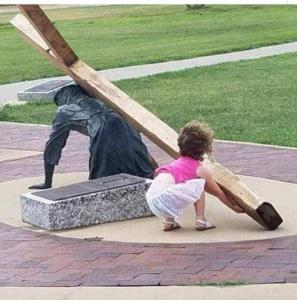
When French cognoscenti such as Marcel Mauss or Jacques Derrida speak, this is what we hear: even though a gift appears to be disinterested and gratuitous, it cannot help but create obligations that require reciprocity (Mauss, 1990). Even without an exchange, the receiver of the gift is obligated to treat the giver with honor, respect, and enhanced status. In short, no such thing as a gift exists.
What is it that concerns these philosophers and their anthropologist friends? It is not the gift per say. Rather, what concerns them is the economy of giving and receiving. Why? Because giving and receiving gifts requires measurable reciprocity. Gifts are not free.
Actually, according to Derrida, it is the economy of giving and receiving that “makes the gift impossible” (Kearney, 1999, p. 62 cited). The gift in itself is not a thing, an object, independent of donor and recipient. The gift becomes what it is in the event of giving and receiving. We are enjoined to conclude, then, there is no such thing as a free gift. A pure gift with no strings attached does not exist. Does it follow that all this evangelical talk of a free gift of God’s grace is null and void? If so, should I tear up my ordination certificate?
Theologians such as Risto Saarinen at the University of Helsinki or Bo Holm at Aarhus University cannot help but ask: what can we say about grace if no such thing as a free or pure gift exists? Is God’s gracious gift really just a form of divine manipulation, a disguised demand? Is it really a sham to think of the Torah, the decalogue, and Jesus’ new law—the law that we love one another (John 13:34)—as a gift of divine grace? Have we tied our evangelical theologians up into a knot? How can we untie the knot and release our beleaguered theologians from their misery?
Untying the philosophical knot along with the bow
I believe that our philosopher friends have confused the concrete with the abstract. I believe they commit the fallacy of misplaced concreteness. How does this help us untie the knot?
First, we should distinguish between what is concrete and what is abstract. I recommend we rethink the relationship between primary or symbolic discourse, on the one hand, and secondary or theological discourse, on the other.

Primary symbolic discourse can be analyzed by both the phenomenologist and the systematic theologian. Derrida, like most philosophers, presumes that phenomenology means to see and describe a phenomenon. Symbolic articulation of biblical beliefs is the basic phenomenon in question here. The systematic theologian reflects on this phenomenon. “Systematic theological analogical language…is a second order reflective language re-expressing the meanings of the originating religious event and its original religious language to and for a reflective mind” (Tracy, The Analogical Imagination, 1981, p. 409).
At the primary level of biblical discourse we read in 1 John 4:19: “We love because God first loved us.” Are there strings attached to God’s love? If so, it’s our job to interpret those strings.
What is primary is the concrete event of Jesus Christ combined with the indwelling of the resurrected Christ in the person of faith. We participate in the meaning of this event through the symbolic discourse of Holy Scripture, worship, and prayer. This primary phenomenon is subsequently described at the secondary or reflective level of theology with terms such as grace, favor, mercy, agape, and even gift.
The primary level is concrete. The secondary or reflective level is abstract. If we accidently substitute the abstract for the concrete, we commit the fallacy of misplaced concreteness. “The fallacy of misplaced concreteness…consists in neglecting the degree of abstraction involved when an actual entity is considered merely so far as it exemplifies certain categories of thought” (Whitehead, 1929, 1978, pp. 7-8).
Here’s the caution for the theologian. The theologian should avoid over defining the abstract terms. Avoid treating doctrinal concepts such as gift or grace as if they were primary. Over defining a term such as gift so that it no longer describes the primary experience may provide an interesting exercise in sophistry, but it ought not cause the evangelical theologian to lose any sleep. If at the concrete level we experience gift giving and receiving with reciprocity, then so be it.
There! We have untied the knot. Any further implications? [1]
When God in Godself becomes the gift
In his insightful attempt to untie this confounding knot, Jackson Wu acknowledges that God wants a relationship with us creatures. Suppose God’s gift is God’s presence? Does the divine presence include the forgiveness of sins or justification by grace? [2]
For Roman Catholic sockdolager Karl Rahner, God is a self-communicator. What God communicates is God in Godself. God becomes both the giver and the gift. “In and through his own being the giver [God] gives himself to creatures as their own fulfillment” (Rahner, 1978, p. 120).

Might a Lutheran agree? Most assuredly. In the new Finnish interpretation of justification-by-faith, grace and gift become isomorphic because, in Christ, God himself becomes the gift. Christ’s presence in the faith of the believer effects justification and, at the same time, changes the ontological status of the sinful person. “Luther does not separate the person (persona) of Christ and his work (officium) from each other. Instead, Christ himself, both his person and his work, is the Christian righteousness, that is, the ‘righteousness of faith’. Christ—and therefore also his entire person and work—is really and truly present in the faith itself (in ipsa fide Christus adest)” (Mannermaa, 2005, p. 5). (Santa Claus by Thomas Nast, Harpers, 1881)
The person of faith experiences the divine gift (donum, gift)—the real presence—that results from the divine disposition of favor, mercy, love—that is, from the divine disposition we name, grace. In sum, our a se God’s gracious disposition and that God’s presence in Christ are, at the first level of human experience in faith, coincident.
Will our philosophers and theologians take that away from us by denying its possibility at the abstract level? (Lord’s Supper by Dali)

Conclusion
This has been our question: do all gifts of grace require reciprocity? Let us concede this and proceed to implications.
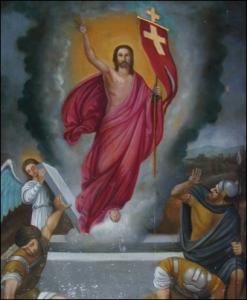
If it is the case that every gift comes with strings attached—meaning that no purely free gift exists—then we must ask about Jesus. Jesus gives us a summary of the divine law—we are obligated to love God and love our neighbor. Does the above philosophical pondering nullify the gifts we receive from our independent and gracious God? No. The problem of the so-called “free gift” is a pseudo-problem. The entire argument commits the fallacy of misplaced concreteness.
Yes, each such gift (Gabe) is associated with an obligation (Aufgabe). But the obligation does not thereby rub out the giftedness of the gift. I would like to avoid any purification exercise that exorcises all strings. Messy ambiguity is OK, I believe. (Resurrection painting in Franciscan church, Chania, Crete)
Nevertheless, the gifts we receive from God are free in the following important sense: God and God alone determines to give such gifts. We do not. God is a se, a reality unto Godself. We, in contrast, exist contingently, as creatures thrown into existence solely at the will of the divine thrower. We did not buy our creation, nor will we buy our redemption. These are free gifts provided us by an independent yet gracious God.
Even more importantly, when we review the cross and perceive the degree of human suffering taken up into the life of the divine giver, we realize that our redemption is a costly gift to God. For this gift, thanksgiving is fitting.
Notes
[1] Is Jesus’ Golden Rule an example of reciprocity? Not according to J.E. Dyer. “But the Golden Rule is miscast as a rule about reciprocity. It is not one: it is not intended to make us think narrowly or pragmatically about avoiding the infliction of harm, nor is its purpose to induce reciprocal behavior from others. The Golden Rule is not about managing human relations or social outcomes. It is about aligning our own hearts with the basic relational attitude of God the Father.” [2] Peter Leithard connects divine presence with forgiveness. “The basis of our relationship with God is the forgiveness of debts not only at the outset, when God forgives the ungodly, but every day. Every day God bestows gifts that leave us in His debt; then He forgives those debts. He does not enslave but frees.”
▓

Ted Peters is a Lutheran pastor and emeritus seminary professor. His one volume systematic theology is now in its 3rd edition, God—The World’s Future (Fortress 2015). He has undertaken a thorough examination of the sin-and-grace dialectic in two works, Sin: Radical Evil in Soul and Society (Eerdmans 1994) and Sin Boldly! (Fortress 2015). Watch for his forthcoming, The Voice of Public Christian Theology (ATF 2022). See his website: TedsTimelyTake.com.
▓
Bibliography
Bayer, O. (2007-2014). Gift: Systematic Theology. In D. S. Hans Dieter Betz, Religion in Gesichte und Gegenwart, 14 Volumes (p. 5:431). Leiden and Boston: Brill.
Bayer, O. (2009). Schöpgungslehre als Rechtifertigungsontologie. In e. Bo Kristian Holm and Peter Widman, Word-Gift-Being (pp. 17-42). Tubingen: Mohr Siebeck.
Coakley, S. (2008). Why Gift? Gift, gender, and Trinitarian relations in Milbank and Tanner. Scottish Journal of Theology 6:2.
Derrida, J. (1992). Given Time. Chicago: University of Chicago Press.
Holm, B. (2005). Luther’s Theology of the Gift. In B. H. Niels Henrik Gregersen, The Gift of Grace: The Future of Lutheran Theology. Minneapolis MN: Fortress.
Juntunen, S. (2004). The Notion of Gift (donum) in Luther’s Thinking. In A. V.-P. Ulrik Nissen, Luther Between Present and Past: Studies in Luther and Lutheranism. Helsinki: Luther Agricola Society.
Kearney, R. (1999). On the Gift: A Discussion between Jacques Derrida and Jean Luc-Marion. In e. John D. Caputo and Michael J. Scanlon, God, the Gift, and Postmodernism (pp. 54-78). Bloomington IN: Indiana University Press.
Luther, M. (2015-2019). The Smalcald Articles. In M. Luther, The Annotated Luther, 6 Volumes (p. 2:455). Minneap;olis MN: Fortress.
Mannermaa, T. (2005). Christ Present in Faith: Luther’s View of Justification. Minneapolis MN: Fortress.
Marion, J.-L. (1991). God Without Being. Chicago: University of Chicago Press.
Mauss, M. (1990). The Gift: Forms and Functions of Exchange in Archaic Societies. London: Routledge.
McGrath, A. (1988). Justification by Faith: What It Means To Us Today. Grand Rapids MI: Zondervan.
Milbank, J. (1995). Can a Gift be Given? Modern Theology 11.
Peters, T. (2015). God–The World’s Future: Systematic Theology for a New Era (3rd ed.). Minneapolis MN: Fortress Press.
Rahner, K. (1978). Foundations of the Christian Faith. New York: Seabury Crossroad.
Riswold, C. (2020). Luther an(d) Feminist Intersectional Theology. Religions 11:2, 1-8; https://doi.org/10.3390/rel11020054. .
Saarinen, R. (2017). Luther and the Gift. Tubingen: Mohr Siebeck.
Stjerna, K. (2021). Lutheran Theology: A Grammar of Faith. Edeinburgh: T & T Clark.
Tanner, K. (2005). The Ecoomy of Grace. Minneapolis MN: Augsburg.
Tracy, D. (1981). The Analogical Imagination. New York: Crossroad.
Tracy, D. (1994). On Naming the Present: God, Hermeneutics, and Church. Maryknoll NY: Orbis.
Trelstad, M. (2006). Introduction. In e. Marit Trelstad, Cross Examinations: Readings in the Meaning of the Cross Today. Minneapolis MN: Fortress.
Voegelin, E. (1956-1987). Order and History, 5 Volumes. Baton Rouge LA: Louisiana State University Press.
Wesley, J. (1984). Sermon 5: Justification by Faith . In e. Frank Baker, The Bicentennial Edition of the Works of John Wesley (p. 1:87). Nashville TN: Abingdon Press.
Whitehead, A. N. (1929, 1978). Process and Reality (Corrected Edition). New York: Macmillan.
Wright, N. T. (2009). Justification: God’s Plan and Pau’ls Vision. Downers Grove IL: IVP Academic.

About Ted Peters
Ted Peters is a Lutheran pastor and seminary professor. His fields of teaching and writing include public systematic theology as well as the dialogue between faith and science. You can read more about the author here.
Previous Post

November 19, 2021
Sin 4: the Invisible Scapegoat
Next Post
November 22, 2021 Is Justice Just a Chain of Serial Violence? Rittenhouse One More Time
Browse Our Archives
Select a Category Afterlife America in Crisis Ancient Alien Apocalypse Art Artificial Intelligence Astrobiology Astrotheology Atheism Big History Buddhist Catholic Christian Nationalism Christmas Comparative Theology Death Ecology Ethics ETI Evangelical Evolution Existential Questions Free Will General Christian Hermeneutics Hindu https://www.patheos.com/blogs/allsetfree/2020/12/sins-we-need-to-talk-about/?utm_source=Newsletter&utm_medium=email&utm_campaign=Christians+For+a+Better+Christianity&utm_content=43&lct Interreligious Islam Jewish Justice Latter-Day Saints Literature Literature and Theology Lutheran Methodism Mormonism Nonreligious ontology Orthodox Pagam Prayer progressive Christian PT 6 Dignity Public Theology Race racial justice Religious Liberty Romance Satan Scapegoat Science & Religion Science and Religion social justice Spirituality SR 8 Transhumanism Systematic Theology Taoism Ted Peters UAP UFO Uncategorized War
Select a Month September 2026 August 2026 July 2026 June 2026 May 2026 April 2026 March 2026 February 2026 December 2025 November 2025 October 2025 September 2025 August 2025 July 2025 June 2025 May 2025 April 2025 March 2025 February 2025 January 2025 December 2024 November 2024 October 2024 September 2024 August 2024 July 2024 June 2024 May 2024 April 2024 March 2024 February 2024 January 2024 December 2023 November 2023 October 2023 September 2023 August 2023 July 2023 June 2023 May 2023 April 2023 March 2023 February 2023 January 2023 December 2022 November 2022 October 2022 September 2022 August 2022 July 2022 June 2022 May 2022 April 2022 March 2022 February 2022 January 2022 December 2021 November 2021 October 2021 September 2021
Follow Us!
TAKE THE
Religious Wisdom Quiz
I was rejected by God as king for offering an unauthorized sacrifice instead of waiting. Who am I?
Select your answer to see how you score.
Solomon Rehoboam Saul David
Related posts from Public Theology

Why Public Theology Needs a Theology of Nature

America's 250th Birthday Gift: Civic Renewal

Do You Believe in UFOs? A Theologian's Answer.

Free Will and Christian Freedom TWO
TRENDING AT PATHEOS Progressive Christian

Why Christians Have a Sacred Duty to Vote:...
The Bible offers strong support for the sacred duty to vote. Here...

What Being a Modern-Day Apostle Means to Me
In my last column, I discussed the ins and outs of modern-day...

Did Ancient China Once Worship the God of...
Across human history, a common thread weaves through the origins of the...

Love Your Neighbor – Including Earth-Kin: Lev. 19,...
God’s command to love your neighbor means acting in an ethical and...

Lead a Church Study of “Jesus and Lao...
Guest writer Jack Thomas (The Irreverent Reverend) reflects on leading his church...

Principles for Understanding the Apostolic Ministry Today
Whenever people discover that my formal ministry title is "apostle," as in...
view all Progressive Christian blogs
Ad-Free & Subscriber Log-In Subscription Support
- About Us
- 2026 Calendar
- Videos
- Podcasts
- Library of World Religions
- Faith In Media Tracker
- Advertise With Us
- Write for Us
- Privacy Policy
- Terms of Service
- Do Not Sell My Data
- Contact Us
- Radiant Digital
- Manage Newsletter Subscriptions
- Unsubscribe From Notifications
- Sitemap
Copyright 2008-2026, Patheos. All rights reserved.
Subscription Support Ad-Free & Subscriber Log-In
Follow Patheos