
BuddhistCatholicContemplativeEvangelicalGeneral ChristianHinduJewishLatter-day SaintMuslimNew VisionsProgressive Christian
Beliefs
- Buddhist
- Catholic
- Contemplative
- Evangelical
- General Christian
- Hindu
- Jewish
- Latter-day Saint
- More Voices
- Muslim
- New Visions
- Pagan
- Progressive Christian
Topics
- Religion News
- Food and Religion
- Sports and Religion
- Religious Art
- Religious Music and Entertainment
- Religious Events
- History and Religion
- Style and Religion
- Politics and Religion
- Women in Religion
- Recreation Outdoors and Religion
- Business Finance and Religion
- Careers Workplace and Religion
- Education and Religion
- Family Parenting and Religion
- Health Fitness and Religion
- Home and Religion
- Relationships and Religion
- Technology and Religion
- Travel and Religion
Columnists
- Buddhist Columnists
- Business Finance and Religion Columnists
- Careers Workplace and Religion Columnists
- Catholic Columnists
- Contemplative Columnists
- Education and Religion Columnists
- Evangelists Columnists
- Family Parenting and Religion Columnists
- General Christian Columnists
- Health Fitness and Religion Columnists
- Hindu Columnists
- History and Religion Columnists
- Home and Religion Columnists
- Jewish Columnists
- More Voices Columnists
- Latter Day Columnists
- Muslim Columnists
- New Visions Columnists
- Nonreligious Columnists
- Pagan Columnists
- Politics and Religion Columnists
- Progressive Columnists
- Recreation Outdoors and Religion Columnists
- Relationships and Religion Columnists
- Religion News Columnists
- Religious Art Columnists
- Religious Events Columnists
- Religious Music and Entertainment Columnists
- Sports and Religion Columnists
- Style and Religion Columnists
- Technology and Religion Columnists
- Travel and Religion Columnists
- Women in Religion Columnists
Resource Library
- 2026 Calendar
- Library of World Religions
- The 100 Most Holy Places on Earth
- Patheos Answers
- Podcasts
- Videos
- Faith Leaders Database
- Anglican Episcopalian
- Bahai
- Baptist
- Buddhism
- Christianity
- Confucianism
- Eastern Orthodoxy
- Hinduism
- Holiness and Pentecostal
- ISKCON
- Islam
- Judaism
- Lutheran
- Methodist
- The Church of Jesus Christ of Latter-day Saints
- New Age
- Paganism
- Presbytarian and Reformed
- Protestantism
- Religion Behind the Scenes
- Roman Catholic
- Scientology
- Shia Islam
- Sikhism
- Sufism
- Sunni Islam
- Taoism
- Zen
- See all religions
Research Tools
 Ad-Free & Subscriber Log-In Subscription Support
Ad-Free & Subscriber Log-In Subscription Support
Follow Patheos 

- Trending:
- Forgiveness
- |
- Marriage
- |
- Consciousness
- |
- Death Penalty
- |
- Election
- |
- Halloween
 Putting the Protest in Protestant
- Home
- Evangelical
- That Feeling when Academic Historians Get Ordained to the Ministry
That Feeling when Academic Historians Get Ordained to the Ministry
Last updated on: July 2, 2019 at 5:03 pm by D. G. Hart
That Feeling when Academic Historians Get Ordained to the Ministry 2019-07-02T17:03:26-04:00 D. G. Hart
Patheos Explore the world's faith through different perspectives on religion and spirituality! Patheos has the views of the prevalent religions and spiritualities of the world.
These reflections come in the context of finishing a manuscript on the spiritual life of Benjamin Franklin. Of all the debates that surround the Christian character of the American Founding and the faith of the nation’s original statesmen, most academics have little trouble disposing of Franklin within the ranks of the faithful. The Bostonian who grew up in New England Puritanism and then relocated to Philadelphia and went through a Deist phase, married an Anglican woman and made his peace with organized religion by living and moving and having his being on the margins of colonial Protestantism. Franklin’s early Deistical writings, siring an illegitimate son, and a string of flirtatious relationships with women not his wife are not the stuff of genuine Protestant conviction for most historians. Not even Franklin’s proposal for a prayer at the Constitutional Convention — sort of a hail Mary pass for divine assistance during a stormy session of debate — could turn him into evidence for American’s Christian founding.
I understand this and hope to explain the nooks and crannies of Franklin’s place among colonial British Protestants.
What I wonder about is the ease with which historians (and even preachers) can conclude that Franklin was not fit for inclusion in a Christian communion but then turn around and classify other figures from the past, without the slightest hesitation, as genuinely Christian.
Not to pick on him (I did read his posts while wrapping up my conclusion of Franklin), but James Bratt gave examples precisely of what I have described — even with Franklin in view. In one post, Bratt described going to Easter services at Christ Church, Philadelphia, the Anglican parish where the Franklin family attended when the did worship:
It was an unusual Easter sermon, to say the least. At least unusual for this well-trained CRC boy. We were worshiping at Christ Church in the old center of Philadelphia, a venerable Episcopal parish founded in 1695 and claiming all sorts of historic figures on its rolls. Many of these were Christians. Others were, well, like Ben Franklin. So maybe an Easter sermon off the well-worn West Michigan path was to be expected. I didn’t expect, however, that it would culminate with Marian Anderson.
Notice, there went Franklin with those names in the category “other” than Christian.
But not so for Marian Anderson, the famous African-American vocalist from Philadelphia, who was the subject (in part) for the homily Bratt heard:
But first, how did her story become central to an Easter sermon? Well, as the good rector said in an effective connection to his congregation, Marian Anderson’s is a Philadelphia story. She was born and reared in South Philly to a family one generation removed from slavery. She discovered her talent at Union Baptist Church there, and she persevered in developing it against racist policies in the local schools and conservatories. With any number of black jazz and classical musicians, she finally had to go to Europe to get the audience and make the living that she deserved. For her belated coming-out party at the Lincoln Memorial she faced logistical difficulties due to segregated transportation and lodging facilities. Even had the DAR allowed her to sing at Constitution Hall, she would not have been allowed to use the restroom there, it being designated for whites, and city law at the time prohibiting mixed-use bathrooms. Which kinda rings a bell, right, North Carolina?
Ok, a moving Philadelphia story, but what’s the connection to Easter? The sermon got around to that at the very end. Maybe that’s effective homiletics, maybe not—I’ll leave it to Twelver Scott Hoezee and other experts in the field to weigh in on that. Marian Anderson, the pastor said, was living out of something hoped for, by the conviction of something not yet seen. That is, she was living by faith (Heb 11:1) along with all the other saints of that chapter.
That’s an agreeable rendering but even Anderson herself in her autobiography conceded that although she was on good terms with God she was not active in church.
So what makes it easy to turn Ben down for inclusion in Christianity but let Marian in?
Bratt engaged in a similar assessment a few weeks later when he posted about FDR:
Roosevelt was a loyal birthright Episcopalian, low-church in liturgy, undemanding in theology, but vigorous in the social ethics of the Gospel. Start to finish, he believed that the universe was in the hands of a good God who has instituted a moral order for human flourishing, and who calls us to advance that order and flourishing as we are able. His was a “very simple faith,” his wife Eleanor observed; yet his confidant and speechwriter Robert Sherwood judged that “his religious faith was the strongest and most mysterious force in him.”
So far, FDR sounds a lot like Ben Franklin in his prime.
But then:
the key turning point in Roosevelt’s life—also in his spiritual life—came when he was paralyzed by polio (some now say Guillain–Barré syndrome) at age 39. Up to this point everything in life had come so easily for him that he struck many as just a glib son of privilege. His paralysis cast him into deep darkness, and upon his deepest resources. Roosevelt emerged with a more tested faith, with a greater sense of dependence on others, and with a greater sense of gratitude and empathy. He invested much of his personal fortune into making Warm Springs, Georgia the site of a premier facility for the treatment of paralysis, emphasizing the emotional and human-relational as well as physical aspects of the process. He roved the Georgia countryside in a customized automobile and got to know poor dirt farmers as he never would have otherwise. Put simply, his disease turned FDR into a mensch of ready compassion which his political genius could then turn into public policy.
Bratt concludes:
Religion comes in many shapes and sizes. Perhaps we can best judge its quality exactly as Jesus prescribed: “By their fruits ye shall know them.”
Okay, then why not Ben?
Does it come down to the personal preferences of a historian or priest? Those characters we admire we want to include in the Christian camp? Those less estimable we don’t mind leaving outside that camp?
Even more poignant is the question of what allows academics, people who are supposed to be somewhat impartial and very scholarly, to identify with a religious tradition sufficiently to judge who qualifies as a genuine adherent of that religion. Isn’t that something, even if you are a Christian scholar, you leave to those whose pay grade (or ordination) it is to make that judgment?
Image
Previous Post

June 27, 2019
Not "Who's an Evangelical" but "Who's a Presbyterian"
Next Post

July 3, 2019 Colin Kaepernick is a Good Test for David French-ism
Browse Our Archives
Select a Category 2016 Presidential Election 2020 Presidential Election Apocalypse Bible in American Life Biblical authority Books and culture Calvinism Church Life Civil Religion Culture Wars Doctrine evangelicalism Gullibility Heaven and Hell Intellectual life Jesus Ministry modernity moralism Nationalism New Testament Old Testament Otherworldiness Otherworldliness Paul Peter Piety Popular culture Protestantism Psalms Puritans Race Roman Catholicism sacred/secular distinction Sex Shameless Self Promotion Sports Ten Commandments U.S. politics Uncategorized vulgarity worship
Select a Month January 2022 October 2021 August 2021 June 2021 May 2021 April 2021 March 2021 February 2021 January 2021 December 2020 November 2020 October 2020 September 2020 August 2020 July 2020 June 2020 May 2020 April 2020 March 2020 February 2020 January 2020 December 2019 November 2019 October 2019 September 2019 August 2019 July 2019 June 2019 May 2019 April 2019 March 2019 February 2019 January 2019 December 2018 November 2018 October 2018 September 2018 August 2018 July 2018 June 2018 May 2018 April 2018 March 2018 February 2018 January 2018 December 2017 November 2017 October 2017 September 2017 August 2017 July 2017 June 2017 May 2017 April 2017 March 2017 February 2017 January 2017 December 2016 November 2016 October 2016 September 2016 August 2016 July 2016 June 2016 May 2016 April 2016 March 2016 February 2016 January 2016 December 2015 November 2015 October 2015 September 2015 August 2015 July 2015 June 2015 May 2015 April 2015 March 2015 February 2015 January 2015
Follow Us!
TAKE THE
Religious Wisdom Quiz
How do you show your love for God?
Select your answer to see how you score.
All of these Keeping His Commandments Prayer Looking Forward to Heaven
Related posts from Putting the Protest in Protestant

Putting the Protest in Protestant

The Optics and the Reality of Evangelical Elites
Putting the Protest in Protestant
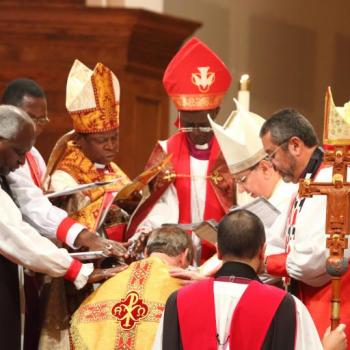
Do Anglicans in N. America Talk Funny?
Putting the Protest in Protestant

Shocked, Shocked that American Catholics Fund the Vatican
Putting the Protest in Protestant
TRENDING AT PATHEOS Evangelical

The REST of Your Life: A Creative Wrestles...
This week I had a conversation with a good friend from church....

How the author of the world's best hymn...
I've been working with John Newton for a while now. This makes...

Long before this Lectio Divina, Psalm 130 - the song - started...

What About the Trees? Another Living Parable
After I finished writing the last article about falling leaves as a...

Why Classical Education Is a Conversation, Not a...
Come and Read: Joy in Classical Education When I was a little...

Cornell University has received a great deal of negative publicity and intense...
view all Evangelical blogs
Ad-Free & Subscriber Log-In Subscription Support
- About Us
- 2026 Calendar
- Videos
- Podcasts
- Library of World Religions
- Faith In Media Tracker
- Advertise With Us
- Write for Us
- Privacy Policy
- Terms of Service
- Do Not Sell My Data
- Contact Us
- Radiant Digital
- Manage Newsletter Subscriptions
- Unsubscribe From Notifications
- Sitemap
Copyright 2008-2026, Patheos. All rights reserved.
Subscription Support Ad-Free & Subscriber Log-In
Follow Patheos