
BuddhistCatholicContemplativeEvangelicalGeneral ChristianHinduJewishLatter-day SaintMuslimNew VisionsProgressive Christian
Beliefs
- Buddhist
- Catholic
- Contemplative
- Evangelical
- General Christian
- Hindu
- Jewish
- Latter-day Saint
- More Voices
- Muslim
- New Visions
- Pagan
- Progressive Christian
Topics
- Religion News
- Food and Religion
- Sports and Religion
- Religious Art
- Religious Music and Entertainment
- Religious Events
- History and Religion
- Style and Religion
- Politics and Religion
- Women in Religion
- Recreation Outdoors and Religion
- Business Finance and Religion
- Careers Workplace and Religion
- Education and Religion
- Family Parenting and Religion
- Health Fitness and Religion
- Home and Religion
- Relationships and Religion
- Technology and Religion
- Travel and Religion
Columnists
- Buddhist Columnists
- Business Finance and Religion Columnists
- Careers Workplace and Religion Columnists
- Catholic Columnists
- Contemplative Columnists
- Education and Religion Columnists
- Evangelists Columnists
- Family Parenting and Religion Columnists
- General Christian Columnists
- Health Fitness and Religion Columnists
- Hindu Columnists
- History and Religion Columnists
- Home and Religion Columnists
- Jewish Columnists
- More Voices Columnists
- Latter Day Columnists
- Muslim Columnists
- New Visions Columnists
- Nonreligious Columnists
- Pagan Columnists
- Politics and Religion Columnists
- Progressive Columnists
- Recreation Outdoors and Religion Columnists
- Relationships and Religion Columnists
- Religion News Columnists
- Religious Art Columnists
- Religious Events Columnists
- Religious Music and Entertainment Columnists
- Sports and Religion Columnists
- Style and Religion Columnists
- Technology and Religion Columnists
- Travel and Religion Columnists
- Women in Religion Columnists
Resource Library
- 2026 Calendar
- Library of World Religions
- The 100 Most Holy Places on Earth
- Patheos Answers
- Podcasts
- Videos
- Faith Leaders Database
- Anglican Episcopalian
- Bahai
- Baptist
- Buddhism
- Christianity
- Confucianism
- Eastern Orthodoxy
- Hinduism
- Holiness and Pentecostal
- ISKCON
- Islam
- Judaism
- Lutheran
- Methodist
- The Church of Jesus Christ of Latter-day Saints
- New Age
- Paganism
- Presbytarian and Reformed
- Protestantism
- Religion Behind the Scenes
- Roman Catholic
- Scientology
- Shia Islam
- Sikhism
- Sufism
- Sunni Islam
- Taoism
- Zen
- See all religions
Research Tools
 Ad-Free & Subscriber Log-In Subscription Support
Ad-Free & Subscriber Log-In Subscription Support
Follow Patheos 

- Trending:
- Forgiveness
- |
- Marriage
- |
- Consciousness
- |
- Death Penalty
- |
- Election
- |
- Halloween
 Putting the Protest in Protestant
- Home
- Evangelical
- Even A Liberal Theocracy is Still Theocratic
Even A Liberal Theocracy is Still Theocratic
Last updated on: February 15, 2019 at 3:48 pm by D. G. Hart
Even A Liberal Theocracy is Still Theocratic 2019-02-15T15:48:21-04:00 D. G. Hart
Patheos Explore the world's faith through different perspectives on religion and spirituality! Patheos has the views of the prevalent religions and spiritualities of the world.
Alan Cross has to assert several times that in arguing for Christian involvement in politics, he is not advocating theocracy. But the question is how, once you uphold the Bible as a standard for even some parts of social life, you stop from applying biblical morality to everything? Is it possible to have only some of the Bible, to cut out the pieces we don’t like, the way Thomas Jefferson did?
Cross, to be clear, was arguing against Jerry Falwell, Jr. The president of Liberty University said the following and received a lot of criticism:
There’s two kingdoms. There’s the earthly kingdom and the heavenly kingdom. In the heavenly kingdom the responsibility is to treat others as you’d like to be treated. In the earthly kingdom, the responsibility is to choose leaders who will do what’s best for your country.
Cross’ response went to the Sermon on the Mount:
The function of salt is to season and preserve. The function of light is to illuminate. The church is to speak prophetically to the earthly powers about the character of God and what the Scriptures say.
It does this not to dominate the earthly world, or to create a theocracy, but to witness to the realities of what we believe is the better way of Jesus. Witnessing the realities of the Kingdom of God is not just about how to be to be forgiven of sin and how to become a Christian through faith in Jesus. It also involves proclaiming and demonstrating to every facet of human life and society, including the political sphere, the ways that Jesus calls us to live.
There is the first insistence that being salt and light is not theocratic.
When he quotes John Adams, he has to stamp his anti-theocratic foot again:
John Adams wrote, “We have no government armed with power capable of contending with human passions unbridled by morality and religion. Avarice, ambition, revenge or gallantry would break the strongest cords of our Constitution as a whale goes through a net. Our Constitution is designed only for a moral and religious people. It is wholly inadequate for any other.”
I don’t think that Adams was talking about the church being sanctioned by the state or pining for theocracy. He was saying that our system of government works best when religious and moral people exert influence in appropriate ways, because you cannot possibly write down enough laws to govern the affairs of men who hold themselves apart from the judgements of a Higher Power.
Then, one more time for feeling, came Cross’ call for the church to speak out on social matters:
But, the church also has a role to play to guide the state morally and ethically through prophetic witness. If the church is subverted to the state in acquiescence, all manner of evil can proliferate without a check. But, when the church upholds the good and denounces the bad and calls our leaders to repentance—that is for the good not just of individuals or the church, but also for all of society. Whether our leaders like it or not.
That isn’t the establishment of a theocracy. It’s just the church being the church in a free society.
The problem is that Cross wants the church to speak out only on parts of what the Bible instructs. For instance, the Ten Commandments cover the sorts of morals that protect human life, property, honesty, families, and marriage. That all sounds relatively good for the commonwealth, although where Christian sexual morality takes you with gay marriage is a bit sticky. But I’m sure Cross would call for Christians — and defend their freedom — to object to gay marriage based on the Bible’s teaching.
But what about the first four (by Reformed Protestant count) commandments. What about false worship and blasphemy, which is partly in view in the first three commandments. Let’s not even talk about how the church would look if instead having Super Bowl parties, they spoke out against profaning the Lord’s Day (fourth commandment) and lobbied Congress to force the NFL to play on a different day.
Keep in mind that in conservative sectors of evangelicalism, for instance, Mormonism is a heresy. Jared C. Wilson, a Southern Baptist who works in The Gospel Coalition circles, recently wrote this about Mormonism:
There are other interesting departures from orthodoxy to be found in LDS teaching—what they believe about the Bible and ongoing revelation, what they believe about pre-existing human beings, about Jesus coming to North America to minister to the Native Americans, etc.—and lots of questions to suss out about Mormonism’s prophetic and historiographical claims. (The historical record is not kind to the former, when you begin to honestly appraise the character of Joseph Smith in particular, and the archaeological record is not kind to the latter.) But the bottom line is that on four very key points of Christian orthodoxy, Mormonism utterly fails the test. . . .
I know too many Christians are prone to throwing around the “heresy” word in a willy-nilly fashion at anyone who disagrees with them. Preachers who talk about social justice or have rock-and-roll worship on stage are called “heretics.” But the word has an historical legitimacy. It does apply to some beliefs that depart from the faith once delivered. And the historical record of creeds and councils of the Christian church is clear, as is the word of God from which they are deriving their theological guardrails: if you deny the traditional doctrines of the deity of Christ and of the triune Godhead and mess with salvation by grace, you are indeed a heretic.
If I put Cross’ anti-Falwell piece together with Wilson’s anti-Mormon piece, I compute that the church, in its capacity as salt and light, is to warn government about the dangers of religious liberty because those conditions allow heresy to flourish.
I doubt Cross wants to go that far. That would be a theocracy. But if he is uncomfortable with the church speaking out about heresy and idolatry in politics and society, why not a similar discomfort with the church speaking out on other matters? Using the Bible or church teaching as a standard for public policy is not liberal (in the classical sense). Cross seems to call for the church to be anti-liberal on some of the Bible’s teaching but not on the other. That is odd.
The alternative is to adopt a two-kingdom position. Two-kingdom advocates may not care for Falwell’s use of it or for it’s apparent blessing of Donald Trump. But is that any worse than Christians who call for the church to heed biblical teaching and speak out on political matters then telling the church, in the next breath, not to speak out on political matters (like freedom of worship)?
Image
Previous Post
February 12, 2019
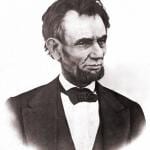
If Abraham Lincoln were Donald Trump
Next Post

February 22, 2019 What's Good for Lincoln Is Good for Washington
Browse Our Archives
Select a Category 2016 Presidential Election 2020 Presidential Election Apocalypse Bible in American Life Biblical authority Books and culture Calvinism Church Life Civil Religion Culture Wars Doctrine evangelicalism Gullibility Heaven and Hell Intellectual life Jesus Ministry modernity moralism Nationalism New Testament Old Testament Otherworldiness Otherworldliness Paul Peter Piety Popular culture Protestantism Psalms Puritans Race Roman Catholicism sacred/secular distinction Sex Shameless Self Promotion Sports Ten Commandments U.S. politics Uncategorized vulgarity worship
Select a Month January 2022 October 2021 August 2021 June 2021 May 2021 April 2021 March 2021 February 2021 January 2021 December 2020 November 2020 October 2020 September 2020 August 2020 July 2020 June 2020 May 2020 April 2020 March 2020 February 2020 January 2020 December 2019 November 2019 October 2019 September 2019 August 2019 July 2019 June 2019 May 2019 April 2019 March 2019 February 2019 January 2019 December 2018 November 2018 October 2018 September 2018 August 2018 July 2018 June 2018 May 2018 April 2018 March 2018 February 2018 January 2018 December 2017 November 2017 October 2017 September 2017 August 2017 July 2017 June 2017 May 2017 April 2017 March 2017 February 2017 January 2017 December 2016 November 2016 October 2016 September 2016 August 2016 July 2016 June 2016 May 2016 April 2016 March 2016 February 2016 January 2016 December 2015 November 2015 October 2015 September 2015 August 2015 July 2015 June 2015 May 2015 April 2015 March 2015 February 2015 January 2015
Follow Us!
TAKE THE
Religious Wisdom Quiz
What Christian group uses the term "Elder" for its church leaders?
Select your answer to see how you score.
Pentecostals Baptists Presbyterians Methodists
Related posts from Putting the Protest in Protestant

Putting the Protest in Protestant

The Optics and the Reality of Evangelical Elites
Putting the Protest in Protestant

Are Complementarians America's Taliban?
Putting the Protest in Protestant

Thinking Theologically with David French (about aliens)
Putting the Protest in Protestant
TRENDING AT PATHEOS Evangelical

The REST of Your Life: A Creative Wrestles...
This week I had a conversation with a good friend from church....

How the author of the world's best hymn...
I've been working with John Newton for a while now. This makes...

Long before this Lectio Divina, Psalm 130 - the song - started...

What About the Trees? Another Living Parable
After I finished writing the last article about falling leaves as a...

Why Classical Education Is a Conversation, Not a...
Come and Read: Joy in Classical Education When I was a little...

Cornell University has received a great deal of negative publicity and intense...
view all Evangelical blogs
Ad-Free & Subscriber Log-In Subscription Support
- About Us
- 2026 Calendar
- Videos
- Podcasts
- Library of World Religions
- Faith In Media Tracker
- Advertise With Us
- Write for Us
- Privacy Policy
- Terms of Service
- Do Not Sell My Data
- Contact Us
- Radiant Digital
- Manage Newsletter Subscriptions
- Unsubscribe From Notifications
- Sitemap
Copyright 2008-2026, Patheos. All rights reserved.
Subscription Support Ad-Free & Subscriber Log-In
Follow Patheos