
BuddhistCatholicContemplativeEvangelicalGeneral ChristianHinduJewishLatter-day SaintMuslimNew VisionsProgressive Christian
Beliefs
- Buddhist
- Catholic
- Contemplative
- Evangelical
- General Christian
- Hindu
- Jewish
- Latter-day Saint
- More Voices
- Muslim
- New Visions
- Pagan
- Progressive Christian
Topics
- Religion News
- Food and Religion
- Sports and Religion
- Religious Art
- Religious Music and Entertainment
- Religious Events
- History and Religion
- Style and Religion
- Politics and Religion
- Women in Religion
- Recreation Outdoors and Religion
- Business Finance and Religion
- Careers Workplace and Religion
- Education and Religion
- Family Parenting and Religion
- Health Fitness and Religion
- Home and Religion
- Relationships and Religion
- Technology and Religion
- Travel and Religion
Columnists
- Buddhist Columnists
- Business Finance and Religion Columnists
- Careers Workplace and Religion Columnists
- Catholic Columnists
- Contemplative Columnists
- Education and Religion Columnists
- Evangelists Columnists
- Family Parenting and Religion Columnists
- General Christian Columnists
- Health Fitness and Religion Columnists
- Hindu Columnists
- History and Religion Columnists
- Home and Religion Columnists
- Jewish Columnists
- More Voices Columnists
- Latter Day Columnists
- Muslim Columnists
- New Visions Columnists
- Nonreligious Columnists
- Pagan Columnists
- Politics and Religion Columnists
- Progressive Columnists
- Recreation Outdoors and Religion Columnists
- Relationships and Religion Columnists
- Religion News Columnists
- Religious Art Columnists
- Religious Events Columnists
- Religious Music and Entertainment Columnists
- Sports and Religion Columnists
- Style and Religion Columnists
- Technology and Religion Columnists
- Travel and Religion Columnists
- Women in Religion Columnists
Resource Library
- 2026 Calendar
- Library of World Religions
- The 100 Most Holy Places on Earth
- Patheos Answers
- Podcasts
- Videos
- Faith Leaders Database
- Anglican Episcopalian
- Bahai
- Baptist
- Buddhism
- Christianity
- Confucianism
- Eastern Orthodoxy
- Hinduism
- Holiness and Pentecostal
- ISKCON
- Islam
- Judaism
- Lutheran
- Methodist
- The Church of Jesus Christ of Latter-day Saints
- New Age
- Paganism
- Presbytarian and Reformed
- Protestantism
- Religion Behind the Scenes
- Roman Catholic
- Scientology
- Shia Islam
- Sikhism
- Sufism
- Sunni Islam
- Taoism
- Zen
- See all religions
Research Tools
 Ad-Free & Subscriber Log-In Subscription Support
Ad-Free & Subscriber Log-In Subscription Support
Follow Patheos 

- Trending:
- Forgiveness
- |
- Marriage
- |
- Consciousness
- |
- Death Penalty
- |
- Election
- |
- Halloween
 Putting the Protest in Protestant
- Home
- Evangelical
- What if Christians in the U.S. Sounded Like Jewish Americans?
What if Christians in the U.S. Sounded Like Jewish Americans?
Last updated on: December 6, 2018 at 1:52 pm by D. G. Hart
What if Christians in the U.S. Sounded Like Jewish Americans? 2018-12-06T13:52:57-04:00 D. G. Hart
Patheos Explore the world's faith through different perspectives on religion and spirituality! Patheos has the views of the prevalent religions and spiritualities of the world.
Take for instance the recent review essay in the New York Times of books on American Judaism in which the author, Gal Beckerman, writes this way about the United States even after the killing of 11 Jews on October 28 at a Pittsburgh synagogue:
They were victims, in America, a country that has never seen even a hint of a pogrom. In their pain and worry, individual Jews had a rare chance to feel themselves part of a larger community — one that mourns together, gets angry together, imbued with a separate and unique identity, threatened yet resilient. And in this, victimhood offered an illusion.
For one thing, the violence of Pittsburgh is far from the everyday reality of American Jews. They live in a country that has offered them a great deal more love than it ever has hate. We’re beyond mere tolerance. A recent Pew poll found that Americans felt “warmer” about Jews than any other
religious group.
Although Jews have experienced prejudice and hardship in the United States, Beckerman, unlike Christians on both the left and the right who use almost any news item to whine, said remarkably kind things about the nation. In the New York Times, even!!
Here’s another example of Jewish reflection about U.S. politics and religious identity again in the immediate context of the Pittsburgh shootings. At Slate Isaac Chotiner interviewed Abraham Foxman, the director of the Center for the Study of Anti-Semitism at the Museum of Jewish Heritage in New York and the former head of the Anti-Defamation League, about President Trump and his responsibility for turning up prejudice against minority groups in the United States:
Foxman:
Isaac, look, [Trump] has put forward issues which in the abstract are legitimate issues. Immigration is an issue. It is a legitimate issue. Look at Europe. Look at what is going on in the world with immigration. There was antagonism to Irish immigration, Japanese immigration, Jewish immigration. So it is a legitimate subject for debate today. Two: Globalism is a legitimate issue of debate. Even gun control is a legitimate issue of debate. But at the same time, these issues—especially globalism and nationalism and immigration—have played deeply on the agenda of racists. Immigration has always played in the racist camps and anti-Semitism camps. Globalism as well. What he has done by using these issues for his own self-interest, what he believes will serve him and he believes serve America better, is that he has provided a legitimate platform for these bigots. David Duke has announced after all these years, all of a sudden, he says, “Oh, these are our issues.” You can’t take away the right to debate and discuss the issue of immigration just because bigots embrace it.
Chotiner:
It seems like you are saying that these are legitimate issues that need to be discussed, which I agree with. But it seems like the problem is that Trump is not interested in discussing them. He is interested in demagoguing them. The goal is not to resolve them. And once a demagogue is wielding them, it seems like we have to move beyond simply saying, “We need a better political conversation.” There is a political party intent on riling up fear and not getting to the bottom of these issues.
Foxner:
I don’t disagree with you. Therefore, American citizens, good people, should deal with it, combat it, vote, etc. We started at a different point: whether the Jewish community—because there is anti-Semitism, and because he has now legitimized it—should become politically active as Jews. And I think they should be politically active as good citizens. But for Jews not to politicize anti-Semitism. I think Jews as American citizens should be out there in the political arena fighting for a better America. I have said he is a demagogue and demagogues are dangerous to democracy, and if democracy is in trouble, Jews would be in trouble. Fine. But not as a community per se. I don’t want us, on the issue of anti-Semitism, to play Democrat or Republican. I think we should play what’s good for America, but also protect the Jewish interest.
Foxner eschews playing the role of the victim to gain more plausibility for American Jews. In fact, he wants Jews to participate in political life not as Jews but as Americans.
That is different from the kind of conversations that often happen about evangelical Protestants about how to live out their faith in all walks of life. Not only can you classify evangelicals according to their attitudes toward Trump — with six degrees of separation — but some evangelicals talk about their experience in ways far removed from Foxner’s even so little removed from a mass murder:
It simply does not matter to the evangelical church that Trump is racist and that his dehumanizing rhetoric is emboldening radicals and costing Americans their lives. Americans are dying in mass shootings at the hands of white supremacists, while the church is celebrating the nation’s return to traditional values. For Christians who reject the MAGA mindset, this is absolute crazy making.
No wonder I live with crippling anxiety and spiritual trauma. The church that warned me against moral relativism now calls me a heretic when I apply the very principles they taught me to real situations, with real stakes for real people. I don’t know where to turn or whom to trust. Is any of it true? Have I wasted my life on a religion that hurts more than it helps?
I stopped attending church regularly almost two years ago, but I am more invested in my spiritual life than ever before. Although I’ve lost the majority of my local Christian community, save for a few precious friends, I still cling to the true teachings and example of Jesus to inform my politics and moral code. I now understand that Scripture pays more attention to serving the needs of the oppressed than to regulating their lifestyle. Sin is not as much about my behavior as it is about my inability to love people well.
Meanwhile, I’ve diversified my bookshelf, podcast subscriptions and Twitter feed to include voices speaking truth to power from the perspective of marginalized people ― the same voices that the Trump administration continually tries to silence. I’ve joined online communities of people also working through spiritual trauma and gaslighting by the evangelical church. This fall, I attended the Evolving Faith conference, a gathering of more than 1,500 people in different stages of the deconstructing of their faith. As I’ve worked through my grief and anger, I’ve discovered I am not as isolated as I once believed. My hope is to someday find a local church again, one that is progressive, open and affirming, but I am not actively searching.
I wish the evangelical church would wake up and realize how many of us there are out there feeling manipulated and abused. This community of wanderers is dealing with grief both privately and collectively. Together we weep, we rage and we try to rebuild what’s left of our shattered spiritual lives. Healing is slow and it’s painful. I’m working hard to separate the true, worthy parts of Christianity from the bullshit. I do hope to return to church someday, but I will never again be gaslighted by an institution that sells out Jesus for political power.
The difference between the anxieties expressed by Jewish and Christian Americans, along with their respective perceptions of President Trump, makes you wonder if Judaism has something on evangelical Christianity.
Image
Previous Post

December 3, 2018
No Gospel without Social Injustice
Next Post

December 7, 2018 I Would Rather be Treated by a Smart Turk than an Untrained Christian
Browse Our Archives
Select a Category 2016 Presidential Election 2020 Presidential Election Apocalypse Bible in American Life Biblical authority Books and culture Calvinism Church Life Civil Religion Culture Wars Doctrine evangelicalism Gullibility Heaven and Hell Intellectual life Jesus Ministry modernity moralism Nationalism New Testament Old Testament Otherworldiness Otherworldliness Paul Peter Piety Popular culture Protestantism Psalms Puritans Race Roman Catholicism sacred/secular distinction Sex Shameless Self Promotion Sports Ten Commandments U.S. politics Uncategorized vulgarity worship
Select a Month January 2022 October 2021 August 2021 June 2021 May 2021 April 2021 March 2021 February 2021 January 2021 December 2020 November 2020 October 2020 September 2020 August 2020 July 2020 June 2020 May 2020 April 2020 March 2020 February 2020 January 2020 December 2019 November 2019 October 2019 September 2019 August 2019 July 2019 June 2019 May 2019 April 2019 March 2019 February 2019 January 2019 December 2018 November 2018 October 2018 September 2018 August 2018 July 2018 June 2018 May 2018 April 2018 March 2018 February 2018 January 2018 December 2017 November 2017 October 2017 September 2017 August 2017 July 2017 June 2017 May 2017 April 2017 March 2017 February 2017 January 2017 December 2016 November 2016 October 2016 September 2016 August 2016 July 2016 June 2016 May 2016 April 2016 March 2016 February 2016 January 2016 December 2015 November 2015 October 2015 September 2015 August 2015 July 2015 June 2015 May 2015 April 2015 March 2015 February 2015 January 2015
Follow Us!
TAKE THE
Religious Wisdom Quiz
By questioning Moses' authority this person became leperous?
Select your answer to see how you score.
Ithamar Miriam Caleb Aaron
Related posts from Putting the Protest in Protestant

When Roman Catholics Feel a Little Protestant (and...
Putting the Protest in Protestant

What if Christianity is Not Reasonable?
Putting the Protest in Protestant
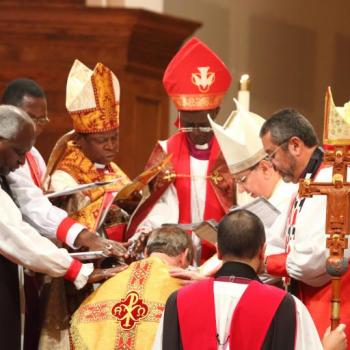
Do Anglicans in N. America Talk Funny?
Putting the Protest in Protestant

Shocked, Shocked that American Catholics Fund the Vatican
Putting the Protest in Protestant
TRENDING AT PATHEOS Evangelical

The REST of Your Life: A Creative Wrestles...
This week I had a conversation with a good friend from church....

How the author of the world's best hymn...
I've been working with John Newton for a while now. This makes...

Long before this Lectio Divina, Psalm 130 - the song - started...

What About the Trees? Another Living Parable
After I finished writing the last article about falling leaves as a...

Why Classical Education Is a Conversation, Not a...
Come and Read: Joy in Classical Education When I was a little...

Cornell University has received a great deal of negative publicity and intense...
view all Evangelical blogs
Ad-Free & Subscriber Log-In Subscription Support
- About Us
- 2026 Calendar
- Videos
- Podcasts
- Library of World Religions
- Faith In Media Tracker
- Advertise With Us
- Write for Us
- Privacy Policy
- Terms of Service
- Do Not Sell My Data
- Contact Us
- Radiant Digital
- Manage Newsletter Subscriptions
- Unsubscribe From Notifications
- Sitemap
Copyright 2008-2026, Patheos. All rights reserved.
Subscription Support Ad-Free & Subscriber Log-In
Follow Patheos