
BuddhistCatholicContemplativeEvangelicalGeneral ChristianHinduJewishLatter-day SaintMuslimNew VisionsProgressive Christian
Beliefs
- Buddhist
- Catholic
- Contemplative
- Evangelical
- General Christian
- Hindu
- Jewish
- Latter-day Saint
- More Voices
- Muslim
- New Visions
- Pagan
- Progressive Christian
Topics
- Religion News
- Food and Religion
- Sports and Religion
- Religious Art
- Religious Music and Entertainment
- Religious Events
- History and Religion
- Style and Religion
- Politics and Religion
- Women in Religion
- Recreation Outdoors and Religion
- Business Finance and Religion
- Careers Workplace and Religion
- Education and Religion
- Family Parenting and Religion
- Health Fitness and Religion
- Home and Religion
- Relationships and Religion
- Technology and Religion
- Travel and Religion
Columnists
- Buddhist Columnists
- Business Finance and Religion Columnists
- Careers Workplace and Religion Columnists
- Catholic Columnists
- Contemplative Columnists
- Education and Religion Columnists
- Evangelists Columnists
- Family Parenting and Religion Columnists
- General Christian Columnists
- Health Fitness and Religion Columnists
- Hindu Columnists
- History and Religion Columnists
- Home and Religion Columnists
- Jewish Columnists
- More Voices Columnists
- Latter Day Columnists
- Muslim Columnists
- New Visions Columnists
- Nonreligious Columnists
- Pagan Columnists
- Politics and Religion Columnists
- Progressive Columnists
- Recreation Outdoors and Religion Columnists
- Relationships and Religion Columnists
- Religion News Columnists
- Religious Art Columnists
- Religious Events Columnists
- Religious Music and Entertainment Columnists
- Sports and Religion Columnists
- Style and Religion Columnists
- Technology and Religion Columnists
- Travel and Religion Columnists
- Women in Religion Columnists
Resource Library
- 2026 Calendar
- Library of World Religions
- The 100 Most Holy Places on Earth
- Patheos Answers
- Podcasts
- Videos
- Faith Leaders Database
- Anglican Episcopalian
- Bahai
- Baptist
- Buddhism
- Christianity
- Confucianism
- Eastern Orthodoxy
- Hinduism
- Holiness and Pentecostal
- ISKCON
- Islam
- Judaism
- Lutheran
- Methodist
- The Church of Jesus Christ of Latter-day Saints
- New Age
- Paganism
- Presbytarian and Reformed
- Protestantism
- Religion Behind the Scenes
- Roman Catholic
- Scientology
- Shia Islam
- Sikhism
- Sufism
- Sunni Islam
- Taoism
- Zen
- See all religions
Research Tools
 Ad-Free & Subscriber Log-In Subscription Support
Follow Patheos 

- Trending:
- Advent
- |
- Forgiveness
- |
- Thanksgiving
- |
- Election
- |
- Seasonal Holidays
- |
- Marriage
 Putting the Protest in Protestant
- Home
- Evangelical
- Would We Know as Much about Evangelicals if Not for the Religious Right?
Would We Know as Much about Evangelicals if Not for the Religious Right?
Last updated on: May 1, 2017 at 8:55 am by D. G. Hart
Would We Know as Much about Evangelicals if Not for the Religious Right? 2017-05-01T08:55:39-04:00 D. G. Hart
Patheos Explore the world's faith through different perspectives on religion and spirituality! Patheos has the views of the prevalent religions and spiritualities of the world.
Barry Hankins makes the fair point that Francis Fitzgerald’s new book, The Evangelicals: The Struggle to Shape America, fails to capture the extent of evangelical life beyond political activism:
I’ve always maintained that the typical evangelical isn’t all that political. Rather, the important things for most evangelicals are: (1) living godly lives; (2) raising their children to be committed, evangelical Christians; (3) being active in their local churches; and (4) evangelizing their neighbors. They talk about issues like abortion and gay marriage in Sunday school, and on Election Day about 75 percent to 80 percent of them dutifully vote Republican, even if a pagan like Donald Trump is at the head of the ticket. They may even put a sign in their yard for the Republican congressman in their district. But the vast majority of evangelicals don’t march in the street, write letters to their congressmen and senators, run for the local school board, or attend Christian Right rallies. They’re too busy being Christians, so they leave that to the Falwells, Roberstons, and Dobsons of the world.
This is where FitzGerald’s book falls down a bit. In covering the Christian Right so thoroughly, The Evangelicals perpetuates the myth that evangelicalism and the Christian Right became synonymous. In part, FitzGerald seems to want to show that this was the case and that it was an unfortunate aberration, given the nearly three centuries of rich and robust evangelicalism that predated the Christian Right. On the other hand, however, part of the reason we need good history is to show that perceptions, especially those perpetuated by the media, need correction—that there’s more to a movement than its most visible, loud, and sometimes outrageous public figures.
What if we only knew more about evangelicalism, however, thanks to editors and publishers willing to produce books on evangelicalism thanks precisely to a desire to figure out the Religious Right? At the risk of self-promotion, almost fifteen years ago I noticed the coincidence of an outpouring of scholarship on evangelicalism precisely at the same time that born-again Protestants were making headlines and magazine covers thanks to their association with the Republican Party:
A funny thing happened to the study of evangelical Protestantism in the decades after Newsweek declared 1976 “the year of the evangelical.” A religious movement largely in obscurity since the Scopes Trial emerged as a source of inspiration for millions of Americans and a formidable lobby in electoral politics. Even so, the early scholarly returns on evangelicalism were not encouraging. Martin E. Marty declared that, by 1980, “there was a paucity of good research” on evangelicalism or its related subjects, fundamentalism and pentecostalism1—one indication that the so-called recovery of American religious history, lauded by Henry May in 1965, had yet to pay dividends for Protestants outside the mainline
denominations.In 1992, within a decade of Marty’s assessment, Jon Butler of Yale University claimed in a provocative paper delivered to the American Society of Church History that the tide had turned into a tsunami of historical writing on evangelicalism and its influence on American society, drowning other perspectives and interests. In response to Garry Wills’ Under God: Religion and American Politics, which faulted academics and journalists for ignoring faith’s importance, Butler asked, “Are we looking at the same subject?” He claimed that historians, especially Americanists, could scarcely pay more attention to religion: meetings of the Organization of American Historians and the American Studies Association offered countless sessions on religion, and books on American religion were published in record numbers despite the decline in publishers’ interest in New England Community studies. The publishing boom in particular drew Butler’s interest. The books described the importance of American religion, especially evangelical Christianity: “They often describe religion as a cause—sometimes the cause—of what is distinctive and important in America, American culture, politics, even identity…. They are, in the main, books about evangelical Christianity’s dominant position in American religion and its shaping of American identity from the Puritans to the Reagans.”
This is not to suggest that evangelicalism equals a certain kind of political activism, though the notion that personal faith must inform all of life makes it hard to separate religion from politics. But it does mean that the study of evangelicalism would be substantially less prominent if most Americans assumed that born-again Protestants were simply a curious group of Christians who somehow clung to the experiences that Jonathan Edwards and George Whitefield first cultivated. After all, if evangelicals were not political would they generate any more attention than the Amish?
Image
Previous Post

April 20, 2017
What You Give Up To Fit In
Next Post

April 27, 2017 Don't Tell Marshall Bruce Mathers, III
Browse Our Archives
Select a Category 2016 Presidential Election 2020 Presidential Election Apocalypse Bible in American Life Biblical authority Books and culture Calvinism Church Life Civil Religion Culture Wars Doctrine evangelicalism Gullibility Heaven and Hell Intellectual life Jesus Ministry modernity moralism Nationalism New Testament Old Testament Otherworldiness Otherworldliness Paul Peter Piety Popular culture Protestantism Psalms Puritans Race Roman Catholicism sacred/secular distinction Sex Shameless Self Promotion Sports Ten Commandments U.S. politics Uncategorized vulgarity worship
Select a Month January 2022 October 2021 August 2021 June 2021 May 2021 April 2021 March 2021 February 2021 January 2021 December 2020 November 2020 October 2020 September 2020 August 2020 July 2020 June 2020 May 2020 April 2020 March 2020 February 2020 January 2020 December 2019 November 2019 October 2019 September 2019 August 2019 July 2019 June 2019 May 2019 April 2019 March 2019 February 2019 January 2019 December 2018 November 2018 October 2018 September 2018 August 2018 July 2018 June 2018 May 2018 April 2018 March 2018 February 2018 January 2018 December 2017 November 2017 October 2017 September 2017 August 2017 July 2017 June 2017 May 2017 April 2017 March 2017 February 2017 January 2017 December 2016 November 2016 October 2016 September 2016 August 2016 July 2016 June 2016 May 2016 April 2016 March 2016 February 2016 January 2016 December 2015 November 2015 October 2015 September 2015 August 2015 July 2015 June 2015 May 2015 April 2015 March 2015 February 2015 January 2015
Follow Us!
TAKE THE
Religious Wisdom Quiz
What is the main symbol of Christianity?
Select your answer to see how you score.
Lion Rainbow The cross Olive branch
Related posts from Putting the Protest in Protestant
Putting the Protest in Protestant
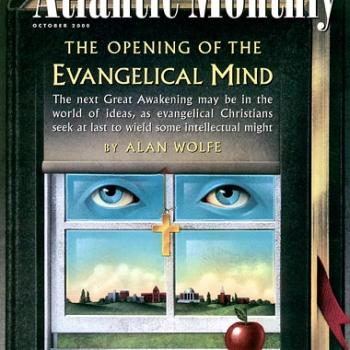
The Optics and the Reality of Evangelical Elites
Putting the Protest in Protestant

Are Complementarians America's Taliban?
Putting the Protest in Protestant

Thinking Theologically with David French (about aliens)
Putting the Protest in Protestant
TRENDING AT PATHEOS Evangelical

When you hear the word riches, what comes to mind? For most...

Don’t Miss the Parents: A Creative Christmas Meditation
As we enter the Advent Season, I see many people trying to...

Making Stones Into Bread: Choosing the “Right” Work
I was on my online arts ministry Zoom meeting with the International...

Ukraine’s exhausted Christians face fifth winter of war
By Julian Lukins The full-scale war in Ukraine is taking “a serious...

Russell Brand's Conviction is not anti-Christian Persecution
How do we shed the reputation that the Church is OK with...

Have you ever caught yourself saying, “I’ll do it tomorrow,” or “Now...
view all Evangelical blogs
Ad-Free & Subscriber Log-In Subscription Support
- About Us
- 2026 Calendar
- Videos
- Podcasts
- Library of World Religions
- Faith In Media Tracker
- Advertise With Us
- Write for Us
- Privacy Policy
- Terms of Service
- Do Not Sell My Data
- Contact Us
- Radiant Digital
- Manage Newsletter Subscriptions
- Unsubscribe From Notifications
- Sitemap
Copyright 2008-2026, Patheos, part of the Radiant Digital network of media brands. All rights reserved.
Subscription Support Ad-Free & Subscriber Log-In
Follow Patheos