
BuddhistCatholicContemplativeEvangelicalGeneral ChristianHinduJewishLatter-day SaintMuslimNew VisionsProgressive Christian
Beliefs
- Buddhist
- Catholic
- Contemplative
- Evangelical
- General Christian
- Hindu
- Jewish
- Latter-day Saint
- More Voices
- Muslim
- New Visions
- Pagan
- Progressive Christian
Topics
- Religion News
- Food and Religion
- Sports and Religion
- Religious Art
- Religious Music and Entertainment
- Religious Events
- History and Religion
- Style and Religion
- Politics and Religion
- Women in Religion
- Recreation Outdoors and Religion
- Business Finance and Religion
- Careers Workplace and Religion
- Education and Religion
- Family Parenting and Religion
- Health Fitness and Religion
- Home and Religion
- Relationships and Religion
- Technology and Religion
- Travel and Religion
Columnists
- Buddhist Columnists
- Business Finance and Religion Columnists
- Careers Workplace and Religion Columnists
- Catholic Columnists
- Contemplative Columnists
- Education and Religion Columnists
- Evangelists Columnists
- Family Parenting and Religion Columnists
- General Christian Columnists
- Health Fitness and Religion Columnists
- Hindu Columnists
- History and Religion Columnists
- Home and Religion Columnists
- Jewish Columnists
- More Voices Columnists
- Latter Day Columnists
- Muslim Columnists
- New Visions Columnists
- Nonreligious Columnists
- Pagan Columnists
- Politics and Religion Columnists
- Progressive Columnists
- Recreation Outdoors and Religion Columnists
- Relationships and Religion Columnists
- Religion News Columnists
- Religious Art Columnists
- Religious Events Columnists
- Religious Music and Entertainment Columnists
- Sports and Religion Columnists
- Style and Religion Columnists
- Technology and Religion Columnists
- Travel and Religion Columnists
- Women in Religion Columnists
Resource Library
- 2026 Calendar
- Library of World Religions
- The 100 Most Holy Places on Earth
- Patheos Answers
- Podcasts
- Videos
- Faith Leaders Database
- Anglican Episcopalian
- Bahai
- Baptist
- Buddhism
- Christianity
- Confucianism
- Eastern Orthodoxy
- Hinduism
- Holiness and Pentecostal
- ISKCON
- Islam
- Judaism
- Lutheran
- Methodist
- The Church of Jesus Christ of Latter-day Saints
- New Age
- Paganism
- Presbytarian and Reformed
- Protestantism
- Religion Behind the Scenes
- Roman Catholic
- Scientology
- Shia Islam
- Sikhism
- Sufism
- Sunni Islam
- Taoism
- Zen
- See all religions
Research Tools
 Ad-Free & Subscriber Log-In Subscription Support
Ad-Free & Subscriber Log-In Subscription Support
Follow Patheos 

- Trending:
- Forgiveness
- |
- Marriage
- |
- Consciousness
- |
- Death Penalty
- |
- Election
- |
- Halloween
 Proper Nomenclature
- Home
- Catholic
- The Pope’s April Prayer Intention is for You, Small Farmers
The Pope’s April Prayer Intention is for You, Small Farmers
Last updated on: April 3, 2016 at 2:01 pm by Keith Michael Estrada
The Pope’s April Prayer Intention is for You, Small Farmers 2016-04-03T14:01:13-07:00 Keith Michael Estrada
Patheos Explore the world's faith through different perspectives on religion and spirituality! Patheos has the views of the prevalent religions and spiritualities of the world.
Join Keith Michael Estrada on Facebook …
My son, deprive not the poor of his living… – Sirach 4:1
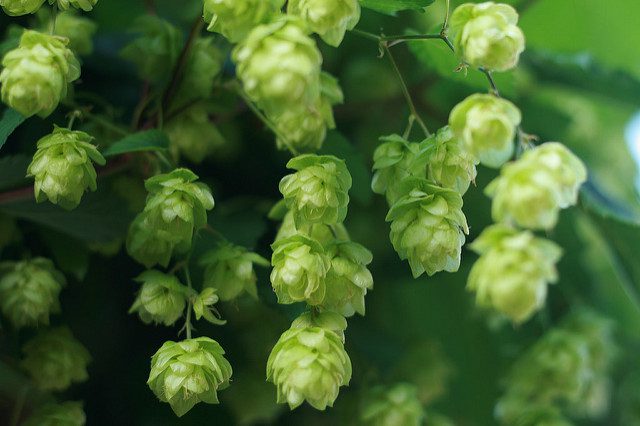
If you drink beer, try to find beer made with organic ingredients. Some breweries in Washington source their organic hops from small, family farms in Eastern Washington. Hops. Photo credit: Paul Miller via Flickr.com / CC BY 2.0
The Holy Father’s universal prayer intention for the month of April is for small farmers: “That small farmers may receive a just reward for their precious labor.”
This intention immediately reminds us of the sixth verse in the second chapter of Paul’s second letter to Timothy:
It is the hard-working farmer who ought to have the first share of the crops. – 2 Tim 2:6 RSV-CE
Of course, two additional qualifications in the intention stick out to us. That the farmers pointed out are “small farmers”, and that their labor is “precious”.
We must protect small farms and farmers, and those who work with the land.
The result of failing to join the cause of small farmers is suffering on many levels.
When small farmers – and small businesses, in general – are not preferred, supported, and protected by their communities, things begin to fall apart.
Reflecting on the Pope’s April intention, the Apostleship of Prayer writes,
Seventy-two percent of the world’s farms are less than 2.5 acres in size. In the U.S., 90 percent of the 2.1 million farms are considered small, family farms, and many of them are struggling.
Though prices have gone up in supermarkets, the income of farmers has not. As a result, the U.S. Bureau of Labor Statistics states that the largest job loss of any occupation is farmers. When the small farms go out of business, often large agri-businesses acquire the land and create greater potential for ecological damage and health risks.
For Pope Francis small farmers are essential to caring for the earth and safeguarding it for future generations. He said that “in the work of farmers there is the acceptance of the precious gift of the land which comes to us from God, but there is also its appreciation in the equally precious work of men and women, called to respond to the mandate of tilling and safeguarding the land (Genesis 2: 15).”
Agricultural workers should receive a just wage. As the pope said, “The labor of those who cultivate the earth, generously dedicating time and energy to it, appears as a genuine vocation. It deserves to be recognized and appropriately appreciated, also in concrete economic policies.”
With the coming of spring, we pray for those on small farms who are busy planting. May they not only have an abundant harvest this year but also “receive a just reward for their precious labor.”
Fewer people in possession of land who truly care for the earth and the life it sustains is the condition of a society that does not support small farmers.
A photo posted by Pope Francis (@franciscus) on Apr 1, 2016 at 12:36pm PDT
Small farming, opportunity, and care for God’s creation, these go together in a way that industrial farming, exploitation, and destruction go together.
In Laudato si’, Francis considers the protections we should establish for small producers, noting the benefits for human and organic life, and the threat big business poses to all of the above:
In order to continue providing employment, it is imperative to promote an economy which favours productive diversity and business creativity. For example, there is a great variety of small-scale food production systems which feed the greater part of the world’s peoples, using a modest amount of land and producing less waste, be it in small agricultural parcels, in orchards and gardens, hunting and wild harvesting or local fishing. Economies of scale, especially in the agricultural sector, end up forcing smallholders to sell their land or to abandon their traditional crops. Their attempts to move to other, more diversified, means of production prove fruitless because of the difficulty of linkage with regional and global markets, or because the infrastructure for sales and transport is geared to larger businesses. Civil authorities have the right and duty to adopt clear and firm measures in support of small producers and differentiated production. To ensure economic freedom from which all can effectively benefit, restraints occasionally have to be imposed on those possessing greater resources and financial power. To claim economic freedom while real conditions bar many people from actual access to it, and while possibilities for employment continue to shrink, is to practise a doublespeak which brings politics into disrepute. (par. 129)
Small producers have the ability to opt for a life and work style that is more respectful of creation and more compatible with simplicity that larger ones do not:
Liberation from the dominant technocratic paradigm does in fact happen sometimes, for example, when cooperatives of small producers adopt less polluting means of production, and opt for a non-consumerist model of life, recreation and community. (par. 112)
Considering genetically modified organisms (GMOs) or crops, Francis ties the technology to big business, economic injustice, and ecological destruction:
In many places, following the introduction of these [genetically modified] crops, productive land is concentrated in the hands of a few owners due to “the progressive disappearance of small producers, who, as a consequence of the loss of the exploited lands, are obliged to withdraw from direct production”. The most vulnerable of these become temporary labourers, and many rural workers end up moving to poverty-stricken urban areas. The expansion of these crops has the effect of destroying the complex network of ecosystems, diminishing the diversity of production and affecting regional economies, now and in the future. In various countries, we see an expansion of oligopolies for the production of cereals and other products needed for their cultivation. This dependency would be aggravated were the production of infertile seeds to be considered; the effect would be to force farmers to purchase them from larger producers. (par. 134)
Capitalism takes control of the land away from our communities, our local families and farmers. As ownership is claimed by a smaller, more centralized group of capitalists – paired with a failure to pay just wages and ensure fair working conditions, and the commodification of creation – political power is claimed by a smaller, more centralized group in our “representative” system. Distributists, socialists, and anarchists all see this. Of course, by distributist, anarchist, and socialist, I refer to each as synonymous with the other.
In our society, economic and political power are bound to each other. Democracy and capitalism are incompatible. Read Dorothy Day, Chesterton, Kropotkin, etc.
The land is meant for all – and cannot be claimed exclusively by the capitalist.
Recall Saint John Paul II’s 7 July, 1980 homily to campesinos in Recife,
No es lícito, por tanto, porque no es conforme con el designio de Dios, usar este don de modo tal que sus beneficios favorezcan sólo a unos pocos, dejando a los otros, la inmensa mayoría, excluidos. Más grave es aún el desequilibrio y más insultante la injusticia que trae consigo, cuando esa inmensa mayoría se ve condenada por eso mismo a una situación de escasez, de pobreza y de marginación. (par. 4)
Of course, possession and use are two different things – but when just wages are secured and prices are fair, their is a tendency against accumulation. This is, as we all can see, not the case in the prevailing economic order.
If we don’t protect family and community land holdings, we leave people and the land vulnerable – ready to be defrauded and abused. We saw this take place in Mexico when, prior to the signing of the North American Free Trade Agreement (NAFTA), Article 27 of the Mexican Constitution was butchered. Article 27 broke up large estates and secured inalienable small-scale land holdings for peasants called ejidos. With the protection of these lands gone, large imports of subsidized foreign goods flooded the Mexican market and forced peasants – no longer able to compete – to sell their land in search for some living in factories or north of the border.
Clearly, Francis isn’t creating hypotheticals in the above cited paragraph:
In many places, following the introduction of these crops, productive land is concentrated in the hands of a few owners due to “the progressive disappearance of small producers, who, as a consequence of the loss of the exploited lands, are obliged to withdraw from direct production”. The most vulnerable of these become temporary labourers, and many rural workers end up moving to poverty-stricken urban areas. The expansion of these crops has the effect of destroying the complex network of ecosystems, diminishing the diversity of production and affecting regional economies, now and in the future. (par. 134)
Small farms and farmers should be protected and preferred over industrial, exploitive, destructive alternatives.
Where we must consume, be mindful of workers and the planet. Choose local – which is often organic, even without being certified – and you’re likely to be choosing to protect the livelihood of small farmers who care for the land they live and work on in a way industrial agriculture cannot.
Let us pray with Pope Francis, “That small farmers may receive a just reward for their precious labor.”
Until next time,
Next Post
April 8, 2016 'Amoris Laetitia': On Love in the Family - Available for Download Now
Browse Our Archives
Select a Category Benedict XVI Canada Capital Punishment Capitalism Care for Creation Catholic Committee of Appalachia Catholic News Catholic Social Teaching Catholic Tradition - Art Catholic Worker Catholic Worker Inspirations CST in 140 Characters or Less Diocese of San Diego Faithful Citizenship Father Frank Pavone Chronicles Fathers, Mothers, Saints, and Doctors Francis Guest Posts Gun Violence Humor, Parody, and/or Satire Interfaith Dialogue John Eudes John Paul II Marriage and Family Migration New Evangelization News Not a formal post. Our Lady of Guadalupe Paul VI Popes Pro-Life Racial Justice Releases Religious Freedom Repeat/Repost Saints Socialism Thomas Aquinas Uncategorized
Select a Month March 2020 July 2019 June 2018 May 2018 March 2018 December 2017 October 2017 September 2017 July 2017 June 2017 May 2017 April 2017 March 2017 December 2016 November 2016 October 2016 September 2016 August 2016 July 2016 April 2016 February 2016 January 2016 December 2015
Follow Us!
TAKE THE
Religious Wisdom Quiz
Which Psalm is an ancient call to worship: "Make a joyful noise to the Lord"?
Select your answer to see how you score.
Psalm 100 Psalm 117 Psalm 23 Psalm 90
Related posts from Proper Nomenclature

Franciscan University of Steubenville not recommend; alumni aren't...
Bishop of San Jose: Do not deny sacraments,...
Pope: Death penalty is inadmissible
Pope Francis gave a Laudato si' Ted Talk...
TRENDING AT PATHEOS Catholic

Creation, Preservation, and Teleology in Catholic Theology
As I write this, it is very early Monday morning. Like millions...

The Parable Of The Sower And The Word...
One of Christ’s most famous parables is that of the sower who...

Rejecting Doom: Christian Hope And Human Action
Christianity is a religion of hope. We are to have hope and...

Why I Choose the Eucharist Over the Sermon
Choose the Eucharist, Not the Sermon What are we supposed to get...

5 Design Elements Found in Spiritually Rooted Homes
Putting Spirituality Into Home Decor Our homes are more than our living...

Credo: A Story of God Told with the...
About 10 years ago, I began to imagine a personal "Credo" that...
view all Catholic blogs
Ad-Free & Subscriber Log-In Subscription Support
- About Us
- 2026 Calendar
- Videos
- Podcasts
- Library of World Religions
- Faith In Media Tracker
- Advertise With Us
- Write for Us
- Privacy Policy
- Terms of Service
- Do Not Sell My Data
- Contact Us
- Radiant Digital
- Manage Newsletter Subscriptions
- Unsubscribe From Notifications
- Sitemap
Copyright 2008-2026, Patheos. All rights reserved.
Subscription Support Ad-Free & Subscriber Log-In
Follow Patheos