
BuddhistCatholicContemplativeEvangelicalGeneral ChristianHinduJewishLatter-day SaintMuslimNew VisionsProgressive Christian
Beliefs
- Buddhist
- Catholic
- Contemplative
- Evangelical
- General Christian
- Hindu
- Jewish
- Latter-day Saint
- More Voices
- Muslim
- New Visions
- Pagan
- Progressive Christian
Topics
- Religion News
- Food and Religion
- Sports and Religion
- Religious Art
- Religious Music and Entertainment
- Religious Events
- History and Religion
- Style and Religion
- Politics and Religion
- Women in Religion
- Recreation Outdoors and Religion
- Business Finance and Religion
- Careers Workplace and Religion
- Education and Religion
- Family Parenting and Religion
- Health Fitness and Religion
- Home and Religion
- Relationships and Religion
- Technology and Religion
- Travel and Religion
Columnists
- Buddhist Columnists
- Business Finance and Religion Columnists
- Careers Workplace and Religion Columnists
- Catholic Columnists
- Contemplative Columnists
- Education and Religion Columnists
- Evangelists Columnists
- Family Parenting and Religion Columnists
- General Christian Columnists
- Health Fitness and Religion Columnists
- Hindu Columnists
- History and Religion Columnists
- Home and Religion Columnists
- Jewish Columnists
- More Voices Columnists
- Latter Day Columnists
- Muslim Columnists
- New Visions Columnists
- Nonreligious Columnists
- Pagan Columnists
- Politics and Religion Columnists
- Progressive Columnists
- Recreation Outdoors and Religion Columnists
- Relationships and Religion Columnists
- Religion News Columnists
- Religious Art Columnists
- Religious Events Columnists
- Religious Music and Entertainment Columnists
- Sports and Religion Columnists
- Style and Religion Columnists
- Technology and Religion Columnists
- Travel and Religion Columnists
- Women in Religion Columnists
Resource Library
- 2026 Calendar
- Library of World Religions
- The 100 Most Holy Places on Earth
- Patheos Answers
- Podcasts
- Videos
- Faith Leaders Database
- Anglican Episcopalian
- Bahai
- Baptist
- Buddhism
- Christianity
- Confucianism
- Eastern Orthodoxy
- Hinduism
- Holiness and Pentecostal
- ISKCON
- Islam
- Judaism
- Lutheran
- Methodist
- The Church of Jesus Christ of Latter-day Saints
- New Age
- Paganism
- Presbytarian and Reformed
- Protestantism
- Religion Behind the Scenes
- Roman Catholic
- Scientology
- Shia Islam
- Sikhism
- Sufism
- Sunni Islam
- Taoism
- Zen
- See all religions
Research Tools
 Ad-Free & Subscriber Log-In Subscription Support
Ad-Free & Subscriber Log-In Subscription Support
Follow Patheos 

- Trending:
- Forgiveness
- |
- Marriage
- |
- Consciousness
- |
- Death Penalty
- |
- Election
- |
- Halloween
 Proper Nomenclature
- Home
- Catholic
- State Can Wage War, but not Provide for the Poor?
State Can Wage War, but not Provide for the Poor?
Last updated on: January 5, 2016 at 8:48 pm by Keith Michael Estrada
State Can Wage War, but not Provide for the Poor? 2016-01-05T20:48:02-07:00 Keith Michael Estrada
Patheos Explore the world's faith through different perspectives on religion and spirituality! Patheos has the views of the prevalent religions and spiritualities of the world.
We often hear that the state has little to no responsibility in providing for the needs of its people in need – especially the poor. The most basic responsibilities of the state, some have said, rest solely in enforcing contracts, protecting property rights, and providing security for its people.
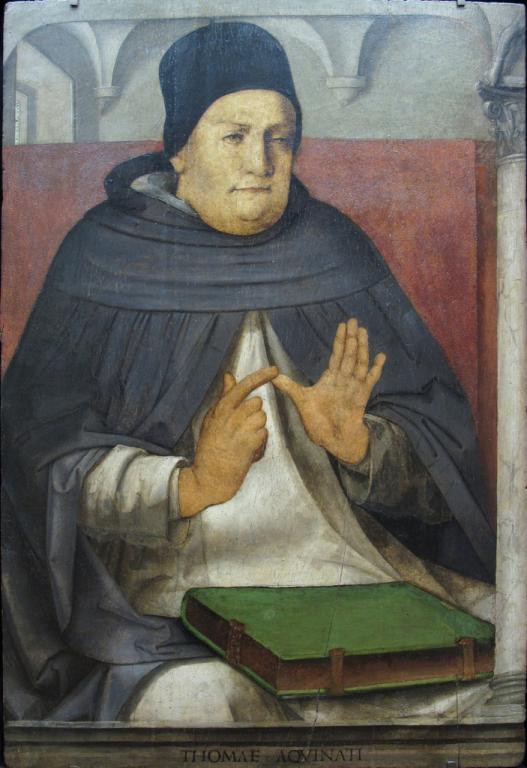
Summa Contra Libertarians? Photo credit: Martin Beek via Foter.com / CC BY-NC-ND
Besides the challenge we face in determining how we understand contractual agreements and what exactly – and how and why – one can claim something(s) as their property, we may consider another difficulty that is tied to the needs of the poor.
To the idea that poverty relief should be left primarily to the free will of the donor, that is, to the spark of mercy that leads an individual to charitable giving – without any room for the state if needs remain unmet – we recently replied in this post “Theft: Being Forced to Help the Poor“.
In the aforementioned post, we discussed the complaint many have about what they call “forced charity”, having to pay taxes in order to have goods distributed to the needy.
In this post, however, we are led to add to that conversation.
Aquinas allows for all individuals to act for the common good if the action does not cause harm¹. If harm is caused – this discussion taking place in his treatment of capital punishment – only the competent authority may consider the action at hand, and carry it out. Two questions later², Aquinas considers theft and need. If life-threatening need presents itself, a person may take from the excess of the rich in order to satisfy that need – because such need automatically makes what is needed the belonging of the person who needs it. Not only can the needy take, they can do so in secret. Moreover, a person may take – in proxy – for the need of a neighbor.
In the following article, Aquinas allows for the competent authority to take from the excesses of the wealthy to provide for the needs of the common good: “It is no robbery if princes exact from their subjects that which is due to them for the safe-guarding of the common good, even if they use violence in so doing…”.³ Does this mean the higher levels of social organization, those authorities responsible for safe-guarding the common good, can take from the wealthy to provide for the needy?
We can consider this question, in the minds of our – if we may – libertarian friends, in two ways
First, does Aquinas refer strictly to taxation – if we can call it that – for national defense⁴ in the above quote? We shouldn’t think so, as Aquinas treats the authorities as guardians as justice with the role of safe-guarding the common good. And as the previous article refers to, all in the same question, the goods of the earth are meant for all – therefore when need arises one cannot sin in taking what is needed because all becomes common.
Whatever one has in superabundance “is due, by natural law, to the purpose of succoring the poor.”⁵
If we can take what is needed for ourselves or for another, as doing so to satisfy that need would be good, it would only follow that, as not having basic needs met would be detrimental to the common good, the authorities responsible for the safeguarding of the common good could do so as well, using violence – that is, force – if necessary.⁶
Clearly we can see a connection here between protecting the common good in the case of providing for the needy, and other, less contested areas such as the state carrying out capital punishment and waging war. We also touched on the responsibility of the state in safeguarding the common good in the case of the suspected Planned Parenthood shooter, where we called for the death penalty to be removed from the options for punishment.⁷
That said, by looking at these questions on taking from the excesses of the wealthy to provide for the common good – on the part of the proper authorities – we can see one way Aquinas allows for wealth redistribution for those in need on the part of the State. Individuals and the Public Authority may do good, and giving what is needed to the poor from the excesses of the wealthy is good.
The second way we can see Aquinas acknowledging in the responsibility of the proper authorities the provision of the needs of the poor is by considering his article on waging war.
We know that Aquinas doesn’t allow for private individuals to wage war – only the proper public authority may do so, under the appropriate circumstances, for Aquinas.
It is in this very article that Aquinas notes that “as the care of the common weal is committed to those who are in authority, it is their business to watch over the common weal of the city, kingdom or province subject to them.”⁸ This includes protecting – with the sword – the population from internal disturbances and from external enemies, when the proper conditions are met, of course – along with other requirements for justice in war.
However, what interests our discussion here, is that in order to justify his claim that waging war is for public authorities alone, he also justifies the role of public authorities in providing for the poor. Quoting the Psalms as defending the role of the public authority, he writes, “Hence it is said to those who are in authority: ‘Rescue the poor: and deliver the needy out of the hand of the sinner,’.”⁹
The Psalm Aquinas pulls from is Psalm 82, verse 4. Let’s look at verses 3 and 4 together:
Give justice to the weak and the fatherless; maintain the right of the afflicted and destitute. Rescue the weak and the needy; deliver them from the hand of the wicked.¹⁰
With this brief treatment on the question of relieving the poor of their misery and the role of the state, it seems that Aquinas not only accepts the state’s ability to provide for the poor using the excess wealth of the rich – and its right to use violence, that is force, when necessary – but that he grounds this position in Sacred Scripture. Let’s remember this – especially during election season – as we recall Archbishop Chaput’s “these are prudential judgments” line.
But as we said last time, let’s organize a system that diminishes any justification for state intervention. Let’s secure just wages, and engage in fair trade – and when this fails, let’s joyfully come to the aid of the poor. If we cannot do so efficiently, let’s work to make our political activity an efficient means of doing so. Otherwise, we give rise to the possibility of encountering the wrath of the poor – which would be the least of a non-materialists’s concern – and the judgement of God.
May we never find ourselves in the position of the wicked – and let us close with a portion of Matthew 22:
‘Depart from me, you accursed, into the eternal fire prepared for the devil and his angels.
For I was hungry and you gave me no food, I was thirsty and you gave me no drink,
a stranger and you gave me no welcome, naked and you gave me no clothing, ill and in prison, and you did not care for me.’
Then they will answer and say, ‘Lord, when did we see you hungry or thirsty or a stranger or naked or ill or in prison, and not minister to your needs?’
He will answer them, ‘Amen, I say to you, what you did not do for one of these least ones, you did not do for me.’
Until next time,
If you have found the content on Keith Michael Estrada’s “Proper Nomenclature” to be useful, kindly consider supporting the cause with a donation.
Use the button below to donate through PayPal:
Thank you!
¹ II-II Q. 64, A. 3.
² II-II Q. 66, A. 7.
³ II-II Q. 66, A. 8.
⁴ By national defense we mean what is necessary in order to protect a population from physical harm, at least.
⁵ II-II Q. 66, A. 7.
⁶ II-II Q. 66, A. 8.
⁷ Aquinas discusses capital punishment in II-II Q. 64, A. 3 & 7.
⁸ II-II Q. 40, A. 1.
⁹ Ibid.
¹⁰ Let’s look at how the Vulgate spells this out for us:
- iudicate egenum et pupillum
humilem et pauperem iustificate- eripite pauperem et egenum
de manu peccatoris liberate
Fathers, Mothers, Saints, and Doctors
Previous Post

December 18, 2015
Always Appreciated: Reminders of Church's Regret
Next Post

December 20, 2015 Being Liberal: Should Justin Trudeau Apologize to Pope?
Browse Our Archives
Select a Category Benedict XVI Canada Capital Punishment Capitalism Care for Creation Catholic Committee of Appalachia Catholic News Catholic Social Teaching Catholic Tradition - Art Catholic Worker Catholic Worker Inspirations CST in 140 Characters or Less Diocese of San Diego Faithful Citizenship Father Frank Pavone Chronicles Fathers, Mothers, Saints, and Doctors Francis Guest Posts Gun Violence Humor, Parody, and/or Satire Interfaith Dialogue John Eudes John Paul II Marriage and Family Migration New Evangelization News Not a formal post. Our Lady of Guadalupe Paul VI Popes Pro-Life Racial Justice Releases Religious Freedom Repeat/Repost Saints Socialism Thomas Aquinas Uncategorized
Select a Month March 2020 July 2019 June 2018 May 2018 March 2018 December 2017 October 2017 September 2017 July 2017 June 2017 May 2017 April 2017 March 2017 December 2016 November 2016 October 2016 September 2016 August 2016 July 2016 April 2016 February 2016 January 2016 December 2015
Follow Us!
TAKE THE
Religious Wisdom Quiz
According to Isaiah 53, how would the Messiah be treated by people?
Select your answer to see how you score.
Ignored and forgotten Worshiped and adored Despised and rejected Feared and honored
Related posts from Proper Nomenclature

Franciscan University of Steubenville not recommend; alumni aren't...
Bishop of San Jose: Do not deny sacraments,...
Pope: Death penalty is inadmissible
Pope Francis gave a Laudato si' Ted Talk...
TRENDING AT PATHEOS Catholic

Rejecting Doom: Christian Hope And Human Action
Christianity is a religion of hope. We are to have hope and...

It’s What Comes From Within Which Matters
One of the most difficult things for us to understand is why...

Why I Choose the Eucharist Over the Sermon
Choose the Eucharist, Not the Sermon What are we supposed to get...

5 Design Elements Found in Spiritually Rooted Homes
Putting Spirituality Into Home Decor Our homes are more than our living...

Credo: A Story of God Told with the...
About 10 years ago, I began to imagine a personal "Credo" that...

The Anatomy of Divine Revelation in Catholic Thought
The claim that God has made Himself known to human beings is...
view all Catholic blogs
Ad-Free & Subscriber Log-In Subscription Support
- About Us
- 2026 Calendar
- Videos
- Podcasts
- Library of World Religions
- Faith In Media Tracker
- Advertise With Us
- Write for Us
- Privacy Policy
- Terms of Service
- Do Not Sell My Data
- Contact Us
- Radiant Digital
- Manage Newsletter Subscriptions
- Unsubscribe From Notifications
- Sitemap
Copyright 2008-2026, Patheos. All rights reserved.
Subscription Support Ad-Free & Subscriber Log-In
Follow Patheos