
BuddhistCatholicContemplativeEvangelicalGeneral ChristianHinduJewishLatter-day SaintMuslimNew VisionsProgressive Christian
Beliefs
- Buddhist
- Catholic
- Contemplative
- Evangelical
- General Christian
- Hindu
- Jewish
- Latter-day Saint
- More Voices
- Muslim
- New Visions
- Pagan
- Progressive Christian
Topics
- Religion News
- Food and Religion
- Sports and Religion
- Religious Art
- Religious Music and Entertainment
- Religious Events
- History and Religion
- Style and Religion
- Politics and Religion
- Women in Religion
- Recreation Outdoors and Religion
- Business Finance and Religion
- Careers Workplace and Religion
- Education and Religion
- Family Parenting and Religion
- Health Fitness and Religion
- Home and Religion
- Relationships and Religion
- Technology and Religion
- Travel and Religion
Columnists
- Buddhist Columnists
- Business Finance and Religion Columnists
- Careers Workplace and Religion Columnists
- Catholic Columnists
- Contemplative Columnists
- Education and Religion Columnists
- Evangelists Columnists
- Family Parenting and Religion Columnists
- General Christian Columnists
- Health Fitness and Religion Columnists
- Hindu Columnists
- History and Religion Columnists
- Home and Religion Columnists
- Jewish Columnists
- More Voices Columnists
- Latter Day Columnists
- Muslim Columnists
- New Visions Columnists
- Nonreligious Columnists
- Pagan Columnists
- Politics and Religion Columnists
- Progressive Columnists
- Recreation Outdoors and Religion Columnists
- Relationships and Religion Columnists
- Religion News Columnists
- Religious Art Columnists
- Religious Events Columnists
- Religious Music and Entertainment Columnists
- Sports and Religion Columnists
- Style and Religion Columnists
- Technology and Religion Columnists
- Travel and Religion Columnists
- Women in Religion Columnists
Resource Library
- 2026 Calendar
- Library of World Religions
- The 100 Most Holy Places on Earth
- Patheos Answers
- Podcasts
- Videos
- Faith Leaders Database
- Anglican Episcopalian
- Bahai
- Baptist
- Buddhism
- Christianity
- Confucianism
- Eastern Orthodoxy
- Hinduism
- Holiness and Pentecostal
- ISKCON
- Islam
- Judaism
- Lutheran
- Methodist
- The Church of Jesus Christ of Latter-day Saints
- New Age
- Paganism
- Presbytarian and Reformed
- Protestantism
- Religion Behind the Scenes
- Roman Catholic
- Scientology
- Shia Islam
- Sikhism
- Sufism
- Sunni Islam
- Taoism
- Zen
- See all religions
Research Tools
 Ad-Free & Subscriber Log-In Subscription Support
Ad-Free & Subscriber Log-In Subscription Support
Follow Patheos 

- Trending:
- Forgiveness
- |
- Marriage
- |
- Consciousness
- |
- Death Penalty
- |
- Election
- |
- Halloween
 Proper Nomenclature
- Home
- Catholic
- Phoenix Priest Offers Homily Advice on Voting – But Something Is Missing
Phoenix Priest Offers Homily Advice on Voting – But Something Is Missing
Last updated on: October 10, 2016 at 3:12 pm by Keith Michael Estrada
Phoenix Priest Offers Homily Advice on Voting – But Something Is Missing 2016-10-10T15:12:49-07:00 Keith Michael Estrada
Patheos Explore the world's faith through different perspectives on religion and spirituality! Patheos has the views of the prevalent religions and spiritualities of the world.
Join Keith Michael Estrada on Facebook …
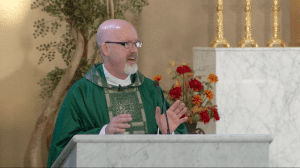
Fr. John Lankeit, the Rector of The Cathedral of Saints Simon and Jude Cathedral in Phoenix, Arizona, preached on the 2016 elections from “a Catholic perspective” this Sunday (Oct. 2).
I’ve seen some wonderful people around the web praise the homily and the homilist, alike, for various reasons.
It’s a lengthy homily, but this isn’t an issue for me. Something else is missing – well, some things are missing.
The homily, I think, lacks several necessary distinctions, fails to address a few pertinent realities, and reminds me of utilitarian arguments for/against abortion (or for/against some other reality).
Working our way backwards, treating threats to human life as a numbers game can blur into utilitarianism quickly. Intrinsic evils are intrinsically evil no matter how often they occur – and they are, in themselves, matters which we cannot promote or support. Bringing about the end of one human life is undesirable – so is bringing about the end of one million human lives. Fr. Lankeit’s homily leaves a lot of room for people to start reasoning out what intrinsic evil is more intrinsically evil (which cannot be calculated)- or what threat to human life deserves our concern more than another (which is slightly different and concerns gravity) – simply by incorporating objectifying statistics. Certainly, we shouldn’t think Fr. Lankeit wants us to employ a logic of “lives lost by *x ‘*is greater than’ lives lost by y, therefore x is our priority” – human life isn’t a variable in a utilitarian calculus; so let’s not make that part of the core in one’s short argument.
Fr. Lankeit ends his homily with a quote from Bp. Olmsted:
“We have a serious obligation to protect human life, and especially the lives of the most innocent and vulnerable among us. Whoever fails to do this, when otherwise able to do so, commits a serious sin of omission. They jeopardize their own spiritual wellbeing and they are a source of scandal for others. Should they be Catholics, they should not receive Holy Communion.” (Catholics in the Public Square, 4th ed.)
This, in itself, does not play into Fr. Lankeit’s numbers’ game. Innocent human life is lost by war, our economies, our foreign policy, our immigration policy, and our energy policy. Aboriton is Fr. Lankeit’s focus – indeed, it is one area where human life is “innocent and vulnerable,” and requires our respect and protection. When we “fail to do this, when otherwise able to do so,” we commit a serious sin of omission. Of course, we’d need to be able to do so, and know that the threat is there, etc. More on this below.
Besides a utilitarian argument, Father Lankeit’s homily forgets a few pertinent realities. I didn’t see much on poverty or Care for our Common Home in his homily.
Now, over 21,000 children die each day from poverty related causes – “innocent and vulnerable” human lives among us – and what are we doing about this?
What about deaths of “innocent and vulnerable” lives, that we can otherwise choose to prevent “with our votes”, caused by unhealthy environments (12.6 million/year), simply air pollution (6.5 million/year), caused by a lack of food from climate change (est. half a million in the year 2050), etc., etc.?
Join Keith Michael Estrada on Facebook …
There is more to death than numbers – and all human life should be respected and protected. No matter which candidate you vote for, particularly “major party” candidates – though others, as well -, you will be voting for a person or a party platform (or party trend) that fails to protect “innocent and vulnerable” human lives. Want to make this a pure numbers game? Join the utilitarian church of america.
Besides forgetting these other realities and threats to human life (we haven’t even considered grave evils), the utilitarian framework only takes away from his argument.
We cannot forget our concern that Father failed to make some distinctions.
These distinctions, are made in Forming Consciences for Faithful Citizenship by the USCCB:
Catholics often face difficult choices about how to vote. This is why it is so important to vote according to a well-formed conscience that perceives the proper relationship among moral goods. A Catholic cannot vote for a candidate who favors a policy promoting an intrinsically evil act, such as abortion, euthanasia, assisted suicide, deliberately subjecting workers or the poor to subhuman living conditions, redefining marriage in ways that violate its essential meaning, or racist behavior, if the voter’s intent is to support that position. In such cases, a Catholic would be guilty of formal cooperation in grave evil. At the same time, a voter should not use a candidate’s opposition to an intrinsic evil to justify indifference or inattentiveness to other important moral issues involving human life and dignity.
There may be times when a Catholic who rejects a candidate’s unacceptable position even on policies promoting an intrinsically evil act may reasonably decide to vote for that candidate for other morally grave reasons. Voting in this way would be permissible only for truly grave moral reasons, not to advance narrow interests or partisan preferences or to ignore a fundamental moral evil.
When all candidates hold a position that promotes an intrinsically evil act, the conscientious voter faces a dilemma. The voter may decide to take the extraordinary step of not voting for any candidate or, after careful deliberation, may decide to vote for the candidate deemed less likely to advance such a morally flawed position and more likely to pursue other authentic human goods.
In making these decisions, it is essential for Catholics to be guided by a well-formed conscience that recognizes that all issues do not carry the same moral weight and that the moral obligation to oppose policies promoting intrinsically evil acts has a special claim on our consciences and our actions. These decisions should take into account a candidate’s commitments, character, integrity, and ability to influence a given issue. In the end, this is a decision to be made by each Catholic guided by a conscience formed by Catholic moral teaching.
Indeed, the entirety of this post can be useful to anyone who sought guidance from Father’s homily – consider, especially, our “Eight Signs of Faithful Citizenship“.
Intrinsic evils vs grave evils, formal cooperation vs acceptable material cooperation, etc. – these seem to be missing in Father’s homily. Also missing is a useful discussion on prudential judgment – in fact, I think Father didn’t do too well here. Instead of Father’s use and consideration of prudential judgment, I suggest this short document. Discussing things like immigration, economic policy, etc., Father forgets to mention that prudential judgment isn’t just a free pass to vote GOP (again, consider the Eight Signs of Faithful Citizenship and the document linked in the previous sentence) and move on with life, but requires an adherence to principles that must always be respected – these are principles found in the social doctrine of the Church. The US Bishops may embrace certain policy recommendations, then have certain policy requirements that are born out of respect for certain principles. We cannot violate these principles, even if we may believe certain policies can more successfully bring about an improvement to the common good than other policies – that’s prudential judgment. (Also, the common good is one principle we must not violate – and is one you should consider forgetting about if you vote Democrat or Republican with some foolish allegiance.) Consider C. Camosy’s report on Bishop D. Flores of Brownsville, Texas, “Bishop says deporting migrants ‘not unlike’ abortion” or “US bishops: Ryan budget fails to meet ‘basic moral test’“.
On the failure to provide clarity and distinctions we have, for example, Father saying, “There are other issues, however, which touch on matters of intrinsic evil—actions that can never, at any time, under any circumstances be committed, promoted or even enabled by a faithful Catholic.” I am sure Father doesn’t mean to say it, but the use of the word “enabled” seems strange, as it could come off as suggesting that material cooperation with evil is never justifiable. But, let’s take Father’s words and think of enabling racism, torture, lying, and other intrinsic evils by voting for, let’s say, Donald Trump – would Father then say you can’t vote for him, or revert to a numbers game, or pick and choose among intrinsic evils? Either way, there is too much missing from Father’s homily to make a prudential – that is, wise – decision based off of it.
Don’t let me forget, we’re also missing, from Father’s guidance, talk of the possibility of conscientious objection and on voting for so-called “third party” candidates – alas, we should not be surprised given how much is absent in the homily, already.
Lastly, Father says, “But let’s face facts: Abortion is not caused by economics or social conditions. Economic and social factors are, no doubt, circumstances that affect a mother’s decision in some cases, but they are not causes.” This is muddled and not very precise. Capitalism as a socio-economic structure is a structure of sin that is made up of individual sins; being a crystallization of individual decisions to choose against human life and a preference for death, capitalism, in turn, prefers, encourages, and reinforces the decision to choose against life (material and spiritual, human and organic). We don’t have to believe in dialectical materialism to see how our culture plays a role in discouraging the option for what is life giving. (See: “If You Want Atheism, Destroy Creation, Embrace Capitalism,” “Gun Violence and the Religious Nones: If Family is the Remedy, What Assaults the Family?” and “Laudato si’ Invites You: An Economy Beyond Capitalism,” and “Capitalists Should Be Nervous: A Response to Fr. Robert Barron on Laudato Si’.”
Using this homily, as imprecise as it is, for or against some political trend or candidate or party, knowing its flaws and understanding that more accurate teaching is available, seems insincere, an abuse of Priestly authority, and disrespectful of the Holy Mass.
In the end, Father’s homily lacks much that is easily accessed in other teachings on voting from a Catholic perspective and is not recommended for guidance. A link to Forming Consciences for Faithful Citizenship can be found here.
Father’s video follows and this is a link to the homily text.
Until next time,
Keith Michael Estrada
Update on 8 October – edited for clarity.
Update on 10 October – addition on not voting/third party voting.
Next Post
October 7, 2016 Bourgeois 'CatholicVote' Warns of Liberation Theology Roots of Tim Kaine
Browse Our Archives
Select a Category Benedict XVI Canada Capital Punishment Capitalism Care for Creation Catholic Committee of Appalachia Catholic News Catholic Social Teaching Catholic Tradition - Art Catholic Worker Catholic Worker Inspirations CST in 140 Characters or Less Diocese of San Diego Faithful Citizenship Father Frank Pavone Chronicles Fathers, Mothers, Saints, and Doctors Francis Guest Posts Gun Violence Humor, Parody, and/or Satire Interfaith Dialogue John Eudes John Paul II Marriage and Family Migration New Evangelization News Not a formal post. Our Lady of Guadalupe Paul VI Popes Pro-Life Racial Justice Releases Religious Freedom Repeat/Repost Saints Socialism Thomas Aquinas Uncategorized
Select a Month March 2020 July 2019 June 2018 May 2018 March 2018 December 2017 October 2017 September 2017 July 2017 June 2017 May 2017 April 2017 March 2017 December 2016 November 2016 October 2016 September 2016 August 2016 July 2016 April 2016 February 2016 January 2016 December 2015
Follow Us!
TAKE THE
Religious Wisdom Quiz
Who said, "To the pure, all things are pure"?
Select your answer to see how you score.
Peter James John Paul
Related posts from Proper Nomenclature
Watch the trauma that comes from family separations...
Franciscan University of Steubenville not recommend; alumni aren't...
Bishop of San Jose: Do not deny sacraments,...
Pope: Death penalty is inadmissible
TRENDING AT PATHEOS Catholic

Rejecting Doom: Christian Hope And Human Action
Christianity is a religion of hope. We are to have hope and...

It’s What Comes From Within Which Matters
One of the most difficult things for us to understand is why...

Why I Choose the Eucharist Over the Sermon
Choose the Eucharist, Not the Sermon What are we supposed to get...

5 Design Elements Found in Spiritually Rooted Homes
Putting Spirituality Into Home Decor Our homes are more than our living...

Credo: A Story of God Told with the...
About 10 years ago, I began to imagine a personal "Credo" that...

The Anatomy of Divine Revelation in Catholic Thought
The claim that God has made Himself known to human beings is...
view all Catholic blogs
Ad-Free & Subscriber Log-In Subscription Support
- About Us
- 2026 Calendar
- Videos
- Podcasts
- Library of World Religions
- Faith In Media Tracker
- Advertise With Us
- Write for Us
- Privacy Policy
- Terms of Service
- Do Not Sell My Data
- Contact Us
- Radiant Digital
- Manage Newsletter Subscriptions
- Unsubscribe From Notifications
- Sitemap
Copyright 2008-2026, Patheos. All rights reserved.
Subscription Support Ad-Free & Subscriber Log-In
Follow Patheos