
BuddhistCatholicContemplativeEvangelicalGeneral ChristianHinduJewishLatter-day SaintMuslimNew VisionsProgressive Christian
Beliefs
- Buddhist
- Catholic
- Contemplative
- Evangelical
- General Christian
- Hindu
- Jewish
- Latter-day Saint
- More Voices
- Muslim
- New Visions
- Pagan
- Progressive Christian
Topics
- Religion News
- Food and Religion
- Sports and Religion
- Religious Art
- Religious Music and Entertainment
- Religious Events
- History and Religion
- Style and Religion
- Politics and Religion
- Women in Religion
- Recreation Outdoors and Religion
- Business Finance and Religion
- Careers Workplace and Religion
- Education and Religion
- Family Parenting and Religion
- Health Fitness and Religion
- Home and Religion
- Relationships and Religion
- Technology and Religion
- Travel and Religion
Columnists
- Buddhist Columnists
- Business Finance and Religion Columnists
- Careers Workplace and Religion Columnists
- Catholic Columnists
- Contemplative Columnists
- Education and Religion Columnists
- Evangelists Columnists
- Family Parenting and Religion Columnists
- General Christian Columnists
- Health Fitness and Religion Columnists
- Hindu Columnists
- History and Religion Columnists
- Home and Religion Columnists
- Jewish Columnists
- More Voices Columnists
- Latter Day Columnists
- Muslim Columnists
- New Visions Columnists
- Nonreligious Columnists
- Pagan Columnists
- Politics and Religion Columnists
- Progressive Columnists
- Recreation Outdoors and Religion Columnists
- Relationships and Religion Columnists
- Religion News Columnists
- Religious Art Columnists
- Religious Events Columnists
- Religious Music and Entertainment Columnists
- Sports and Religion Columnists
- Style and Religion Columnists
- Technology and Religion Columnists
- Travel and Religion Columnists
- Women in Religion Columnists
Resource Library
- 2026 Calendar
- Library of World Religions
- The 100 Most Holy Places on Earth
- Patheos Answers
- Podcasts
- Videos
- Faith Leaders Database
- Anglican Episcopalian
- Bahai
- Baptist
- Buddhism
- Christianity
- Confucianism
- Eastern Orthodoxy
- Hinduism
- Holiness and Pentecostal
- ISKCON
- Islam
- Judaism
- Lutheran
- Methodist
- The Church of Jesus Christ of Latter-day Saints
- New Age
- Paganism
- Presbytarian and Reformed
- Protestantism
- Religion Behind the Scenes
- Roman Catholic
- Scientology
- Shia Islam
- Sikhism
- Sufism
- Sunni Islam
- Taoism
- Zen
- See all religions
Research Tools
 Ad-Free & Subscriber Log-In Subscription Support
Ad-Free & Subscriber Log-In Subscription Support
Follow Patheos 

- Trending:
- Forgiveness
- |
- Marriage
- |
- Consciousness
- |
- Death Penalty
- |
- Election
- |
- Halloween

- Home
- Progressive Christian
- Politics and Religion
- How 9/11 Fueled 1/06
How 9/11 Fueled 1/06
Last updated on: September 11, 2023 at 10:22 pm by Rodney Kennedy
How 9/11 Fueled 1/06 2023-09-11T22:22:52-05:00 Rodney Kennedy
Patheos Explore the world's faith through different perspectives on religion and spirituality! Patheos has the views of the prevalent religions and spiritualities of the world.
How 9/11 Fueled 1/06
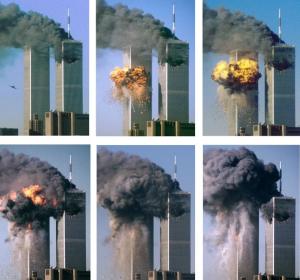

Donald Trump’s indictment on charges that he incited the insurrection on January 6, 2021, brings that infamous day back into the vision of the American people. I believe that 1/06 was fueled by destructive tropes that originated after 9/11. The day known only as 9/11, like a famous person with only one name, lives in American memory. The day of 1/06 erupted from the distorted memory and vision of 9/11. Here’s my case for this audacious claim. American reactions to 9/11 produced a virulent, militant form of patriotism that evolved into January 6, 2021.
Instead of a period of national mourning, President Bush launched a war in response to the 9//11 attacks. Instead of doing the necessary grief work to move from resentment and anger, the nation made an emotional investment in a form of hyper-patriotism that closed the door to any actions other than war. The lack of national mourning for 9/11 paved the road to 1/06. The repressed grief finally came up from the depths of America’s soul and erupted in violence against democracy. When President Donald Trump lost the 2020 election, instead of respecting tradition and democracy, the expectation of a smooth and peaceful transition of power, he stood on presidential ground and gave a speech of incitement. No concession, no appeals for healing our deep divisions, but rancor, resentment, and a cry for battle spilled forth from Trump’s mouth. Instead of a time for his followers to grieve and move to acceptance, Trump gave them a permanent case of resentment. The speech unleashed the same destructive tropes of 9/11: hyper-patriotism, revenge, and enemies.
Trump is now slow walking us through a rhetorical version of 1/06. All of democracy and its anchor institutions had to offered on the altar of the one great resentful enterprise of overturning the 2020 election and returning Trump to the White House. 1/06 happened; it continues to happen because there has been no closure. Trump has the power to end our national turmoil with two words: “I lost.”
The toxic waste of a hyper-patriotism, the trope of “enemies,” the anger, desire for revenge based on resentment – all left over and never cleaned from our nation’s soul – was packaged by Trump to give us a sense of being at war with one another. This is how 1/06 happened. Trump used weaponized rhetoric to blow the embers that remain from 9/11 back into a roaring fire. He has even posted an image of himself in front of a White House in flames.
January 6 fueled by revenge shattered the silence of MAGA mourning Trump’s loss. The flags that flew that day were transformed into a pride-filled thing. The flag became a symbol of the people’s right to “right the wrong” done to President Trump by a stolen election. At least, that’s what the insurrectionists told themselves. They were determined to prevail no matter how many members of Congress they had to kill, even if they were forced to “hang Vice-President Pence.” They had to rid themselves of the stench of a “stolen election.” And in the revisionist telling of the story, they had to be heroes, patriots. So the members of the mob breaking windows in the capitol was a hero as much as the people who died in 9/11. Never doubt that this mob was of the same genre as the one gathered outside of Jerusalem on Good Friday at Golgotha screaming, “Crucify him.”
O wretched country that we are, who shall deliver us from these death wishes?
A Rhetorical Paradigm for Our Lack of Mourning
In an essay titled, “No time for mourning: The rhetorical production of the melancholic citizen-subject in the war on terror,” in Philosophy and Rhetoric, Barbara Biesecker argues that the nation never had an opportunity to mourn after 9/11. Instead of mourning, we went straight to revenge.
I extend Biesecker’s argument to suggest that there has been an unexpected consequence of the excessive messages and symbols of patriotism that showed up after 9/11 in one form and morphed into a much more dangerous form during and after then-President Trump’s January 6 speech and the ensuing insurrection. This is not melancholy – a passive position for the polity of ceding authority to the state.
Perhaps it is ressentiment – the powerful but suppressed feelings of hatred and envy that Trump and his supporters exhibit toward Democrats. Or perhaps it is the rhetorical perversion that Joshua Gunn identifies in Political Perversion. Gunn notes that Trump uses “perniciously perverse rhetorics” to achieve his goals. Or even more Trump has combined the rhetorical markers of a violent populism – a holy people, powerful enemies, the system, and the apocalyptic. If this is the case, then we are dealing with Trump unleashing apocalyptic actions into a vulnerable democracy. And this could also be Trump’s jouissance – his intellectual and political delight at producing chaos.
The Fear of Liberal Destroyers
The idolatry of Christian nationalism made its first major public appearance on 1/06. The hate groups that helped make January 6 happen were also everywhere. Mixed with the American flag there were Confederate flags, Jesus flags, and “Don’t Tread on Me” flags.
Here’s the problem: Most Americans saw the attack on democracy live on television. In colloquial language, “We can’t ‘unsee’ that.” MAGA is a regime of perception, a perverse perception, but incredibly powerful. This perception has connected in some strange cocktail of victimage, desire for revenge, and a sense of holiness that borders on blasphemy in theological terms. Perception replaced “vision.” Rhetorical resources were marshalled to convince Americans that we did not see what we saw; another perception was available and many Americans have embraced that Trumpian perception.
Various tropes have merged to ramp up the perverse rhetoric of Trump and MAGA. 9/11 responses were only a prelude to 1/06. 9/11 let the “mule out of the barn;” 1/06 turned loose the mules of violence.
A Blind Patriotism
Reading patriotism through the lenses of 9/11, I offer a reading of patriotism as the emotional upshot of carefully managed campaign that ceded the power of the demos to a remilitarized state for the sake of protecting what we feared we would lost; namely, the democratic way of life. I extend Barbara Biesecker’s argument to argue that there has been an unexpected consequence of the excessive messages and symbols of patriotism that showed up after 9/11 in one form and morphed into a much more dangerous form during and after then-President Trump’s January 6 and the ensuing insurrection. The violence of 1/06 caught us off-guard. The signs were there, we could even see the smoke, but still no one knew MAGA would go that far.
Either conservative’s eyes have failed them, or they are failing their eyes, but as new members of the society of the blind, they are having their fingers pressed forcibly down on the fiery Braille alphabet of an endangered democracy. “The blind cannot lead the blind; both fall into the ditch.”
America’s War of Memories
America now engages in a war of memories. The men and women who struggled here in the citadel of our democracy cannot be called patriots, warriors, true Americans, but they must forever be known for what they were – the worst of us. Now, they must be called by their proper names – Traitors. We highly resolve that this cancer on our democracy will not be allowed to grow among us – that this nation, under God, shall have a new birth of freedom – and that government of the people, by the people, for the people, shall not perish from the earth.”
Historian David Blight may be our best guide in understanding the history of how Americans are remembering 1/06. Contending memories are clashing in public view. Two variant narratives are working themselves into the American memory.
Memories can be hijacked, distorted, changed, even given completely different interpretations. What is left of the white supremacy vision disrupts our civility today in the “Lost Cause,” repudiations of systemic racism, whining about Critical Race Theory, and shouts of “They will not replace us.” Memories are stubborn, resistant to change, and as the lighter wood of the brain, they calcify, petrify, and attach to the portions of the brain that stimulate anger, bitterness, and desires for revenge.
Thucydides, in the History of the Peloponnesian War, said, “The People made their recollection fit in with their sufferings.” These words ring true for a Republican population that feels scorned, shamed, and left out of everyone else’s rights movement. Trump Republicans plunge blindly toward the sea, a host of lemmings in transit.
Donald Trump refuses to allow 1/06 to become history. The rhetorical tragedy is how Trump keeps 1/06 alive and hints at its return in a more violent way or ways. It is here and now, living and breathing in every lie, accusation, and misinformation fomented by Trump and his minions. As James Baldwin correctly affirms “history is literally present in all that we do.” Now, the attempt to rewrite history in terms favorable to Trump and the “patriots” who invaded the Capitol, history is present. No candidate can look to the future on the Republican side as long as Trump keeps alive the perverted memories of 1/06.
Americans are conflicted about memories. Sounding like Catholics and Baptists arguing over whether the Lord’s Supper is a sacrament or a memory meal, America’s political parties are offering selective, redacted, revisionist memories. Our political life has become a war of memories.
Unfair treatment becomes the culprit and what Trump did fades into the background as nothing but “a perfect call,” a speech for a fair election, and a desire to save America. Less able to be pinned down, victimhood is a performance that folds suffering, persecution, and melancholy into the social fabric of white hegemonic masculinity.
While Trump positioned himself as the “Strong Man” who alone could save America, he has always painted a picture of himself as “The Suffering Servant.” He insists that he is suffering all these attacks, abuse, and mistreatment by Democrats for the people. Trump has no qualms about the theatrical absurdity of posing as the Suffering Servant of Isaiah.
“He was despised and rejected by others; a man of suffering and acquainted with infirmity; and as one from whom others hide their faces (This can’t apply to Trump – he’s too vain about his appearance). he was despised, and we held him of no account.”
Republican leaders became historical revisionists after 1/06. They rallied behind the wounded leader and poured forth the alternative truth – the status quo truth, the truth of the party. Trump’s supporters, released from any anchor in truth shamelessly used lies magically transformed into “Trump truth.” As long as Trump cajoles, threatens, and incites, 1/06 remains alive and toxic.
Previous Post

September 6, 2023
Donald Trump: The Last White President
Next Post

September 11, 2023 A Map for Leaving MAGA Land
Recent Comments
Browse Our Archives
Select a Category Uncategorized
Select a Month September 2024 August 2024 June 2024 May 2024 April 2024 March 2024 February 2024 January 2024 December 2023 November 2023 October 2023 September 2023 August 2023 July 2023
TAKE THE
Religious Wisdom Quiz
Who was Paul's companion on his first missionary journey?
Select your answer to see how you score.
Silas Timothy Barnabas Luke
Books by This Author Books by Rodney Kennedy
Related posts from Progressive Persuasion and Passion

Progressive Persuasion and Passion
Meet the False Prophets Hijacking Evangelical Movement
Progressive Persuasion and Passion
Only the Prophets Can Save Us Now
Progressive Persuasion and Passion
Keeping An Eye on Dictators and Would-Be Dictators
Progressive Persuasion and Passion
TRENDING AT PATHEOS Progressive Christian

What Being a Modern-Day Apostle Means to Me
In my last column, I discussed the ins and outs of modern-day...

Did Ancient China Once Worship the God of...
Across human history, a common thread weaves through the origins of the...

Love Your Neighbor – Including Earth-Kin: Lev. 19,...
God’s command to love your neighbor means acting in an ethical and...

Lead a Church Study of “Jesus and Lao...
Guest writer Jack Thomas (The Irreverent Reverend) reflects on leading his church...

Pastoral Wisdom for Responding to Sermon Pushback
Getting sermon pushback on your social justice sermon? Learn practical, Proverbs-based strategies...

Principles for Understanding the Apostolic Ministry Today
Whenever people discover that my formal ministry title is "apostle," as in...
view all Progressive Christian blogs
What Are Your Thoughts?leave a comment
Ad-Free & Subscriber Log-In Subscription Support
- About Us
- 2026 Calendar
- Videos
- Podcasts
- Library of World Religions
- Faith In Media Tracker
- Advertise With Us
- Write for Us
- Privacy Policy
- Terms of Service
- Do Not Sell My Data
- Contact Us
- Radiant Digital
- Manage Newsletter Subscriptions
- Unsubscribe From Notifications
- Sitemap
Copyright 2008-2026, Patheos. All rights reserved.
Subscription Support Ad-Free & Subscriber Log-In
Follow Patheos