
BuddhistCatholicContemplativeEvangelicalGeneral ChristianHinduJewishLatter-day SaintMuslimNew VisionsProgressive Christian
Beliefs
- Buddhist
- Catholic
- Contemplative
- Evangelical
- General Christian
- Hindu
- Jewish
- Latter-day Saint
- More Voices
- Muslim
- New Visions
- Pagan
- Progressive Christian
Topics
- Religion News
- Food and Religion
- Sports and Religion
- Religious Art
- Religious Music and Entertainment
- Religious Events
- History and Religion
- Style and Religion
- Politics and Religion
- Women in Religion
- Recreation Outdoors and Religion
- Business Finance and Religion
- Careers Workplace and Religion
- Education and Religion
- Family Parenting and Religion
- Health Fitness and Religion
- Home and Religion
- Relationships and Religion
- Technology and Religion
- Travel and Religion
Columnists
- Buddhist Columnists
- Business Finance and Religion Columnists
- Careers Workplace and Religion Columnists
- Catholic Columnists
- Contemplative Columnists
- Education and Religion Columnists
- Evangelists Columnists
- Family Parenting and Religion Columnists
- General Christian Columnists
- Health Fitness and Religion Columnists
- Hindu Columnists
- History and Religion Columnists
- Home and Religion Columnists
- Jewish Columnists
- More Voices Columnists
- Latter Day Columnists
- Muslim Columnists
- New Visions Columnists
- Nonreligious Columnists
- Pagan Columnists
- Politics and Religion Columnists
- Progressive Columnists
- Recreation Outdoors and Religion Columnists
- Relationships and Religion Columnists
- Religion News Columnists
- Religious Art Columnists
- Religious Events Columnists
- Religious Music and Entertainment Columnists
- Sports and Religion Columnists
- Style and Religion Columnists
- Technology and Religion Columnists
- Travel and Religion Columnists
- Women in Religion Columnists
Resource Library
- 2026 Calendar
- Library of World Religions
- The 100 Most Holy Places on Earth
- Patheos Answers
- Podcasts
- Videos
- Faith Leaders Database
- Anglican Episcopalian
- Bahai
- Baptist
- Buddhism
- Christianity
- Confucianism
- Eastern Orthodoxy
- Hinduism
- Holiness and Pentecostal
- ISKCON
- Islam
- Judaism
- Lutheran
- Methodist
- The Church of Jesus Christ of Latter-day Saints
- New Age
- Paganism
- Presbytarian and Reformed
- Protestantism
- Religion Behind the Scenes
- Roman Catholic
- Scientology
- Shia Islam
- Sikhism
- Sufism
- Sunni Islam
- Taoism
- Zen
- See all religions
Research Tools
 Ad-Free & Subscriber Log-In Subscription Support
Ad-Free & Subscriber Log-In Subscription Support
Follow Patheos 

- Trending:
- Forgiveness
- |
- Marriage
- |
- Consciousness
- |
- Death Penalty
- |
- Election
- |
- Halloween

- Home
- Progressive Christian
- Politics and Religion
- How Not to Be Secular
How Not to Be Secular
Last updated on: August 14, 2023 at 2:43 pm by Rodney Kennedy
How Not to Be Secular 2023-08-14T14:43:02-05:00 Rodney Kennedy
Patheos Explore the world's faith through different perspectives on religion and spirituality! Patheos has the views of the prevalent religions and spiritualities of the world.
What’s Your Name? How (Not) to Be Secular
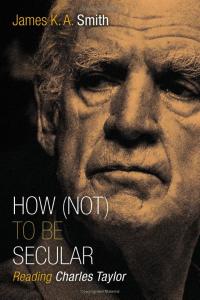 The story of Joseph is a story of how members of the family of God become secularists. Charles
Amazon.com
Taylor, in A Secular Age, defines secularism as a culture where belief in God is no longer the default setting. Let Egypt stand for our modern secular culture, and Joseph stand for the people who have left church to become secular. Can we get back to where we belong? This is our question. The theme: There is no undoing of the secular, but can we learn how not to live secular lives.
With each passing day, faith seems to recede in America. Either it goes down the rabbit hole of an austere fundamentalism screaming at the top of its lungs about “literalism,” or it embarks on a spiritualization that denies the bodily, fleshly nature of Christian faith, or it retreats into the wasteland of secular, “exclusive humanism.” Genesis 12 – 50 chronicles how faith disappears across generations.
The disappearance of faith
As we work our way through Genesis, from Abraham to Joseph, we see a fading faith. Abraham was the father of our faith, by the time of Jacob, he had become a scoundrel and a thief and then Joseph a member of the Egyptian court. Features of faith that were so obvious in Abraham disappear as Joseph embraces Egyptian secularism.
And it takes a considerable amount of time for this erosion to happen. Faith never dies easily. That means there are always opportunities for a “return”.
More than that, Joseph is the secular man. By the time Jospeh ends up in Egypt – he has become totally secular. I am convinced that this is the current trajectory of American faith – secularism. And much of it happens unconsciously.
Joseph assimilates into Egyptian culture, Egyptian thought, Egyptian politics, and with each compromise, each decision, each step, Joseph moves away from the faith of his ancestors. Joseph dresses like an Egyptian, talks like an Egyptian (those funny accents heh?), thinks like an Egyptian. He’s eating Egyptian food, drinking Egyptian wine, and hanging out in Egyptian night clubs.
He gets an Egyptian name – Zaphenath-Paneah; an Egyptian wife, Asenath. Asenath has two sons, but Joseph doesn’t give them Egyptian names. He names them Manasseh and Ephraim. A pair of Hebrew names offer the first glimmer of hope. Maybe secularization can be reversed in a family.
And if there is any remaining doubt about Joseph being Egyptian, Genesis closes with these words: “And Joseph died, being one hundred and ten years old; he was embalmed and placed in a coffin in Egypt.” An Egyptian funeral, presided over by an Egyptian priest, and buried in a coffin in Egypt.”
A later tradent of Genesis inserts another narrative suggesting that Joseph left instructions for “his bones” to be dug up and carried out of Egypt. This attempt to cover Joseph’s totally secular commitments seems a bit weak. Walter Brueggeman tags Joseph as a “fourth-generation sellout.” He notes that the Jewish mantra of faith became “The God of Abraham, Isaac, and Jacob.” Why doesn’t anyone ever add “and Joseph”? Joseph, Brueggeman argues, has to be dropped because he became so Egyptian, in my term, so secular.
When Our Story Becomes Secular
When we die will we be placed in a coffin in Egypt (the land of the secular)? Will a Christian pastor preside over our funeral? Probably yes for the rest of this generation. The remnants of the church that still cling to even the most secular of us are “baptize, marry, and bury.” But what about the fifth, sixth, and seventh generations? Will the later members of our families receive an Egyptian funeral, presided over by a Egyptian priest, a secular guru, a positive thinking con artist? Is there any hope left for us?
What about our developing secularization? Philosopher James Smith says, “We’re all secular now.” The secular touches and tarnishes everything it touches. We are all living in a globalized Gotham now. The Joker is everywhere, and the joke may be on us.
There’s a disturbing verse at the end of Hebrews 11 – the faith chapter of the Bible. After praising generations of the faithful, the preacher of Hebrews leaves us with this sobering thought: “Apart from us, all the generations of the faithful, will not be made perfect.”
So, if you are lying around the apartment on a Sunday morning you should know that the entirety of your family, all the way back to the first one, is depending on you to keep the faith. No matter how far you may drift from the church, you have been elected to represent your family – all of the long generations. I, of course, know that this will not suddenly drive young people back to the church; I just want them to feel guilty for not doing so. Such guilt will be a sign of hope.
Joseph, the secular man, operates in a political sphere that has no morals, no ethics. Brueggemann suggests, “Joseph understood so little and valued so thinly the God of the promise that he served greedy interests that victimized his own people.”
A Name. A Family. A Reconciliation
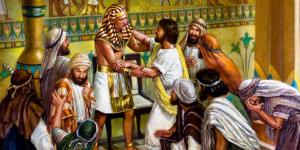
Joseph Forgives His Brothers —
Watchtower ONLINE LIBRARY jw.org
But thank God that is not the end of Joseph’s story. There’s more yet to come. There’s hope yet to be unleashed. And it happens in Genesis 45.
All of Joseph’s brothers are there. They don’t recognize Joseph, but he knows them. He has been working out his “residual resentments,” but then something happens. Suddenly, Joseph loses all pretense of being a powerful, revenge-obsessed politician. “Joseph could no longer control himself.” He cried out, “Clear the house,” or as the president in all our movies puts it, “Give us the room.”
And Joseph wept so loudly that the Egyptians heard it out in the hallways of the palace. One of Joseph’s interns must have asked, “What’s up with his highness?”
And then the entire story becomes a prelude to gospel. “I am your brother, Joseph.” We have a name: Joseph. Manasseh and Ephraim. We belong to God. Here’s the hope. A name. A family. A purpose rooted in God’s long vision for the future. Secularism can be thwarted.
Joseph remembers that he is not an Egyptian despite his Egyptian robes, rings, and riches. Joseph remembers his identity. He knows that he belongs to God, that God has a bigger dream for Joseph and his people than Joseph ever had for himself. Joseph sees for the first time that it’s not about him, it’s about what he can do for his people.
There is a way back from a secular wilderness for all of us.
Previous Post

August 9, 2023
Boredom: How Trumpism Ends
Next Post
August 14, 2023 Why Care about Israel's Restricting Supreme Court
Recent Comments
Browse Our Archives
Select a Category Uncategorized
Select a Month September 2024 August 2024 June 2024 May 2024 April 2024 March 2024 February 2024 January 2024 December 2023 November 2023 October 2023 September 2023 August 2023 July 2023
TAKE THE
Religious Wisdom Quiz
What does Proverbs instruct to trust in with all your heart?
Select your answer to see how you score.
Yourself Money The Lord Rulers
Books by This Author Books by Rodney Kennedy
Related posts from Progressive Persuasion and Passion

Progressive Persuasion and Passion
Meet the False Prophets Hijacking Evangelical Movement
Progressive Persuasion and Passion

Only the Prophets Can Save Us Now
Progressive Persuasion and Passion

Keeping An Eye on Dictators and Would-Be Dictators
Progressive Persuasion and Passion
TRENDING AT PATHEOS Progressive Christian

What Being a Modern-Day Apostle Means to Me
In my last column, I discussed the ins and outs of modern-day...

Did Ancient China Once Worship the God of...
Across human history, a common thread weaves through the origins of the...

Love Your Neighbor – Including Earth-Kin: Lev. 19,...
God’s command to love your neighbor means acting in an ethical and...

Lead a Church Study of “Jesus and Lao...
Guest writer Jack Thomas (The Irreverent Reverend) reflects on leading his church...

Pastoral Wisdom for Responding to Sermon Pushback
Getting sermon pushback on your social justice sermon? Learn practical, Proverbs-based strategies...

Principles for Understanding the Apostolic Ministry Today
Whenever people discover that my formal ministry title is "apostle," as in...
view all Progressive Christian blogs
What Are Your Thoughts?leave a comment
Ad-Free & Subscriber Log-In Subscription Support
- About Us
- 2026 Calendar
- Videos
- Podcasts
- Library of World Religions
- Faith In Media Tracker
- Advertise With Us
- Write for Us
- Privacy Policy
- Terms of Service
- Do Not Sell My Data
- Contact Us
- Radiant Digital
- Manage Newsletter Subscriptions
- Unsubscribe From Notifications
- Sitemap
Copyright 2008-2026, Patheos. All rights reserved.
Subscription Support Ad-Free & Subscriber Log-In
Follow Patheos