
BuddhistCatholicContemplativeEvangelicalGeneral ChristianHinduJewishLatter-day SaintMuslimNew VisionsProgressive Christian
Beliefs
- Buddhist
- Catholic
- Contemplative
- Evangelical
- General Christian
- Hindu
- Jewish
- Latter-day Saint
- More Voices
- Muslim
- New Visions
- Pagan
- Progressive Christian
Topics
- Religion News
- Food and Religion
- Sports and Religion
- Religious Art
- Religious Music and Entertainment
- Religious Events
- History and Religion
- Style and Religion
- Politics and Religion
- Women in Religion
- Recreation Outdoors and Religion
- Business Finance and Religion
- Careers Workplace and Religion
- Education and Religion
- Family Parenting and Religion
- Health Fitness and Religion
- Home and Religion
- Relationships and Religion
- Technology and Religion
- Travel and Religion
Columnists
- Buddhist Columnists
- Business Finance and Religion Columnists
- Careers Workplace and Religion Columnists
- Catholic Columnists
- Contemplative Columnists
- Education and Religion Columnists
- Evangelists Columnists
- Family Parenting and Religion Columnists
- General Christian Columnists
- Health Fitness and Religion Columnists
- Hindu Columnists
- History and Religion Columnists
- Home and Religion Columnists
- Jewish Columnists
- More Voices Columnists
- Latter Day Columnists
- Muslim Columnists
- New Visions Columnists
- Nonreligious Columnists
- Pagan Columnists
- Politics and Religion Columnists
- Progressive Columnists
- Recreation Outdoors and Religion Columnists
- Relationships and Religion Columnists
- Religion News Columnists
- Religious Art Columnists
- Religious Events Columnists
- Religious Music and Entertainment Columnists
- Sports and Religion Columnists
- Style and Religion Columnists
- Technology and Religion Columnists
- Travel and Religion Columnists
- Women in Religion Columnists
Resource Library
- 2026 Calendar
- Library of World Religions
- The 100 Most Holy Places on Earth
- Patheos Answers
- Podcasts
- Videos
- Faith Leaders Database
- Anglican Episcopalian
- Bahai
- Baptist
- Buddhism
- Christianity
- Confucianism
- Eastern Orthodoxy
- Hinduism
- Holiness and Pentecostal
- ISKCON
- Islam
- Judaism
- Lutheran
- Methodist
- The Church of Jesus Christ of Latter-day Saints
- New Age
- Paganism
- Presbytarian and Reformed
- Protestantism
- Religion Behind the Scenes
- Roman Catholic
- Scientology
- Shia Islam
- Sikhism
- Sufism
- Sunni Islam
- Taoism
- Zen
- See all religions
Research Tools
 Ad-Free & Subscriber Log-In Subscription Support
Ad-Free & Subscriber Log-In Subscription Support
Follow Patheos 

- Trending:
- Forgiveness
- |
- Marriage
- |
- Consciousness
- |
- Death Penalty
- |
- Election
- |
- Halloween

- Home
- Progressive Christian
- Politics and Religion
- God Not in the Abuse of Hagar
God Not in the Abuse of Hagar
Last updated on: July 13, 2023 at 3:29 pm by Rodney Kennedy
God Not in the Abuse of Hagar 2023-07-13T15:29:46-05:00 Rodney Kennedy
Patheos Explore the world's faith through different perspectives on religion and spirituality! Patheos has the views of the prevalent religions and spiritualities of the world.
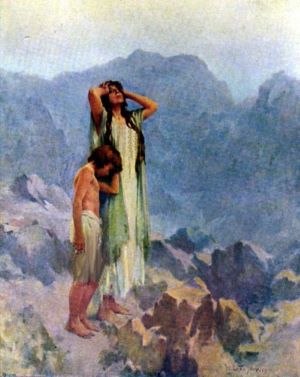 God Not in the Abuse of Hagar and Neither Is the Bible
Too much of American Christian culture breathes a white, toxic masculinity. This heteronormative, male dominated system even manages to involve women in the abuse of power. Sarah represents every conservative evangelical woman who upholds, defends, and supports the structure of male toxicity. The story of Hagar moves with shift-shaping swiftness, across time and space; its explosions may seem disconnected from each other. They are not. This violence shares a fundamental kinship with Abraham and Sarah in the systemic abuse that exists in all male-dominated Christian institutions. As it was with Abraham and Sarah, so it is today with men and women caught in violence and abuse.
When we figure violence as alien to our alleged superior ethical consciousness, we ignore the harsh reality that even our churches are built on violence rather than reason. We need for the cries of Hagar to be heard as the cries of women today. We need to name, identify, and condemn rhetorical tropes that conceal and enable repetitive exclusions and abuses.
My sweet Jesus, what an awful text. Reading the mistreatment of Hagar and Ishmael raises questions about the Bible, questions we must face before we can even look this text of terror in the eye. A man sends the mother of his first-born son and the son into the wilderness to face an almost certain death.
A Text of Terror
Theologian Phyllis Trible calls the story of Hagar a text of terror. Hagar, also known as “the slave woman,” faces abuse, rejection, and violence. So, with that in mind, we consider the threesome of Abram, Sarah, and Hagar – a biblical Ménage à trois.
As Professor Trible points out, Sarah was Hebrew, married, rich, and free; Hagar was Egyptian, single, poor, and enslaved. Sarah was older and barren. Hagar was younger and fertile (Phyllis Trible, Texts of Terror, p. 10). And these differences played themselves out as the relationship between the two was broken by issues of threat and power, abuse, and mistrust. There are always people with power and people with no power. There are always people with privilege and people with none. The denial of privilege is not the eradication of privilege. If we are white, rich, free – we are privileged for centuries piled on top of centuries; privileges piled on the dead, dry bones of other civilizations of people of other colors; privileged and blind as bats to the privilege.
An Act of Abuse
And so, in one of the harshest scenes of the Bible, Sarah orders Abraham to banish Hagar and Ishmael into the wilderness. Out of her own sense of powerlessness and precarity, Sarah orders a death sentence for Hagar and Ishmael. “Throw her out” may seem harsher than “Lock her up,” but the two slogans originate in the same poison well. Abraham gives the order, but Sarah pulls the strings.
The abuse was so awful that Hagar ran away into the desert with her baby. In that encounter, Hagar becomes the first person in Scripture to give God a name. She calls God “El-roi,” or “the God who sees.” Hagar, a slave woman, becomes the first one in our collective holy story to give God a name. Hagar calls God by name. The abuse is not God’s doing.
Others Also Call God by Name
If you engage in discriminating practices against others, no matter how much you think they may be wrong, do you realize that they also call on the name of God? I think it is a form of blindness, that we can’t see that everyone in the universe is in a relationship with God, without our righteous permission. Do we not know that the immigrants at our borders know the name of God, call on the name of the Lord, cry out to God to save their children?
God Is Not in the Abuse
The story claims God approved it; God signed the executive order expelling Hagar and son to the wilderness. God said send them back to Mexico. God said send them back to Africa. God said it, that’s what the Scripture says. When the noise of our self-righteousness drowns out the cries of the oppressed, we should know we are in trouble. Nothing is more offensive than hiding our mistreatment of others behind the will of God. God did not do this. An innocent God has been framed and even a junior grade Bible detective can show that the evidence points at us and not at God. Sarah and a complicit Abraham did this. Isaac and Ishmael, a childhood friendship now fractured into an unending animosity that has never ended.
But the story is only creating drama, the tension in the moment. This is not God’s doing. These are words of interpretation that often appear in the Old Testament. God’s real response will come later, and it will not be a response of exclusion. The writer of Genesis knew the true nature of God and understood that God would not desert Hagar and the child. Wait for it. God is not a signatory to the abuse of Hagar. This is not God’s doing.
God Hears the Cries of All the Hagars in the World
Look, you can run down any group, any race, any religion, you wish, but you can’t keep them from the grace of God. You can pout, like Jonah, when God saves Nineveh, but you can’t deny the love of God for the world. You can pretend that your brand of Christianity is superior to all others and to all other religions, but you can’t stop people from calling on the name of the Lord. When you shut some group out from the grace of God, it doesn’t mean that God is part of your judgment.
Contrast the Christians who call others demeaning, judging, condemning names with the Others calling God by name. God especially hears the cries of oppression. Those awful cries are all over the Bible.
The God Who See Is Also the God Who Hears
God hears the cries of Ishmael and Hagar: She lifted up her voice and wept. And God heard the voice of the boy; and the angel of God called to Hagar from heaven, and said to her, ‘What troubles you, Hagar? Do not be afraid; for God has heard the voice of the boy where he is. Come, lift up the boy and hold him fast with your hand, for I will make a great nation of him.’ Then God opened her eyes, and she saw a well of water. She went, and filled the skin with water, and gave the boy a drink.”
The divine presence of Love, the subversive holy presence, is too powerful to be kept covered by the gritty ash of abuse, and even in the middle of this text of terror, they break free and rise. God’s presence rises up in the wilderness. God’s presence rises up out of the brokenness. God’s presence rises up and refuses to play a part in the story of abuse, in the story of abandonment, in the story of the hell we can too easily inflict on one another.
We do not have to participate in systems of abuse. God is present in the terror, but God is not a terrorist, doesn’t participate in the abuse but transforms it. What good news.
Previous Post

July 12, 2023
Creation - God Takes Her Sweet Time
Next Post

July 14, 2023 American History at the "Beauty Salon"
Recent Comments
Browse Our Archives
Select a Category Uncategorized
Select a Month September 2024 August 2024 June 2024 May 2024 April 2024 March 2024 February 2024 January 2024 December 2023 November 2023 October 2023 September 2023 August 2023 July 2023
TAKE THE
Religious Wisdom Quiz
Who recognized Jesus as "the Christ" in the Temple as an infant?
Select your answer to see how you score.
Joseph Simeon Peter Zechariah
Books by This Author Books by Rodney Kennedy
Related posts from Progressive Persuasion and Passion

Progressive Persuasion and Passion
Meet the False Prophets Hijacking Evangelical Movement
Progressive Persuasion and Passion

Only the Prophets Can Save Us Now
Progressive Persuasion and Passion

Keeping An Eye on Dictators and Would-Be Dictators
Progressive Persuasion and Passion
TRENDING AT PATHEOS Progressive Christian

Why Christians Have a Sacred Duty to Vote:...
The Bible offers strong support for the sacred duty to vote. Here...

What Being a Modern-Day Apostle Means to Me
In my last column, I discussed the ins and outs of modern-day...

Did Ancient China Once Worship the God of...
Across human history, a common thread weaves through the origins of the...

Love Your Neighbor – Including Earth-Kin: Lev. 19,...
God’s command to love your neighbor means acting in an ethical and...

Lead a Church Study of “Jesus and Lao...
Guest writer Jack Thomas (The Irreverent Reverend) reflects on leading his church...

Principles for Understanding the Apostolic Ministry Today
Whenever people discover that my formal ministry title is "apostle," as in...
view all Progressive Christian blogs
What Are Your Thoughts?leave a comment
Ad-Free & Subscriber Log-In Subscription Support
- About Us
- 2026 Calendar
- Videos
- Podcasts
- Library of World Religions
- Faith In Media Tracker
- Advertise With Us
- Write for Us
- Privacy Policy
- Terms of Service
- Do Not Sell My Data
- Contact Us
- Radiant Digital
- Manage Newsletter Subscriptions
- Unsubscribe From Notifications
- Sitemap
Copyright 2008-2026, Patheos. All rights reserved.
Subscription Support Ad-Free & Subscriber Log-In
Follow Patheos