
BuddhistCatholicContemplativeEvangelicalGeneral ChristianHinduJewishLatter-day SaintMuslimNew VisionsProgressive Christian
Beliefs
- Buddhist
- Catholic
- Contemplative
- Evangelical
- General Christian
- Hindu
- Jewish
- Latter-day Saint
- More Voices
- Muslim
- New Visions
- Pagan
- Progressive Christian
Topics
- Religion News
- Food and Religion
- Sports and Religion
- Religious Art
- Religious Music and Entertainment
- Religious Events
- History and Religion
- Style and Religion
- Politics and Religion
- Women in Religion
- Recreation Outdoors and Religion
- Business Finance and Religion
- Careers Workplace and Religion
- Education and Religion
- Family Parenting and Religion
- Health Fitness and Religion
- Home and Religion
- Relationships and Religion
- Technology and Religion
- Travel and Religion
Columnists
- Buddhist Columnists
- Business Finance and Religion Columnists
- Careers Workplace and Religion Columnists
- Catholic Columnists
- Contemplative Columnists
- Education and Religion Columnists
- Evangelists Columnists
- Family Parenting and Religion Columnists
- General Christian Columnists
- Health Fitness and Religion Columnists
- Hindu Columnists
- History and Religion Columnists
- Home and Religion Columnists
- Jewish Columnists
- More Voices Columnists
- Latter Day Columnists
- Muslim Columnists
- New Visions Columnists
- Nonreligious Columnists
- Pagan Columnists
- Politics and Religion Columnists
- Progressive Columnists
- Recreation Outdoors and Religion Columnists
- Relationships and Religion Columnists
- Religion News Columnists
- Religious Art Columnists
- Religious Events Columnists
- Religious Music and Entertainment Columnists
- Sports and Religion Columnists
- Style and Religion Columnists
- Technology and Religion Columnists
- Travel and Religion Columnists
- Women in Religion Columnists
Resource Library
- 2026 Calendar
- Library of World Religions
- The 100 Most Holy Places on Earth
- Patheos Answers
- Podcasts
- Videos
- Faith Leaders Database
- Anglican Episcopalian
- Bahai
- Baptist
- Buddhism
- Christianity
- Confucianism
- Eastern Orthodoxy
- Hinduism
- Holiness and Pentecostal
- ISKCON
- Islam
- Judaism
- Lutheran
- Methodist
- The Church of Jesus Christ of Latter-day Saints
- New Age
- Paganism
- Presbytarian and Reformed
- Protestantism
- Religion Behind the Scenes
- Roman Catholic
- Scientology
- Shia Islam
- Sikhism
- Sufism
- Sunni Islam
- Taoism
- Zen
- See all religions
Research Tools
 Ad-Free & Subscriber Log-In Subscription Support
Ad-Free & Subscriber Log-In Subscription Support
Follow Patheos 

- Trending:
- Forgiveness
- |
- Marriage
- |
- Consciousness
- |
- Death Penalty
- |
- Election
- |
- Halloween
 Profession of Faith
- Home
- Careers, Workplace and Religion
- Game-Changing Openers: “You deserve to have your name pronounced correctly.”
Game-Changing Openers: “You deserve to have your name pronounced correctly.”
Last updated on: August 23, 2016 at 1:42 pm by Sarah Conrad Sours
Game-Changing Openers: “You deserve to have your name pronounced correctly.” 2016-08-23T13:42:40-06:00 Sarah Conrad Sours
Patheos Explore the world's faith through different perspectives on religion and spirituality! Patheos has the views of the prevalent religions and spiritualities of the world.
I just discovered this semester that I’ve been doing something wrong–or at least not very right–for a long time.
First day of class roll call always involves a bit of awkwardness as I’m learning to pronounce people’s names, particularly as the number of naming cultures in this country grows and as naming conventions become less and less standardized in general.
Having once been in class with an undergrad professor who was less gracious about this than he thought he was (whose “Oh, what kind of name is that?” was meant to be welcoming but instead marked people out as different), I have tried to handle this as smoothly and respectfully as possible.
I’ve always said, “If I’m mispronouncing your name, please correct me. I want to get it right. Even if it’s a little embarrassing, please correct me.”
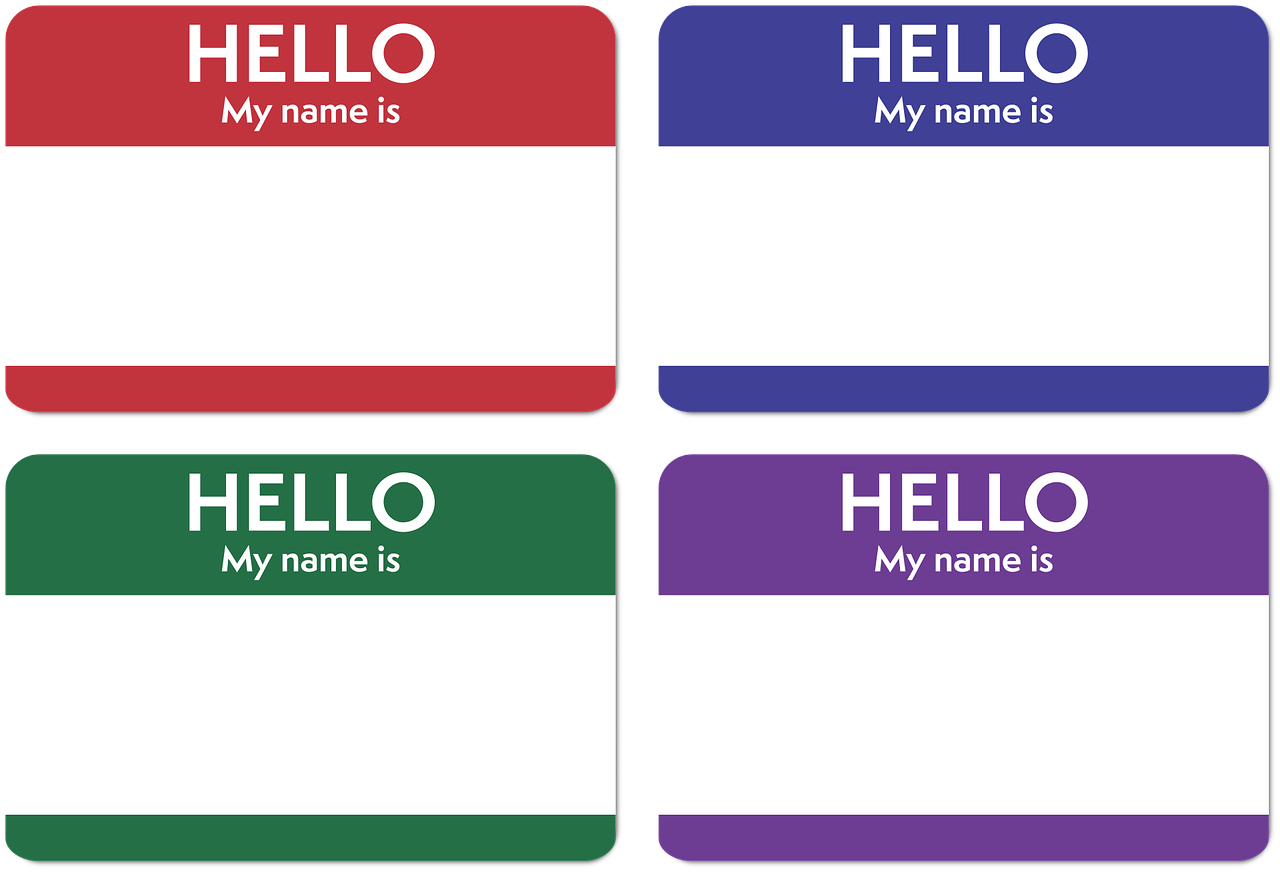
Image via Pixabay. Public Domain.
Well.
Then I met Kenyatta, a salesperson in a woman’s clothing store.
She did the usual, “I’ve opened up changing room six for you, and if you need any help, my name is Kenyatta.”
I said, “Ooo, like the statesman?”
She said, surprised, “Yes, that’s who I was named after. Um, I usually have to tell people it rhymes with pinata.”
Okay, NO.
I told her I thought she deserved better, and she seemed appreciative.
(I don’t think she’s going to start saying, “Like the first president of independent Kenya? Don’t you KNOW who that is?” But, gosh darn it, maybe she should.)
As soon as I put it that way, I realized that I hadn’t really been all that much more gracious than that undergrad professor I remembered. “Even if it’s embarrassing, correct me” put the responsibility on the student with the unconventional name. “Even if it’s embarrassing” told all my students that there might be a reason to be embarrassed about correcting your professor. “I want to get it right” told my students that I was just. so. special. because I wanted to learn their unconventional names. My effort to say something respectful actually made it sound like I was extending an extra, rather than a standard, courtesy.
Okay, so, NO. That script needed a change.
This year, for roll call: “My apologies if I mispronounce it the first time. Please let me know the correct pronunciation. You deserve to have your name pronounced correctly.”
This language emphasized my responsibility–to do right by them–rather than theirs. This language emphasized a universal standard–we all owe this to each other–rather than my super-special-niceness toward some poor “different” kid. This language equalized and normalized what might otherwise have been singled out and made exceptional.
I don’t know how much difference it will make to my students, but it makes a difference to me. I think I did my job better with that tiny change of emphasis. I think I told my students more clearly that college-educated folk learn to pronounce each others’ names. That’s just what we do.
Teachers at the beginning of the school year aren’t the only people who set the tone in this way and who might do their jobs better in this way.
HR folks, section leaders, orientation directors, managers, bosses, employers of all sorts can communicate expectations, foster a culture of equality, and welcome new employees well when they handle unfamiliar names appropriately.
Allowing some room for regional accents, we can, in general, learn to pronounce people’s names correctly, no matter what naming cultures we or they come from. And we can, in our language about our own learning curve, acknowledge whose responsibility the learning is.
“I can tell I’m not getting it quite right. Can you help me again?”
Not “What is it again? It’s hard.”
Or, “I’m so bad with ethnic names. What is it again?”
“Friends, let me introduce [pause] [name pronounced correctly, slowly]. She will be working with you on [job-related thing]. Please welcome [name pronounced correctly, at normal speed] and orient her to our project.”
Not “All right guys, here’s your new co-worker [name pronounced fast and slightly wrong]. Make her feel welcome. Try to learn her name right. [hearty guffaw]”
“No, don’t apologize. I’ve learned to pronounce Socrates and Beethoven and Krzyzewski and Keanu. I can learn Damrithamanij. Don’t let me off the hook on this.”
Not, “That doesn’t sound how it’s spelled. What kind of name is that, anyway?”
“I’m sorry. I was saying it wrong because we have another employee with the same spelling whose name is de HAY-zoos. I will remember from now on that your name is de hay-SOOS.”
Not,”Oh, I’ll try to remember that you pronounce it differently than the other De Jesus I know.”
Or, “Oh. That’s not how Jorge in Accounting pronounces it. Why is yours different?”
And never, ever, EVER, “I’m just going to call you [nickname I made up].”
Previous Post

August 20, 2016
Al Roker Is The Bomb
Next Post

October 7, 2016 Locker Room Talk at the Workplace
Browse Our Archives
Select a Category Uncategorized
Select a Month July 2017 February 2017 October 2016 August 2016 June 2016 April 2016 March 2016 January 2016 December 2015 November 2015 October 2015 September 2015 August 2015 July 2015 June 2015 May 2015 April 2015 March 2015
Follow Us!
TAKE THE
Religious Wisdom Quiz
Who said, "Repent, for the kingdom of heaven is at hand"?
Select your answer to see how you score.
Jesus Isaiah Peter John the Baptist
Related posts from Profession of Faith

Professional Integrity in Uncertain Times, Part II

Professional Integrity in Uncertain Times

Conscientiousness Matters: He Who is Faithful in a...

Quadrennial Professionalism Reminder
TRENDING AT PATHEOS Careers, Workplace and Religion

St. Francis by Bill Droel Pope Leo XIV declares 2026 as “Year...

Catholics are schooled in the faith by memorizing dogmatic points and lots...

The Good News of Our Human Limitations -...
After another day of trying to meet deadlines and working on projects,...

Quiet Holy Attentiveness (podcast) with Sarah Clarkson
We know that quiet is an essential aspect of the spiritual life,...

Every Vocation Everywhere All At Once
What is a vocation? How does it endure through the years? Can...

I promise this is not going to become a Taylor Swift Studies...
view all Careers, Workplace and Religion blogs
Ad-Free & Subscriber Log-In Subscription Support
- About Us
- 2026 Calendar
- Videos
- Podcasts
- Library of World Religions
- Faith In Media Tracker
- Advertise With Us
- Write for Us
- Privacy Policy
- Terms of Service
- Do Not Sell My Data
- Contact Us
- Radiant Digital
- Manage Newsletter Subscriptions
- Unsubscribe From Notifications
- Sitemap
Copyright 2008-2026, Patheos. All rights reserved.
Subscription Support Ad-Free & Subscriber Log-In
Follow Patheos