
BuddhistCatholicContemplativeEvangelicalGeneral ChristianHinduJewishLatter-day SaintMuslimNew VisionsProgressive Christian
Beliefs
- Buddhist
- Catholic
- Contemplative
- Evangelical
- General Christian
- Hindu
- Jewish
- Latter-day Saint
- More Voices
- Muslim
- New Visions
- Pagan
- Progressive Christian
Topics
- Religion News
- Food and Religion
- Sports and Religion
- Religious Art
- Religious Music and Entertainment
- Religious Events
- History and Religion
- Style and Religion
- Politics and Religion
- Women in Religion
- Recreation Outdoors and Religion
- Business Finance and Religion
- Careers Workplace and Religion
- Education and Religion
- Family Parenting and Religion
- Health Fitness and Religion
- Home and Religion
- Relationships and Religion
- Technology and Religion
- Travel and Religion
Columnists
- Buddhist Columnists
- Business Finance and Religion Columnists
- Careers Workplace and Religion Columnists
- Catholic Columnists
- Contemplative Columnists
- Education and Religion Columnists
- Evangelists Columnists
- Family Parenting and Religion Columnists
- General Christian Columnists
- Health Fitness and Religion Columnists
- Hindu Columnists
- History and Religion Columnists
- Home and Religion Columnists
- Jewish Columnists
- More Voices Columnists
- Latter Day Columnists
- Muslim Columnists
- New Visions Columnists
- Nonreligious Columnists
- Pagan Columnists
- Politics and Religion Columnists
- Progressive Columnists
- Recreation Outdoors and Religion Columnists
- Relationships and Religion Columnists
- Religion News Columnists
- Religious Art Columnists
- Religious Events Columnists
- Religious Music and Entertainment Columnists
- Sports and Religion Columnists
- Style and Religion Columnists
- Technology and Religion Columnists
- Travel and Religion Columnists
- Women in Religion Columnists
Resource Library
- 2026 Calendar
- Library of World Religions
- The 100 Most Holy Places on Earth
- Patheos Answers
- Podcasts
- Videos
- Faith Leaders Database
- Anglican Episcopalian
- Bahai
- Baptist
- Buddhism
- Christianity
- Confucianism
- Eastern Orthodoxy
- Hinduism
- Holiness and Pentecostal
- ISKCON
- Islam
- Judaism
- Lutheran
- Methodist
- The Church of Jesus Christ of Latter-day Saints
- New Age
- Paganism
- Presbytarian and Reformed
- Protestantism
- Religion Behind the Scenes
- Roman Catholic
- Scientology
- Shia Islam
- Sikhism
- Sufism
- Sunni Islam
- Taoism
- Zen
- See all religions
Research Tools
 Ad-Free & Subscriber Log-In Subscription Support
Ad-Free & Subscriber Log-In Subscription Support
Follow Patheos 

- Trending:
- Forgiveness
- |
- Marriage
- |
- Consciousness
- |
- Death Penalty
- |
- Election
- |
- Halloween
 Profession of Faith
- Home
- Careers, Workplace and Religion
- Teaching Unprofessionalism
Teaching Unprofessionalism
Last updated on: August 24, 2015 at 7:16 am by Sarah Conrad Sours
Teaching Unprofessionalism 2015-08-24T07:16:26-06:00 Sarah Conrad Sours
Patheos Explore the world's faith through different perspectives on religion and spirituality! Patheos has the views of the prevalent religions and spiritualities of the world.
For the second time this summer, those of us who have ever been patients under anesthesia cringed and hoped it hadn’t happened to us. An essay published this past week in the Annals of Internal Medicine highlighted one more danger we’d rather not worry about: the possibility that medical caregivers misbehave when patients are at their most vulnerable.
This is not actually news, and not just because we heard about just such an incident earlier this summer.
It’s not news because we’ve known for quite some time that residents of long-term medical and mental health facilities–that is, populations who are particularly vulnerable–are potentially subject to abuse and neglect precisely because they are all but invisible. The history of treatment for mental illnesses is particularly deplorable, but let us not practice chronological snobbery: it is not only in pre-modern insane asylums that patients have been dehumanized, physically abused, and forcibly sterilized.
Those are “them,” though, and we’re “us.”
That is, most of us in a position to read newspaper and internet accounts of such horrors are protected from them, to a degree, by not ourselves being in such an institution.
But anyone might find herself in an emergency room, or dental operating room, or little outpatient operating room in his doctor’s office. Any of us might find ourselves vulnerable to abuse, humiliation, or cruelty.
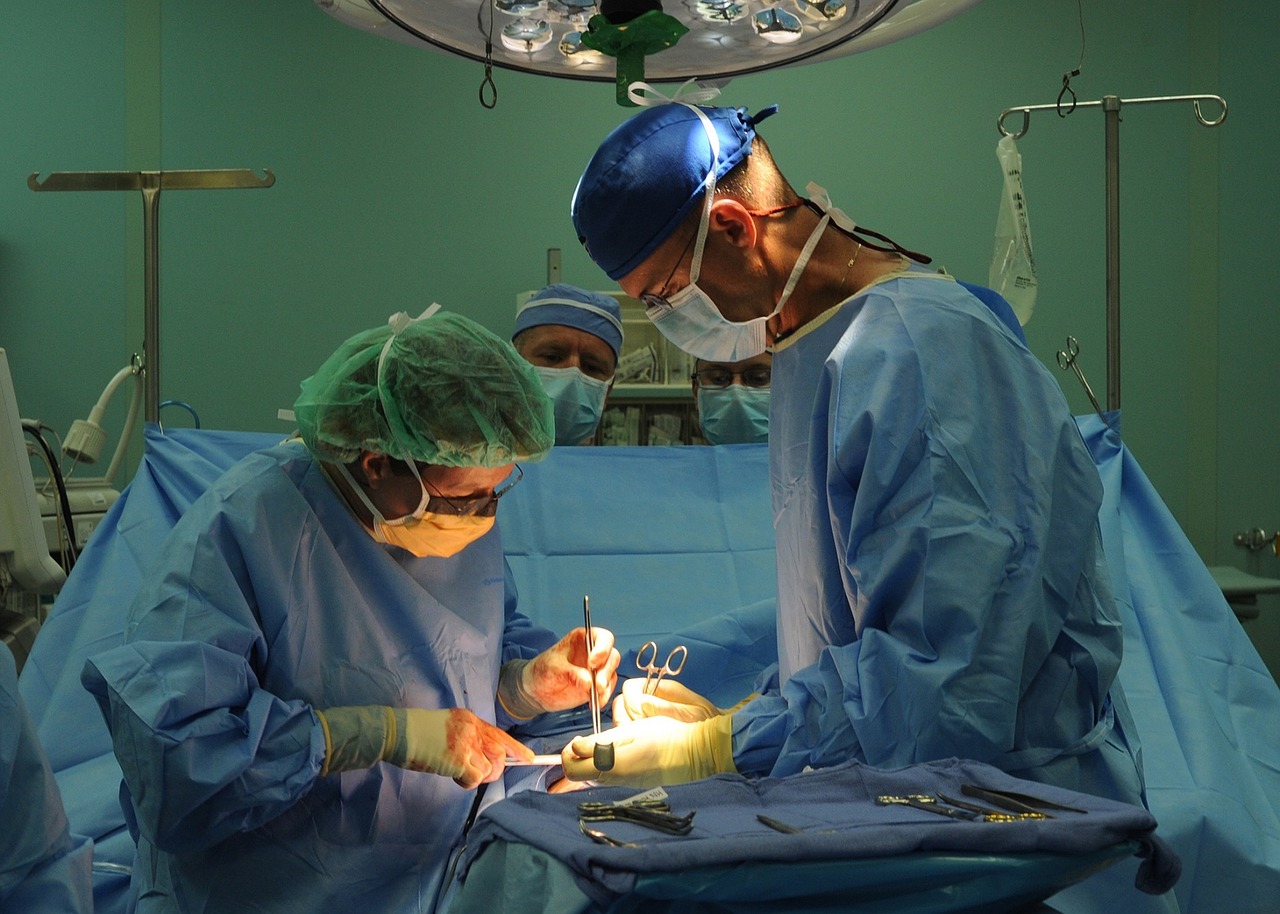
Image via Pixabay. Public Domain.
We are always just a bit vulnerable when we are in a medical setting. From the medical history (Do I tell them about my past drug use? I’ll round down, shall I, when they ask how much alcohol I drink per week? Is my mother’s bipolar disorder relevant? Does he really have to know about that abortion when I was sixteen?) to the operating table (Do you think they cleaned those instruments properly? She looks about twelve years old–how many spinal punctures has she actually done? Why are they talking about their vacations while I’m sitting here with my [random organ that’s supposed to be internal] on the outside of my body??), fears abound.
The greatest fear, after the fear of outright incompetence, is that the one supposed to be caring for us is not a caring person.
The two incidents described in the Annals both involved medical professionals behaving unprofessionally, even if they didn’t actually harm patients or break the law. They were, in the words of the anesthesiologist quoted, assholes, even if they were life-saving assholes. Both incidents involved unconscious women being mocked in sexual (and in the one case racist) ways by the very person charged with her safety and care.
The thing that struck me most about the essay, though, was that the people most upset by the behavior were the people least in a position to do anything about it. The stories were told by people who were, during the incidents themselves, medical students. Though not as vulnerable as the patients whose abuse they witnessed, they were themselves vulnerable to abuses of power by the doctors they might have considered reporting, and they would certainly have been socialized against objecting openly to their superiors’ behavior.
And if no one objected to it, they would have learned that it was unobjectionable.
Thank goodness for the anesthesiologist who cried foul, in the second story.
Thank goodness for the journal editors for publishing the stories–their way of, in essence, crying foul.
Thank goodness, even, for the essay writer, who recognized the moment, finally, to break his silence and confess his complicity–his willingness to “sway to the beat” the doctor is singing.
But mostly thank goodness for that anesthesiologist. But for her* willingness to call the assholes out, the essay writer might still be “swaying to the beat” he learned as a medical student.
*I cannot justify my assumption that the essay writer is male and the anesthesiologist female. But that is the casting in my head, when I imagine the scene.
Previous Post

August 17, 2015
On Lattices and Ladders
Next Post

September 7, 2015 The Work of Our Hands
Browse Our Archives
Select a Category Uncategorized
Select a Month July 2017 February 2017 October 2016 August 2016 June 2016 April 2016 March 2016 January 2016 December 2015 November 2015 October 2015 September 2015 August 2015 July 2015 June 2015 May 2015 April 2015 March 2015
Follow Us!
TAKE THE
Religious Wisdom Quiz
Who wrote most of the New Testament letters?
Select your answer to see how you score.
John James Peter Paul
Related posts from Profession of Faith

Professional Integrity in Uncertain Times, Part II

Professional Integrity in Uncertain Times

Conscientiousness Matters: He Who is Faithful in a...

Locker Room Talk at the Workplace
TRENDING AT PATHEOS Careers, Workplace and Religion

St. Francis by Bill Droel Pope Leo XIV declares 2026 as “Year...

Catholics are schooled in the faith by memorizing dogmatic points and lots...

The Good News of Our Human Limitations -...
After another day of trying to meet deadlines and working on projects,...

Quiet Holy Attentiveness (podcast) with Sarah Clarkson
We know that quiet is an essential aspect of the spiritual life,...

Every Vocation Everywhere All At Once
What is a vocation? How does it endure through the years? Can...

I promise this is not going to become a Taylor Swift Studies...
view all Careers, Workplace and Religion blogs
Ad-Free & Subscriber Log-In Subscription Support
- About Us
- 2026 Calendar
- Videos
- Podcasts
- Library of World Religions
- Faith In Media Tracker
- Advertise With Us
- Write for Us
- Privacy Policy
- Terms of Service
- Do Not Sell My Data
- Contact Us
- Radiant Digital
- Manage Newsletter Subscriptions
- Unsubscribe From Notifications
- Sitemap
Copyright 2008-2026, Patheos. All rights reserved.
Subscription Support Ad-Free & Subscriber Log-In
Follow Patheos