
BuddhistCatholicContemplativeEvangelicalGeneral ChristianHinduJewishLatter-day SaintMuslimNew VisionsProgressive Christian
Beliefs
- Buddhist
- Catholic
- Contemplative
- Evangelical
- General Christian
- Hindu
- Jewish
- Latter-day Saint
- More Voices
- Muslim
- New Visions
- Pagan
- Progressive Christian
Topics
- Religion News
- Food and Religion
- Sports and Religion
- Religious Art
- Religious Music and Entertainment
- Religious Events
- History and Religion
- Style and Religion
- Politics and Religion
- Women in Religion
- Recreation Outdoors and Religion
- Business Finance and Religion
- Careers Workplace and Religion
- Education and Religion
- Family Parenting and Religion
- Health Fitness and Religion
- Home and Religion
- Relationships and Religion
- Technology and Religion
- Travel and Religion
Columnists
- Buddhist Columnists
- Business Finance and Religion Columnists
- Careers Workplace and Religion Columnists
- Catholic Columnists
- Contemplative Columnists
- Education and Religion Columnists
- Evangelists Columnists
- Family Parenting and Religion Columnists
- General Christian Columnists
- Health Fitness and Religion Columnists
- Hindu Columnists
- History and Religion Columnists
- Home and Religion Columnists
- Jewish Columnists
- More Voices Columnists
- Latter Day Columnists
- Muslim Columnists
- New Visions Columnists
- Nonreligious Columnists
- Pagan Columnists
- Politics and Religion Columnists
- Progressive Columnists
- Recreation Outdoors and Religion Columnists
- Relationships and Religion Columnists
- Religion News Columnists
- Religious Art Columnists
- Religious Events Columnists
- Religious Music and Entertainment Columnists
- Sports and Religion Columnists
- Style and Religion Columnists
- Technology and Religion Columnists
- Travel and Religion Columnists
- Women in Religion Columnists
Resource Library
- 2026 Calendar
- Library of World Religions
- The 100 Most Holy Places on Earth
- Patheos Answers
- Podcasts
- Videos
- Faith Leaders Database
- Anglican Episcopalian
- Bahai
- Baptist
- Buddhism
- Christianity
- Confucianism
- Eastern Orthodoxy
- Hinduism
- Holiness and Pentecostal
- ISKCON
- Islam
- Judaism
- Lutheran
- Methodist
- The Church of Jesus Christ of Latter-day Saints
- New Age
- Paganism
- Presbytarian and Reformed
- Protestantism
- Religion Behind the Scenes
- Roman Catholic
- Scientology
- Shia Islam
- Sikhism
- Sufism
- Sunni Islam
- Taoism
- Zen
- See all religions
Research Tools
 Ad-Free & Subscriber Log-In Subscription Support
Ad-Free & Subscriber Log-In Subscription Support
Follow Patheos 

- Trending:
- Forgiveness
- |
- Marriage
- |
- Consciousness
- |
- Death Penalty
- |
- Election
- |
- Halloween
 Preventing Grace
- Home
- Evangelical
- Mozart and Medusa
Mozart and Medusa
Last updated on: January 29, 2024 at 1:14 pm by Anne Kennedy
Mozart and Medusa 2024-01-29T13:14:04-04:00 Anne Kennedy
Patheos Explore the world's faith through different perspectives on religion and spirituality! Patheos has the views of the prevalent religions and spiritualities of the world.
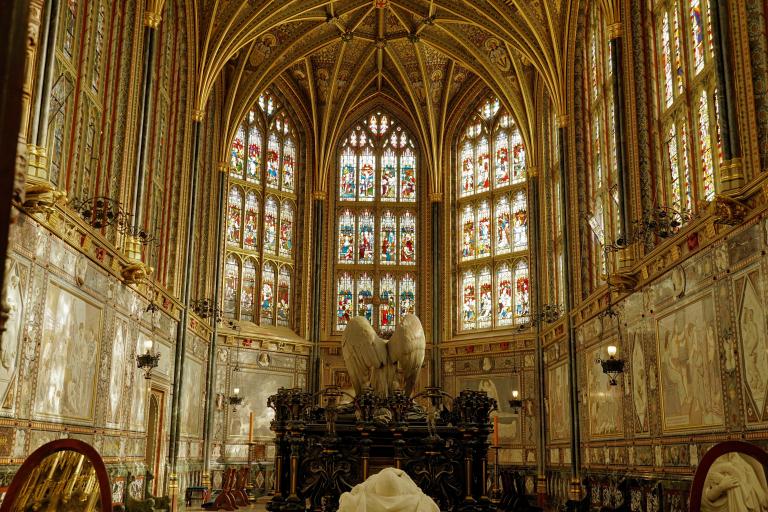
Yesterday after church I succeeded in herding a whole flock of young people across town, in the snow, to hear a local production of Mozart’s Requiem. It’s one of my favorite pieces of music, being so tragic and so beautiful, that though it was on the wrong day and at the wrong time of day, I jostled and maneuvered everyone to have that single hour free. All my kids have heard it many times, but never in person, live as it were, and so, despite the weather, and the usual complications of a long day of worship, Sunday school, and lunch we got ourselves together just in time to find our seats.
It is always discomfiting to encounter what once used to be known as “Church Music” but now probably falls under the “Classical Music” rubric out in the wilds of a secular world. All the context has been stripped away and the music hangs out there almost by itself, strange and alone, like a sort of relic to gods unknown. The four soloists brought this discomfort visually to the fore by wearing ordinary concert fare–the women resplendent in ball gowns of shimmering pale blue with sequins and dazzling red satin, the men in better-than-usual cut business casual. The blend of their voices with the choir was, at least from my point of view, divine. But it was bewildering to hear the words of church in such a setting, especially after we, in our service, sang some Getty songs and a couple of solid old Chestnut hymns. Why aren’t all the singers in choir robes, I wondered to myself as I sipped my merlot–for, no lie, our local Philharmonic sells little cups of wine with lids that you can take with you to your seat–and why isn’t this a cathedral? When the lights over the audience–would that it could have been a congregation–fell and the stage–would that it had could have been a chancel–blazed in glory, someone from the Chamber of Commerce came to the mic and bid us all to enjoy the “Show” for that, indeed, is what this beautiful music has become.
I love the whole Requiem but am always bold over by the Sequence, ‘Dies irae, dies illa,’ in English:
‘Day of wrath, day of anger
will dissolve the world in ashes,
as foretold by David and the Sibyl.
Great trembling there will be
when the Judge descends from heaven
to examine all things closely.’
Here’s just that bit if you want to listen to it on YouTube:
The words, so familiar usually, took on a poignant resonance yesterday, the notes resounding over a room full of people who have no more recollection of what that “day” refers to, nor who is angry or why.
Over the last week, there has been a bitter back and forth in the highways and byways of Christian Twitter. The “debate”–though that is not at all the word I’m groping for–is over the adoption of Medusa as a trop, as some kind of icon of wrath and recrimination in the argument over women in the church. I am slowly working my thoughts out on the particulars of that debate and don’t want to be rushed. The trouble is, instead of becoming more reasonable, the quarrel is taking on an almost mythic-level aesthetic. The push and pull, the reaction producing another reaction, like a pendulum swinging back and forth, back and forth, swinging farther out each time, is like the banging of the drum in the middle of the Requiem—predictable, and full of doom.
Here is no progression towards some greater knowledge or understanding, but rather a reeling back and forth, and the long journey from one pole to the other is much wrath and vexation.
The Sequence in the Requiem is about God’s wrath, about which we are given fair warning. One of the signs that God is angry is in the proliferation of human anger. Peace and tranquility only come about when God restrains our wrath and indignation against him. When he withdraws his hand, though we think we will be happier than ever, our anger overflows like wine spilling out of a cup, being poured without attention.
Just before the Sequence, in the Requiem, is the Kyrie, which my church will sing every Sunday of Lent. It’s simple—deceptively so—and is the only remedy for all the troubles and arguments we share:
Lord, have mercy upon us.
Christ have mercy upon us.
Lord have mercy upon us.
Find me on Substack!
Previous Post

January 22, 2024
The Paper Dolls of Polyamory
Next Post

February 5, 2024 Can A Political Party Stand Between You And Jesus?
Recent Comments
"Do you take dish soap with you? Or just rely on the boiling water to ..."
"This is brilliant. The fam has been watching the re-make, but I have avoided it ..."
"The depraved don't know that they are depraved."
"I'm sorry to hear that (ie 2.) I do hope if you get to enjoy ..."
Browse Our Archives
Select a Category books Catechesis of the Good Shepherd Children in Conversation culture watch Daily Devotions Demotivations with Anne faith alone for the grandparents GAFCON In conversation with children In the News Kitchen Notes Lambeth Learning Notes Life Going On Men are Human Notes from Home Pictures Reading the Bible Saturday Links Sermons Signs of the Apocalypse The Bad Word Association The Prayer of Jonah Travel Notes Uncategorized Witless Wednesdays Work and the Christian
Select a Month June 2024 May 2024 April 2024 March 2024 February 2024 January 2024 November 2023 October 2023 September 2023 August 2023 July 2023 June 2023 May 2023 April 2023 March 2023 February 2023 January 2023 December 2022 November 2022 October 2022 September 2022 July 2022 May 2022 April 2022 March 2022 February 2022 January 2022 December 2021 November 2021 October 2021 September 2021 August 2021 July 2021 June 2021 May 2021 April 2021 March 2021 February 2021 January 2021 December 2020 November 2020 October 2020 September 2020 August 2020 July 2020 June 2020 May 2020 April 2020 March 2020 February 2020 January 2020 December 2019 November 2019 October 2019 September 2019 August 2019 July 2019 June 2019 May 2019 April 2019 March 2019 February 2019 January 2019 December 2018 November 2018 October 2018 September 2018 August 2018 July 2018 June 2018 May 2018 April 2018 March 2018 February 2018 January 2018 December 2017 November 2017 October 2017 September 2017 August 2017 July 2017 June 2017 May 2017 April 2017 March 2017 February 2017 January 2017 December 2016 November 2016 October 2016 September 2016 August 2016 July 2016 June 2016 May 2016 April 2016 March 2016 February 2016 January 2016 December 2015 November 2015 October 2015 September 2015 August 2015 July 2015 June 2015 May 2015 April 2015 March 2015 February 2015 January 2015 December 2014 November 2014 October 2014 September 2014 August 2014 July 2014 June 2014 May 2014 April 2014 March 2014 February 2014 January 2014 December 2013 November 2013 October 2013 September 2013 August 2013 July 2013 June 2013 May 2013 April 2013 March 2013 February 2013 January 2013 December 2012 November 2012 October 2012 September 2012 August 2012 July 2012 June 2012 May 2012 April 2012 March 2012 February 2012 January 2012 December 2011 November 2011 October 2011 September 2011 August 2011 July 2011 June 2011 May 2011 April 2011 March 2011 February 2011 January 2011 December 2010 November 2010 October 2010 September 2010 August 2010 July 2010 June 2010 May 2010 April 2010 March 2010 February 2010 January 2010 December 2009 November 2009 October 2009 September 2009 August 2009 July 2009 June 2009 May 2009 April 2009 March 2009 February 2009 January 2009 December 2008 November 2008 October 2008 September 2008 August 2008 July 2008 June 2008 May 2008 April 2008 March 2008 February 2008 January 2008 December 2007 November 2007 October 2007 September 2007 August 2007 July 2007 June 2007 May 2007 April 2007 March 2007 February 2007 January 2007 December 2006 November 2006 October 2006
Follow Us!
TAKE THE
Religious Wisdom Quiz
Who wrote the Book of Acts?
Select your answer to see how you score.
Luke Mark Paul Peter
Books by This Author Books by Anne Kennedy
Related posts from Preventing Grace


I'm Over Forty And I Won't Be Reading...

I Will Never Stop Talking About Jesus

TRENDING AT PATHEOS Evangelical

The REST of Your Life: A Creative Wrestles...
This week I had a conversation with a good friend from church....

How the author of the world's best hymn...
I've been working with John Newton for a while now. This makes...

Long before this Lectio Divina, Psalm 130 - the song - started...

What About the Trees? Another Living Parable
After I finished writing the last article about falling leaves as a...

Why Classical Education Is a Conversation, Not a...
Come and Read: Joy in Classical Education When I was a little...

Cornell University has received a great deal of negative publicity and intense...
view all Evangelical blogs
Ad-Free & Subscriber Log-In Subscription Support
- About Us
- 2026 Calendar
- Videos
- Podcasts
- Library of World Religions
- Faith In Media Tracker
- Advertise With Us
- Write for Us
- Privacy Policy
- Terms of Service
- Do Not Sell My Data
- Contact Us
- Radiant Digital
- Manage Newsletter Subscriptions
- Unsubscribe From Notifications
- Sitemap
Copyright 2008-2026, Patheos. All rights reserved.
Subscription Support Ad-Free & Subscriber Log-In
Follow Patheos