
BuddhistCatholicContemplativeEvangelicalGeneral ChristianHinduJewishLatter-day SaintMuslimNew VisionsProgressive Christian
Beliefs
- Buddhist
- Catholic
- Contemplative
- Evangelical
- General Christian
- Hindu
- Jewish
- Latter-day Saint
- More Voices
- Muslim
- New Visions
- Pagan
- Progressive Christian
Topics
- Religion News
- Food and Religion
- Sports and Religion
- Religious Art
- Religious Music and Entertainment
- Religious Events
- History and Religion
- Style and Religion
- Politics and Religion
- Women in Religion
- Recreation Outdoors and Religion
- Business Finance and Religion
- Careers Workplace and Religion
- Education and Religion
- Family Parenting and Religion
- Health Fitness and Religion
- Home and Religion
- Relationships and Religion
- Technology and Religion
- Travel and Religion
Columnists
- Buddhist Columnists
- Business Finance and Religion Columnists
- Careers Workplace and Religion Columnists
- Catholic Columnists
- Contemplative Columnists
- Education and Religion Columnists
- Evangelists Columnists
- Family Parenting and Religion Columnists
- General Christian Columnists
- Health Fitness and Religion Columnists
- Hindu Columnists
- History and Religion Columnists
- Home and Religion Columnists
- Jewish Columnists
- More Voices Columnists
- Latter Day Columnists
- Muslim Columnists
- New Visions Columnists
- Nonreligious Columnists
- Pagan Columnists
- Politics and Religion Columnists
- Progressive Columnists
- Recreation Outdoors and Religion Columnists
- Relationships and Religion Columnists
- Religion News Columnists
- Religious Art Columnists
- Religious Events Columnists
- Religious Music and Entertainment Columnists
- Sports and Religion Columnists
- Style and Religion Columnists
- Technology and Religion Columnists
- Travel and Religion Columnists
- Women in Religion Columnists
Resource Library
- 2026 Calendar
- Library of World Religions
- The 100 Most Holy Places on Earth
- Patheos Answers
- Podcasts
- Videos
- Faith Leaders Database
- Anglican Episcopalian
- Bahai
- Baptist
- Buddhism
- Christianity
- Confucianism
- Eastern Orthodoxy
- Hinduism
- Holiness and Pentecostal
- ISKCON
- Islam
- Judaism
- Lutheran
- Methodist
- The Church of Jesus Christ of Latter-day Saints
- New Age
- Paganism
- Presbytarian and Reformed
- Protestantism
- Religion Behind the Scenes
- Roman Catholic
- Scientology
- Shia Islam
- Sikhism
- Sufism
- Sunni Islam
- Taoism
- Zen
- See all religions
Research Tools
 Ad-Free & Subscriber Log-In Subscription Support
Ad-Free & Subscriber Log-In Subscription Support
Follow Patheos 

- Trending:
- Forgiveness
- |
- Marriage
- |
- Consciousness
- |
- Death Penalty
- |
- Election
- |
- Halloween
 Preventing Grace
- Home
- Evangelical
- It Was the Will of God to Crush Him
It Was the Will of God to Crush Him
Last updated on: April 15, 2022 at 1:30 pm by Anne Kennedy
It Was the Will of God to Crush Him 2022-04-15T08:36:17-04:00 Anne Kennedy
Patheos Explore the world's faith through different perspectives on religion and spirituality! Patheos has the views of the prevalent religions and spiritualities of the world.
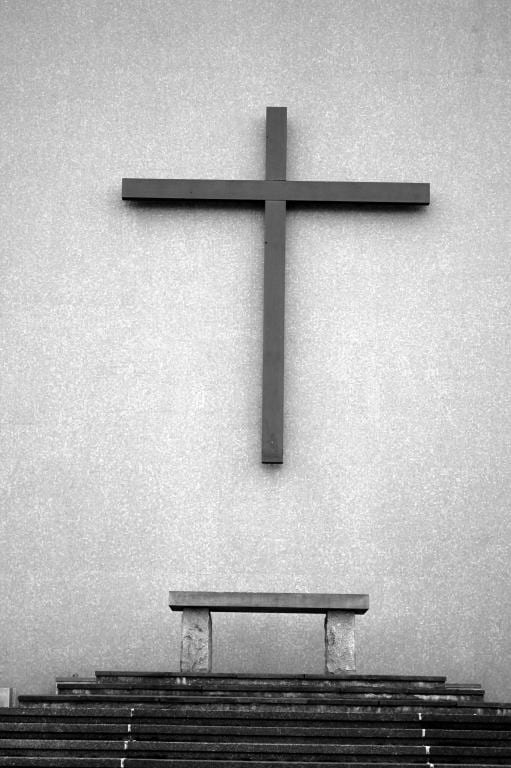
Earlier this week I came across an article in the Atlantic that I like so much. The author articulates a trouble faced not just by married people, but really all of us, in one way or another. I read it, in fact, when my children were rearranging their rooms. It is a piece by someone who wrote a book called This Is How Your Marriage Ends. A shortened version of his thesis is that what you do in your day-to-day life with other people has a lot more significance, meaning, if you will, then the thing itself. He used himself as a bad example. He was unwilling ever to take the glass he had stopped drinking out of, and reach down and put it in the dishwasher. This, he said, was just one among many actions that his wife wanted him to perform, but that he didn’t see the need to do. He puts it this way:
I wanted my wife to agree that when you put life in perspective, a drinking glass by the sink is simply not a big problem that should cause a fight. I thought she should recognize how petty and meaningless it was in the grand scheme of life. I repeated that train of thought for the better part of 12 years, waiting for her to finally agree with me.
Of course, as you have probably guessed, she did not agree with him. He writes:
Hundreds, maybe thousands of times, my wife tried to communicate that something was wrong. That something hurt. But that doesn’t make sense, I thought. I’m not trying to hurt her; therefore, she shouldn’t feel hurt.
When it was too late, when their marriage had ended by the death of, he says, thousands of paper cuts, he finally understood, he writes, that:
A dish by the sink in no way feels painful or disrespectful to a spouse who wakes up every day and experiences a marriage partner who communicates in both word and action how important and cherished their spouse and relationship are…My wife communicated pain and frustration over the frequent reminders she encountered that told her over and over and over again just how little she was considered when I made decisions.
And then he says this, which is the money bit:
If I had to distill the problems in failed relationships down to one idea, it would be our colossal failure to make the invisible visible, our failure to invest time and effort into developing awareness of what we otherwise might not notice in the busyness of daily life.
So leave aside the busy considerations of your life and go with me for a moment to a tense and desperate scene. This isn’t one of those times where you’re rushing out the door, trying to remember everything you have to do, not particularly worried about the state of your soul, or your relationships, or what God thinks about any of it. No, for you, time has stopped. “After these things” narrates the writer of Genesis,
God tested Abraham and said to him, ‘Abraham!’ And he said, ‘Here I am.’ He said, ‘Take your son, your only son Isaac, whom you love, and go to the land of Moriah, and offer him there as a burnt offering on one of the mountains of which I shall tell you.’ So Abraham rose early in the morning, saddled his donkey, and took two of his young men with him, and his son Isaac.
And he did it deliberately, almost quickly, purposefully. God, who had so often spoken to him, who had kept all his promises—wealth, a name, a son, a new home—was now demanding back the very thing he had said was the cornerstone, the future, the solid foundation of all those promises. How could this be? This was a voice Abraham trusted, one he knew. It wasn’t just that God gave him nice things, it was that when God spoke to him, he was always ready to leave everything behind and follow him. And so now, when something incomprehensible is being asked, he gets up immediately and does it. And he also
cut the wood for the burnt offering and arose and went to the place of which God had told him. And on the third day Abraham lifted up his eyes and saw the place from afar. Then Abraham said to his young men, ‘Stay here with the donkey; I and the boy will go over there and worship and come again to you.’
So we see that Abraham’s trust in God was complete. He did not hesitate to obey, and he knew also that God had the power to undo, or redo, the thing he had promised—to give the son, to take then son, and then to give back the son.
And yet, it was his son, his only son, whom he loved. Much farther off, Isaiah, seeing the crucifixion of Jesus ahead of time, said, “Yet it was the will of the LORD to crush him.” And in this single line, I think we might gather up the grief and horror of what God is asking of both Abraham and Isaac. For Isaac might have run away as the realization of what his father was going to do began to dawn. For
Abraham took the wood of the burnt offering and laid it on Isaac his son. And he took in his hand the fire and the knife. So they went both of them together. And Isaac said to his father Abraham, ‘My father!’ And he said, ‘Here I am, my son.’ He said, ‘Behold, the fire and the wood, but where is the lamb for a burnt offering?’ Abraham said, ‘God will provide for himself the lamb for a burnt offering, my son.’ So they went both of them together.
The human will is an elusive, a fraught thing. What is it? You can’t see it, except in the outflow, both for good and for evil, of human civilization. You can’t see it, but you can feel its power. It is like the wind. It is what gets you up out of bed in the morning, and maybe even to work. I will go to the store, I say to myself, and by that, I mean that I will get up and go. I can do it, and I will. But what of the divine will? Why does God do any of the things he does? And why, most particularly, would it be God’s will to crush his Son? And what sort of crushing is it? Why would the Son take up the wood, and of his own will, walk to the place where he would die?
Why do you sometimes accept, without giving up and running away, to be crushed by God? For isn’t that what happens too many times, in the crucible of life? That God crushes you, brings about a circumstance or person that threatens to ruin you? You look up from the pit of grief, from the mirey bog, your eyes dim from weeping, your throat parched, waiting and waiting for God to do something, anything to bring you into the land of the living? For
when they came to the place of which God had told him, Abraham built the altar there and laid the wood in order and bound Isaac his son and laid him on the altar, on top of the wood. Then Abraham reached out his hand and took the knife to slaughter his son. But the angel of the LORD called to him from heaven and said, ‘Abraham, Abraham!’ And he said, ‘Here I am.’ And he said, ‘Do not lay your hand on the boy or do anything to him, for now I know that you fear God, seeing you have not withheld your son, your only son, from me.’
And in so doing, God painted for us and for Abraham a picture, a shadowy form of the coming sacrifice of his own Son. All the sacrifices before this and after it might be summed up in Isaac being laid down on that altar and then being spared, and a mute animal being slain in his place. You should have died, your life forfeit to God, but God accepted the blood of the animal rather than human sacrifice for human sin. Until it was his own Son who took up the wood and went to his death. For, it was the will of God to crush him.
Because, it was the will of God not to crush you.
And yet, your will has to be crushed. You have to be crushed. Why? Why can’t you live the way you want to? Why can’t you carry on with your busy life, stopping for brief moments to be grateful that you have a life, of course, and to give back a little to the community? Why do you have to be crushed? Why do you have to bend your will painfully all the way to the wood, to the fire and the knife? Why inflict such a horrible traumatic pain on Abraham and Isaac? And you. Why is God crushing you by a thousand tiny, though sometimes not tiny, griefs and disappointments?
Surely you can look into the depths of your own heart and answer that question. Isn’t it your colossal failure to make the invisible visible? To give to God the love he is owed? To care for the people he puts in your way? To reach over and put the glass into the dishwasher, just once? To say no to yourself and yes to other people? It is the will of God to crush you because you have to be crushed. Your will, your total commitment to yourself has to die and die completely because it is the thing that is killing you and breaking everything. It is the will of God to crush you because he loves you.
And yet, it is not the crushing that you think it is going to be. For
Abraham lifted up his eyes and looked, and behold, behind him was a ram, caught in a thicket.
A ram, for Isaac. But for you, The Lamb that takes away the sins of the world—the only spotless, pure, innocent sacrifice that ever came about. It was the only one that only had to be offered once. It was a single, final, complete crushing of sin that never had to be offered again. There is no blood here, smeared over this table day after day. And there are places for us to sit. Indeed, though we are constantly reminded by many words and prayers of our need for that one, single, perfect oblation and satisfaction for the sins of the whole world, yet we merely pass through the shadow, the veil of his flesh, drawing near to the very throne of grace with confidence, our consciences washed clean by his blood. For God did not spare his own Son to make visible to you the depths of his love and his mercy. By his death he writes his will over yours, he forgives you all your colossal failures, he remembers your sins no more.
Previous Post

April 14, 2022
Thursday in Holy Week
Next Post

April 26, 2022 Is It the End of Time?
Browse Our Archives
Select a Category books Catechesis of the Good Shepherd Children in Conversation culture watch Daily Devotions Demotivations with Anne faith alone for the grandparents GAFCON In conversation with children In the News Kitchen Notes Lambeth Learning Notes Life Going On Men are Human Notes from Home Pictures Reading the Bible Saturday Links Sermons Signs of the Apocalypse The Bad Word Association The Prayer of Jonah Travel Notes Uncategorized Witless Wednesdays Work and the Christian
Select a Month June 2024 May 2024 April 2024 March 2024 February 2024 January 2024 November 2023 October 2023 September 2023 August 2023 July 2023 June 2023 May 2023 April 2023 March 2023 February 2023 January 2023 December 2022 November 2022 October 2022 September 2022 July 2022 May 2022 April 2022 March 2022 February 2022 January 2022 December 2021 November 2021 October 2021 September 2021 August 2021 July 2021 June 2021 May 2021 April 2021 March 2021 February 2021 January 2021 December 2020 November 2020 October 2020 September 2020 August 2020 July 2020 June 2020 May 2020 April 2020 March 2020 February 2020 January 2020 December 2019 November 2019 October 2019 September 2019 August 2019 July 2019 June 2019 May 2019 April 2019 March 2019 February 2019 January 2019 December 2018 November 2018 October 2018 September 2018 August 2018 July 2018 June 2018 May 2018 April 2018 March 2018 February 2018 January 2018 December 2017 November 2017 October 2017 September 2017 August 2017 July 2017 June 2017 May 2017 April 2017 March 2017 February 2017 January 2017 December 2016 November 2016 October 2016 September 2016 August 2016 July 2016 June 2016 May 2016 April 2016 March 2016 February 2016 January 2016 December 2015 November 2015 October 2015 September 2015 August 2015 July 2015 June 2015 May 2015 April 2015 March 2015 February 2015 January 2015 December 2014 November 2014 October 2014 September 2014 August 2014 July 2014 June 2014 May 2014 April 2014 March 2014 February 2014 January 2014 December 2013 November 2013 October 2013 September 2013 August 2013 July 2013 June 2013 May 2013 April 2013 March 2013 February 2013 January 2013 December 2012 November 2012 October 2012 September 2012 August 2012 July 2012 June 2012 May 2012 April 2012 March 2012 February 2012 January 2012 December 2011 November 2011 October 2011 September 2011 August 2011 July 2011 June 2011 May 2011 April 2011 March 2011 February 2011 January 2011 December 2010 November 2010 October 2010 September 2010 August 2010 July 2010 June 2010 May 2010 April 2010 March 2010 February 2010 January 2010 December 2009 November 2009 October 2009 September 2009 August 2009 July 2009 June 2009 May 2009 April 2009 March 2009 February 2009 January 2009 December 2008 November 2008 October 2008 September 2008 August 2008 July 2008 June 2008 May 2008 April 2008 March 2008 February 2008 January 2008 December 2007 November 2007 October 2007 September 2007 August 2007 July 2007 June 2007 May 2007 April 2007 March 2007 February 2007 January 2007 December 2006 November 2006 October 2006
Follow Us!
TAKE THE
Religious Wisdom Quiz
According to Jesus, what should you do when you pray?
Select your answer to see how you score.
Only pray at church Pray loudly for show Pray in secret Pray once a year
Books by This Author Books by Anne Kennedy
Related posts from Preventing Grace
Dress for Action like an Anglican


Can A Political Party Stand Between You And...

TRENDING AT PATHEOS Evangelical

The REST of Your Life: A Creative Wrestles...
This week I had a conversation with a good friend from church....

How the author of the world's best hymn...
I've been working with John Newton for a while now. This makes...

Long before this Lectio Divina, Psalm 130 - the song - started...

What About the Trees? Another Living Parable
After I finished writing the last article about falling leaves as a...

Why Classical Education Is a Conversation, Not a...
Come and Read: Joy in Classical Education When I was a little...

Cornell University has received a great deal of negative publicity and intense...
view all Evangelical blogs
Ad-Free & Subscriber Log-In Subscription Support
- About Us
- 2026 Calendar
- Videos
- Podcasts
- Library of World Religions
- Faith In Media Tracker
- Advertise With Us
- Write for Us
- Privacy Policy
- Terms of Service
- Do Not Sell My Data
- Contact Us
- Radiant Digital
- Manage Newsletter Subscriptions
- Unsubscribe From Notifications
- Sitemap
Copyright 2008-2026, Patheos. All rights reserved.
Subscription Support Ad-Free & Subscriber Log-In
Follow Patheos