
BuddhistCatholicContemplativeEvangelicalGeneral ChristianHinduJewishLatter-day SaintMuslimNew VisionsProgressive Christian
Beliefs
- Buddhist
- Catholic
- Contemplative
- Evangelical
- General Christian
- Hindu
- Jewish
- Latter-day Saint
- More Voices
- Muslim
- New Visions
- Pagan
- Progressive Christian
Topics
- Religion News
- Food and Religion
- Sports and Religion
- Religious Art
- Religious Music and Entertainment
- Religious Events
- History and Religion
- Style and Religion
- Politics and Religion
- Women in Religion
- Recreation Outdoors and Religion
- Business Finance and Religion
- Careers Workplace and Religion
- Education and Religion
- Family Parenting and Religion
- Health Fitness and Religion
- Home and Religion
- Relationships and Religion
- Technology and Religion
- Travel and Religion
Columnists
- Buddhist Columnists
- Business Finance and Religion Columnists
- Careers Workplace and Religion Columnists
- Catholic Columnists
- Contemplative Columnists
- Education and Religion Columnists
- Evangelists Columnists
- Family Parenting and Religion Columnists
- General Christian Columnists
- Health Fitness and Religion Columnists
- Hindu Columnists
- History and Religion Columnists
- Home and Religion Columnists
- Jewish Columnists
- More Voices Columnists
- Latter Day Columnists
- Muslim Columnists
- New Visions Columnists
- Nonreligious Columnists
- Pagan Columnists
- Politics and Religion Columnists
- Progressive Columnists
- Recreation Outdoors and Religion Columnists
- Relationships and Religion Columnists
- Religion News Columnists
- Religious Art Columnists
- Religious Events Columnists
- Religious Music and Entertainment Columnists
- Sports and Religion Columnists
- Style and Religion Columnists
- Technology and Religion Columnists
- Travel and Religion Columnists
- Women in Religion Columnists
Resource Library
- 2026 Calendar
- Library of World Religions
- The 100 Most Holy Places on Earth
- Patheos Answers
- Podcasts
- Videos
- Faith Leaders Database
- Anglican Episcopalian
- Bahai
- Baptist
- Buddhism
- Christianity
- Confucianism
- Eastern Orthodoxy
- Hinduism
- Holiness and Pentecostal
- ISKCON
- Islam
- Judaism
- Lutheran
- Methodist
- The Church of Jesus Christ of Latter-day Saints
- New Age
- Paganism
- Presbytarian and Reformed
- Protestantism
- Religion Behind the Scenes
- Roman Catholic
- Scientology
- Shia Islam
- Sikhism
- Sufism
- Sunni Islam
- Taoism
- Zen
- See all religions
Research Tools
 Ad-Free & Subscriber Log-In Subscription Support
Ad-Free & Subscriber Log-In Subscription Support
Follow Patheos 

- Trending:
- Forgiveness
- |
- Marriage
- |
- Consciousness
- |
- Death Penalty
- |
- Election
- |
- Halloween
 Preventing Grace
- Home
- Evangelical
- Where Is God Finding His Joy During Covid?
Where Is God Finding His Joy During Covid?
Last updated on: October 25, 2020 at 8:04 am by Anne Kennedy
Where Is God Finding His Joy During Covid? 2020-10-25T08:04:37-04:00 Anne Kennedy
Patheos Explore the world's faith through different perspectives on religion and spirituality! Patheos has the views of the prevalent religions and spiritualities of the world.

This is a talk I gave on Friday night to a group of students. Enjoy!
Almighty God, whose most dear Son went not up to joy but first he suffered pain and went not into glory before he was crucified; mercifully grant that we, walking in the way of the cross, may find it none other than the way of life and peace, Amen.
At the beginning of this last week, I saw on Twitter that Amazon, who has managed to put a lot of smaller catalog oriented enterprises completely out of business, has—get this—gone into the catalog business. For real, they are sending out paper catalogs, like it’s the year 2000 or something. “That’s dumb,” I thought, and moved on. But only a day later I got one of these things in the mail. Not the thing I ordered from Amazon two whole weeks ago. No, that hasn’t come. Instead of that, I’ve gotten a paper catalog in the mail. Let me show it to you. It’s titled “Joy Delivered.” There are some well-styled woodland creatures fawning over some Amazon boxes on the front. When you open the cover, there is a nice, stiff piece of lined paper titled “Make a list, check it twice [could be anything, like hugs, hats, or talking mice.]” When you flip that page over, you find a recipe for cocoa. Turn over another page and you find “Hey Grownups”—ah, I see, this thing is for the little kiddies. And I have six of them, so that’s why this thing landed in my mailbox. There’s a word search! And a mad-libs page! And a little story! And some stickers! Everyone loves stickers. And, oh my word, so many toys pictured, including some horrible Baby Shark Amazon Exclusive devices that will play that all the time. Just use the promo code KIDSHOLIDAY and get three months of Amazon Kids+ for $.99. I am clearly supposed to leave this thing lying around so that all my kids can pour over it. Amazon has got wise on me. They have figured out that I’m not letting my little kids surf the internet all the time. They aren’t getting all the access they need. And they have billions of dollars at their disposal, so it’s not a problem for them to design a beautiful little catalog and ship it off to every single home in America.
The best part of this thing, I should mention, is that there are no prices listed. Just the names of the toys and the tracking codes. I mean, really, why do you need prices listed? Joy is priceless, and Amazon will bring it directly into your house if you just do a little bit of clicking. Nothing could be easier.
Well, nothing is easy in the time of covid. I have been trying to imagine what it would be like to be in your shoes right now. For me, it’s the uncertainty of everything that wears me down. At the beginning of the time of covid, we immediately went to couch church—which is as complicated, I imagine, as suddenly being an exclusively online student when you signed up, as it were, for an “in-person” education. But we rolled with it. We’re flexible. This is America. Amazon delivers, of course, and we’ve paid for prime.
I, as probably all of you, have learned a lot about myself and this culture in the last six months. I’ve learned that it really rots not being in control. I’ve learned how to wear a mask. I’ve learned how to clean with straight vinegar. But the chief thing I’ve learned is a new and bitter-tasting kind of joy, which I think we’ll see together if we look together at an ancient, but still poignantly relevant book of the Bible.
This talk is called: Where is God Finding His Joy in Covid? It’s meant to be a little bit funny. God doesn’t need to “find” joy. He already has it. He doesn’t need it delivered to his doorstep with a lot of extra plastic and cardboard to keep it safe. He is complete in himself. But God, in the beginning of time, did something very peculiar. He—who lacked nothing, who never needed to suffer, who never needed to worry about anything or change his plans or his mind or recalibrate his hopes or agonize over his budget or be anxious about the health of the one he loved best—this God decided to throw all that security and settled rest aside and join his way to us, coming into the very darkness that threatens to overwhelm us.
I don’t know if you have a Bible to hand, but if you do, open it up to the book of Zephaniah. Zephaniah, I should say, is one of my favorites. I love the minor prophets. I don’t know why, really, they are very depressing. If you ever try to read the Bible chronologically, by the time you get to Zephaniah you will be more downcast than ever in your life. But Zephaniah is astonishing because of its intense contrasts. It has some of the boldest passages of judgment. The wrath of God—his righteously hot anger against not only the sin of his chosen people, but of the sins of the whole world—leaps off the page. And, on the other hand, as one commentator put it, the only OT version of John 3:16 is in this very book.
Zephaniah means “he whom YHWH hides,” which feels strangely pertinent by the time you come to chapter 2. Most scholars agree it was written around the time that the Law was discovered in the temple during the reign of Josiah. Some of you might remember that story. Somehow the people to whom God had given the law, whom he had called out of Egypt to be his own, whom he had brought into the land he promised, to whom he had given safety and peace and a line of kings—these very people who should have prized the Bible above all else, managed instead to keep the “worship” of the temple going without actually having any copies of the scriptures to hand. So one day Hilkiah, the high priest, was rummaging around in one of those many rooms that line the courts of the Lord, thinking it might be good to clear away some of the dust and throw away, or at least mend, some of the heaps of broken furniture, when he happened to lay his hand on a scroll, which, when he unrolled it and began to read, struck him to the heart. It was the law—and when he faced its contents, he knew that he, his king, and his people were all doomed for they were in gross violation of the law of God.
Zephaniah was written right around that time—and it has haunting notes from the book of Deuteronomy. Haunting, because God seems always to say the same thing, from one generation unto another.
If you look at the second verse of chapter one, God says, “I will utterly sweep away everything from the face of the earth…I will sweep away man and beast; I will sweep away the birds of the heavens and the fish of the sea…” If you know your Bible, you’ll see that this is exactly a reversal of the order in which God created everything. First, he created the fish, then the birds, then the beasts, then man. But here, in his wroth, he’s going to get rid of humanity first, and then all the rest of his creation. And like in Genesis, after describing the order of creation and then its destruction, God narrows down for a more intimate look at the destruction part. He’s going to come—or stretch out his hand—against Judah and Jerusalem in particular. In verses 4, 5, and 6 he is particularly angry about the perversion of worship, that the people of Judah are worshiping Baal, that they do not trust him.
The rest of chapter 1 describes “The Day of the Lord.” Look what will happen on that day.
-God will prepare a sacrifice.
-God will punish all the wicked.
-Cries will be heard, and a “loud clash” from the hills.
-God will particularly punish those who say, ‘The Lord will not do good, nor will he do ill.’
-God will bring distress on all humanity so that they ‘walk like the blind’
And then look at what the day will be like.
-It will be a day of distress and anguish,
-of ruin and devastation,
-of darkness and gloom,
-a day of battle cry and trumpets.
And finally, see what God says to do on that day—fall silent.
Chapter 2 is all about God’s anger against the enemies of Judah. This is all about the desolation and destruction of the earth—the land being laid waste, useless, so that nothing grows, nothing can be made, no one can have what they need. They will all be hungry, unable to find any of the things that not only make life comfortable, but make life possible at all.
But look at verses 2 and 3. There’s something you can do before this happens. Before the burning anger of the Lord comes, you can, verse 3, “seek the Lord” and there is a certain attribute, or characteristic of the person who might do this. Those who are “humble,” who “do his just commands,” that means they are obedient, “who seek righteousness,” who “seek humility,” perhaps, says God, “you may be hidden on the day of the anger of the Lord.”
In chapter 3 God turns again to Jerusalem with the word “woe,” which is a way of saying “doom.” Terrible things will befall her. And why? Because she doesn’t listen, she can’t be corrected, she doesn’t trust God—that’s all verse 2. And then verse 8, “wait for me,” says God, for “all the earth will be consumed.”
Let’s just pause for a minute before going on and acknowledge that talking about God being angry is not a comfortable thing to do. Certainly, when I get to know someone for the first time and think about how great it would be if they would consider Jesus as a solution to their problems, would maybe put themselves in his hands, I don’t ever begin with, “Hey, did you know that God is really angry? And probably with you, personally? Actually, I don’t even know what you’ve done, but maybe?” Or, “Hey, want to talk about the wrath of God for a while?” These are not great conversation openers. And believe me, I don’t feel very comfortable right now, never mind the separation that we have with each other by means of this screen—both connected and separated in one uncomfortable moment.
But I think we can understand the feeling of anger. Even righteous anger. Not just over a stupid Amazon catalog. For example—and this is very fresh on my mind, so forgive me if I cry. My parents are missionaries in Africa, where I grew up. The whole time that they have lived there, my Aunt Sharon in Portland, Oregon stored all their stuff in her attic. As they came back and forth over the decades, they added their pictures, all my letters home from boarding school, my dad’s collection of irreplaceable Nigerian pipes, hand-dyed cloth and some leather boxes from Mali, boxes of language data that needed to be digitalized, my grandmother’s hand-embroidered rocker. They had sheet music and books because they read voraciously and play recorder and piano. There were beautiful things in the truck, which, in a sort of reversal of Amazon, you couldn’t get by clicking—stuff that was hard to get and you had to actually go there and handle, and buy it and bring it back. So anyway, covid forced my mom and dad back to the states, and they have bought a house, and so three weeks ago they flew to Oregon and rented a U-Haul, and packed their stuff in it, and started driving it back here. And then, in Indianapolis, someone stole the truck. Someone doubtless believing it would be full of TVs and computers or something. Unhappily for that person, the only electrical item in the truck was a thirty-year-old toaster. So, that’s sort of satisfying. Perhaps you might be able to join me, this evening, in not only feelings of anger, but of rage, of almost impossible to swallow wrath.
It’s the senselessness of the thing—beyond sense. It’s just stupid. This is how God feels when we destroy what he has made, what he has preserved, what he has thought about, and collected, and taken care of. This is what sin is, for the whole cosmos. Sin is when you ruin something, you destroy it, because of your selfishness, or your pride, or your belief that you know better than the person who designed you, who made you. This is the flood of anger that God feels when he looks at us—who he made for himself, to worship him, to trust him, to love him, knowing that that would be pure joy, unadulterated and unruined happiness—and yet we say over and over to him, no, no thanks. We steal his U-Haul truck and pretend that it’s no big deal.
So now let’s go to the last part of Zephaniah. Because there’s an answer to this. It’s not rage with no solution. It’s not “senseless” anger in the face of senseless sin.
Chapter 3 vs 9. First God is going to “change the speech of the people to a pure speech, so that “all of them call on the name of the Lord and serve him with one accord.” He’s going to gather all the people, all the nations to himself. After that, verse 11, you will not be “put to shame,” that is held accountable for “the deeds by which you have rebelled” against God. He’s going to take away the proud, he’s going to take away “haughtiness.” He’s going to make “you,” verse 12, into a people who are humble and lowly. These people will be the ones who were hidden back in chapter 2. They are going to be the people he was looking for, who were also looking for him. But he’s going to turn some of us who weren’t like that into those that were. Look, verse 13, they will “lie down and not be afraid.”
And finally, look at God’s joy in verse 14 through to the end. “You,’ says God, “will rejoice with all your heart” because “the Lord has taken away the judgments against you and he has cleared away your enemies. Jump down to verse 17, this is the verse I hope you go home from here and memorize. Look what God is going to do: “The Lord your God is in your midst, a mighty one who will save; he will rejoice over you with gladness; he will quiet you by his love; he will exult over you with loud singing.”
There are three things here—a loud rejoicing, a deep interior quietness, and an exaltation. I hope you see the stark contrast between the intimacy of this kind of joy, this rejoicing, and the kind of sweeping anger of the rest of the book. Where does this change from anger to rejoicing come from?
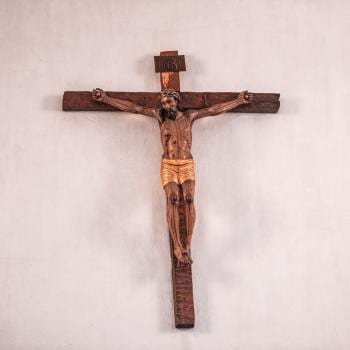
The answer is the Day of the Lord back in the first chapter. The judgment that God promised to pour out on all those who ruined everything, that very judgment God directed towards himself on the cross. He “prepared a sacrifice”—himself—” and the king’s son”—himself. This day of anguish and distress was his own. He walked—himself—into the very midst of our ruin. He took up the cross, not looking for an easy joy, some fleeting happiness that can be bought for so little at the expense of creation itself, No, he gave himself up so that, go back to verse 17, he could rejoice over you with gladness, he could stop in that deep contentment that you can feel when you look at someone you love and are grateful and quiet, as if no words could even begin to describe your joy and satisfaction, and then finally to exalt, to cry aloud about the happy vindication of you being put right, being recovered from the destructive, ruinous power of evil.
Where is God finding his joy right now? In you—when you go to him to find your joy. When you let everything else fall out of your hand and grab onto him, holding on no matter the circumstances of your life, as a humble, obedient, repentant child. God’s exaltation and joy over you cannot even be understood by you, let alone those around you, when you hide yourself in him on His own Day, the day of his wrath, the day of his cross.
I hope you will be encouraged by God’s great love for you, for which he was willing not to take up his joy alone, but first he walked to his cross, so that you might be encompassed in his own joy forever. I hope you will find some rest tonight, that you will rejoice yourself in his astonishing and merciful joy.
Previous Post

October 23, 2020
7 Takes on the Family
Next Post

October 26, 2020 Guide To Surviving The Autumn Podcast and Links
Browse Our Archives
Select a Category books Catechesis of the Good Shepherd Children in Conversation culture watch Daily Devotions Demotivations with Anne faith alone for the grandparents GAFCON In conversation with children In the News Kitchen Notes Lambeth Learning Notes Life Going On Men are Human Notes from Home Pictures Reading the Bible Saturday Links Sermons Signs of the Apocalypse The Bad Word Association The Prayer of Jonah Travel Notes Uncategorized Witless Wednesdays Work and the Christian
Select a Month June 2024 May 2024 April 2024 March 2024 February 2024 January 2024 November 2023 October 2023 September 2023 August 2023 July 2023 June 2023 May 2023 April 2023 March 2023 February 2023 January 2023 December 2022 November 2022 October 2022 September 2022 July 2022 May 2022 April 2022 March 2022 February 2022 January 2022 December 2021 November 2021 October 2021 September 2021 August 2021 July 2021 June 2021 May 2021 April 2021 March 2021 February 2021 January 2021 December 2020 November 2020 October 2020 September 2020 August 2020 July 2020 June 2020 May 2020 April 2020 March 2020 February 2020 January 2020 December 2019 November 2019 October 2019 September 2019 August 2019 July 2019 June 2019 May 2019 April 2019 March 2019 February 2019 January 2019 December 2018 November 2018 October 2018 September 2018 August 2018 July 2018 June 2018 May 2018 April 2018 March 2018 February 2018 January 2018 December 2017 November 2017 October 2017 September 2017 August 2017 July 2017 June 2017 May 2017 April 2017 March 2017 February 2017 January 2017 December 2016 November 2016 October 2016 September 2016 August 2016 July 2016 June 2016 May 2016 April 2016 March 2016 February 2016 January 2016 December 2015 November 2015 October 2015 September 2015 August 2015 July 2015 June 2015 May 2015 April 2015 March 2015 February 2015 January 2015 December 2014 November 2014 October 2014 September 2014 August 2014 July 2014 June 2014 May 2014 April 2014 March 2014 February 2014 January 2014 December 2013 November 2013 October 2013 September 2013 August 2013 July 2013 June 2013 May 2013 April 2013 March 2013 February 2013 January 2013 December 2012 November 2012 October 2012 September 2012 August 2012 July 2012 June 2012 May 2012 April 2012 March 2012 February 2012 January 2012 December 2011 November 2011 October 2011 September 2011 August 2011 July 2011 June 2011 May 2011 April 2011 March 2011 February 2011 January 2011 December 2010 November 2010 October 2010 September 2010 August 2010 July 2010 June 2010 May 2010 April 2010 March 2010 February 2010 January 2010 December 2009 November 2009 October 2009 September 2009 August 2009 July 2009 June 2009 May 2009 April 2009 March 2009 February 2009 January 2009 December 2008 November 2008 October 2008 September 2008 August 2008 July 2008 June 2008 May 2008 April 2008 March 2008 February 2008 January 2008 December 2007 November 2007 October 2007 September 2007 August 2007 July 2007 June 2007 May 2007 April 2007 March 2007 February 2007 January 2007 December 2006 November 2006 October 2006
Follow Us!
TAKE THE
Religious Wisdom Quiz
Who denied Jesus three times before the rooster crowed?
Select your answer to see how you score.
Judas Paul Peter John
Books by This Author Books by Anne Kennedy
Related posts from Preventing Grace


TRENDING AT PATHEOS Evangelical

The REST of Your Life: A Creative Wrestles...
This week I had a conversation with a good friend from church....

How the author of the world's best hymn...
I've been working with John Newton for a while now. This makes...

Long before this Lectio Divina, Psalm 130 - the song - started...

What About the Trees? Another Living Parable
After I finished writing the last article about falling leaves as a...

Why Classical Education Is a Conversation, Not a...
Come and Read: Joy in Classical Education When I was a little...

Cornell University has received a great deal of negative publicity and intense...
view all Evangelical blogs
Ad-Free & Subscriber Log-In Subscription Support
- About Us
- 2026 Calendar
- Videos
- Podcasts
- Library of World Religions
- Faith In Media Tracker
- Advertise With Us
- Write for Us
- Privacy Policy
- Terms of Service
- Do Not Sell My Data
- Contact Us
- Radiant Digital
- Manage Newsletter Subscriptions
- Unsubscribe From Notifications
- Sitemap
Copyright 2008-2026, Patheos. All rights reserved.
Subscription Support Ad-Free & Subscriber Log-In
Follow Patheos