
BuddhistCatholicContemplativeEvangelicalGeneral ChristianHinduJewishLatter-day SaintMuslimNew VisionsProgressive Christian
Beliefs
- Buddhist
- Catholic
- Contemplative
- Evangelical
- General Christian
- Hindu
- Jewish
- Latter-day Saint
- More Voices
- Muslim
- New Visions
- Pagan
- Progressive Christian
Topics
- Religion News
- Food and Religion
- Sports and Religion
- Religious Art
- Religious Music and Entertainment
- Religious Events
- History and Religion
- Style and Religion
- Politics and Religion
- Women in Religion
- Recreation Outdoors and Religion
- Business Finance and Religion
- Careers Workplace and Religion
- Education and Religion
- Family Parenting and Religion
- Health Fitness and Religion
- Home and Religion
- Relationships and Religion
- Technology and Religion
- Travel and Religion
Columnists
- Buddhist Columnists
- Business Finance and Religion Columnists
- Careers Workplace and Religion Columnists
- Catholic Columnists
- Contemplative Columnists
- Education and Religion Columnists
- Evangelists Columnists
- Family Parenting and Religion Columnists
- General Christian Columnists
- Health Fitness and Religion Columnists
- Hindu Columnists
- History and Religion Columnists
- Home and Religion Columnists
- Jewish Columnists
- More Voices Columnists
- Latter Day Columnists
- Muslim Columnists
- New Visions Columnists
- Nonreligious Columnists
- Pagan Columnists
- Politics and Religion Columnists
- Progressive Columnists
- Recreation Outdoors and Religion Columnists
- Relationships and Religion Columnists
- Religion News Columnists
- Religious Art Columnists
- Religious Events Columnists
- Religious Music and Entertainment Columnists
- Sports and Religion Columnists
- Style and Religion Columnists
- Technology and Religion Columnists
- Travel and Religion Columnists
- Women in Religion Columnists
Resource Library
- 2026 Calendar
- Library of World Religions
- The 100 Most Holy Places on Earth
- Patheos Answers
- Podcasts
- Videos
- Faith Leaders Database
- Anglican Episcopalian
- Bahai
- Baptist
- Buddhism
- Christianity
- Confucianism
- Eastern Orthodoxy
- Hinduism
- Holiness and Pentecostal
- ISKCON
- Islam
- Judaism
- Lutheran
- Methodist
- The Church of Jesus Christ of Latter-day Saints
- New Age
- Paganism
- Presbytarian and Reformed
- Protestantism
- Religion Behind the Scenes
- Roman Catholic
- Scientology
- Shia Islam
- Sikhism
- Sufism
- Sunni Islam
- Taoism
- Zen
- See all religions
Research Tools
 Ad-Free & Subscriber Log-In Subscription Support
Ad-Free & Subscriber Log-In Subscription Support
Follow Patheos 

- Trending:
- Forgiveness
- |
- Marriage
- |
- Consciousness
- |
- Death Penalty
- |
- Election
- |
- Halloween
 Preventing Grace
- Home
- Evangelical
- Emptying Out Death’s Storehouse
Emptying Out Death’s Storehouse
Last updated on: September 22, 2019 at 6:28 am by Anne Kennedy
Emptying Out Death’s Storehouse 2019-09-22T06:28:12-04:00 Anne Kennedy
Patheos Explore the world's faith through different perspectives on religion and spirituality! Patheos has the views of the prevalent religions and spiritualities of the world.
This morning’s gospel lesson makes it impossible for me not to relish—just a little bit—the poking in the eye of those who don’t want to take the Bible “literally.” The Dishonest Steward is one of my favorite parables in the New Testament. For one, it’s hard and needs some reasoning out. And two, if you’ve decided that the Bible shouldn’t be read the way you would try to read any book—by trying to understand what it says—you will end up making conclusions entirely at variance with all the other things the Bible says. If you don’t want to read the bible “literally” you end up with an incoherent and confused God who isn’t able to say what he means, who is humorless and, well, illiterate, like so much of the world.
Of course, what I mean by reading the bible “literally” is that you take the text as it is, with its rich tapestry of metaphor, illusion, humor, irony, sarcasm, and emotion. It isn’t a manual, a textbook, or even a “letter from God to me.” It doesn’t go in a straight line. You have to agree to it on its own terms or you will never see its astonishing beauty.
What others mean by “literally” is that the text is read (they would say wrongly, and actually, I would too) in a flat, wooden, uncomprehending way. If the line reads that God “owns the cattle on a thousand hills,” well, then he owns exactly the cattle on one thousand hills and nary a bovine more. It couldn’t possibly be that God likes poetry, and likes people who like poetry, and that “owning the cattle on a thousand hills” is a beautiful way of saying that God is richly provident and has both enough cattle and enough of everything.
No, the charge that people like me read the bible “literally” is specious. I would say that I read it correctly (no scare quotes so help me), as if it is true, and beautiful, and by parts strange. If you go into it thinking it isn’t true and isn’t beautiful, you end up with a narrow and tiny God, you put him place of the dishonest manager, this morning, instead of putting yourself there first.
And of course, I can see why you recoil from doing so. What a humiliating and grasping place to be. And how unpleasant to go from the beauty and light of the pasture, the found coin, the feast celebrating the lost son who was found, to this middle-aged (I mean, he must be), washed up, bent swindler who discovers that all his sins are finding him out.
He has lit his lamp, like the woman before taking up her broom, but his work means he won’t stir from his chair for the whole night. Pouring over the books, he searches also—not for a lost coin—but for a way out. He has hemmed himself in, he has heaped up his own ruin. Observe his calculations. “I am not strong enough to dig, and I am ashamed to beg.”
Surely, I have ever been in this place when it comes to the question of money. I want it. I want it to be filled up in sacks around me so that I don’t have to worry about where it is coming from. I want not to scrape and grasp, to be anxious and tired. I don’t want to go to work at the Christmas Tree Shop as I once did, straightening the absurd objets that make the American economy go round and round, trying to pray for the woman buying an accumulation of wretched little Styrofoam half-priced snowmen with plastic spectacles glued on their beady little eyes, on Christmas Eve, rather than hating her. I should have said “snowpeople,” for I wasn’t allowed to wish her a “Merry Christmas” even though that was clearly her holiday of choice. It was myself I hated, though, for getting into debt and having to work a job I hated as much, or more, than myself.
I don’t want to go back to fire watch, to walking up and down in a darkened lumber mill looking for smoldering flames amongst piles and piles of sawdust. I don’t want to do pet care, or enter little bits of irrelevant units of information into a computer. I don’t want to do any of those jobs.
Nor do I want to face the debt of my own faltering and sinful existence—the shame of my neglect in paying what honor and attention to others that I owe, the weakness of constantly giving in to my own grasping nature. I am the dishonest manager by virtue of getting up in the morning and walking through the day, heaping up sins, even when I’m not trying, like so many bags of ruin around me. What am I to do?
The dishonest manager decides what to do. He calls his master’s debtors one by one and slashes their debt. He “makes friends for himself” among those who have similarly mishandled their professional and private lives, who frankly, have exactly the same relationship to his master that he does—debt, ruin. They go away happy, good feelings flowing all around.
The master—and Jesus—commend the manager. If only you all could be as shrewd as he was, complains Jesus.
The modern reader searches back over the words and wonders if Jesus is commending dishonest dealings with money, as if anywhere else in the scripture one is permitted to lie, to cheat, to steal. Did all the rules suddenly change? Is my dishonest nature no longer a problem? To which Jesus again shakes his head and mutters, ‘Don’t they teach any reading comprehension in the schools these days? I wonder if any of them can even name one book—just one—they’ve read in the last year.’
No, that is not the point of this dark and terrible story. Look back up at the other stories Jesus told in chapter 15. What unites them all? The stooping woman, the shepherd and his lost sheep, the father and the son?
Hemmed in by shame and weakness, the steward takes his life in his hands and does whatever it takes to be ok in the next phase of his faltering life. Which is to say, as Jesus goes on looking over the crowds of disciples and Pharisees, the latter of which, we find out a few verses before, “were lovers of money” and therefore “ridiculed him,” that most of us are not desperate or anxious enough about the sickening mounting debt allotted to our eternal accounts. We have what we need now, and so we don’t think at all about how our mismanagement of what we have—morally, spiritually, eternally—means that we will have nothing later. Our senseless and selfish human natures ensure that we will all, each of us, “lose our management” and be cast out of the master’s house.
You won’t even think in economic terms, castigates Jesus. You won’t think at all. You imagine that you are good and that you’re all paid up, but it’s just because you haven’t opened the door of the storehouse—never mind your own mind and heart—and seen that you squandered it all and there’s nothing there.
Christians like to warn against using the specter of hell in the declaration of the gospel. It’s not very nice, for one thing, and fear isn’t a good motivator—nor shame for that matter. We should all come to Jesus out of love and desire for him, not to rescue our souls from torment. That’s paltry, grasping, and, well, dare I say, desperate.
But desperation clears the mind, illuminates the will, puts everything into focus. How often does God particularly use the experience of utter, grasping, terrifying desperation to reveal the truth that man is devoted to destruction as the sparks fly upward? That we are perishing forever and need to be rescued? The Exodus is the foundational one, of course, but so are all the others ever after—Abraham, Jacob, Hannah, Elijah, Jonah, literally all the prophets. You think you own the cattle on a thousand hills, that you are fine and everything is fine, and then you look up one day and find that they aren’t cattle, they are bags and bags of eternal offense delivered up to a God whom you do not know and do not love. What are you to do?
Make Friends With That God. Fling yourself on his mercy. Spend every kind of penny you have to make him forgive you. Throw all your money—and yourself—at him and beg him not to cast you out.
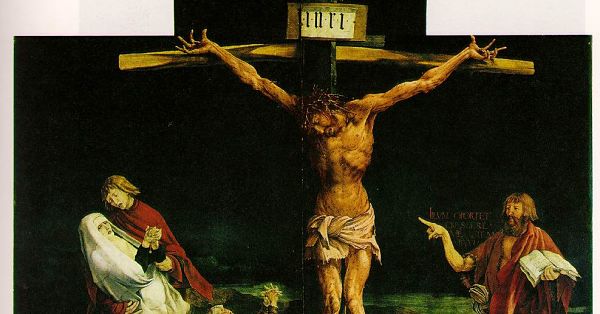
It seems paltry, greedy, needy, grasping, the kind of motivation we would yet despise. Until you find yourself some other day, loafing around the streets of Jerusalem, trying to figure out how to make a buck, and see another kind of steward go by. This one is the perfect manager, the one who takes what is given to him and administers it with true, deep-hearted obedience. Whatever was given to him for safe-keeping, he gave it all back without losing a single measure, pressed down, shaken together. Yet this other steward is bleeding, beaten, cast out, driven out of the city to be hung up on a tree and then to die. And in so dying, to, by the power of his life, by the glory of the shame with which he clothes himself—your shame—to pay off all that debt, every single bit of it.
What, is begging too impossible for you? Do you prefer the quiet shame and weakness of your ruinous pride? Do your moral, intellectual, and emotional weaknesses taste better than groveling desperation? Can you not stomach to look up and see a man—a steward—who bears in his body the shame of your cursed debt? Would you rather die than live?
Wouldn’t you rather be brought into the house, to be forgiven all those offenses you could never pay for, never atone for no matter what you did?
Jesus lets the parable fall like the lead balloon that it is and draws away the twelve, for the third time, to declare his intention to die. Luke reports that “they understood none of these things,” because how could they? They don’t know their right hands from their left hands. They are busy buying Styrofoam Santas and judging each other. They won’t get it until much later, wandering around death’s empty storehouse, laughing from relief and joy.
Previous Post

September 20, 2019
7 Persisting Takes
Next Post

September 23, 2019 What We're Reading Podcast and Links
Browse Our Archives
Select a Category books Catechesis of the Good Shepherd Children in Conversation culture watch Daily Devotions Demotivations with Anne faith alone for the grandparents GAFCON In conversation with children In the News Kitchen Notes Lambeth Learning Notes Life Going On Men are Human Notes from Home Pictures Reading the Bible Saturday Links Sermons Signs of the Apocalypse The Bad Word Association The Prayer of Jonah Travel Notes Uncategorized Witless Wednesdays Work and the Christian
Select a Month June 2024 May 2024 April 2024 March 2024 February 2024 January 2024 November 2023 October 2023 September 2023 August 2023 July 2023 June 2023 May 2023 April 2023 March 2023 February 2023 January 2023 December 2022 November 2022 October 2022 September 2022 July 2022 May 2022 April 2022 March 2022 February 2022 January 2022 December 2021 November 2021 October 2021 September 2021 August 2021 July 2021 June 2021 May 2021 April 2021 March 2021 February 2021 January 2021 December 2020 November 2020 October 2020 September 2020 August 2020 July 2020 June 2020 May 2020 April 2020 March 2020 February 2020 January 2020 December 2019 November 2019 October 2019 September 2019 August 2019 July 2019 June 2019 May 2019 April 2019 March 2019 February 2019 January 2019 December 2018 November 2018 October 2018 September 2018 August 2018 July 2018 June 2018 May 2018 April 2018 March 2018 February 2018 January 2018 December 2017 November 2017 October 2017 September 2017 August 2017 July 2017 June 2017 May 2017 April 2017 March 2017 February 2017 January 2017 December 2016 November 2016 October 2016 September 2016 August 2016 July 2016 June 2016 May 2016 April 2016 March 2016 February 2016 January 2016 December 2015 November 2015 October 2015 September 2015 August 2015 July 2015 June 2015 May 2015 April 2015 March 2015 February 2015 January 2015 December 2014 November 2014 October 2014 September 2014 August 2014 July 2014 June 2014 May 2014 April 2014 March 2014 February 2014 January 2014 December 2013 November 2013 October 2013 September 2013 August 2013 July 2013 June 2013 May 2013 April 2013 March 2013 February 2013 January 2013 December 2012 November 2012 October 2012 September 2012 August 2012 July 2012 June 2012 May 2012 April 2012 March 2012 February 2012 January 2012 December 2011 November 2011 October 2011 September 2011 August 2011 July 2011 June 2011 May 2011 April 2011 March 2011 February 2011 January 2011 December 2010 November 2010 October 2010 September 2010 August 2010 July 2010 June 2010 May 2010 April 2010 March 2010 February 2010 January 2010 December 2009 November 2009 October 2009 September 2009 August 2009 July 2009 June 2009 May 2009 April 2009 March 2009 February 2009 January 2009 December 2008 November 2008 October 2008 September 2008 August 2008 July 2008 June 2008 May 2008 April 2008 March 2008 February 2008 January 2008 December 2007 November 2007 October 2007 September 2007 August 2007 July 2007 June 2007 May 2007 April 2007 March 2007 February 2007 January 2007 December 2006 November 2006 October 2006
Follow Us!
TAKE THE
Religious Wisdom Quiz
What did Nebuchadnezzar see inside the fiery furnace along with the three men?
Select your answer to see how you score.
A great cloud of smoke An angel with a sword A fourth figure like "a son of the gods" A vision of his own kingdom
Books by This Author Books by Anne Kennedy
Related posts from Preventing Grace

Dress for Action like an Anglican


TRENDING AT PATHEOS Evangelical

The REST of Your Life: A Creative Wrestles...
This week I had a conversation with a good friend from church....

How the author of the world's best hymn...
I've been working with John Newton for a while now. This makes...

Long before this Lectio Divina, Psalm 130 - the song - started...

What About the Trees? Another Living Parable
After I finished writing the last article about falling leaves as a...

Why Classical Education Is a Conversation, Not a...
Come and Read: Joy in Classical Education When I was a little...

Cornell University has received a great deal of negative publicity and intense...
view all Evangelical blogs
Ad-Free & Subscriber Log-In Subscription Support
- About Us
- 2026 Calendar
- Videos
- Podcasts
- Library of World Religions
- Faith In Media Tracker
- Advertise With Us
- Write for Us
- Privacy Policy
- Terms of Service
- Do Not Sell My Data
- Contact Us
- Radiant Digital
- Manage Newsletter Subscriptions
- Unsubscribe From Notifications
- Sitemap
Copyright 2008-2026, Patheos. All rights reserved.
Subscription Support Ad-Free & Subscriber Log-In
Follow Patheos