
BuddhistCatholicContemplativeEvangelicalGeneral ChristianHinduJewishLatter-day SaintMuslimNew VisionsProgressive Christian
Beliefs
- Buddhist
- Catholic
- Contemplative
- Evangelical
- General Christian
- Hindu
- Jewish
- Latter-day Saint
- More Voices
- Muslim
- New Visions
- Pagan
- Progressive Christian
Topics
- Religion News
- Food and Religion
- Sports and Religion
- Religious Art
- Religious Music and Entertainment
- Religious Events
- History and Religion
- Style and Religion
- Politics and Religion
- Women in Religion
- Recreation Outdoors and Religion
- Business Finance and Religion
- Careers Workplace and Religion
- Education and Religion
- Family Parenting and Religion
- Health Fitness and Religion
- Home and Religion
- Relationships and Religion
- Technology and Religion
- Travel and Religion
Columnists
- Buddhist Columnists
- Business Finance and Religion Columnists
- Careers Workplace and Religion Columnists
- Catholic Columnists
- Contemplative Columnists
- Education and Religion Columnists
- Evangelists Columnists
- Family Parenting and Religion Columnists
- General Christian Columnists
- Health Fitness and Religion Columnists
- Hindu Columnists
- History and Religion Columnists
- Home and Religion Columnists
- Jewish Columnists
- More Voices Columnists
- Latter Day Columnists
- Muslim Columnists
- New Visions Columnists
- Nonreligious Columnists
- Pagan Columnists
- Politics and Religion Columnists
- Progressive Columnists
- Recreation Outdoors and Religion Columnists
- Relationships and Religion Columnists
- Religion News Columnists
- Religious Art Columnists
- Religious Events Columnists
- Religious Music and Entertainment Columnists
- Sports and Religion Columnists
- Style and Religion Columnists
- Technology and Religion Columnists
- Travel and Religion Columnists
- Women in Religion Columnists
Resource Library
- 2026 Calendar
- Library of World Religions
- The 100 Most Holy Places on Earth
- Patheos Answers
- Podcasts
- Videos
- Faith Leaders Database
- Anglican Episcopalian
- Bahai
- Baptist
- Buddhism
- Christianity
- Confucianism
- Eastern Orthodoxy
- Hinduism
- Holiness and Pentecostal
- ISKCON
- Islam
- Judaism
- Lutheran
- Methodist
- The Church of Jesus Christ of Latter-day Saints
- New Age
- Paganism
- Presbytarian and Reformed
- Protestantism
- Religion Behind the Scenes
- Roman Catholic
- Scientology
- Shia Islam
- Sikhism
- Sufism
- Sunni Islam
- Taoism
- Zen
- See all religions
Research Tools
 Ad-Free & Subscriber Log-In Subscription Support
Ad-Free & Subscriber Log-In Subscription Support
Follow Patheos 

- Trending:
- Forgiveness
- |
- Marriage
- |
- Consciousness
- |
- Death Penalty
- |
- Election
- |
- Halloween
 Morning Rose Prayer Gardens
- Home
- Catholic
- Tree Hugging Saints who Preceded Tree Hugging Pope Francis; St. Oengus
Tree Hugging Saints who Preceded Tree Hugging Pope Francis; St. Oengus
Last updated on: September 8, 2015 at 9:02 am by Margaret Rose Realy, Obl. OSB
Tree Hugging Saints who Preceded Tree Hugging Pope Francis; St. Oengus 2015-09-08T09:02:21-04:00 Margaret Rose Realy, Obl. OSB
Patheos Explore the world's faith through different perspectives on religion and spirituality! Patheos has the views of the prevalent religions and spiritualities of the world.
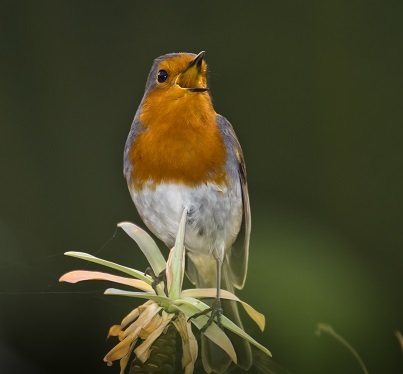 “Now ask the beasts to teach you, and the birds of the air to tell you; Or the reptiles on earth to instruct you, and the fish of the sea to inform you. Which of all these does not know that the hand of God has done this? In his hand is the soul of every living thing, and the life breath of all mankind.” Job 12: 7-10
Yesterday was a big day for us gardeners and, well, all naturalists, when Pope Francis instituted within the Church September 1 as the World Day of Prayer for the Care of Creation.
Vatican Radio reported the event, in which Pope Francis noted that,
…the initiative follows in the footsteps of the Orthodox Church which, for the past 25 years, has dedicated September 1st, the beginning of a new year in the Orthodox liturgical calendar, to care for the environment. Since that time, the World Council of Churches has also marked a month-long ‘Time for Creation’ stretching from September 1st to the feast of St Francis of Assisi on October 4th.
In the spirit of this time for creation I will weekly until October 4 share with you a few gardening saints who knew the value of nature.
St. Óengus the Culdee (Angus, Ængus, Dengus, of Tallaght, of Clonenagh, Servant of God)
ca. 824, Ireland, Memorial March 11
Patron of Kitchen (Cellarer’s) Gardens
The term Culdee, Servant of God, refers to St. Óengus’ love of solitude. Célé Dé or Céili Dé (Culdee) was a name given to the hermits of that time; Céili Dé means the intimates or companions of God. There is considerable conflicting information (each source indicating of course that it is the most accurate) whether he became a lay brother of the Culdees, if the order developed because of him or if this was a general term for monks in solitude.[1] In any case, this order of monks took a more austere form of fasting, penance, and prayer. He eventually became a bishop in Ireland.
As a young man St. Óengus is said to have conversed with angels who enhanced his love of prayer and solitude. During that time he researched and wrote extensively about the saints and later wrote his own Féilire or Festilogium, a calendar of saints that became one of the sources of information for the early Irish saints. He found nature supplied him with a good deal of insight about those holy men and women:
The birds…sang to him songs of the saints; the green grass of the Emerald Isle told him of their hopefulness; the white daisy blossoms of their purity; the red roses of their martyrdom. The mighty oak trees spoke of their strength; all nature seemed to him to be singing the praises of the saints. He, thinking upon the saints so much encouraged others to take the sweetness of these holy lives and make it their own, even as the bee gathers honey from the flower.[2]
This beloved saint in all humility hid the fact for years that he was highly educated, choosing manual labor. He pursued the practice of deep durational prayer, more easily admired than imitated.
When St. Óengus entered the monastery he labored in the cellarer’s gardens. The cellarer was one of the leading monastic officials in charge of maintaining provisions, responsible for feeding the entire monastic community. This including lay-workers and peasants in need, as well as a steady stream of guests who visited the monastery on a journey or pilgrimage. And royalty guests could include a large retinue! The cellarer’s provisioning included a supply of vegetables and fruit, dairy, fowl and fish, medicinal plants and utilitarian herbs including hay and flax, as well as bees for candle wax and honey. There were many types of cellarer’s gardens with the main one being the kitchen garden or, in French, the le jardin potager.
While working the many provisional gardens St. Óengus usually had birds perching on his shoulders and singing to him as he worked. These birds and especially the robins were his constant companions. One day he severely cut his hand while chopping wood and the robins were so distressed they flew near to his hand frantically beating their wings and “…uttered loud cries because their friend was hurt.”
The Robin of Ireland, Erithacus rubecula, often called a Ploughman’s Bird or Spideog, is a small little bird of only about three inches. It is mostly gray with a portion of its face and breast being red, and the remaining underside mottled white. It is a friendly bird rarely disturbed by the hubbub of people and often trails behind gardeners looking for freshly unearthed worms…and now you know why its so named, the Ploughman’s Bird.
For more gardening saints, my book, A Catholic Gardener’s Spiritual Almanac, has them listed by month!
(Image of Erithacus rubecula by Juan Emilio from Las Palmas de Gran Canaria, España [CC BY-SA 2.0 ( http://creativecommons.org/licenses/by-sa/2.0 )], via Wikimedia Commons)
[1] My bias is that of St. Óengus being a hermit in service to God and that the term culdee simply indicated that solitary activity; see the 1868 writings about the life of this saint by Rev. John O’Hanlon.
[2] Hilton, Agnes Aubrey, Legends of Saints and Birds, p. 37
World Day of Prayer for the Care of Creation
Previous Post

September 1, 2015
Hinderance in Doubt, Tuesday's Prayer for Sisters and Nuns
Next Post

September 8, 2015 Signs and Symbols of Faith, Prayers for Sisters and Nuns
Browse Our Archives
Select a Category @pontifex Aleteia Ask the Pope Book Reviews Caring for Houseplants Catholic Garden Christmas Christmas decorations Christmas Gifts for Gardeners Christmas Plants Christmases Past Equus Passage Faith and Gratitude Fasting and Virtue Flowers Fun Stuff Garden Catechism Garden Saints Garden Walk Gifts Gardener God's Timing Houseplants How to say thank you Language of flowers Letting Go Life of Christ meaning of Christmas Photo Challenge Practical Gardening Prayer Prayer for Priests Prayers for Sisters and Nuns Prayers Needed Pro-life Quote Recipes Saints Starting Seeds symbolism of evergreens Synod of Bishops Uncategorized Writing
Select a Month May 2017 March 2017 August 2016 July 2016 May 2016 April 2016 March 2016 February 2016 January 2016 December 2015 November 2015 October 2015 September 2015 August 2015 July 2015 June 2015 May 2015 April 2015 March 2015 February 2015 January 2015 December 2014 November 2014 October 2014 September 2014 August 2014 July 2014 June 2014 May 2014 April 2014 March 2014 February 2014 January 2014 December 2013 November 2013 October 2013 September 2013 August 2013 July 2013 June 2013 May 2013 April 2013 March 2013 February 2013 January 2013 December 2012 November 2012 October 2012
Follow Us!
TAKE THE
Religious Wisdom Quiz
True or False: The Thessalonians were told that the day of the Lord will come like a thief in the night.
Select your answer to see how you score.
TRUE FALSE
Related posts from Morning Rose Prayer Gardens
Decompressing; Photos in a Garden
Passion Flower and the Stations of the Cross

Finding Treasure with Painted Pony Beans
TRENDING AT PATHEOS Catholic

Rejecting Doom: Christian Hope And Human Action
Christianity is a religion of hope. We are to have hope and...

It’s What Comes From Within Which Matters
One of the most difficult things for us to understand is why...

Why I Choose the Eucharist Over the Sermon
Choose the Eucharist, Not the Sermon What are we supposed to get...

5 Design Elements Found in Spiritually Rooted Homes
Putting Spirituality Into Home Decor Our homes are more than our living...

Credo: A Story of God Told with the...
About 10 years ago, I began to imagine a personal "Credo" that...

The Anatomy of Divine Revelation in Catholic Thought
The claim that God has made Himself known to human beings is...
view all Catholic blogs
Ad-Free & Subscriber Log-In Subscription Support
- About Us
- 2026 Calendar
- Videos
- Podcasts
- Library of World Religions
- Faith In Media Tracker
- Advertise With Us
- Write for Us
- Privacy Policy
- Terms of Service
- Do Not Sell My Data
- Contact Us
- Radiant Digital
- Manage Newsletter Subscriptions
- Unsubscribe From Notifications
- Sitemap
Copyright 2008-2026, Patheos. All rights reserved.
Subscription Support Ad-Free & Subscriber Log-In
Follow Patheos