
BuddhistCatholicContemplativeEvangelicalGeneral ChristianHinduJewishLatter-day SaintMuslimNew VisionsProgressive Christian
Beliefs
- Buddhist
- Catholic
- Contemplative
- Evangelical
- General Christian
- Hindu
- Jewish
- Latter-day Saint
- More Voices
- Muslim
- New Visions
- Pagan
- Progressive Christian
Topics
- Religion News
- Food and Religion
- Sports and Religion
- Religious Art
- Religious Music and Entertainment
- Religious Events
- History and Religion
- Style and Religion
- Politics and Religion
- Women in Religion
- Recreation Outdoors and Religion
- Business Finance and Religion
- Careers Workplace and Religion
- Education and Religion
- Family Parenting and Religion
- Health Fitness and Religion
- Home and Religion
- Relationships and Religion
- Technology and Religion
- Travel and Religion
Columnists
- Buddhist Columnists
- Business Finance and Religion Columnists
- Careers Workplace and Religion Columnists
- Catholic Columnists
- Contemplative Columnists
- Education and Religion Columnists
- Evangelists Columnists
- Family Parenting and Religion Columnists
- General Christian Columnists
- Health Fitness and Religion Columnists
- Hindu Columnists
- History and Religion Columnists
- Home and Religion Columnists
- Jewish Columnists
- More Voices Columnists
- Latter Day Columnists
- Muslim Columnists
- New Visions Columnists
- Nonreligious Columnists
- Pagan Columnists
- Politics and Religion Columnists
- Progressive Columnists
- Recreation Outdoors and Religion Columnists
- Relationships and Religion Columnists
- Religion News Columnists
- Religious Art Columnists
- Religious Events Columnists
- Religious Music and Entertainment Columnists
- Sports and Religion Columnists
- Style and Religion Columnists
- Technology and Religion Columnists
- Travel and Religion Columnists
- Women in Religion Columnists
Resource Library
- 2026 Calendar
- Library of World Religions
- The 100 Most Holy Places on Earth
- Patheos Answers
- Podcasts
- Videos
- Faith Leaders Database
- Anglican Episcopalian
- Bahai
- Baptist
- Buddhism
- Christianity
- Confucianism
- Eastern Orthodoxy
- Hinduism
- Holiness and Pentecostal
- ISKCON
- Islam
- Judaism
- Lutheran
- Methodist
- The Church of Jesus Christ of Latter-day Saints
- New Age
- Paganism
- Presbytarian and Reformed
- Protestantism
- Religion Behind the Scenes
- Roman Catholic
- Scientology
- Shia Islam
- Sikhism
- Sufism
- Sunni Islam
- Taoism
- Zen
- See all religions
Research Tools
 Ad-Free & Subscriber Log-In Subscription Support
Ad-Free & Subscriber Log-In Subscription Support
Follow Patheos 

- Trending:
- Forgiveness
- |
- Marriage
- |
- Consciousness
- |
- Death Penalty
- |
- Election
- |
- Halloween
 Morning Rose Prayer Gardens
- Home
- Catholic
- What 3 plants to grow for Justice
What 3 plants to grow for Justice
Last updated on: March 7, 2016 at 1:11 pm by Margaret Rose Realy, Obl. OSB
What 3 plants to grow for Justice 2016-03-07T13:11:19-05:00 Margaret Rose Realy, Obl. OSB
Patheos Explore the world's faith through different perspectives on religion and spirituality! Patheos has the views of the prevalent religions and spiritualities of the world.
There is so much more to spiritually uplifting gardens than a statue of a saint or a cross strategically placed in the yard with a few petunias coloring up the base. Catholic gardeners can express their faith in nearly limitless ways in a garden setting.
This is the second in a series of blog posts focusing on a landscape theme of virtues. As I wrote in the previous column, the Catechism of the Catholic Church tells us there are four cardinal virtues: prudence, justice, fortitude, and temperance. There are also three theological virtues: faith, hope, and charity.
I will continue with the virtues theme until all have been presented. Today, the second cardinal virtue is justice.
According to the CCC:
Justice is the moral virtue that consists in the constant and firm will to give their due to God and neighbor. Justice toward God is called the “virtue of religion.” Justice toward men disposes one to respect the rights of each and to establish in human relationships the harmony that promotes equity with regard to persons and to the common good. The just man, often mentioned in the Sacred Scriptures, is distinguished by habitual right thinking and the uprightness of his conduct toward his neighbor.
 The Chestnut tree represents a personal intercession for justice, a desire for the common good for others and one’s self. The tree itself connotes “to do justice,” and the flowers are indicative of seeking it. The tree in paintings alludes to the Resurrection, to justify all mankind; trees that are grown for their wood can be cut nearly to the ground every few years—a practice called coppicing—and results in vigorous regrowth (a resurrection if you will) of numerous long straight shoots.
Chestnut trees are easy to grow, provide abundant and dense shade, have a striking flora display, and burr-covered fruit—hazardous to lawn mowers—containing edible nuts. Charlie Nardozzi on his web Edible Landscaping offers several cultivars resistant to chestnut blight suitable for the landscape.
Beautiful still life paintings of flowers have long been associated with the notion that both life and beauty are short lived. Lovely images of glorious bouquets, especially during the 17th century, included flowers in wilt with petals often scattered about the vase. A reminder the virtues must always be kept in mind as we progress to our final destination.
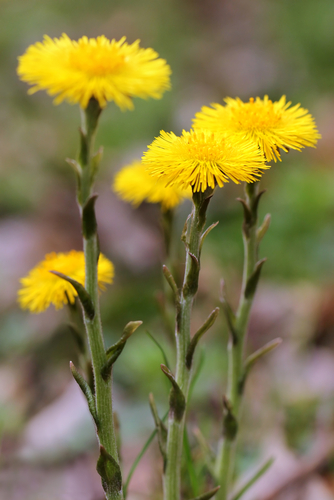 A small bouquet of yellow coltsfoot—looking much like dandelion flowers—was offered as a sentiment that “justice shall be done.” This is presumed to come from the fact that their leaves and flowers do not develop at the same time.
A small, though some consider weedy plant, is the Coltsfoot, Tussilago farfara. It is an herb that had been used medicinally for coughs; its use is now in question when its toxic effects on the liver were discovered. Coltsfoot is a perennial plant that spreads by seeds and rhizomatous roots. It is often found in colonies, patches of dozens of plants. The flowers appear in early spring with leaves, which resemble a colt’s foot not appearing usually until after the seeds set. Thus, the flowers appear on stems with no apparent leaves, and the later leaves appear then die during the season without seeming to set flowers.
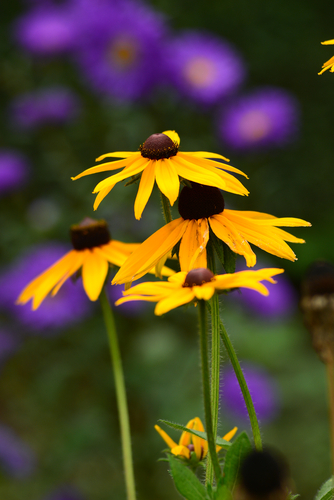 Rudbeckia, commonly known as the black-eyed susan, gloriosa daisy, or yellow ox-eye daisy connotes justice. Rudbeckiain the language of flowers stands firm in justice, its flowers once cut will last for nearly two weeks in water. The native plant also has deep roots—one of many plants known as clay-busters—and like justice grows deep and secure in life.
An easily grown perennial or biennial that flowers in late summer in to autumn, it has a wide range of cultivars for the sunny garden.
For more Catholic garden ideas, my latest book, A Catholic Gardener’s Spiritual Almanac, will offer inspiration. To learn how to build a prayer garden, my first books, A Garden of Visible Prayer, will lead you through the process one step at a time.
(All images courtesy shutterstock.com, by artists, in order of images: Chestnut, Mayovskyy Andrew, Coltsfoot, MarkMirror, Rudbeckia, Vahan Abrahamyan)
Stay in touch! Like The Catholic Garden, Morning Rose Prayer Gardens’ page on Facebook:
Previous Post

March 10, 2015
In the Sicknesses that Pierce the Heart, Pray for Sisters and Nuns
Next Post

March 16, 2015 Laetare Sunday and Hard Rocks
Browse Our Archives
Select a Category @pontifex Aleteia Ask the Pope Book Reviews Caring for Houseplants Catholic Garden Christmas Christmas decorations Christmas Gifts for Gardeners Christmas Plants Christmases Past Equus Passage Faith and Gratitude Fasting and Virtue Flowers Fun Stuff Garden Catechism Garden Saints Garden Walk Gifts Gardener God's Timing Houseplants How to say thank you Language of flowers Letting Go Life of Christ meaning of Christmas Photo Challenge Practical Gardening Prayer Prayer for Priests Prayers for Sisters and Nuns Prayers Needed Pro-life Quote Recipes Saints Starting Seeds symbolism of evergreens Synod of Bishops Uncategorized Writing
Select a Month May 2017 March 2017 August 2016 July 2016 May 2016 April 2016 March 2016 February 2016 January 2016 December 2015 November 2015 October 2015 September 2015 August 2015 July 2015 June 2015 May 2015 April 2015 March 2015 February 2015 January 2015 December 2014 November 2014 October 2014 September 2014 August 2014 July 2014 June 2014 May 2014 April 2014 March 2014 February 2014 January 2014 December 2013 November 2013 October 2013 September 2013 August 2013 July 2013 June 2013 May 2013 April 2013 March 2013 February 2013 January 2013 December 2012 November 2012 October 2012
Follow Us!
TAKE THE
Religious Wisdom Quiz
What was the name of the sea that Moses parted?
Select your answer to see how you score.
Dead Sea Jordan River Red Sea Sea of Galilee
Related posts from Morning Rose Prayer Gardens

Decompressing; Photos in a Garden
Passion Flower and the Stations of the Cross

Finding Treasure with Painted Pony Beans

TRENDING AT PATHEOS Catholic

Rejecting Doom: Christian Hope And Human Action
Christianity is a religion of hope. We are to have hope and...

It’s What Comes From Within Which Matters
One of the most difficult things for us to understand is why...

Why I Choose the Eucharist Over the Sermon
Choose the Eucharist, Not the Sermon What are we supposed to get...

5 Design Elements Found in Spiritually Rooted Homes
Putting Spirituality Into Home Decor Our homes are more than our living...

Credo: A Story of God Told with the...
About 10 years ago, I began to imagine a personal "Credo" that...

The Anatomy of Divine Revelation in Catholic Thought
The claim that God has made Himself known to human beings is...
view all Catholic blogs
Ad-Free & Subscriber Log-In Subscription Support
- About Us
- 2026 Calendar
- Videos
- Podcasts
- Library of World Religions
- Faith In Media Tracker
- Advertise With Us
- Write for Us
- Privacy Policy
- Terms of Service
- Do Not Sell My Data
- Contact Us
- Radiant Digital
- Manage Newsletter Subscriptions
- Unsubscribe From Notifications
- Sitemap
Copyright 2008-2026, Patheos. All rights reserved.
Subscription Support Ad-Free & Subscriber Log-In
Follow Patheos