
BuddhistCatholicContemplativeEvangelicalGeneral ChristianHinduJewishLatter-day SaintMuslimNew VisionsProgressive Christian
Beliefs
- Buddhist
- Catholic
- Contemplative
- Evangelical
- General Christian
- Hindu
- Jewish
- Latter-day Saint
- More Voices
- Muslim
- New Visions
- Pagan
- Progressive Christian
Topics
- Religion News
- Food and Religion
- Sports and Religion
- Religious Art
- Religious Music and Entertainment
- Religious Events
- History and Religion
- Style and Religion
- Politics and Religion
- Women in Religion
- Recreation Outdoors and Religion
- Business Finance and Religion
- Careers Workplace and Religion
- Education and Religion
- Family Parenting and Religion
- Health Fitness and Religion
- Home and Religion
- Relationships and Religion
- Technology and Religion
- Travel and Religion
Columnists
- Buddhist Columnists
- Business Finance and Religion Columnists
- Careers Workplace and Religion Columnists
- Catholic Columnists
- Contemplative Columnists
- Education and Religion Columnists
- Evangelists Columnists
- Family Parenting and Religion Columnists
- General Christian Columnists
- Health Fitness and Religion Columnists
- Hindu Columnists
- History and Religion Columnists
- Home and Religion Columnists
- Jewish Columnists
- More Voices Columnists
- Latter Day Columnists
- Muslim Columnists
- New Visions Columnists
- Nonreligious Columnists
- Pagan Columnists
- Politics and Religion Columnists
- Progressive Columnists
- Recreation Outdoors and Religion Columnists
- Relationships and Religion Columnists
- Religion News Columnists
- Religious Art Columnists
- Religious Events Columnists
- Religious Music and Entertainment Columnists
- Sports and Religion Columnists
- Style and Religion Columnists
- Technology and Religion Columnists
- Travel and Religion Columnists
- Women in Religion Columnists
Resource Library
- 2026 Calendar
- Library of World Religions
- The 100 Most Holy Places on Earth
- Patheos Answers
- Podcasts
- Videos
- Faith Leaders Database
- Anglican Episcopalian
- Bahai
- Baptist
- Buddhism
- Christianity
- Confucianism
- Eastern Orthodoxy
- Hinduism
- Holiness and Pentecostal
- ISKCON
- Islam
- Judaism
- Lutheran
- Methodist
- The Church of Jesus Christ of Latter-day Saints
- New Age
- Paganism
- Presbytarian and Reformed
- Protestantism
- Religion Behind the Scenes
- Roman Catholic
- Scientology
- Shia Islam
- Sikhism
- Sufism
- Sunni Islam
- Taoism
- Zen
- See all religions
Research Tools
 Ad-Free & Subscriber Log-In Subscription Support
Ad-Free & Subscriber Log-In Subscription Support
Follow Patheos 

- Trending:
- Forgiveness
- |
- Marriage
- |
- Consciousness
- |
- Death Penalty
- |
- Election
- |
- Halloween
 Morning Rose Prayer Gardens
- Home
- Catholic
- Top 5 Flowers of the Annunciation
Top 5 Flowers of the Annunciation
Last updated on: March 26, 2015 at 3:18 am by Margaret Rose Realy, Obl. OSB
Top 5 Flowers of the Annunciation 2015-03-26T03:18:37-04:00 Margaret Rose Realy, Obl. OSB
Patheos Explore the world's faith through different perspectives on religion and spirituality! Patheos has the views of the prevalent religions and spiritualities of the world.
The flowers associated with the Annunciation represent in varied ways the spiritual fruit of the event—purity of heart, humility, fruitfulness, and The Mother of God.
The Annunciation to Mary found in Luke 1:26-39 and Matthew 1:18-21, is not only recognized by Roman and Eastern Catholics, but is also recorded in the Qur’an. We read in the Bible that the angel St. Gabriel came to Mary and announced to her what her vocation would be; “…you will conceive in your womb and bear a son, and you shall call his name Jesus… therefore the child to be born will be called holy, the Son of God.” (Lk 1:30, 35). This closeness with God and her trust in him allowed Mary to fully submit to his request at the Annunciation, and allowed God’s saving grace to work through her.
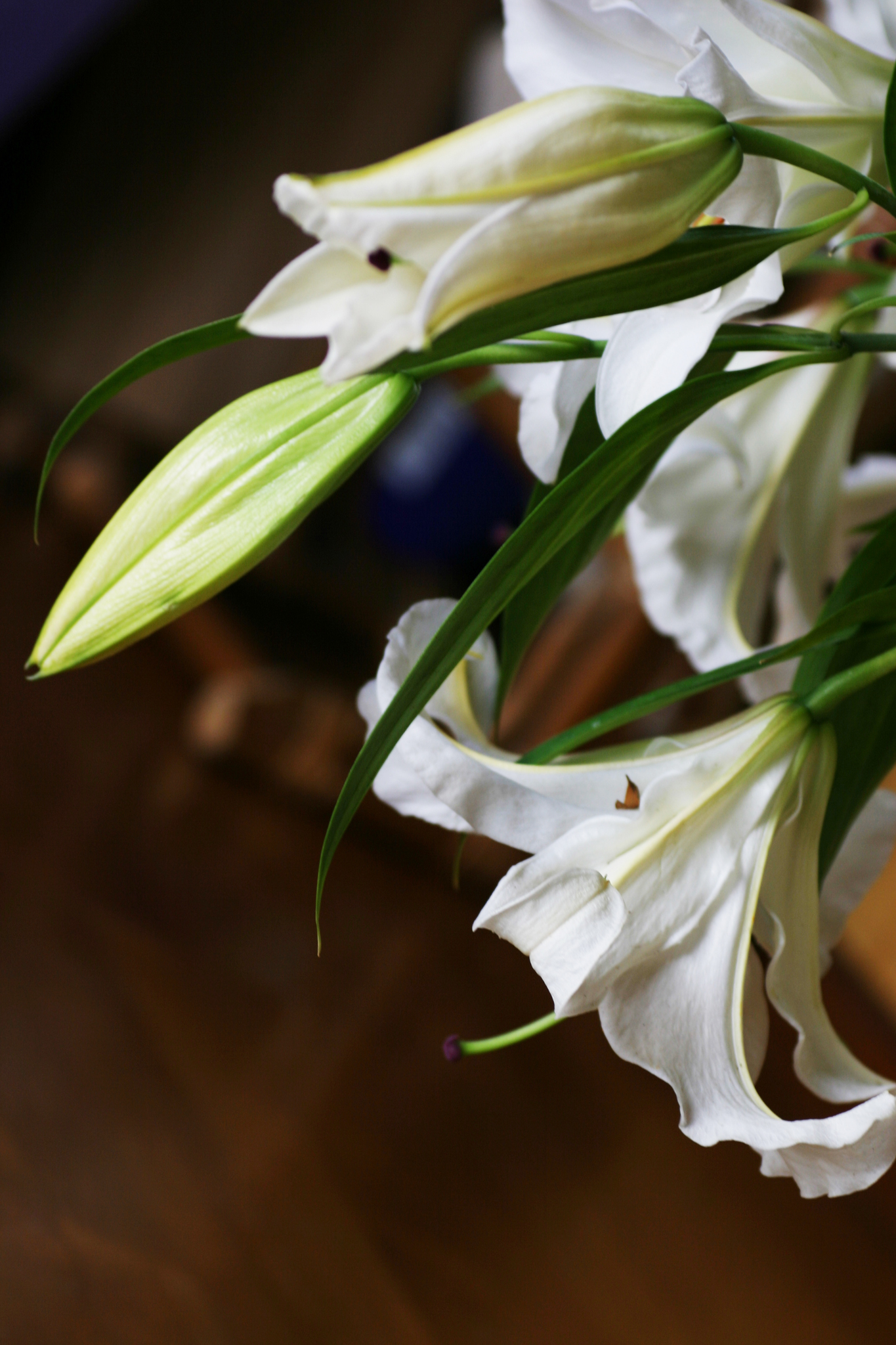 The most familiar flower is the Madonna lily, Lilium candidum. This plant symbolizes confirmation of a message from God to only the purest of hearts. It is included in paintings of the archangel St. Gabriel—messenger of God, and on the staff of St. Joseph to indicate his worth to guard and care for Mary and the Son of God, and of course artwork of Mother Mary.
Native to West Asia it is seen in images dating back 4000 years. This is a true lily and can grow up to five feet, but more commonly 24-36”, being topped with its signature white trumpet flowers. It is easily grown in most gardens. Where temperatures run high keep the soil cool with a deep layer of mulch. This plant reproduces from both bulblets and seed.
There are several plants associated with the Virgin’s humility.
Bluebells, Hyacinthoides italica, represents humility, constancy, and gratitude. The Italian squill or bluebell is a spring flowering perennial bulb native to the central Mediterranean region. In a woodlands area, plant the spreading English Bluebell, Hyacinthoides non-scripta, for an exquisite blue carpet of flowers in spring. Take note—this is a dominant spreading plant having a special beauty in mass and is not suited to grow among other flowers.
In your garden you can also use these plants symbolic of humility: spring blooming Virginia Bluebells, Mertensia virginica, the woodland violet, Viola odoratoa, or the low growing herb thyme, Thymus vulgaris.
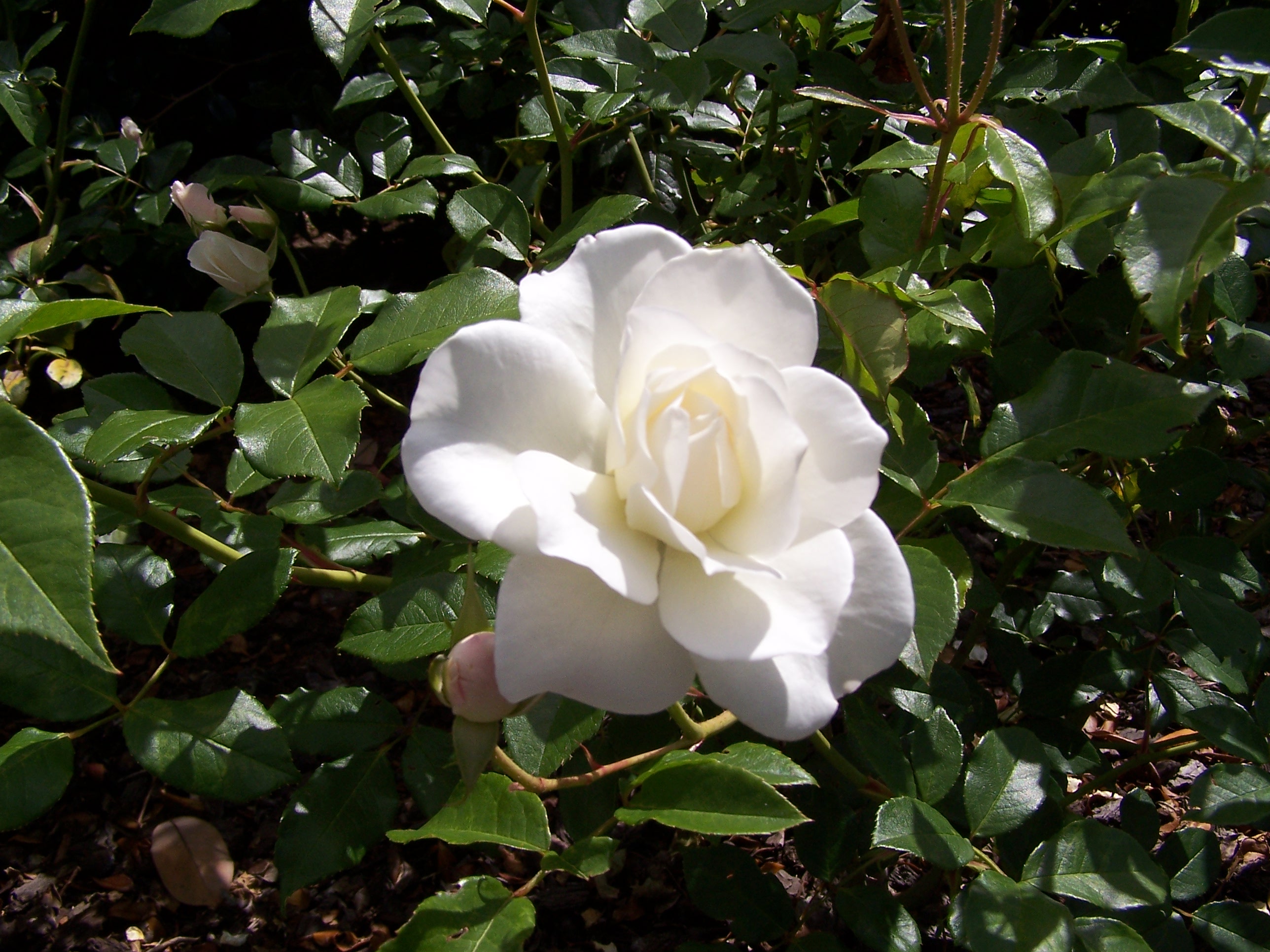 Mary’s purity of heart is symbolized by the white flowering Japanese Camellia, Camellia japonica ‘Alba Plena’. An interesting note, the genus Camellia was named after the Jesuit priest George Kamel who was also a botanist.
For most of us, this is a potted plant. It is an evergreen shrub in warmer Zones 8-10. For more information on growing this beautiful fragrant plant visit the Royal Horticultural Society web page.
Mary’s fruitfulness is symbolized by the pear tree, Pyrus communis. The European pear or common field pear is the parent of numerous cultivars grown for fruit production. From the University of Minnesota come the following recommendations for the Midwest home garden:
The varieties we purchase at the grocery store – ‘Bartlett,’ ‘Bosc,’ and the pricey Asian pears – are not hardy here. The good news, however, is that the main differences between grocery store pears and those we can grow here are size and fresh fruit keeping ability.
Gourmet
…’Gourmet’ produces medium-sized fruit in mid- to late September that are juicy and sweet with a firm, crisp texture somewhat reminiscent of an Asian pear. It is somewhat resistant to fire blight.
Luscious
… ‘Luscious’ bears medium to medium-small fruits in mid to late September with a flavor similar to ‘Bartlett,’ but more intense. Texture is firm but melting. Like ‘Gourmet,’ ‘Luscious’ reportedly is somewhat resistant to fire blight.
Parker
An older University of Minnesota release (1934), ‘Parker’ produces fruit similar in size, flavor and texture to ‘Bartlett.’ Somewhat less hardy than other varieties listed here, it may not grow well north of the Twin Cities. Harvest mid-September.
Patten
Originally from Iowa, ‘Patten,’ like ‘Parker,’ produces fruit comparable in character to ‘Bartlett.’ Hardiness is slightly better than ‘Parker.’ … Harvest mid- to late September.
Summercrisp
…’Summercrisp’ produces medium-sized, red-blushed fruit that is mild and sweet with a crisp texture strongly reminiscent of an Asian pear. Hardy in most of Minnesota and moderately resistant to fire blight. An early variety – harvest in mid-August.
 As a final consideration Sweet Marjoram, Origanum majorana, can be planted around the base of a Marian statue, it symbolizes the Mother of God.
Marjoram is one of my favorite herbs blending well in soups, on meats, and goes well with eggs or mushrooms. I always use a touch of it dried in fresh fruit salads (those that do not have melons mixed in!), adding some finely diced celery to the mix.
Marjoram is a Mediterranean herb intolerant of freezing temperatures and usually grown as an annual. It can be grown indoors but requires a lot of direct sunlight. It is a sprawling 12-15” and a wonderful edging plant. It likes to be kept moist and like most herbs needs good drainage. Fertilize it about every three to four weeks with an all-purpose organic fertilizer. Cut stems back early and often to encourage branching, and shear down by two-thirds when harvesting—a second cutting should be ready before frost.
(All images courtesy morguefile.com)
Don’t forget to enter the gardener’s gift basket give away!
Previous Post

March 24, 2015
Being Mortal, Prayer for Sisters and Nuns
Next Post

March 26, 2015 An Appeal through Mother Mary to Pray for Priests
Browse Our Archives
Select a Category @pontifex Aleteia Ask the Pope Book Reviews Caring for Houseplants Catholic Garden Christmas Christmas decorations Christmas Gifts for Gardeners Christmas Plants Christmases Past Equus Passage Faith and Gratitude Fasting and Virtue Flowers Fun Stuff Garden Catechism Garden Saints Garden Walk Gifts Gardener God's Timing Houseplants How to say thank you Language of flowers Letting Go Life of Christ meaning of Christmas Photo Challenge Practical Gardening Prayer Prayer for Priests Prayers for Sisters and Nuns Prayers Needed Pro-life Quote Recipes Saints Starting Seeds symbolism of evergreens Synod of Bishops Uncategorized Writing
Select a Month May 2017 March 2017 August 2016 July 2016 May 2016 April 2016 March 2016 February 2016 January 2016 December 2015 November 2015 October 2015 September 2015 August 2015 July 2015 June 2015 May 2015 April 2015 March 2015 February 2015 January 2015 December 2014 November 2014 October 2014 September 2014 August 2014 July 2014 June 2014 May 2014 April 2014 March 2014 February 2014 January 2014 December 2013 November 2013 October 2013 September 2013 August 2013 July 2013 June 2013 May 2013 April 2013 March 2013 February 2013 January 2013 December 2012 November 2012 October 2012
Follow Us!
TAKE THE
Religious Wisdom Quiz
Which major biblical covenant is first introduced in Genesis?
Select your answer to see how you score.
Davidic Covenant Abrahamic Covenant Mosaic Covenant New Covenant
Related posts from Morning Rose Prayer Gardens

Decompressing; Photos in a Garden
Passion Flower and the Stations of the Cross

Finding Treasure with Painted Pony Beans

TRENDING AT PATHEOS Catholic

Rejecting Doom: Christian Hope And Human Action
Christianity is a religion of hope. We are to have hope and...

It’s What Comes From Within Which Matters
One of the most difficult things for us to understand is why...

Why I Choose the Eucharist Over the Sermon
Choose the Eucharist, Not the Sermon What are we supposed to get...

5 Design Elements Found in Spiritually Rooted Homes
Putting Spirituality Into Home Decor Our homes are more than our living...

Credo: A Story of God Told with the...
About 10 years ago, I began to imagine a personal "Credo" that...

The Anatomy of Divine Revelation in Catholic Thought
The claim that God has made Himself known to human beings is...
view all Catholic blogs
Ad-Free & Subscriber Log-In Subscription Support
- About Us
- 2026 Calendar
- Videos
- Podcasts
- Library of World Religions
- Faith In Media Tracker
- Advertise With Us
- Write for Us
- Privacy Policy
- Terms of Service
- Do Not Sell My Data
- Contact Us
- Radiant Digital
- Manage Newsletter Subscriptions
- Unsubscribe From Notifications
- Sitemap
Copyright 2008-2026, Patheos. All rights reserved.
Subscription Support Ad-Free & Subscriber Log-In
Follow Patheos