
BuddhistCatholicContemplativeEvangelicalGeneral ChristianHinduJewishLatter-day SaintMuslimNew VisionsProgressive Christian
Beliefs
- Buddhist
- Catholic
- Contemplative
- Evangelical
- General Christian
- Hindu
- Jewish
- Latter-day Saint
- More Voices
- Muslim
- New Visions
- Pagan
- Progressive Christian
Topics
- Religion News
- Food and Religion
- Sports and Religion
- Religious Art
- Religious Music and Entertainment
- Religious Events
- History and Religion
- Style and Religion
- Politics and Religion
- Women in Religion
- Recreation Outdoors and Religion
- Business Finance and Religion
- Careers Workplace and Religion
- Education and Religion
- Family Parenting and Religion
- Health Fitness and Religion
- Home and Religion
- Relationships and Religion
- Technology and Religion
- Travel and Religion
Columnists
- Buddhist Columnists
- Business Finance and Religion Columnists
- Careers Workplace and Religion Columnists
- Catholic Columnists
- Contemplative Columnists
- Education and Religion Columnists
- Evangelists Columnists
- Family Parenting and Religion Columnists
- General Christian Columnists
- Health Fitness and Religion Columnists
- Hindu Columnists
- History and Religion Columnists
- Home and Religion Columnists
- Jewish Columnists
- More Voices Columnists
- Latter Day Columnists
- Muslim Columnists
- New Visions Columnists
- Nonreligious Columnists
- Pagan Columnists
- Politics and Religion Columnists
- Progressive Columnists
- Recreation Outdoors and Religion Columnists
- Relationships and Religion Columnists
- Religion News Columnists
- Religious Art Columnists
- Religious Events Columnists
- Religious Music and Entertainment Columnists
- Sports and Religion Columnists
- Style and Religion Columnists
- Technology and Religion Columnists
- Travel and Religion Columnists
- Women in Religion Columnists
Resource Library
- 2026 Calendar
- Library of World Religions
- The 100 Most Holy Places on Earth
- Patheos Answers
- Podcasts
- Videos
- Faith Leaders Database
- Anglican Episcopalian
- Bahai
- Baptist
- Buddhism
- Christianity
- Confucianism
- Eastern Orthodoxy
- Hinduism
- Holiness and Pentecostal
- ISKCON
- Islam
- Judaism
- Lutheran
- Methodist
- The Church of Jesus Christ of Latter-day Saints
- New Age
- Paganism
- Presbytarian and Reformed
- Protestantism
- Religion Behind the Scenes
- Roman Catholic
- Scientology
- Shia Islam
- Sikhism
- Sufism
- Sunni Islam
- Taoism
- Zen
- See all religions
Research Tools
 Ad-Free & Subscriber Log-In Subscription Support
Ad-Free & Subscriber Log-In Subscription Support
Follow Patheos 

- Trending:
- Forgiveness
- |
- Marriage
- |
- Consciousness
- |
- Death Penalty
- |
- Election
- |
- Halloween
 Morning Rose Prayer Gardens
- Home
- Catholic
- 7 Easy Steps to Bringing Flowers Indoors, Practical Gardening
7 Easy Steps to Bringing Flowers Indoors, Practical Gardening
Last updated on: December 27, 2014 at 3:12 pm by Margaret Rose Realy, Obl. OSB
7 Easy Steps to Bringing Flowers Indoors, Practical Gardening 2014-12-27T15:12:41-05:00 Margaret Rose Realy, Obl. OSB
Patheos Explore the world's faith through different perspectives on religion and spirituality! Patheos has the views of the prevalent religions and spiritualities of the world.
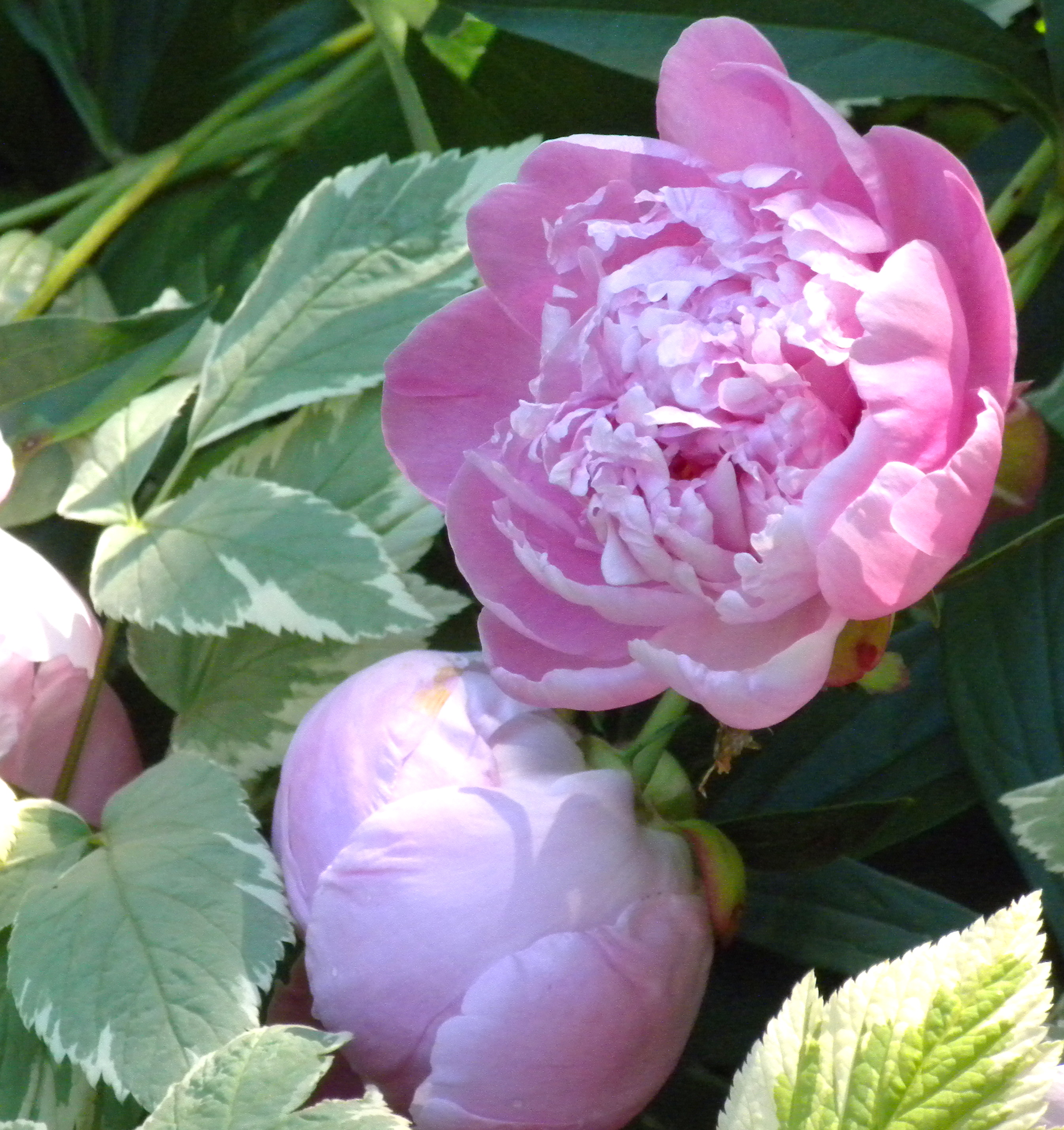
Image by Margaret Rose Realy, Obl. OSB. All rights reserved.
From spring forsythia branches to fall garden mums I bring the beauty and fragrance of my garden into the house. Some arrangements are minimalistic and modern while others are full and robust, looking very much like a 16th century Dutch painting. Either way, they grace my desk, home altar, or table—sometimes I take them to a friend.
Arranging flowers cut from your garden is a time honored tradition. It’s easy once you let go of the glossy magazine images inhibiting your creativity.
1. Start by walking through the garden and cutting a few stems of green leaves, and look for flowers recently or just starting to open. See the tips and Techniques section below.
2. After you have cut your selection, begin by choosing an appropriate vase: low for shorter stemmed and smaller flowering, larger and heavy (to prevent tipping) for fuller arrangements. A drinking glass or canning jar will work perfectly fine too.
3. Determine if you will view only one side of the arrangement or see it all the way around. Most arrangements are one sided, using fewer flowers.
4. Start your arrangement by “greening the vase.” This builds the foundation that holds the flowers in place. Select ferns, hosta, tender branches or any combination of interesting leaves. If cutting branches, be sure you practice proper pruning to prevent an unsightly bare spot on your shrub. Let some of the greens drape over the edge if desired. Strip leaves from portion of stem that will be under water.
5. Next place your featured flowers at differing heights. This could be an arrangement of three large roses, a few stems of snapdragons or cone flowers. A good rule of thumb is for the arrangement’s proportions to be 1/3rd vase and 2/3rds flowers.
6. Three aspects to arranging—that holds true for container gardens, too—are thrillers, fillers, and spillers. Well, you’ve just placed your thriller (featured) flower, now add your fillers. These are smaller and less prominent flowers tucked around your main featured flowers. Things like daisy type flowers, salvia and coreopsis to name a few.
7. Finally add the spiller. These would be cuttings that fall over like floribunda (spray) roses, tuberous begonias or the softer stems of annual eucalyptus.
In the autumn I’ll use the flowering fronds of ornamental grasses to add height and texture.
Flowers with milky sap do not take up water as readily as other cut flowers and will not last as long in an arrangement. Some examples are poinsettia, milkweed, heliotrope, hollyhock, euphorbia and poppy. Most hydrangeas do not work well as cut flowers either.
Experiment with your flowers. Try different combinations. Make miniature arrangements as well as fuller ones. We learn what we like in the doing. So fear not and go cut some flowers!
Tips and Techniques
- Tote a deep stable container filled with tepid water with you into the garden to hold your cuttings.
- Cut stems using bypass nippers or shears; do not use anvil style nippers that will crush stems.
- Cut longish flowering stems just above a node (that bump around the stem where leaves or buds usually emerge).
- To arrange, remove all leaves that would set below the water surface.
- Recut stems to desired length for vase at 45 degree angle using a sharp knife or scissors. To help lengthen their vase life it is often suggested to cut stems under water…I personally have not mastered this technique.
- Help your flowers last longer by using a commercial preservative or by filling a vase with the following premixed solution: 2 tbl. fresh lemon juice or white vinegar, 1 tbl. sugar (use 2 tbl. if using vinegar), ½ tsp. household chlorine bleach, all in 1 quart warm water.
- Keep arrangement cool, out of direct sunlight, away from fans and ripe fruit.
Previous Post

July 3, 2014
Thursday's Prayer for Priests
Next Post
July 8, 2014 Tuesday's Prayer for Sisters and Nuns
Browse Our Archives
Select a Category @pontifex Aleteia Ask the Pope Book Reviews Caring for Houseplants Catholic Garden Christmas Christmas decorations Christmas Gifts for Gardeners Christmas Plants Christmases Past Equus Passage Faith and Gratitude Fasting and Virtue Flowers Fun Stuff Garden Catechism Garden Saints Garden Walk Gifts Gardener God's Timing Houseplants How to say thank you Language of flowers Letting Go Life of Christ meaning of Christmas Photo Challenge Practical Gardening Prayer Prayer for Priests Prayers for Sisters and Nuns Prayers Needed Pro-life Quote Recipes Saints Starting Seeds symbolism of evergreens Synod of Bishops Uncategorized Writing
Select a Month May 2017 March 2017 August 2016 July 2016 May 2016 April 2016 March 2016 February 2016 January 2016 December 2015 November 2015 October 2015 September 2015 August 2015 July 2015 June 2015 May 2015 April 2015 March 2015 February 2015 January 2015 December 2014 November 2014 October 2014 September 2014 August 2014 July 2014 June 2014 May 2014 April 2014 March 2014 February 2014 January 2014 December 2013 November 2013 October 2013 September 2013 August 2013 July 2013 June 2013 May 2013 April 2013 March 2013 February 2013 January 2013 December 2012 November 2012 October 2012
Follow Us!
TAKE THE
Religious Wisdom Quiz
What proportion of lepers healed by Jesus returned to thank Him?
Select your answer to see how you score.
None Five All ten One out of ten
Related posts from Morning Rose Prayer Gardens

Finding Treasure with Painted Pony Beans
Almanac for Catholic Gardeners

Tree Hugging Saints who Preceded Tree Hugging Pope...
TRENDING AT PATHEOS Catholic

Creation, Preservation, and Teleology in Catholic Theology
As I write this, it is very early Monday morning. Like millions...

The Parable Of The Sower And The Word...
One of Christ’s most famous parables is that of the sower who...

Rejecting Doom: Christian Hope And Human Action
Christianity is a religion of hope. We are to have hope and...

Why I Choose the Eucharist Over the Sermon
Choose the Eucharist, Not the Sermon What are we supposed to get...

5 Design Elements Found in Spiritually Rooted Homes
Putting Spirituality Into Home Decor Our homes are more than our living...

Credo: A Story of God Told with the...
About 10 years ago, I began to imagine a personal "Credo" that...
view all Catholic blogs
Ad-Free & Subscriber Log-In Subscription Support
- About Us
- 2026 Calendar
- Videos
- Podcasts
- Library of World Religions
- Faith In Media Tracker
- Advertise With Us
- Write for Us
- Privacy Policy
- Terms of Service
- Do Not Sell My Data
- Contact Us
- Radiant Digital
- Manage Newsletter Subscriptions
- Unsubscribe From Notifications
- Sitemap
Copyright 2008-2026, Patheos. All rights reserved.
Subscription Support Ad-Free & Subscriber Log-In
Follow Patheos