
BuddhistCatholicContemplativeEvangelicalGeneral ChristianHinduJewishLatter-day SaintMuslimNew VisionsProgressive Christian
Beliefs
- Buddhist
- Catholic
- Contemplative
- Evangelical
- General Christian
- Hindu
- Jewish
- Latter-day Saint
- More Voices
- Muslim
- New Visions
- Pagan
- Progressive Christian
Topics
- Religion News
- Food and Religion
- Sports and Religion
- Religious Art
- Religious Music and Entertainment
- Religious Events
- History and Religion
- Style and Religion
- Politics and Religion
- Women in Religion
- Recreation Outdoors and Religion
- Business Finance and Religion
- Careers Workplace and Religion
- Education and Religion
- Family Parenting and Religion
- Health Fitness and Religion
- Home and Religion
- Relationships and Religion
- Technology and Religion
- Travel and Religion
Columnists
- Buddhist Columnists
- Business Finance and Religion Columnists
- Careers Workplace and Religion Columnists
- Catholic Columnists
- Contemplative Columnists
- Education and Religion Columnists
- Evangelists Columnists
- Family Parenting and Religion Columnists
- General Christian Columnists
- Health Fitness and Religion Columnists
- Hindu Columnists
- History and Religion Columnists
- Home and Religion Columnists
- Jewish Columnists
- More Voices Columnists
- Latter Day Columnists
- Muslim Columnists
- New Visions Columnists
- Nonreligious Columnists
- Pagan Columnists
- Politics and Religion Columnists
- Progressive Columnists
- Recreation Outdoors and Religion Columnists
- Relationships and Religion Columnists
- Religion News Columnists
- Religious Art Columnists
- Religious Events Columnists
- Religious Music and Entertainment Columnists
- Sports and Religion Columnists
- Style and Religion Columnists
- Technology and Religion Columnists
- Travel and Religion Columnists
- Women in Religion Columnists
Resource Library
- 2026 Calendar
- Library of World Religions
- The 100 Most Holy Places on Earth
- Patheos Answers
- Podcasts
- Videos
- Faith Leaders Database
- Anglican Episcopalian
- Bahai
- Baptist
- Buddhism
- Christianity
- Confucianism
- Eastern Orthodoxy
- Hinduism
- Holiness and Pentecostal
- ISKCON
- Islam
- Judaism
- Lutheran
- Methodist
- The Church of Jesus Christ of Latter-day Saints
- New Age
- Paganism
- Presbytarian and Reformed
- Protestantism
- Religion Behind the Scenes
- Roman Catholic
- Scientology
- Shia Islam
- Sikhism
- Sufism
- Sunni Islam
- Taoism
- Zen
- See all religions
Research Tools
 Ad-Free & Subscriber Log-In Subscription Support
Ad-Free & Subscriber Log-In Subscription Support
Follow Patheos 

- Trending:
- Forgiveness
- |
- Marriage
- |
- Consciousness
- |
- Death Penalty
- |
- Election
- |
- Halloween
 Morning Rose Prayer Gardens
- Home
- Catholic
- Irises in the Garden, Practical Gardening Series
Irises in the Garden, Practical Gardening Series
Last updated on: December 26, 2014 at 11:50 pm by Margaret Rose Realy, Obl. OSB
Irises in the Garden, Practical Gardening Series 2014-12-26T23:50:24-05:00 Margaret Rose Realy, Obl. OSB
Patheos Explore the world's faith through different perspectives on religion and spirituality! Patheos has the views of the prevalent religions and spiritualities of the world.
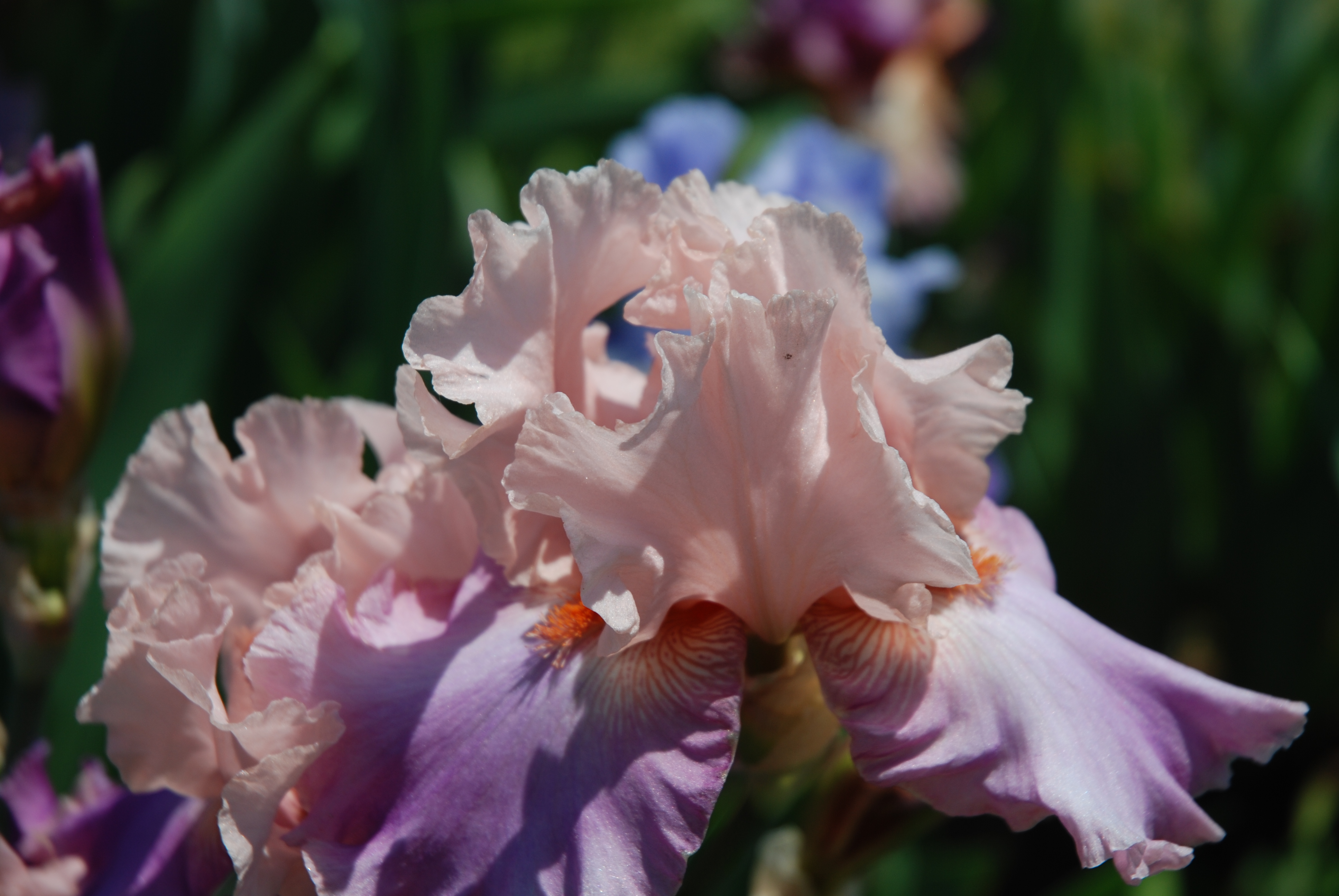
Image morguefile.com.
Irises have been a favorite perennial since childhood. They began my gardening and were there when I retired from working the grounds at St. Francis Retreat Center.
Over the years I have come to love the wide assortment of Iris germanica. From the earliest blooming dwarfs to the big boys late in the season. Bearded Irises are long lived, sturdy, fairly drought tolerant and easy to grow, requiring little maintenance. Usually planted in late spring or early summer, they prefer full sun (6-8 hours) but will tolerate light shade; too much shade and they will not bloom. Grow in well drained garden soil. They will falter in heavy clay, an area that remains wet, or when the rhizomes are covered with mulch.
Irises grow from thick fleshy rhizomes that must be partially exposed to the sun. One end of the rhizome has the leaves and it is from this end that they spread. When planting, face this end into the garden to prevent its growing into edging or other areas.
When planting a bare-root rhizome the division end must be dried over to prevent bacterial rot. Dig a shallow donut-like trench with a mound in the middle. Place the rhizome on the top of the mound so that 1/3 of the rhizome will be above soil level and exposed to the sun. Spread the thick roots inside the trench and back-fill with soil.
If you buy Irises from a greenhouse make sure they are properly potted with 1/3 of the rhizome exposed. Plant the same as any other potted flower making sure the rhizome is slightly above the rest of the garden soil. Because Irises have thick roots, don’t be surprised if the potting mix falls away when you remove the plant.
To encourage a nice set of blooms, keep the soil moist but not wet just prior to flowering. To encourage Reblooming Iris to re-flower they should be watered as needed throughout the growing season. The rebloomers do much better in a garden that is watered regularly whereas single season bloomers are excellent in dryer areas.
Deadhead flowers singly from the main stalk, removing the spent flowering stalk by cutting it a couple of inches above the rhizome. In the fall cut the leaves back to 6-8” in an inverted-V.
There are very few pest and disease issues with this sturdy perennial. Bacterial soft rot, crown rot, fungal leaf spots, and Iris borer may occasionally become problematic. To reduce the occurrence of leaf spots and borers, remove and destroy any old leaves, stems, and plant debris. With bacterial and crown rots, remove all infected plant parts (do not compost) to avoid the spread of these diseases.
After 4-5 years divide the Irises. This is usually done 4-6 weeks after flowering. Cut leaves down to one-third their length, dig up the clump and remove soil by sloshing in a bucket of water. Snap or cut the rhizomes apart so each section has at least one healthy fan of leaves, a firm rhizome and white roots. Allow the cut end of rhizome to dry for 48 hours before replanting.
With very little care Bearded Iris will live on for generations.
Previous Post

May 1, 2014
Thursday's Prayer for Priests
Next Post
May 6, 2014 Tuesday's Prayer for Sisters and Nuns
Browse Our Archives
Select a Category @pontifex Aleteia Ask the Pope Book Reviews Caring for Houseplants Catholic Garden Christmas Christmas decorations Christmas Gifts for Gardeners Christmas Plants Christmases Past Equus Passage Faith and Gratitude Fasting and Virtue Flowers Fun Stuff Garden Catechism Garden Saints Garden Walk Gifts Gardener God's Timing Houseplants How to say thank you Language of flowers Letting Go Life of Christ meaning of Christmas Photo Challenge Practical Gardening Prayer Prayer for Priests Prayers for Sisters and Nuns Prayers Needed Pro-life Quote Recipes Saints Starting Seeds symbolism of evergreens Synod of Bishops Uncategorized Writing
Select a Month May 2017 March 2017 August 2016 July 2016 May 2016 April 2016 March 2016 February 2016 January 2016 December 2015 November 2015 October 2015 September 2015 August 2015 July 2015 June 2015 May 2015 April 2015 March 2015 February 2015 January 2015 December 2014 November 2014 October 2014 September 2014 August 2014 July 2014 June 2014 May 2014 April 2014 March 2014 February 2014 January 2014 December 2013 November 2013 October 2013 September 2013 August 2013 July 2013 June 2013 May 2013 April 2013 March 2013 February 2013 January 2013 December 2012 November 2012 October 2012
Follow Us!
TAKE THE
Religious Wisdom Quiz
I am a donkey that spoke to rebuke my master, a prophet. What am I?
Select your answer to see how you score.
A miracle donkey A prophet's beast A talking animal Balaam's donkey
Related posts from Morning Rose Prayer Gardens

Almanac for Catholic Gardeners

Tree Hugging Saints who Preceded Tree Hugging Pope...


Assumption Lilies for Your Mary Garden
TRENDING AT PATHEOS Catholic

Rejecting Doom: Christian Hope And Human Action
Christianity is a religion of hope. We are to have hope and...

It’s What Comes From Within Which Matters
One of the most difficult things for us to understand is why...

Why I Choose the Eucharist Over the Sermon
Choose the Eucharist, Not the Sermon What are we supposed to get...

5 Design Elements Found in Spiritually Rooted Homes
Putting Spirituality Into Home Decor Our homes are more than our living...

Credo: A Story of God Told with the...
About 10 years ago, I began to imagine a personal "Credo" that...

The Anatomy of Divine Revelation in Catholic Thought
The claim that God has made Himself known to human beings is...
view all Catholic blogs
Ad-Free & Subscriber Log-In Subscription Support
- About Us
- 2026 Calendar
- Videos
- Podcasts
- Library of World Religions
- Faith In Media Tracker
- Advertise With Us
- Write for Us
- Privacy Policy
- Terms of Service
- Do Not Sell My Data
- Contact Us
- Radiant Digital
- Manage Newsletter Subscriptions
- Unsubscribe From Notifications
- Sitemap
Copyright 2008-2026, Patheos. All rights reserved.
Subscription Support Ad-Free & Subscriber Log-In
Follow Patheos