
BuddhistCatholicContemplativeEvangelicalGeneral ChristianHinduJewishLatter-day SaintMuslimNew VisionsProgressive Christian
Beliefs
- Buddhist
- Catholic
- Contemplative
- Evangelical
- General Christian
- Hindu
- Jewish
- Latter-day Saint
- More Voices
- Muslim
- New Visions
- Pagan
- Progressive Christian
Topics
- Religion News
- Food and Religion
- Sports and Religion
- Religious Art
- Religious Music and Entertainment
- Religious Events
- History and Religion
- Style and Religion
- Politics and Religion
- Women in Religion
- Recreation Outdoors and Religion
- Business Finance and Religion
- Careers Workplace and Religion
- Education and Religion
- Family Parenting and Religion
- Health Fitness and Religion
- Home and Religion
- Relationships and Religion
- Technology and Religion
- Travel and Religion
Columnists
- Buddhist Columnists
- Business Finance and Religion Columnists
- Careers Workplace and Religion Columnists
- Catholic Columnists
- Contemplative Columnists
- Education and Religion Columnists
- Evangelists Columnists
- Family Parenting and Religion Columnists
- General Christian Columnists
- Health Fitness and Religion Columnists
- Hindu Columnists
- History and Religion Columnists
- Home and Religion Columnists
- Jewish Columnists
- More Voices Columnists
- Latter Day Columnists
- Muslim Columnists
- New Visions Columnists
- Nonreligious Columnists
- Pagan Columnists
- Politics and Religion Columnists
- Progressive Columnists
- Recreation Outdoors and Religion Columnists
- Relationships and Religion Columnists
- Religion News Columnists
- Religious Art Columnists
- Religious Events Columnists
- Religious Music and Entertainment Columnists
- Sports and Religion Columnists
- Style and Religion Columnists
- Technology and Religion Columnists
- Travel and Religion Columnists
- Women in Religion Columnists
Resource Library
- 2026 Calendar
- Library of World Religions
- The 100 Most Holy Places on Earth
- Patheos Answers
- Podcasts
- Videos
- Faith Leaders Database
- Anglican Episcopalian
- Bahai
- Baptist
- Buddhism
- Christianity
- Confucianism
- Eastern Orthodoxy
- Hinduism
- Holiness and Pentecostal
- ISKCON
- Islam
- Judaism
- Lutheran
- Methodist
- The Church of Jesus Christ of Latter-day Saints
- New Age
- Paganism
- Presbytarian and Reformed
- Protestantism
- Religion Behind the Scenes
- Roman Catholic
- Scientology
- Shia Islam
- Sikhism
- Sufism
- Sunni Islam
- Taoism
- Zen
- See all religions
Research Tools
 Ad-Free & Subscriber Log-In Subscription Support
Ad-Free & Subscriber Log-In Subscription Support
Follow Patheos 

- Trending:
- Forgiveness
- |
- Marriage
- |
- Consciousness
- |
- Death Penalty
- |
- Election
- |
- Halloween
 Morning Rose Prayer Gardens
- Home
- Catholic
- Bee Mindful, Practical Gardening Series
Bee Mindful, Practical Gardening Series
Last updated on: December 26, 2014 at 11:34 pm by Margaret Rose Realy, Obl. OSB
Bee Mindful, Practical Gardening Series 2014-12-26T23:34:50-05:00 Margaret Rose Realy, Obl. OSB
Patheos Explore the world's faith through different perspectives on religion and spirituality! Patheos has the views of the prevalent religions and spiritualities of the world.
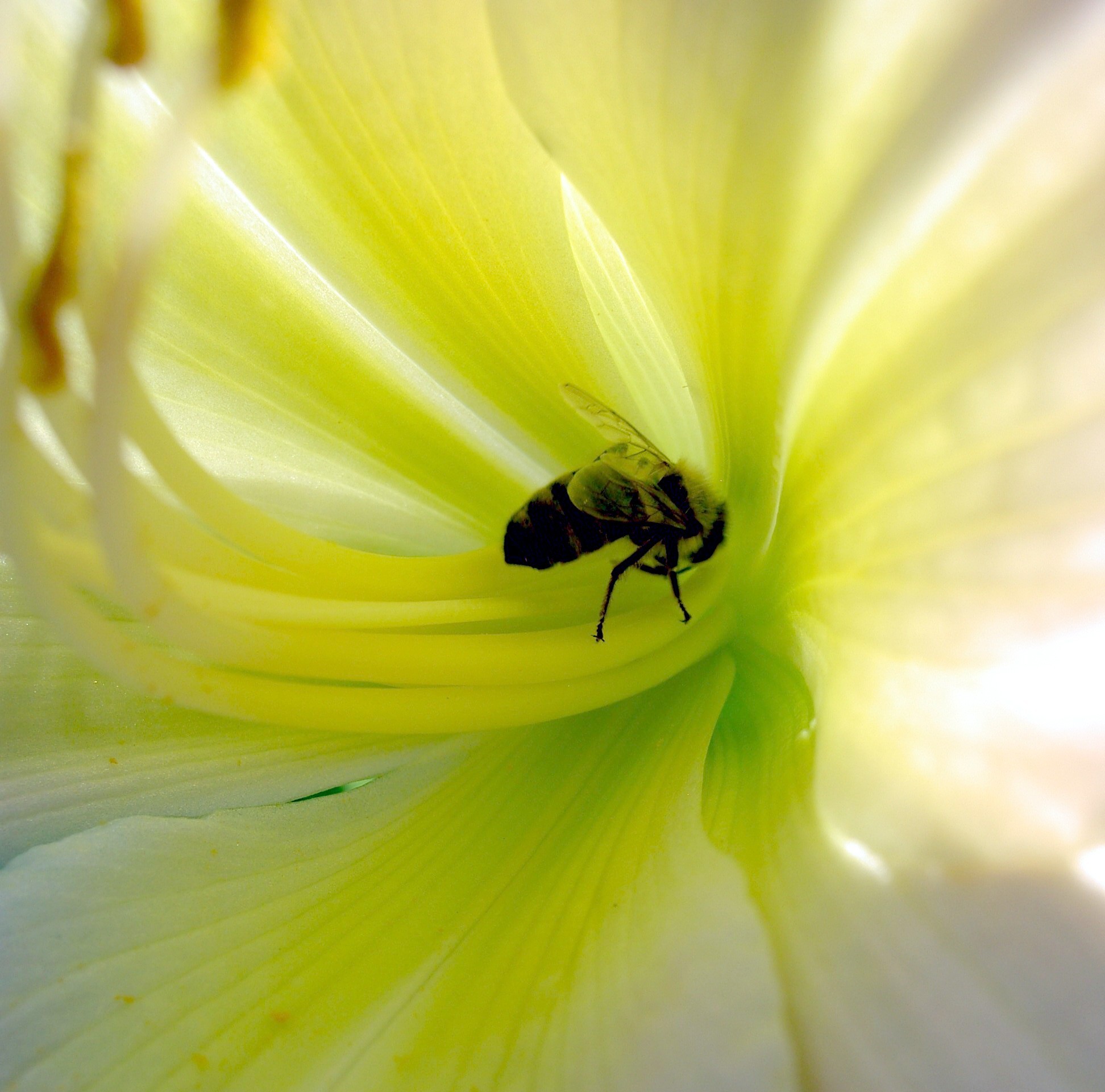
Image morguefile.com.
Have you begun vegetable gardening? Me? Not for another 60 days. My big-garden days are over. I still include a couple tomato plants, pole beans, and bush zucchinis among my remaining border beds.
A decade ago the fruit set was about a third more than it is today. Extra plants are needed to get the same amount of food. The issue is not with the cultivars, and the problem is pretty straight forward—no bees.
And no bees, no food.
It doesn’t matter if you’re growing in containers on a patio or running a multi-million dollar farm. Without pollinators—I’m talking about insects—fertilization and fruitfulness doesn’t happen. No apples or oranges, no cucumbers or tomatoes.
A virulent insecticide known as neonicotinoid (pronounced, nee·ō·nic·ō·te·noyd) became internationally used at the turn of this century. Shortly after its introduction efforts were made to remove it.
The use of some members of this class has been restricted [or eliminated] in some countries due to some evidence of a connection to honey-bee colony collapse disorder [this insecticide breaks down the bee’s immune system so they are no longer resistant to common viruses]. In January 2013, the European Food Safety Authority stated that neonicotinoids pose an unacceptably high risk to bees, and that the industry-sponsored science upon which regulatory agencies’ claims of safety have relied may be flawed.
Organic Gardening writer Jean Nick shared that over 50% of plants at big-box stores are contaminated with this insecticide. What’s worse, the retailers are marketing the stock—vegetables and flowers—as “bee friendly”.
Environmental group Friends of the Earth purchased “bee-friendly” plants from three major big-box retailers around the country and had them analyzed at a laboratory. Seven of the 13 plants tested contained neonicotinoids, a type of synthetic insecticide that is poisonous to bees.
Neonicotinoids are especially dangerous to bees and other insects because they are absorbed into plant tissues and distributed to new growth, including pollen collected and eaten by bees. This class of insecticide is known for its persistence in plant tissues and the environment, remaining deadly for months or even years. An increasing amount of evidence links neonicotinoids to the decline of bee populations worldwide.
Buying plants at big box stores is convenient and cost about 20% less than from independent growers. I ask that you consider if saving a couple of dollars is really worth the tradeoff of essential pollinators.
I’ve experienced first-hand the loss of bees. I’ve hand-pollinated when vegetable plants failed to set fruit, and remove deformed veggies and flowers that lacked full pollination. I’ve listened to friends, neighbors, and clients bewildered over the lack of fruits and veggies in their properly fed and watered gardens.
My attempts to encourage gardeners to purchases from independent growers has had minimal results—and more so, the same people blissfully spray pesticides with little concern. After all, they say, what difference can one person make.
What matters is that you try. That you encourage others to try to be better stewards and gardeners. Being organic is not always easy. Looking out for the littlest of God’s creatures is a challenge. But keep in mind that the end results are pretty straight forward—no bees, no food.
God had a plan when he designed nature, and we need to get with his program.
Previous Post

March 27, 2014
Thursday's Prayer for Priests
Next Post
April 1, 2014 Tuesday's Prayer for Sisters and Nuns
Browse Our Archives
Select a Category @pontifex Aleteia Ask the Pope Book Reviews Caring for Houseplants Catholic Garden Christmas Christmas decorations Christmas Gifts for Gardeners Christmas Plants Christmases Past Equus Passage Faith and Gratitude Fasting and Virtue Flowers Fun Stuff Garden Catechism Garden Saints Garden Walk Gifts Gardener God's Timing Houseplants How to say thank you Language of flowers Letting Go Life of Christ meaning of Christmas Photo Challenge Practical Gardening Prayer Prayer for Priests Prayers for Sisters and Nuns Prayers Needed Pro-life Quote Recipes Saints Starting Seeds symbolism of evergreens Synod of Bishops Uncategorized Writing
Select a Month May 2017 March 2017 August 2016 July 2016 May 2016 April 2016 March 2016 February 2016 January 2016 December 2015 November 2015 October 2015 September 2015 August 2015 July 2015 June 2015 May 2015 April 2015 March 2015 February 2015 January 2015 December 2014 November 2014 October 2014 September 2014 August 2014 July 2014 June 2014 May 2014 April 2014 March 2014 February 2014 January 2014 December 2013 November 2013 October 2013 September 2013 August 2013 July 2013 June 2013 May 2013 April 2013 March 2013 February 2013 January 2013 December 2012 November 2012 October 2012
Follow Us!
TAKE THE
Religious Wisdom Quiz
True or False: The feast of Purim commemorates the Jewish people's deliverance from Haman's plot.
Select your answer to see how you score.
FALSE TRUE
Related posts from Morning Rose Prayer Gardens

Assumption Lilies for Your Mary Garden
Like Patience, Don’t Pray for Perseverance!
Mother has the Patience of a Saint

Cutting the Sod, Not Killing Yourself
TRENDING AT PATHEOS Catholic

Rejecting Doom: Christian Hope And Human Action
Christianity is a religion of hope. We are to have hope and...

It’s What Comes From Within Which Matters
One of the most difficult things for us to understand is why...

Why I Choose the Eucharist Over the Sermon
Choose the Eucharist, Not the Sermon What are we supposed to get...

5 Design Elements Found in Spiritually Rooted Homes
Putting Spirituality Into Home Decor Our homes are more than our living...

Credo: A Story of God Told with the...
About 10 years ago, I began to imagine a personal "Credo" that...

The Anatomy of Divine Revelation in Catholic Thought
The claim that God has made Himself known to human beings is...
view all Catholic blogs
Ad-Free & Subscriber Log-In Subscription Support
- About Us
- 2026 Calendar
- Videos
- Podcasts
- Library of World Religions
- Faith In Media Tracker
- Advertise With Us
- Write for Us
- Privacy Policy
- Terms of Service
- Do Not Sell My Data
- Contact Us
- Radiant Digital
- Manage Newsletter Subscriptions
- Unsubscribe From Notifications
- Sitemap
Copyright 2008-2026, Patheos. All rights reserved.
Subscription Support Ad-Free & Subscriber Log-In
Follow Patheos