
BuddhistCatholicContemplativeEvangelicalGeneral ChristianHinduJewishLatter-day SaintMuslimNew VisionsProgressive Christian
Beliefs
- Buddhist
- Catholic
- Contemplative
- Evangelical
- General Christian
- Hindu
- Jewish
- Latter-day Saint
- More Voices
- Muslim
- New Visions
- Pagan
- Progressive Christian
Topics
- Religion News
- Food and Religion
- Sports and Religion
- Religious Art
- Religious Music and Entertainment
- Religious Events
- History and Religion
- Style and Religion
- Politics and Religion
- Women in Religion
- Recreation Outdoors and Religion
- Business Finance and Religion
- Careers Workplace and Religion
- Education and Religion
- Family Parenting and Religion
- Health Fitness and Religion
- Home and Religion
- Relationships and Religion
- Technology and Religion
- Travel and Religion
Columnists
- Buddhist Columnists
- Business Finance and Religion Columnists
- Careers Workplace and Religion Columnists
- Catholic Columnists
- Contemplative Columnists
- Education and Religion Columnists
- Evangelists Columnists
- Family Parenting and Religion Columnists
- General Christian Columnists
- Health Fitness and Religion Columnists
- Hindu Columnists
- History and Religion Columnists
- Home and Religion Columnists
- Jewish Columnists
- More Voices Columnists
- Latter Day Columnists
- Muslim Columnists
- New Visions Columnists
- Nonreligious Columnists
- Pagan Columnists
- Politics and Religion Columnists
- Progressive Columnists
- Recreation Outdoors and Religion Columnists
- Relationships and Religion Columnists
- Religion News Columnists
- Religious Art Columnists
- Religious Events Columnists
- Religious Music and Entertainment Columnists
- Sports and Religion Columnists
- Style and Religion Columnists
- Technology and Religion Columnists
- Travel and Religion Columnists
- Women in Religion Columnists
Resource Library
- 2026 Calendar
- Library of World Religions
- The 100 Most Holy Places on Earth
- Patheos Answers
- Podcasts
- Videos
- Faith Leaders Database
- Anglican Episcopalian
- Bahai
- Baptist
- Buddhism
- Christianity
- Confucianism
- Eastern Orthodoxy
- Hinduism
- Holiness and Pentecostal
- ISKCON
- Islam
- Judaism
- Lutheran
- Methodist
- The Church of Jesus Christ of Latter-day Saints
- New Age
- Paganism
- Presbytarian and Reformed
- Protestantism
- Religion Behind the Scenes
- Roman Catholic
- Scientology
- Shia Islam
- Sikhism
- Sufism
- Sunni Islam
- Taoism
- Zen
- See all religions
Research Tools
 Ad-Free & Subscriber Log-In Subscription Support
Ad-Free & Subscriber Log-In Subscription Support
Follow Patheos 

- Trending:
- Forgiveness
- |
- Marriage
- |
- Consciousness
- |
- Death Penalty
- |
- Election
- |
- Halloween

- Home
- Latter-day Saint
- Jesus is Greater Than the Law
Jesus is Greater Than the Law
Last updated on: February 18, 2022 at 12:10 pm by Guest Contributor
Jesus is Greater Than the Law 2022-02-15T17:19:30+00:00 Guest Contributor
Patheos Explore the world's faith through different perspectives on religion and spirituality! Patheos has the views of the prevalent religions and spiritualities of the world.
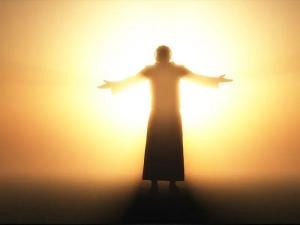
Shutterstock.com
In the previous segments we’ve learned that only a powerful forgiveness event can resolve our insolvable problems: that we are fallen and cannot save ourselves, that we cannot be saved in our sins, and also that we must not die in our sins.
Once we accept a comprehensive saving event, and its effects: redemption, re-birth, being changed to a state of righteousness, then we will begin to recognize an entirely new message from the scriptures. Once we understand that the whole of our mortal existence is spent in either the state of wickedness or the state of righteousness, we will begin to recognize the thousands of scriptures that refer to these two states. References to our fallen state use terms like, “in our sins,” “natural man,” “of nature,” “not redeemed,” “state of wickedness.” (1 Cor. 15:17; 2 Ne 9:38; Mosiah 2:33; Alma 11:37 and 12:16-18.)
Terms that refer to our forgiven state include: “saved,” “redeemed,” “born again,” “reconciled,” “new creature,” “washed in His blood,” “his image in your countenance,” “alive in Christ,” “in Christ,” “in the spirit,” “Christ in us,” and mercy rather than justice.
All of these conditions happen at the same time and are the effects of being forgiven, for example, “Therefore if any man be in Christ, he is a new creature: old things are passed away; behold, all things are become new” (2 Corinthians 5:17). Now that we understand the term “in Christ” refers to our state after being redeemed, this verse tells us, anyone who has been redeemed becomes a completely new creature, and everything is different.
“Everything is different” is the biggest understatement in the universe. One unbelievable difference is our relationship with the law–with all the commandments. If we really can be forgiven for all our sins right now, if we really can be imputed with Christ’s righteousness (justified), then the logical conclusion is that we are no longer in jeopardy of justice, no longer in danger of punishment from the law, right? You cannot be pardoned from punishment, and still be punished, right? You cannot have Christ’s righteousness and need more righteousness, can you?
It’s likely that you just reacted the same as Paul’s audience, “What then? shall we sin, because we are not under the law, but under grace?” (Romans 6:15). Paul’s answer was, “God forbid!”, in other words, of course not! But the premise of their question shows that Paul had been teaching a forgiveness so comprehensive as to render the law “dead.”
Let’s take the concept of forgiveness to its logical and astounding conclusion; if we are forgiven for all our sins, including future sins, then doesn’t that essentially render the law meaningless? Couldn’t you say the law becomes “dead”? For example, if you break a commandment, but have already been forgiven of that sin, then it’s as if there is no commandment, right? Well, that astounding conclusion is exactly what Paul teaches the Romans, Ephesians, and Galatians, that once justified, we are no longer under the law.
What? Forgiven of future sins? No longer under the law? (I know, more cognitive dissonance–sorry). It’s because of teachings like this that many Latter-Day Saints think Paul was a little off the rails. And yet Nephi teaches the same thing! “For this end was the law given; wherefore the law hath become dead unto us, and we are made alive in Christ because of our faith… we speak concerning the law that our children may know the deadness of the law; and they, by knowing the deadness of the law, may look forward unto that life which is in Christ, and know for what end the law was given (2 Ne 25:25, 27).
Was Nephi off the rails too? Was he only referring to the law of Moses being dead? Nope, it’s God’s law, the law that defines sin, the law that will punish the impenitent (2 Ne 2:26; Alma 42:23). And we can trust that Paul and Nephi were not off the rails because Christ himself taught this exact same doctrine. Please read Matt 12:1-8. In this account the ever-present Pharisees see the disciples do something wrong; they pick grain on the Sabbath. (I’m not sure why the Pharisees didn’t also condemn them for stealing, since it wasn’t their grain, but I digress).
Anyway, Jesus answers the Pharisees by giving examples of others who broke the law. David broke the commandment by eating the holy bread. And the priests who profane the sabbath also broke the commandment, but because they work in the temple, they are blameless. And then Jesus makes the audacious statement that he is greater than the temple! So, although his disciples did indeed break the sabbath by picking the grain, (and stealing) they are guiltless because they are with him, and he is greater than the Sabbath! So, Jesus is saying, yes, people break the law, everyone breaks the commandments, but their salvation is obtained by faith in me–by receiving mercy. “Christ is the end of the law for righteousness to everyone who believes.” (Romans 10:3,4)
This is the concept that Paul tries to teach using many different phrases, like, “dead to sin,” “free from sin,” “delivered from the law,” “no longer under the law”, and sin not being “imputed” to us (Rom 4:8; 6:2, 18, 22; 7:6; Gal 2:19; 3:13; 5:18). This concept is hard to accept , but even simple logic brings us to the same conclusion; that once forgiven for all our sins, we can no longer be condemned by the law.
So Paul teaches this doctrine every way he can think of, by metaphor, by simply stating it, and yet, it was lost on many of the Romans, Ephesians, and Galatians just like it’s lost on us. Don’t we too want a reward for our good deeds, and want criminals punished? Forgiving huge debts, looking at the serpent, washing in the stream, the prodigal son, these are inspiring stories, but do we really believe they apply to us?
Please read Galatians chapters 2-5, and Romans chapters 3-8. You can feel Paul’s exasperation as he says, “Tell me, ye that desire to be under the law, do ye not hear the law!” (Gal 4:21). In other words, he is saying, you keep trying to make salvation about keeping the commandments, do you not understand what that means? Do you not understand the impossibility of keeping all the commandments! Do you really want that heavy yoke?
He continues in Galatians 5:1, “Stand fast therefore in the liberty wherewith Christ hath made us free, and be not entangled again with the yoke of bondage” because he who thinks obedience to the laws will save him, is obligated to keep it perfectly, “is a debtor to do the whole law” 5:3. Then he says in effect, if you insist that obedience to the law, (for example circumcision), is what saves you, then “Christ is become of no effect unto you. Whosoever of you are justified by the law, ye are fallen from grace.” 5:4 And, “if ye be led of the spirit, ye are not under the law.” 5:18. In other words, once you have been justified, you are not under the law.
I hope these articles help us better understand repentance, forgiveness, and redemption. If we don’t correctly understand these doctrines, it’s easy to reach incorrect conclusions about which is the cause and which is the effect of salvation. For example, many believe that good works cause the effect of salvation; when actually the scriptures teach that good works–as defined by God–do not even exist until after we’ve been saved. As we see with Benjamin’s people, forgiveness–not obedience–is the key to joy and peace.
Being forgiven and redeemed are true and attainable states, in this life, right now. Contemplate that wonderful possibility; imagine the peace of knowing that Jesus has forgiven you. Imagine knowing that He will conquer your most unconquerable faults. What if rather than worry, you had joy? What if every day you could have a perfect brightness of hope that you will receive eternal life in the Kingdom of God?

About Vardell Taylor
Vardell Taylor was raised in the LDS church but followed a familiar pattern of inactivity before returning to the church at nearly 30 years old. At age 58 he experienced something he didn’t even think was possible–being forgiven and changed by Christ. Since then, 2013, he has written a book about his experience and has tried to minister the good news to anyone patient enough to indulge him. He lives in West Jordan, Utah with his wife. They have four married children and 18 grandchildren. He still works in the same business that he started with 49 years ago, and still loves to hunt, fish, play golf, and testify of Christ–oh, and long walks on the beach. Vardell would welcome your thoughts and comments. [email protected] You can read more about the author here.
Previous Post

February 11, 2022
How Many Commandments Must We Keep?
Browse Our Archives
Select a Category Uncategorized
Select a Month February 2022 January 2022 December 2021 June 2019 March 2019 March 2018
TAKE THE
Religious Wisdom Quiz
What Christian group refers to their leaders as "General Superintendents"?
Select your answer to see how you score.
Nazarene Methodist Catholic Orthodox
Related posts from Posts of Great Price

How Many Commandments Must We Keep?
In What State Do You Reside? Justified?

TRENDING AT PATHEOS Latter-day Saint

Did Prayer Cure His Cancer? Or Was It...
At 4 AM one morning, Joshua W. Brown’s wife awoke to a...

8 Ways a Near-Death Experience Rewires the Soul
Does Consciousness Survive Physical Death? After 50 Years of Research, Dr. Raymond...

Holy Longing: What Our Restlessness Is Telling Us
“One can find so many pains when the rain is falling.” -John...

What this is NOT about. This blog is definitely not about...

Who said the Israelites were God’s chosen? That’s right, they did. Who...

The Spirit World Is the Real World: God...
A Monk’s Wisdom on Body and Spirit I sit with Brother Martin...
view all Latter-day Saint blogs
Ad-Free & Subscriber Log-In Subscription Support
- About Us
- 2026 Calendar
- Videos
- Podcasts
- Library of World Religions
- Faith In Media Tracker
- Advertise With Us
- Write for Us
- Privacy Policy
- Terms of Service
- Do Not Sell My Data
- Contact Us
- Radiant Digital
- Manage Newsletter Subscriptions
- Unsubscribe From Notifications
- Sitemap
Copyright 2008-2026, Patheos. All rights reserved.
Subscription Support Ad-Free & Subscriber Log-In
Follow Patheos