
BuddhistCatholicContemplativeEvangelicalGeneral ChristianHinduJewishLatter-day SaintMuslimNew VisionsProgressive Christian
Beliefs
- Buddhist
- Catholic
- Contemplative
- Evangelical
- General Christian
- Hindu
- Jewish
- Latter-day Saint
- More Voices
- Muslim
- New Visions
- Pagan
- Progressive Christian
Topics
- Religion News
- Food and Religion
- Sports and Religion
- Religious Art
- Religious Music and Entertainment
- Religious Events
- History and Religion
- Style and Religion
- Politics and Religion
- Women in Religion
- Recreation Outdoors and Religion
- Business Finance and Religion
- Careers Workplace and Religion
- Education and Religion
- Family Parenting and Religion
- Health Fitness and Religion
- Home and Religion
- Relationships and Religion
- Technology and Religion
- Travel and Religion
Columnists
- Buddhist Columnists
- Business Finance and Religion Columnists
- Careers Workplace and Religion Columnists
- Catholic Columnists
- Contemplative Columnists
- Education and Religion Columnists
- Evangelists Columnists
- Family Parenting and Religion Columnists
- General Christian Columnists
- Health Fitness and Religion Columnists
- Hindu Columnists
- History and Religion Columnists
- Home and Religion Columnists
- Jewish Columnists
- More Voices Columnists
- Latter Day Columnists
- Muslim Columnists
- New Visions Columnists
- Nonreligious Columnists
- Pagan Columnists
- Politics and Religion Columnists
- Progressive Columnists
- Recreation Outdoors and Religion Columnists
- Relationships and Religion Columnists
- Religion News Columnists
- Religious Art Columnists
- Religious Events Columnists
- Religious Music and Entertainment Columnists
- Sports and Religion Columnists
- Style and Religion Columnists
- Technology and Religion Columnists
- Travel and Religion Columnists
- Women in Religion Columnists
Resource Library
- 2026 Calendar
- Library of World Religions
- The 100 Most Holy Places on Earth
- Patheos Answers
- Podcasts
- Videos
- Faith Leaders Database
- Anglican Episcopalian
- Bahai
- Baptist
- Buddhism
- Christianity
- Confucianism
- Eastern Orthodoxy
- Hinduism
- Holiness and Pentecostal
- ISKCON
- Islam
- Judaism
- Lutheran
- Methodist
- The Church of Jesus Christ of Latter-day Saints
- New Age
- Paganism
- Presbytarian and Reformed
- Protestantism
- Religion Behind the Scenes
- Roman Catholic
- Scientology
- Shia Islam
- Sikhism
- Sufism
- Sunni Islam
- Taoism
- Zen
- See all religions
Research Tools
 Ad-Free & Subscriber Log-In Subscription Support
Ad-Free & Subscriber Log-In Subscription Support
Follow Patheos 

- Trending:
- Forgiveness
- |
- Marriage
- |
- Consciousness
- |
- Death Penalty
- |
- Election
- |
- Halloween

- Home
- Latter-day Saint
- How Many Commandments Must We Keep?
How Many Commandments Must We Keep?
Last updated on: February 11, 2022 at 12:10 pm by Guest Contributor
How Many Commandments Must We Keep? 2022-01-24T04:07:34+00:00 Guest Contributor
Patheos Explore the world's faith through different perspectives on religion and spirituality! Patheos has the views of the prevalent religions and spiritualities of the world.

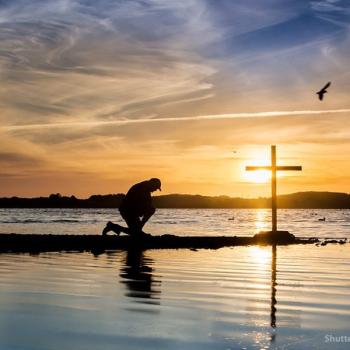
Shutterstock.com
If you read the previous segment, your reaction was likely similar to Paul’s audience, “What then? shall we sin, because we are not under the law, but under grace?” (Romans 6:15). Paul’s reply was, “God forbid!” In other words, of course not! But the premise of their question may be more important than the answer; it tells us Paul had been teaching that once justified, we are no longer under the law, but are now under grace. What exactly does that mean?
There is enough ambiguity in the scriptures that people have debated for millennia whether we are saved by works or by faith. The following conclusions have helped me resolve the question.
Conclusion 1: “They that are in the flesh cannot please God” (Romans 8:8).
We recall that King Benjamin’s people were, “diligent in keeping the commandments,” and a “highly favored people of the Lord” (Mosiah 1:11, 13). And yet these exemplary people were feeling the broken heart, feeling “the fear of the Lord” and “less than the dust of the earth.” Benjamin told them that the reason for their anguish was because “the knowledge of the goodness of God at this time has awakened you to a sense of your nothingness, and your worthless and fallen state” (Mosiah 4:5).
This is extremely important to understand; despite their remarkable obedience these people had not yet been redeemed, and because they were still in the fallen state, their works were also fallen and worthless. The scriptures teach the astounding doctrine that good works are not accounted (not imputed) to those who have not been redeemed, hence Paul correctly said, “They that are in the flesh cannot please God.” You recall from previous segments that, “in the flesh” means “in our fallen state.” So, “They that are in the flesh cannot please God” is Paul’s way of saying exactly what King Benjamin said, “the natural man is an enemy to God.” What Paul and Benjamin are both saying is, regardless of what they do, the un-redeemed will have no good works.
Nephi and Paul both said, “by the law no flesh is justified,” (2 Ne. 2:5; Romans 3:20, 28; Galatians 2:16) which means that regardless of how many commandments we keep, no one can improve himself out of his fallen state. “Man can merit nothing of himself, and must rely wholly upon the merits and mercy of him who is mighty to save” (2 Ne 31:19; Alma 22:14). Until we are redeemed, we are the natural man, an enemy to God, a bad tree, and good fruit cannot come from a bad tree. However, once redeemed/born again, then you become “free from sin, and become the servants of righteousness.” And only now can you have “fruit unto holiness” (Romans ch 6; 3 Ne 14:14-27; Moroni 7:5-12).
The perfect teaching that our works don’t make us righteous is in the Sermon on the Mount where Jesus said, at the judgement there will be many who have done wonderful works, but will still be turned away. “Lord, Lord, have we not prophesied in thy name, and in thy name have cast out devils, and in thy name done many wonderful works? And then will I profess unto them: I never knew you, depart from me, ye that work iniquity” (3 Ne 14:22,23).
So, when we read a scripture that says we will be judged by our works, if we have not been redeemed, then we will have no good works–zero, none. Works of righteousness only come from those who are the new creature, combined with the only source of righteousness–Jesus Christ.
Conclusion 2: Keeping the commandments may not mean ALL of them.
Maybe we’re incorrect to assume that keeping the commandments means doing every possible good thing, and avoiding every possible bad thing. The scriptures teach that, yes, there are some we absolutely must fulfill, and others that are less critical. I think the less critical are the “ends” of the law.
Look at how “fulfilling the commandments” is defined in this verse: “And the first fruits of repentance is baptism, and baptism cometh by faith unto the fulfilling the commandments, and the fulfilling the commandments bringeth remission of sins” (Moroni 8:25). Similarly, in Mormon 7:10, it says that if you believe in Christ and are baptized with water, and then with fire and the Holy Ghost, “according to the commandment, it shall be well with you in the day of judgment”.
So according to these scriptures, accomplishing faith, repentance, baptism, and being forgiven, fulfills the commandments.
Paul’s letters also support this idea that there are some “must do’s” and other “should do’s”. He repeatedly stresses that we are justified by our faith in Christ, but then goes on to list many things that we should do, not to earn our salvation, but as redeemed children of Christ these are traits we should cultivate. “Abhor that which is evil; cleave to that which is good. Be kindly affectioned one to another with brotherly love; Not slothful in business; fervent in spirit; serving the Lord; Rejoicing in hope; patient in tribulation; continuing in prayer; Distributing to the necessity of saints; given to hospitality” (Romans 12). In Ephesians 2:8 Paul again says, we are saved through faith – not of any works, lest man should boast. And then in chapter 4 he says, “walk worthy of the vocation wherewith ye are called, with lowliness and meekness and longsuffering, forbearing one another in love.” In Colossians 2:6 he said, “As ye have received Christ the Lord, so walk in him.” So, Paul’s message is, you have been redeemed–so act like it!
So, if we have been baptized with water, have exhibited faith in Christ by broken-heartedly asking for mercy, have received forgiveness (the baptism of fire and of the Holy Ghost), then we have kept his commandment. Then what about the endless list of do’s and don’ts–the “ends” of the law? “He offereth himself a sacrifice for sin, to answer the ends of the law, unto all those who have a broken heart and a contrite spirit; and unto none else can the ends of the law be answered” (Romans 10:3,4; 2 Nephi 2:7,10).
Conclusion 3: when the commandment came, sin revived (Rom 7:9).
We do receive many blessings from keeping the commandments. But there just is no example in the scriptures where someone receives a remission of sins because they earned it. When some sorrowing soul asks Jesus for mercy, Christ never says, well let’s add up your credits, subtract your debits, and see if you are worthy. So, all the examples of redemption in the scriptures support Paul, that we are justified by manifesting faith in Christ, not because of our obedience.
Then how do we answer Paul’s audience, “What then? shall we sin, because we are not under the law, but under grace?” In other words, if obedience doesn’t earn our salvation, why should we obey? There is great value in improving ourselves. We should try to keep all the commandments; and we are blessed immediately and profusely when we do. Obedience teaches us the goodness of God, and increases our faith in Christ.
But the word of God has two edges, both are beneficial, but one is pleasant and one is not. Our effort to keep the law exposes our own nothingness–exposes our weaknesses (Mosiah 4:5). The law demands perfection, and eventually that heavy yoke breaks our hearts and buckles our knees–which is good, just not pleasant (Rom ch7; 3 Ne 9:20). So yes, try to keep the commandments, but when you realize that you just can’t, then plead to Jesus for mercy.

About Vardell Taylor
Vardell Taylor was raised in the LDS church but followed a familiar pattern of inactivity before returning to the church at nearly 30 years old. At age 58 he experienced something he didn’t even think was possible–being forgiven and changed by Christ. Since then, 2013, he has written a book about his experience and has tried to minister the good news to anyone patient enough to indulge him. He lives in West Jordan, Utah with his wife. They have four married children and 18 grandchildren. He still works in the same business that he started with 49 years ago, and still loves to hunt, fish, play golf, and testify of Christ–oh, and long walks on the beach. Vardell would welcome your thoughts and comments. [email protected] You can read more about the author here.
Previous Post
February 4, 2022
In What State Do You Reside? Justified?
Next Post
February 18, 2022 Jesus is Greater Than the Law
Browse Our Archives
Select a Category Uncategorized
Select a Month February 2022 January 2022 December 2021 June 2019 March 2019 March 2018
TAKE THE
Religious Wisdom Quiz
What did the Israelites worship while Moses was on Mount Sinai?
Select your answer to see how you score.
A bronze snake A statue of Moses The ark A golden calf
Related posts from Posts of Great Price
In What State Do You Reside? Justified?

TRENDING AT PATHEOS Latter-day Saint

Did Prayer Cure His Cancer? Or Was It...
At 4 AM one morning, Joshua W. Brown’s wife awoke to a...

8 Ways a Near-Death Experience Rewires the Soul
Does Consciousness Survive Physical Death? After 50 Years of Research, Dr. Raymond...

Holy Longing: What Our Restlessness Is Telling Us
“One can find so many pains when the rain is falling.” -John...

What this is NOT about. This blog is definitely not about...

Who said the Israelites were God’s chosen? That’s right, they did. Who...

The Spirit World Is the Real World: God...
A Monk’s Wisdom on Body and Spirit I sit with Brother Martin...
view all Latter-day Saint blogs
Ad-Free & Subscriber Log-In Subscription Support
- About Us
- 2026 Calendar
- Videos
- Podcasts
- Library of World Religions
- Faith In Media Tracker
- Advertise With Us
- Write for Us
- Privacy Policy
- Terms of Service
- Do Not Sell My Data
- Contact Us
- Radiant Digital
- Manage Newsletter Subscriptions
- Unsubscribe From Notifications
- Sitemap
Copyright 2008-2026, Patheos. All rights reserved.
Subscription Support Ad-Free & Subscriber Log-In
Follow Patheos