
BuddhistCatholicContemplativeEvangelicalGeneral ChristianHinduJewishLatter-day SaintMuslimNew VisionsProgressive Christian
Beliefs
- Buddhist
- Catholic
- Contemplative
- Evangelical
- General Christian
- Hindu
- Jewish
- Latter-day Saint
- More Voices
- Muslim
- New Visions
- Pagan
- Progressive Christian
Topics
- Religion News
- Food and Religion
- Sports and Religion
- Religious Art
- Religious Music and Entertainment
- Religious Events
- History and Religion
- Style and Religion
- Politics and Religion
- Women in Religion
- Recreation Outdoors and Religion
- Business Finance and Religion
- Careers Workplace and Religion
- Education and Religion
- Family Parenting and Religion
- Health Fitness and Religion
- Home and Religion
- Relationships and Religion
- Technology and Religion
- Travel and Religion
Columnists
- Buddhist Columnists
- Business Finance and Religion Columnists
- Careers Workplace and Religion Columnists
- Catholic Columnists
- Contemplative Columnists
- Education and Religion Columnists
- Evangelists Columnists
- Family Parenting and Religion Columnists
- General Christian Columnists
- Health Fitness and Religion Columnists
- Hindu Columnists
- History and Religion Columnists
- Home and Religion Columnists
- Jewish Columnists
- More Voices Columnists
- Latter Day Columnists
- Muslim Columnists
- New Visions Columnists
- Nonreligious Columnists
- Pagan Columnists
- Politics and Religion Columnists
- Progressive Columnists
- Recreation Outdoors and Religion Columnists
- Relationships and Religion Columnists
- Religion News Columnists
- Religious Art Columnists
- Religious Events Columnists
- Religious Music and Entertainment Columnists
- Sports and Religion Columnists
- Style and Religion Columnists
- Technology and Religion Columnists
- Travel and Religion Columnists
- Women in Religion Columnists
Resource Library
- 2026 Calendar
- Library of World Religions
- The 100 Most Holy Places on Earth
- Patheos Answers
- Podcasts
- Videos
- Faith Leaders Database
- Anglican Episcopalian
- Bahai
- Baptist
- Buddhism
- Christianity
- Confucianism
- Eastern Orthodoxy
- Hinduism
- Holiness and Pentecostal
- ISKCON
- Islam
- Judaism
- Lutheran
- Methodist
- The Church of Jesus Christ of Latter-day Saints
- New Age
- Paganism
- Presbytarian and Reformed
- Protestantism
- Religion Behind the Scenes
- Roman Catholic
- Scientology
- Shia Islam
- Sikhism
- Sufism
- Sunni Islam
- Taoism
- Zen
- See all religions
Research Tools
 Ad-Free & Subscriber Log-In Subscription Support
Ad-Free & Subscriber Log-In Subscription Support
Follow Patheos 

- Trending:
- Forgiveness
- |
- Marriage
- |
- Consciousness
- |
- Death Penalty
- |
- Election
- |
- Halloween

- Home
- Latter-day Saint
- Forgiveness–Amazing Grace
Forgiveness–Amazing Grace
Last updated on: January 28, 2022 at 12:10 pm by Guest Contributor
Forgiveness–Amazing Grace 2022-01-24T04:08:03+00:00 Guest Contributor
Patheos Explore the world's faith through different perspectives on religion and spirituality! Patheos has the views of the prevalent religions and spiritualities of the world.
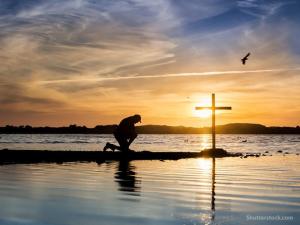 In segment 3 we saw that we can repent of all our sins at once. In every example: Alma, Enos, Benjamin’s people, Lamoni, his father, the King, the wicked Lamanites in Helaman 5, all had broken hearts, all pleaded to Christ for mercy, and all were forgiven and experienced peace and joy.
And yet, a comprehensive forgiveness event simply isn’t accepted by most Latter-Day-Saints. It’s just, well, too much forgiveness–too much like…grace. And yet, wasn’t that the point of so many of Christ’s parables–forgiveness beyond what we deserve? Didn’t the publican in Luke 18 receive too much forgiveness and grace? Didn’t the prodigal son receive too much forgiveness and grace? Isn’t forgiveness of a 10,000-talent debt too much forgiveness and grace? Receiving more forgiveness than we deserve is the definition of grace!
So even though we love these stories, we just don’t believe they apply to us; we want to be like Smith Barney and EARN it. (Google it). But have you ever read an example of that–where Christ requires improvement before bestowing forgiveness? Ever read where the Lord says, “Wow Son, I’ve saved a lot of sinners before, but you simply have too many; can’t you try just a little harder? Can you maybe conquer, oh, let’s say… half of those, and then we’ll talk?” I hope that sounds a little silly, because that’s exactly how silly it is to think that Christ won’t save you until you’ve “done all you can do.”
Remember Benjamin’s people? Despite being very diligent and highly favored of the Lord, they were still “nothing”, were still worthless because they were still fallen. Their exemplary obedience could not earn redemption from the fall; only Christ could redeem them from the fall, and He could do that because of their faith–and it happened immediately. Alma was also forgiven, born again, and redeemed, immediately. You too, can be forgiven and redeemed immediately! (Alma 34:31).
Remember the Kings prayer, “… if thou art God… I will give away all my sins to know thee” (Alma 22:18). Isn’t that phrasing interesting? The King could have said, “I promise to buckle down and improve.” But instead, he said, “I will give away all my sins.” Give them to whom? Who on earth wants someone’s sins!? Well, no one on earth, but the Savior will take them. Christ forgives every sin we will ever commit, and in the same event he will root out our fallen nature and change our hearts, a change so complete that it’s called becoming a new creature–a change so immediate that it’s called being born again. And only after this change are we reconciled with God.
So we see that repentance is not endless self-improvement, it’s a transaction–we give all our sins to Christ in exchange for a purified heart. What a transaction! What a bargain! What a Savior! “the way is prepared from the fall of man, and salvation is free” (2 Ne 2:4).
In these accounts, and in my explanation, we are beginning to see some new terms. Everyone understands the concept of being forgiven, but not everyone understands terms like, “redeemed”, “born again”, “new creature”, “made whole”, “justified”, “reconciled”, “in Christ”, etc. What do all these terms mean, how are they related, and when are they achieved? Understanding them and fitting them into our gospel puzzle is easier than you might expect.
These terms do not refer to different events; they refer to our connection with many different entities; we have a relationship with God, with Christ, with the fall, with the law, with ourselves, and with eternity.
So, at the time when we manifest faith in Christ and receive a forgiveness of sins, instantly our relationship with all of these entities’ changes–we are born again as children of Christ, we are justified with the law, we are redeemed from the fall (Mos 16:5; Ether 3:13), we are reconciled with God, and we are saved from punishment for our sins–from the demands of justice. So, when we read these different words, they do not refer to multiple events, but rather to our change of status with these multiple entities.
Accounts in the scriptures use these terms–and more–interchangeably, in reference to a single redemptive event where one humbly asks for and receives a remission of sins, and experiences a change of nature and a change of status. This event is always followed by a feeling of exquisite peace, joy, and love for God and man.
So these terms refer to effects of forgiveness and they all happen at once. Here is an example of why it’s important to understand this: many people believe that they’ve been born again, but think they are still battling the natural man. Doctrinally that is impossible. These two terms are mutually excluding conditions. Just like a caterpillar becomes a butterfly, but can’t be both at the same time. Just like Clark Kent and Superman cannot be found in the same room simultaneously, neither can someone be born again, and simultaneously be the natural man.
If you are LDS and have courageously read thus far, I’m guessing you are thinking, ok, even if there is a forgiveness/redeemed/born again event, can’t we lose that when we sin? No and yes. Not by sin; remember our sins have been forgiven–all of them. But yes, our redemption can be lost, but only by forgetting how and by whom it was given–faith in Jesus Christ. Benjamin says we retain our remission of sins by remembering our worthlessness, remembering our forgiveness, and continuing in humble daily prayer. That’s it, that’s enduring to the end (Mosiah 4:11,12).
Doing those simple things makes our redemption secure. And the more you ponder these things, you see that the terms themselves imply permanency. Redeemed means to be purchased–saved from the fall. Once Christ has purchased you, adopted you, can you imagine him in the “Returns” line, telling the devil, “Sorry, I thought this one would show more improvement; he just hasn’t. Or would Christ tell the clerk, “Yes, I am God, I can create life and move mountains, but this one has flaws even I can’t fix. Yes, I am God and I know every detail of the future, but I was shocked that this one would sin again!” Those conversations won’t happen.
So, the very use of these words implies a profound change of status that is virtually permanent. Justified means we are pardoned from punishment. How could one be pardoned from punishment, and then be punished? How could one who is adopted by Christ, be un-adopted? How could one who has obtained mercy from justice, be condemned by justice? How could one who is born again be un born? How could one who is imputed with the righteousness of Christ need more righteousness!?
Paul teaches the security of our forgiveness so succinctly; “if we were forgiven when we were enemies with God, then now that we have been reconciled with God, won’t Christ be even more inclined to save us?” Yes! Of course! Our joy and peace testify of this! (Romans 5:8-11).
“whom he called, them he also justified: and whom he justified, them he also glorified. What shall we then say to these things? If God be for us, who can be against us?” (Romans 8:30).
After being redeemed we will slowly but certainly be changed by Christ. Wasn’t that the point of all his miracles, that he can kill anything that needs to be killed, and he can nourish and grow our faintest virtue?

About Vardell Taylor
Vardell Taylor was raised in the LDS church but followed a familiar pattern of inactivity before returning to the church at nearly 30 years old. At age 58 he experienced something he didn’t even think was possible–being forgiven and changed by Christ. Since then, 2013, he has written a book about his experience and has tried to minister the good news to anyone patient enough to indulge him. He lives in West Jordan, Utah with his wife. They have four married children and 18 grandchildren. He still works in the same business that he started with 49 years ago, and still loves to hunt, fish, play golf, and testify of Christ–oh, and long walks on the beach. Vardell would welcome your thoughts and comments. [email protected] You can read more about the author here.
Previous Post

January 23, 2022
Repentance
Next Post
February 4, 2022 In What State Do You Reside? Justified?
Browse Our Archives
Select a Category Uncategorized
Select a Month February 2022 January 2022 December 2021 June 2019 March 2019 March 2018
TAKE THE
Religious Wisdom Quiz
True or False: In Revelation, the New Jerusalem has ten gates, each made of a single pearl.
Select your answer to see how you score.
TRUE FALSE
Related posts from Posts of Great Price

How Many Commandments Must We Keep?
In What State Do You Reside? Justified?

TRENDING AT PATHEOS Latter-day Saint

Did Prayer Cure His Cancer? Or Was It...
At 4 AM one morning, Joshua W. Brown’s wife awoke to a...

8 Ways a Near-Death Experience Rewires the Soul
Does Consciousness Survive Physical Death? After 50 Years of Research, Dr. Raymond...

Holy Longing: What Our Restlessness Is Telling Us
“One can find so many pains when the rain is falling.” -John...

What this is NOT about. This blog is definitely not about...

Who said the Israelites were God’s chosen? That’s right, they did. Who...

The Spirit World Is the Real World: God...
A Monk’s Wisdom on Body and Spirit I sit with Brother Martin...
view all Latter-day Saint blogs
Ad-Free & Subscriber Log-In Subscription Support
- About Us
- 2026 Calendar
- Videos
- Podcasts
- Library of World Religions
- Faith In Media Tracker
- Advertise With Us
- Write for Us
- Privacy Policy
- Terms of Service
- Do Not Sell My Data
- Contact Us
- Radiant Digital
- Manage Newsletter Subscriptions
- Unsubscribe From Notifications
- Sitemap
Copyright 2008-2026, Patheos. All rights reserved.
Subscription Support Ad-Free & Subscriber Log-In
Follow Patheos