
BuddhistCatholicContemplativeEvangelicalGeneral ChristianHinduJewishLatter-day SaintMuslimNew VisionsProgressive Christian
Beliefs
- Buddhist
- Catholic
- Contemplative
- Evangelical
- General Christian
- Hindu
- Jewish
- Latter-day Saint
- More Voices
- Muslim
- New Visions
- Pagan
- Progressive Christian
Topics
- Religion News
- Food and Religion
- Sports and Religion
- Religious Art
- Religious Music and Entertainment
- Religious Events
- History and Religion
- Style and Religion
- Politics and Religion
- Women in Religion
- Recreation Outdoors and Religion
- Business Finance and Religion
- Careers Workplace and Religion
- Education and Religion
- Family Parenting and Religion
- Health Fitness and Religion
- Home and Religion
- Relationships and Religion
- Technology and Religion
- Travel and Religion
Columnists
- Buddhist Columnists
- Business Finance and Religion Columnists
- Careers Workplace and Religion Columnists
- Catholic Columnists
- Contemplative Columnists
- Education and Religion Columnists
- Evangelists Columnists
- Family Parenting and Religion Columnists
- General Christian Columnists
- Health Fitness and Religion Columnists
- Hindu Columnists
- History and Religion Columnists
- Home and Religion Columnists
- Jewish Columnists
- More Voices Columnists
- Latter Day Columnists
- Muslim Columnists
- New Visions Columnists
- Nonreligious Columnists
- Pagan Columnists
- Politics and Religion Columnists
- Progressive Columnists
- Recreation Outdoors and Religion Columnists
- Relationships and Religion Columnists
- Religion News Columnists
- Religious Art Columnists
- Religious Events Columnists
- Religious Music and Entertainment Columnists
- Sports and Religion Columnists
- Style and Religion Columnists
- Technology and Religion Columnists
- Travel and Religion Columnists
- Women in Religion Columnists
Resource Library
- 2026 Calendar
- Library of World Religions
- The 100 Most Holy Places on Earth
- Patheos Answers
- Podcasts
- Videos
- Faith Leaders Database
- Anglican Episcopalian
- Bahai
- Baptist
- Buddhism
- Christianity
- Confucianism
- Eastern Orthodoxy
- Hinduism
- Holiness and Pentecostal
- ISKCON
- Islam
- Judaism
- Lutheran
- Methodist
- The Church of Jesus Christ of Latter-day Saints
- New Age
- Paganism
- Presbytarian and Reformed
- Protestantism
- Religion Behind the Scenes
- Roman Catholic
- Scientology
- Shia Islam
- Sikhism
- Sufism
- Sunni Islam
- Taoism
- Zen
- See all religions
Research Tools
 Ad-Free & Subscriber Log-In Subscription Support
Ad-Free & Subscriber Log-In Subscription Support
Follow Patheos 

- Trending:
- Forgiveness
- |
- Marriage
- |
- Consciousness
- |
- Death Penalty
- |
- Election
- |
- Halloween

- Home
- Latter-day Saint
- How Damning Was The Fall?
How Damning Was The Fall?
Last updated on: January 23, 2022 at 10:14 pm by Guest Contributor
How Damning Was The Fall? 2022-01-23T22:14:44+00:00 Guest Contributor
Patheos Explore the world's faith through different perspectives on religion and spirituality! Patheos has the views of the prevalent religions and spiritualities of the world.
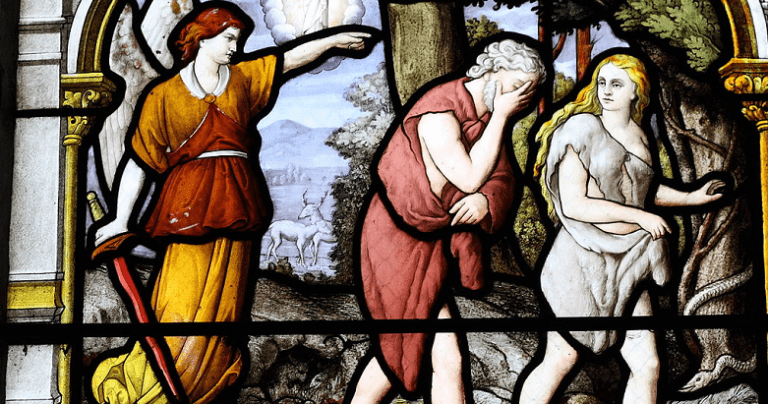
Creative Commons / Wikimedia
By Vardell Taylor
Do we really understand the seriousness of the fall?
When I was teaching Sunday School, I got the impression that most Latter-day Saints think that we come into this world perfect, and sure, everyone will sin, but those with the willpower to stop sinning will earn the kingdom of God. And yes, “earn” is the exact word that was used.
There seems to be little acknowledgement of what the scriptures teach about the seriousness of the fall. I suspect some of our misunderstanding comes from the article of faith, “we are punished for our own sins, not for Adam’s transgression.” So how can we be on a trajectory to hell because of the fall of Adam? I certainly can’t explain the “why” of the fall, but the scriptures do teach us of its effects.
Many scriptures tell us that because of Adam’s fall, we are already in fact “lost”, and are even “carnal, sensual and devilish.” (Mosiah16:3,4; 2 Nephi 2:21,26; Alma 41:11). King Benjamin taught his very obedient people that, “the knowledge of the goodness of God at this time has awakened you to a sense of your nothingness, and your worthless and fallen state” (Mosiah 4:5). We are “unworthy, and because of the fall our natures have become evil continually” (Ether 3:2). All mankind are “fallen, and in the grasp of justice; yea, the justice of God, which consigned them forever to be cut off from his presence” (Alma 42:14). We are under the “curse of Adam” (Moroni 8:8). We have died the “first death”. We are already spiritually dead! (Alma 11:45; 42:9; D&C 29:41) We have failed the “first judgement” (2 Nephi 9:7). Suffered the wrath of his “first provocation” (Alma 12:36).
From the scriptures then, we learn that without divine intervention everyone is destined for a hellish outcome. So, just how do we regain his presence? Most people conclude that improved behavior will regain our worthiness. That is their understanding of repentance. But that paradigm of repentance is not taught in the scriptures. In God’s justice system, improved behavior will not expunge past bad behavior. We’d like to say, “Yes judge, I did break the law, I was doing 40 in a 20, but I will never do it again, so can’t we just forget it ever happened?”
No amount of self-improvement can change our dire situation. “Since man had fallen, he could not merit anything of himself.” (Alma 22:13). Aren’t we inclined to think Aaron has exaggerated here? Don’t we really think that good people “merit” salvation? The scriptures clearly tell us that even if we could keep 99% of the commandments, that will not be good enough to “merit” our exaltation. “Cursed is every one that continueth not in all things which are written in the book of the law to do them” (Galatians 3:10). Aaron did not exaggerate – man can merit nothing of himself.
Lehi stated our problem like this, “All men know good from evil, and the law is given unto men, and by the law no flesh is justified. By the law men are cut off, by the temporal law they were cut off, and by the spiritual law they perish from that which is good, and become miserable forever” (2 Nephi 2:5). Paul taught the same principle: “By the deeds of the law, there shall no flesh be justified in his sight:” (Romans 3:20). “A man is not justified by the works of the law, … by the works of the law shall no flesh be justified (Galatians 2:16). Do you get the message? No flesh – not a single human soul – can comply with God’s law. No matter what good things we do, and regardless of how many commandments we keep, no one can make himself worthy of salvation.
But obviously God provided a way – the Atonement of Christ. I doubt mortals can fully comprehend the magnitude of Christ’s atonement, but the scriptures teach extensively that it enables our forgiveness and our redemption.
Paul taught extensively that Christ satisfies the law for us, and that we are justified with the law through our faith in Christ. Now some Latter-day Saints ignore what Paul says about the law, contending that Paul was referring to the law of Moses. But Paul’s teachings apply to all of Gods laws. How can I say that? Because without law there is no sin. It is by the law that we define sin (Romans 4:15; 5:13; 7:7-14; 2 Nephi 2:13; Alma 42:17). “How could a man repent except he should sin? How could he sin if there was no law?” The most repeated message in the scriptures is for men to repent, and men need to repent because they sin, and sin brings us under the condemnation and curse of a broken law (See Moroni 8:24; Galatians 3:10; Romans 3:19; 2Nephi 2:5; Alma 42:18).
It’s true we are no longer obligated to sacrifice animals, but we are still obligated to keep part of the Mosaic law: the Ten Commandments. Our current law is the law of the Gospel, a law that demands even more from us. And in teaching the Ephesians that they are saved by faith in Christ, Paul makes no reference to the law, but uses the word “works”: “For by grace are ye saved through faith; and that not of yourself: it is the gift of God: Not of works, lest any man should boast” (Ephesians 2:8–9).
So the law that Paul refers to is the same law that Lehi, Nephi, and Alma refer to, and breaking one commandment cuts us off. “By the law we perish from that which is good and become miserable forever” (2 Nephi 2:5). Lehi states this same ominous message again in verse 26,“And the Messiah cometh in the fulness of time, that he may redeem the children of men from the fall. And because that they are redeemed from the fall they have become free forever, knowing good from evil; to act for themselves and not to be acted upon, save it be by the punishment of the law at the great and last day…” (2 Nephi 2:26). Lehi is saying that those who do not gain redemption through Christ, will be punished according to the law–according to justice.
So, the scriptures say that we begin life fallen, lost, even spiritually dead, and that we cannot “earn” our way back to God. Doesn’t that sound disheartening? Is it any wonder that we become discouraged, depressed, and hopeless? If that doesn’t sound like a plan of happiness, you’re right, it’s not–at least not yet. It’s the plan to break our hearts and bend our knees. And our redemption cannot happen until both of those things happen. Yes, exquisite joy will come, but only after experiencing exquisite heartbreak. That is our next subject, understanding the broken heart.

About Vardell Taylor
Vardell Taylor was raised in the LDS church, but followed a familiar pattern of inactivity before returning to the church at nearly 30 years old. At age 58 he experienced something he didn’t even think was possible–being forgiven and changed by Christ. Since then, 2013, he has written a book about his experience, and has tried to minister the good news to anyone patient enough to indulge him. He lives in West Jordan, Utah with his wife. They have four married children and 18 grandchildren. He still works in the same business that he started with 49 years ago, and still loves to hunt, fish, play golf, and testify of Christ–oh, and long walks on the beach. Vardell would welcome your thoughts and comments. [email protected] You can read more about the author here.
Previous Post

June 27, 2019
Yoga and Faith Crises - Learning to Bend When You Feel Like Breaking
Next Post

December 21, 2021 The Broken Heart
Browse Our Archives
Select a Category Uncategorized
Select a Month February 2022 January 2022 December 2021 June 2019 March 2019 March 2018
TAKE THE
Religious Wisdom Quiz
Who was known for interpreting dreams in Babylon?
Select your answer to see how you score.
Daniel Joseph David Moses
Related posts from Posts of Great Price

How Many Commandments Must We Keep?
In What State Do You Reside? Justified?
TRENDING AT PATHEOS Latter-day Saint

Did Prayer Cure His Cancer? Or Was It...
At 4 AM one morning, Joshua W. Brown’s wife awoke to a...

8 Ways a Near-Death Experience Rewires the Soul
Does Consciousness Survive Physical Death? After 50 Years of Research, Dr. Raymond...

Holy Longing: What Our Restlessness Is Telling Us
“One can find so many pains when the rain is falling.” -John...

What this is NOT about. This blog is definitely not about...

Who said the Israelites were God’s chosen? That’s right, they did. Who...

The Spirit World Is the Real World: God...
A Monk’s Wisdom on Body and Spirit I sit with Brother Martin...
view all Latter-day Saint blogs
Ad-Free & Subscriber Log-In Subscription Support
- About Us
- 2026 Calendar
- Videos
- Podcasts
- Library of World Religions
- Faith In Media Tracker
- Advertise With Us
- Write for Us
- Privacy Policy
- Terms of Service
- Do Not Sell My Data
- Contact Us
- Radiant Digital
- Manage Newsletter Subscriptions
- Unsubscribe From Notifications
- Sitemap
Copyright 2008-2026, Patheos. All rights reserved.
Subscription Support Ad-Free & Subscriber Log-In
Follow Patheos