
BuddhistCatholicContemplativeEvangelicalGeneral ChristianHinduJewishLatter-day SaintMuslimNew VisionsProgressive Christian
Beliefs
- Buddhist
- Catholic
- Contemplative
- Evangelical
- General Christian
- Hindu
- Jewish
- Latter-day Saint
- More Voices
- Muslim
- New Visions
- Pagan
- Progressive Christian
Topics
- Religion News
- Food and Religion
- Sports and Religion
- Religious Art
- Religious Music and Entertainment
- Religious Events
- History and Religion
- Style and Religion
- Politics and Religion
- Women in Religion
- Recreation Outdoors and Religion
- Business Finance and Religion
- Careers Workplace and Religion
- Education and Religion
- Family Parenting and Religion
- Health Fitness and Religion
- Home and Religion
- Relationships and Religion
- Technology and Religion
- Travel and Religion
Columnists
- Buddhist Columnists
- Business Finance and Religion Columnists
- Careers Workplace and Religion Columnists
- Catholic Columnists
- Contemplative Columnists
- Education and Religion Columnists
- Evangelists Columnists
- Family Parenting and Religion Columnists
- General Christian Columnists
- Health Fitness and Religion Columnists
- Hindu Columnists
- History and Religion Columnists
- Home and Religion Columnists
- Jewish Columnists
- More Voices Columnists
- Latter Day Columnists
- Muslim Columnists
- New Visions Columnists
- Nonreligious Columnists
- Pagan Columnists
- Politics and Religion Columnists
- Progressive Columnists
- Recreation Outdoors and Religion Columnists
- Relationships and Religion Columnists
- Religion News Columnists
- Religious Art Columnists
- Religious Events Columnists
- Religious Music and Entertainment Columnists
- Sports and Religion Columnists
- Style and Religion Columnists
- Technology and Religion Columnists
- Travel and Religion Columnists
- Women in Religion Columnists
Resource Library
- 2026 Calendar
- Library of World Religions
- The 100 Most Holy Places on Earth
- Patheos Answers
- Podcasts
- Videos
- Faith Leaders Database
- Anglican Episcopalian
- Bahai
- Baptist
- Buddhism
- Christianity
- Confucianism
- Eastern Orthodoxy
- Hinduism
- Holiness and Pentecostal
- ISKCON
- Islam
- Judaism
- Lutheran
- Methodist
- The Church of Jesus Christ of Latter-day Saints
- New Age
- Paganism
- Presbytarian and Reformed
- Protestantism
- Religion Behind the Scenes
- Roman Catholic
- Scientology
- Shia Islam
- Sikhism
- Sufism
- Sunni Islam
- Taoism
- Zen
- See all religions
Research Tools
 Ad-Free & Subscriber Log-In Subscription Support
Ad-Free & Subscriber Log-In Subscription Support
Follow Patheos 

- Trending:
- Forgiveness
- |
- Marriage
- |
- Consciousness
- |
- Death Penalty
- |
- Election
- |
- Halloween
 Pop Theology
- Home
- Progressive Christian
- Religious Music & Entertainment
- “Moonlight” Is a Film of Great Tenderness and Spirit
“Moonlight” Is a Film of Great Tenderness and Spirit
Last updated on: February 11, 2017 at 6:24 pm by Richard Lindsay
“Moonlight” Is a Film of Great Tenderness and Spirit 2017-02-11T18:24:16-08:00 Richard Lindsay
Patheos Explore the world's faith through different perspectives on religion and spirituality! Patheos has the views of the prevalent religions and spiritualities of the world.
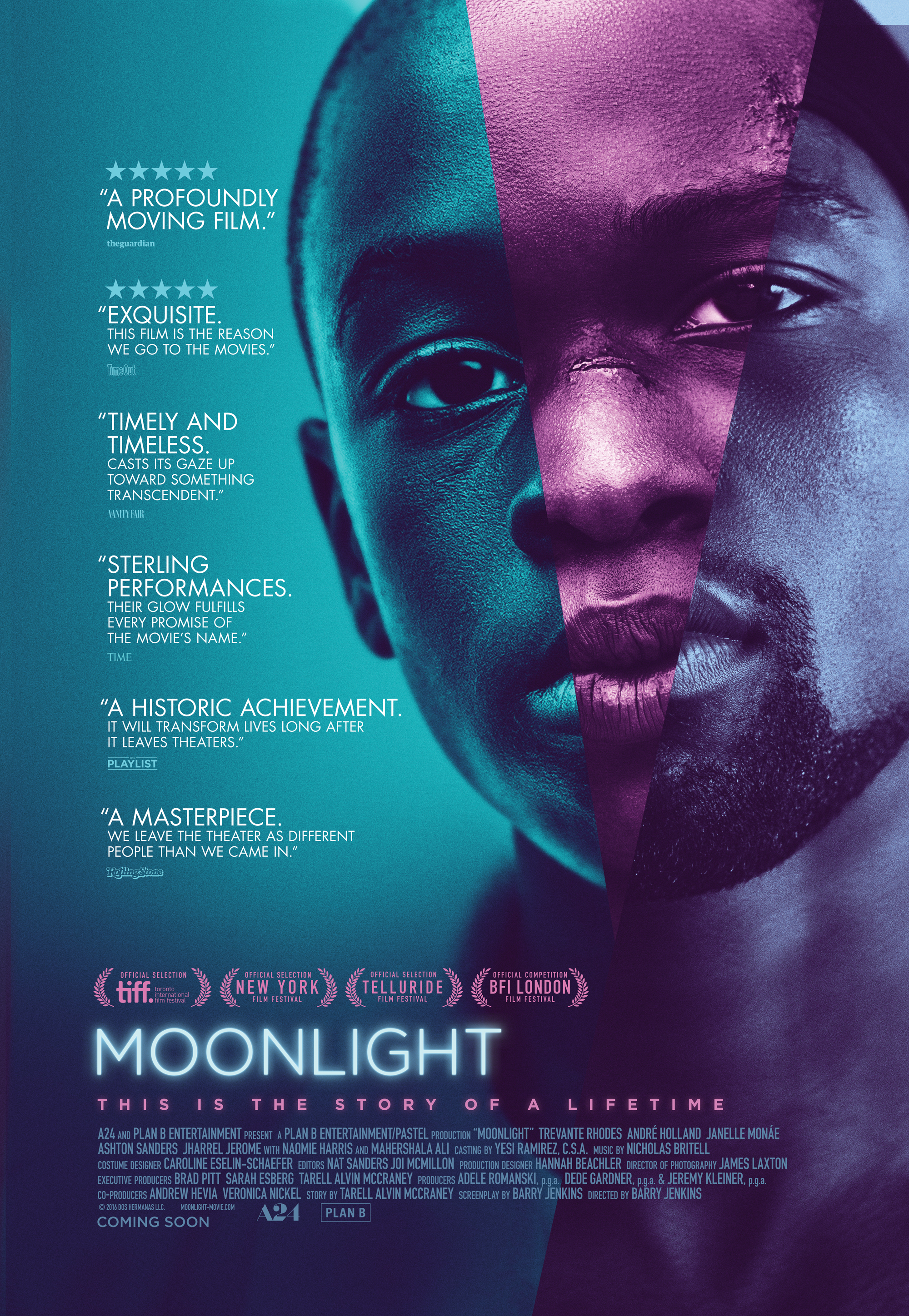 Moonlight has been receiving critical buzz since its debut at the winter film festivals last year, some of which has resulted in a Golden Globe for best picture (drama) and a slew of Oscar nominations. Written and directed by Barry Jenkins, based on a play by Tarell Alvin McCraney, it is a rare film that features black men being at turns tender and melancholy, crushed and resilient, without the usual Hollywood fetishization as thugs or sex machines. Tracing the coming of age of one black boy, Chiron (pronounced shy-RONE) from grade school to high school to young adulthood, it might have been called (Black Queer) Boyhood.
Set in three distinct acts, Chiron as a young boy (Alex Hibbert) lives in Miami, is bullied by kids at school and neglected by his crack-addicted mom (Naomie Harris). Chased by taunting school kids and unable to go home, he finds himself one night in the care of a drug dealer named Juan (Mahershala Ali), and his girlfriend Teresa (Janelle Monáe). In a moving exchange over dinner, he asks Juan what a faggot is—the term boys were using to bully him at school. In a surprising response, Juan gently tells Chrion faggot is a term used to hurt gay people. Chrion follows up by asking, “Am I a faggot?” Again, Juan surprises not by trying to proscribe the boy’s identity, but to say if he is gay, he’ll know one day, and he should never let anyone call him faggot.
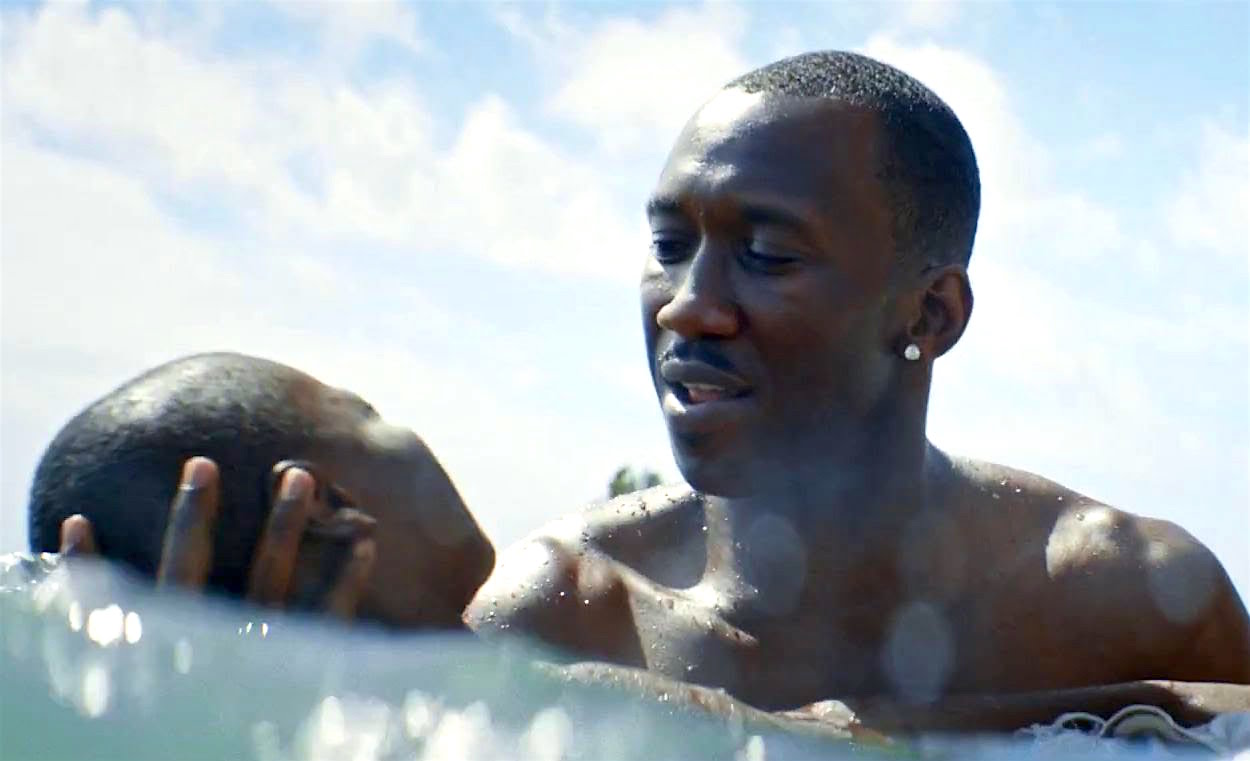
Learning to trust: Alex Hibbert (left) and Mahershala Ali (right) in Moonlight.
In Act II, we see Chiron as a teenager (Ashton Sanders). His mother has spiraled further into addiction, even hitting him up for money to try to get her fix. Things have barely changed for him at school, except the bullying boys are bigger and more dangerous. Chiron has a friend, Kevin (Jharrel Jerome) who seems to be able to bring the quiet boy out of himself. One sultry night they drive to the beach together and have an intimate and beautiful moment of sexual exploration. But the spell is broken the next day when another boy gets Kevin to participate in a brutal game of “knock down/stay down.” Kevin punches Chiron, and as Chiron gets back up again, the boys continue to beat him until he falls to the ground to be pummeled and kicked within an inch of his life. Betrayed by his friend and at the end of his patience, Chrion answers with violence, and is sent to juvenile detention.
Chiron as a young adult (Trevante Rhodes) is nearly unrecognizable. Out of juvie and muscled up, he has built an armor of flesh around himself and become a drug dealer. But we can still sense Chiron’s sensitivity, and we get the idea he is still looking for himself. His mom is in rehab and is making slow progress toward getting her life back. Out of the blue, he gets a call from Kevin in Miami, and he goes to see him.
Based on the violent end of their school friendship, we’re not sure at all what Chiron wants from Kevin. Kevin has become a cook at a diner. The meeting between them seems both dangerous and flirtatious, as Kevin fixes Chiron a sumptuous Cuban feast of chicken and black beans and rice. What happens next between the two is remarkable, and not at all what you might expect from their reunion. We learn that underneath his learned street bluster, Chiron still has the passion and thoughtfulness he had as a child.
Although I have to be careful in appropriating stories like this for my theological ramblings, I’d like to say Chiron is a Christ figure. In a gorgeous scene early on in the film, Chiron undergoes a baptism in the ocean in which he learns to lay back and trust the supporting arms of Juan, as imperfect a character as he is. The betrayal of Kevin and Chiron’s subsequent beating at the hands and feet of the adolescent mob bears a strong resemblance to the Christ story. Where it differs, however, is in his story as a young adult. Set up by society for failure, headed for a life of violence and early death or years in prison, his reunion with Kevin is the beginning of him reclaiming his own life story. Rather than playing out Hollywood and America’s myth of redemptive violence, which has always required the nearly ritualistic sacrifice of young black men, Chiron steps down off the cross like Jesus in The Last Temptation of Christ. He refuses to play out the final act.
I’m also reminded that Chiron’s name is spelled the same as the mythical Greek centaur who was quiet and perceptive, misunderstood by his peers. At one point he is shot by an arrow from Hercules, and although he wishes to die because of the pain, he cannot, because he is immortal. It is from his suffering that he goes on to become a mentor to great figures like Achilles, and introduces medicine to humankind.
Moonlight is based on an unproduced play called “In Moonlight Black Boys Look Blue”. The film is beautifully shot by cinematographer James Laxton, and he captures these rich moments of blueness and greenness in the Miami twilight. Despite its seriousness, the film has a luminous quality that at times brings a sense of lightness and transcendence.
But the “blue” of the title also has to do with a depth of emotion we rarely get to see in Hollywood films from characters who are poor and/or people of color. As playwright Terrell Alvin McCraney says, “It’s probably under the moonlight that we see that black boys can be blue, can be sad and sullen and intimate,” he said. “It’s under starlight that we see them differently, or that we get the chance to.”
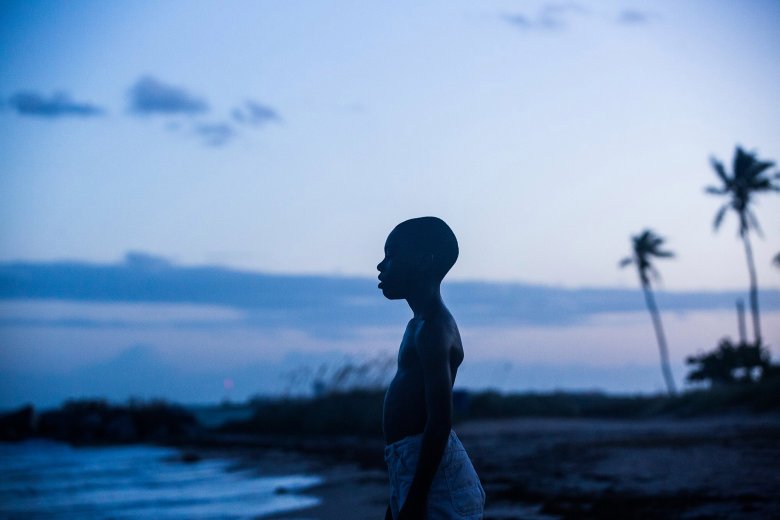
In moonlight, black boys look (or can be) blue.
Previous Post

February 8, 2017
#KillerSerials: THE PATH, S2, Ep. 4
Next Post

February 13, 2017 Shuffled Selections: February 5 – February 11
Browse Our Archives
Select a Category Classics DVD Film Music News Pop Culture Events Print Sports Television Uncategorized Video Games
Select a Month March 2017 February 2017 January 2017 December 2016 November 2016 October 2016 September 2016 August 2016 July 2016 June 2016 May 2016 April 2016 March 2016 February 2016 January 2016 December 2015 November 2015 October 2015 September 2015 August 2015 July 2015 June 2015 May 2015 April 2015 March 2015 February 2015 January 2015 December 2014 November 2014 October 2014 September 2014 August 2014 July 2014 June 2014 May 2014 April 2014 March 2014 February 2014 January 2014 December 2013 November 2013 October 2013 September 2013 August 2013 July 2013 June 2013 May 2013 April 2013 March 2013 February 2013 January 2013 December 2012 November 2012 October 2012 September 2012 August 2012 July 2012 June 2012 May 2012 April 2012 March 2012 February 2012 January 2012 December 2011 November 2011 October 2011 September 2011 August 2011 July 2011 June 2011 May 2011 April 2011 March 2011 February 2011 January 2011 December 2010 November 2010 October 2010 September 2010 August 2010 July 2010 June 2010 May 2010 April 2010 March 2010 February 2010 January 2010 December 2009 November 2009 October 2009 September 2009 August 2009 July 2009 June 2009 May 2009 April 2009 March 2009 February 2009 January 2009 December 2008 November 2008 October 2008 September 2008 August 2008 July 2008 June 2008 May 2008 April 2008 March 2008 February 2008 January 2008 December 2007 November 2007 October 2007 September 2007 August 2007 July 2007 June 2007 May 2007 April 2007 March 2007
Follow Us!
TAKE THE
Religious Wisdom Quiz
Who saw the vision of the valley of dry bones?
Select your answer to see how you score.
Isaiah Jeremiah Daniel Ezekiel
Related posts from Pop Theology


At SXSW2017: May It Last: A Portrait of...

At SXSW 2017: "Untold Tales of Armistead Maupin"
TRENDING AT PATHEOS Progressive Christian

What Being a Modern-Day Apostle Means to Me
In my last column, I discussed the ins and outs of modern-day...

Did Ancient China Once Worship the God of...
Across human history, a common thread weaves through the origins of the...

Love Your Neighbor – Including Earth-Kin: Lev. 19,...
God’s command to love your neighbor means acting in an ethical and...

Lead a Church Study of “Jesus and Lao...
Guest writer Jack Thomas (The Irreverent Reverend) reflects on leading his church...

Pastoral Wisdom for Responding to Sermon Pushback
Getting sermon pushback on your social justice sermon? Learn practical, Proverbs-based strategies...

Principles for Understanding the Apostolic Ministry Today
Whenever people discover that my formal ministry title is "apostle," as in...
view all Progressive Christian blogs
Ad-Free & Subscriber Log-In Subscription Support
- About Us
- 2026 Calendar
- Videos
- Podcasts
- Library of World Religions
- Faith In Media Tracker
- Advertise With Us
- Write for Us
- Privacy Policy
- Terms of Service
- Do Not Sell My Data
- Contact Us
- Radiant Digital
- Manage Newsletter Subscriptions
- Unsubscribe From Notifications
- Sitemap
Copyright 2008-2026, Patheos. All rights reserved.
Subscription Support Ad-Free & Subscriber Log-In
Follow Patheos