
BuddhistCatholicContemplativeEvangelicalGeneral ChristianHinduJewishLatter-day SaintMuslimNew VisionsProgressive Christian
Beliefs
- Buddhist
- Catholic
- Contemplative
- Evangelical
- General Christian
- Hindu
- Jewish
- Latter-day Saint
- More Voices
- Muslim
- New Visions
- Pagan
- Progressive Christian
Topics
- Religion News
- Food and Religion
- Sports and Religion
- Religious Art
- Religious Music and Entertainment
- Religious Events
- History and Religion
- Style and Religion
- Politics and Religion
- Women in Religion
- Recreation Outdoors and Religion
- Business Finance and Religion
- Careers Workplace and Religion
- Education and Religion
- Family Parenting and Religion
- Health Fitness and Religion
- Home and Religion
- Relationships and Religion
- Technology and Religion
- Travel and Religion
Columnists
- Buddhist Columnists
- Business Finance and Religion Columnists
- Careers Workplace and Religion Columnists
- Catholic Columnists
- Contemplative Columnists
- Education and Religion Columnists
- Evangelists Columnists
- Family Parenting and Religion Columnists
- General Christian Columnists
- Health Fitness and Religion Columnists
- Hindu Columnists
- History and Religion Columnists
- Home and Religion Columnists
- Jewish Columnists
- More Voices Columnists
- Latter Day Columnists
- Muslim Columnists
- New Visions Columnists
- Nonreligious Columnists
- Pagan Columnists
- Politics and Religion Columnists
- Progressive Columnists
- Recreation Outdoors and Religion Columnists
- Relationships and Religion Columnists
- Religion News Columnists
- Religious Art Columnists
- Religious Events Columnists
- Religious Music and Entertainment Columnists
- Sports and Religion Columnists
- Style and Religion Columnists
- Technology and Religion Columnists
- Travel and Religion Columnists
- Women in Religion Columnists
Resource Library
- 2026 Calendar
- Library of World Religions
- The 100 Most Holy Places on Earth
- Patheos Answers
- Podcasts
- Videos
- Faith Leaders Database
- Anglican Episcopalian
- Bahai
- Baptist
- Buddhism
- Christianity
- Confucianism
- Eastern Orthodoxy
- Hinduism
- Holiness and Pentecostal
- ISKCON
- Islam
- Judaism
- Lutheran
- Methodist
- The Church of Jesus Christ of Latter-day Saints
- New Age
- Paganism
- Presbytarian and Reformed
- Protestantism
- Religion Behind the Scenes
- Roman Catholic
- Scientology
- Shia Islam
- Sikhism
- Sufism
- Sunni Islam
- Taoism
- Zen
- See all religions
Research Tools
 Ad-Free & Subscriber Log-In Subscription Support
Ad-Free & Subscriber Log-In Subscription Support
Follow Patheos 

- Trending:
- Forgiveness
- |
- Marriage
- |
- Consciousness
- |
- Death Penalty
- |
- Election
- |
- Halloween
 Pop Theology
- Home
- Progressive Christian
- Religious Music & Entertainment
- ‘Silence’: A PopTheology Conversation
‘Silence’: A PopTheology Conversation
Last updated on: January 4, 2017 at 2:15 pm by Richard Lindsay
‘Silence’: A PopTheology Conversation 2017-01-04T14:15:25-08:00 Richard Lindsay
Patheos Explore the world's faith through different perspectives on religion and spirituality! Patheos has the views of the prevalent religions and spiritualities of the world.
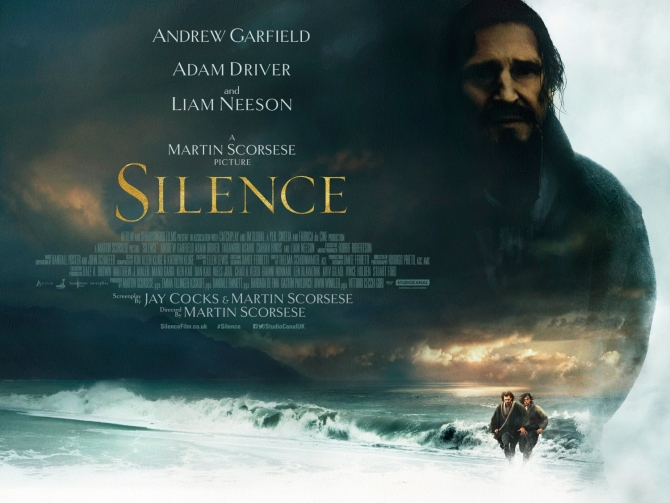 Martin Scorcese’s monumental Silence is now playing in select theaters and is slated for wide release on January 13th. The story of Jesuit missionaries in 17th century Japan is based on the novel by Japanese Catholic convert Shusaku Endo. It explores the nature of faith and doubt in the most impossible of circumstances–when profession of belief can lead to torture and death. But as the film plays out the conflict between the colonial impulses of Europe, which use Christian conversion as a tool, and the political and social forces of Japan, we find there are few easy answers in encountering or understanding the “other.”
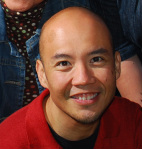 Joining PopTheology editors Ryan Parker and Richard Lindsay in this discussion is Mike Campos, a fellow GTU PhD alumnus, and religious studies teacher at Stuart Hall High School in San Francisco. He is a founding member of EQUARS, the Emerging Queer Asian Pacific Islander Scholars.
Enjoy some short excerpts from our conversation, then listen to the whole discussion on audio media file.
Ryan: Scorcese’s road to making the film was a 28-year process. Scorsese read Silence, which is by Shusaku Endo, and was both moved and puzzled by it. It seems like in those intervening years he also matured spiritually and theologically and then began to see some of the themes that were undergirding the story that he eventually wanted to bring to the screen.
The film is about two Jesuit missionaries in feudal Japan who are on a search for an apostate priest. At this time Christianity is not legal in Japan and practicing or being found to be a part of the Christian community can lead to torture and death, so the stakes are very high. As these two priests continue their search for their mentor, they too begin to experience crisis of faith.
Mike: One of the things I found fascinating about Endo is the way in which he treats faith—especially the relationship between Catholicism as the vehicle for faith—and Japanese culture. One of the things that was very apparent for me is that the two are very distinct for him, which for me, having grown up in the Philippines, the two were not distinct, in fact the two were quite married to each other. So one of the things I entered the film with was this idea of what it means to actually engage Christianity both as an outsider and an insider.
 The second thing that I found a really compelling in the film was that it was undertaken by Jesuit missioners who were going to Japan to engage the question of faith because their own mentor [had been rumored] to have apostasized. In the Jesuit tradition, the idea of being a part of a community is deeply rooted to them because they are essentially an extension of a military framework. Ignatius of Loyola (the Jesuit founder) was a soldier. So every Jesuit was expected to care for another member of the order as if that member were oneself. …
As Jesuits they had a very specific approach to conversion and it had everything to do with how they understood the world around them. … Jesuits had very specific terms, very specific language that expressed that sensibility. The most obvious of which is that Christ is a very real person that you’re in relationship with. That Christ wasn’t an idea, it was really someone that you expended affection, love, investment of time, body, towards. So Christ was a real person, and throughout the film, it was apparent to me that Christ was actually being reincarnated over and over again in different people. So the most obvious would be the Japanese, the second would be the actual historical Christ, and then that scene where even Rodrigues (Andrew Garfield) was looking at himself, and seeing Christ reflected back, was another form of that incarnation.
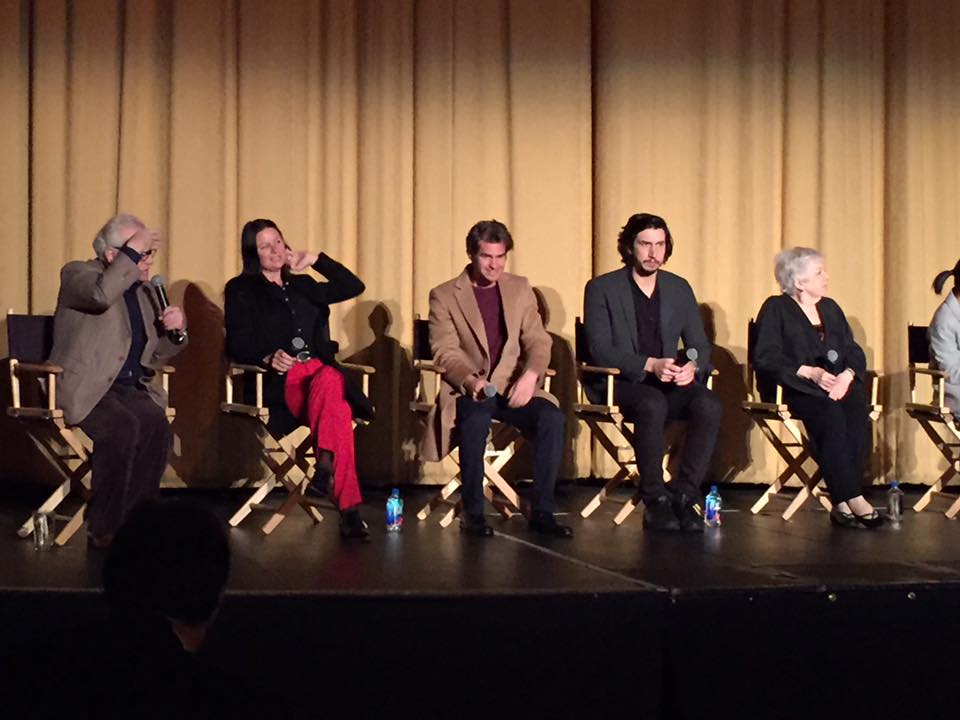
San Francisco premiere of Silence, attended by Richard and Mike, with, L-R: Martin Scorcese, producer Emma Tillinger Koskoff, Andrew Garfield, Adam Driver, editor Thelma Schoonmaker.
Richard: The whole film has this Passion play sensibility to it. [You had] this scene where the Japanese Christians were essentially being crucified by drowning, and that was being staged exactly the same way as the Crucifixion. …I don’t think the Jesuits would have had any problem accepting martyrdom. The problem was that the Japanese officials were martyring their people, were martyring their flock—the Japanese Christians. And they were doing it in such a way as not to necessarily bring about death—because martyrdom actually strengthens the faith— but to bring about apostasy. Because apostasy actually crushes the spirit of the faith.
As a good liberal Christian I found myself questioning my commitment to moral relativism…because I found myself really rooting for Rodrigues and wanting him to hold fast to this faith. As a Western post-Enlightenment person, there’s a conflict there between on the one hand knowing how damaging colonialism has been and that it destroys cultures— and the Church is absolutely a part of that—the Western powers [were] not allowing the Japanese people their own self-determination. And on the other hand, the fact that these Japanese Christians were actually being tortured by their officials [who were] not allowing them their own self-determination. If they wanted to be Christians, who’s to say they can’t?
Enjoy the rest of the conversation here:
http://wp.production.patheos.com/blogs/poptheology/files/2017/01/Silence-Conversation.mp3
Previous Post

December 31, 2016
Top 50 Records of 2016
Next Post

January 9, 2017 Thoughts on 'Rogue One': the Maccabees of the Star Wars Canon
Browse Our Archives
Select a Category Classics DVD Film Music News Pop Culture Events Print Sports Television Uncategorized Video Games
Select a Month March 2017 February 2017 January 2017 December 2016 November 2016 October 2016 September 2016 August 2016 July 2016 June 2016 May 2016 April 2016 March 2016 February 2016 January 2016 December 2015 November 2015 October 2015 September 2015 August 2015 July 2015 June 2015 May 2015 April 2015 March 2015 February 2015 January 2015 December 2014 November 2014 October 2014 September 2014 August 2014 July 2014 June 2014 May 2014 April 2014 March 2014 February 2014 January 2014 December 2013 November 2013 October 2013 September 2013 August 2013 July 2013 June 2013 May 2013 April 2013 March 2013 February 2013 January 2013 December 2012 November 2012 October 2012 September 2012 August 2012 July 2012 June 2012 May 2012 April 2012 March 2012 February 2012 January 2012 December 2011 November 2011 October 2011 September 2011 August 2011 July 2011 June 2011 May 2011 April 2011 March 2011 February 2011 January 2011 December 2010 November 2010 October 2010 September 2010 August 2010 July 2010 June 2010 May 2010 April 2010 March 2010 February 2010 January 2010 December 2009 November 2009 October 2009 September 2009 August 2009 July 2009 June 2009 May 2009 April 2009 March 2009 February 2009 January 2009 December 2008 November 2008 October 2008 September 2008 August 2008 July 2008 June 2008 May 2008 April 2008 March 2008 February 2008 January 2008 December 2007 November 2007 October 2007 September 2007 August 2007 July 2007 June 2007 May 2007 April 2007 March 2007
Follow Us!
TAKE THE
Religious Wisdom Quiz
What items did Pharaoh give Joseph as a sign of authority?
Select your answer to see how you score.
Ring and robe Chariot and whip Sword and shield Crown and sandals
Related posts from Pop Theology


At SXSW2017: May It Last: A Portrait of...

At SXSW 2017: "Untold Tales of Armistead Maupin"
TRENDING AT PATHEOS Progressive Christian

Why Christians Have a Sacred Duty to Vote:...
The Bible offers strong support for the sacred duty to vote. Here...

What Being a Modern-Day Apostle Means to Me
In my last column, I discussed the ins and outs of modern-day...

Did Ancient China Once Worship the God of...
Across human history, a common thread weaves through the origins of the...

Love Your Neighbor – Including Earth-Kin: Lev. 19,...
God’s command to love your neighbor means acting in an ethical and...

Lead a Church Study of “Jesus and Lao...
Guest writer Jack Thomas (The Irreverent Reverend) reflects on leading his church...

Principles for Understanding the Apostolic Ministry Today
Whenever people discover that my formal ministry title is "apostle," as in...
view all Progressive Christian blogs
Ad-Free & Subscriber Log-In Subscription Support
- About Us
- 2026 Calendar
- Videos
- Podcasts
- Library of World Religions
- Faith In Media Tracker
- Advertise With Us
- Write for Us
- Privacy Policy
- Terms of Service
- Do Not Sell My Data
- Contact Us
- Radiant Digital
- Manage Newsletter Subscriptions
- Unsubscribe From Notifications
- Sitemap
Copyright 2008-2026, Patheos. All rights reserved.
Subscription Support Ad-Free & Subscriber Log-In
Follow Patheos